
Beeld: Four Sweet Corn Varieties Growing in a Summer Vegetable Garden
Gepubliseer:
Laas opgedateer: 13 Maart 2026 om 20:38:53 UTC
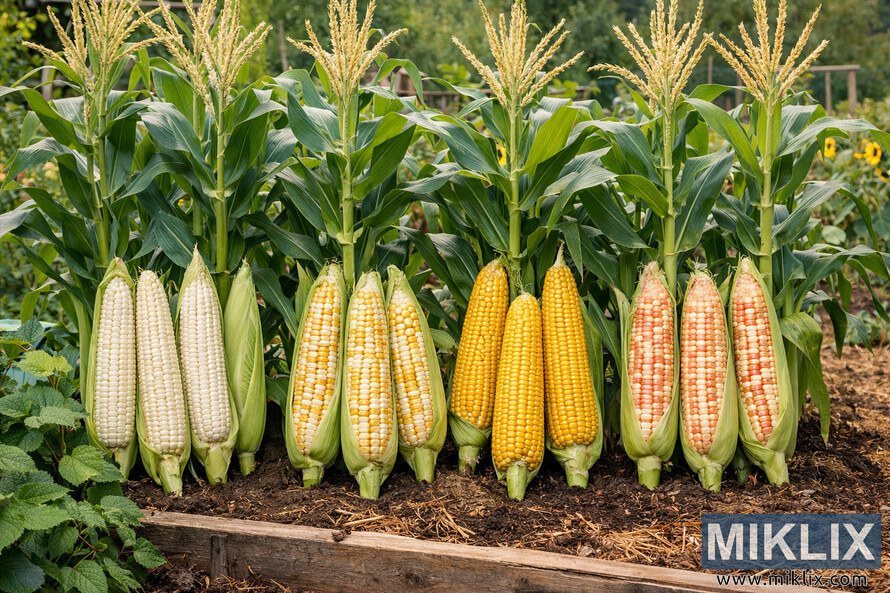
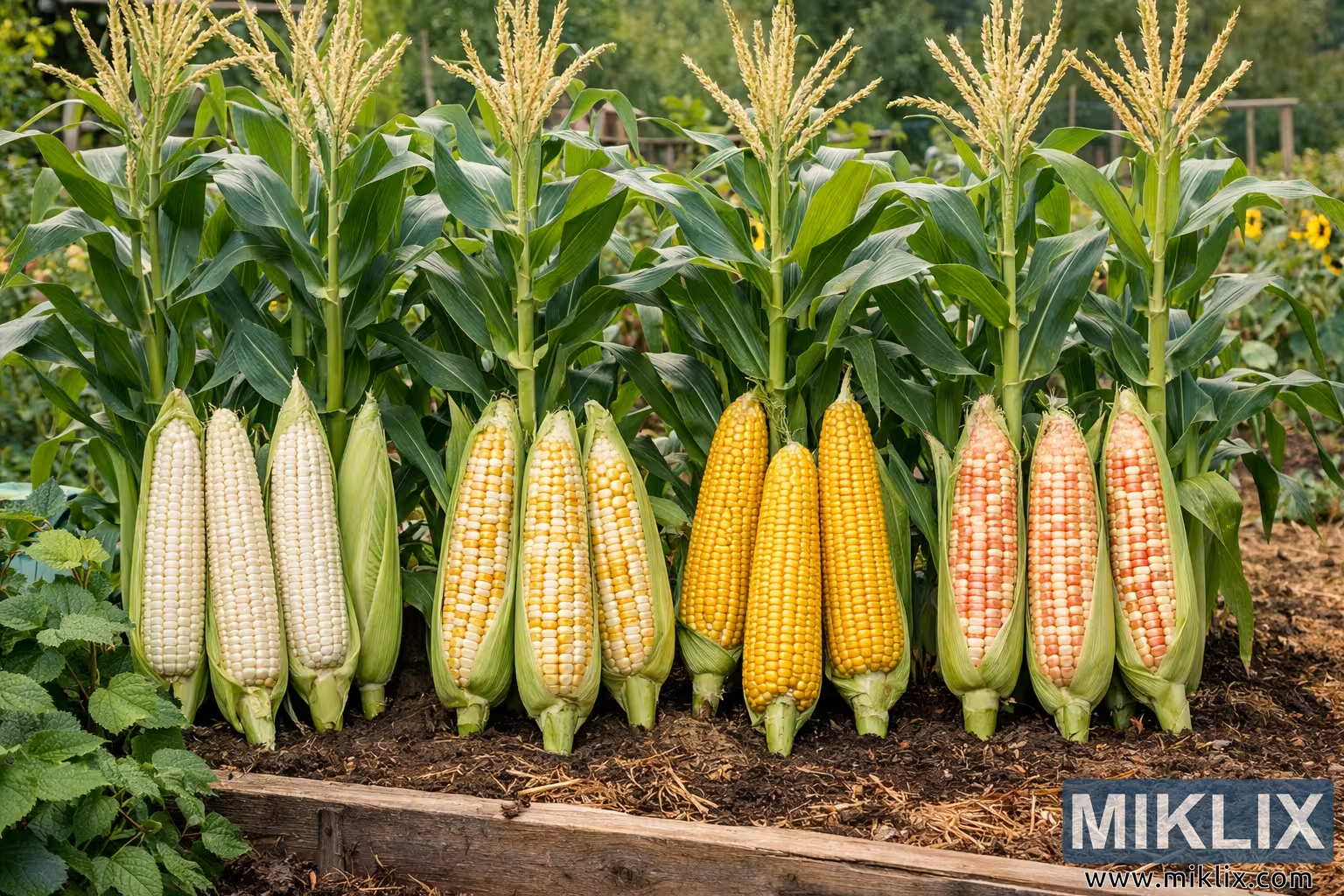
High-resolution landscape image showing four warm-season sweet corn varieties—Silver Queen, Peaches and Cream, Bodacious, and Ambrosia—growing in rows in a vibrant vegetable garden.
Four Sweet Corn Varieties Growing in a Summer Vegetable Garden
Beskikbare weergawes van hierdie beeld
Die beeldlêers wat hieronder beskikbaar is om af te laai, is minder saamgepers en het 'n hoër resolusie - en gevolglik hoër gehalte - as die beelde wat in artikels en bladsye op hierdie webwerf ingebed is, wat meer geoptimaliseer is vir lêergrootte om bandwydteverbruik te verminder.
Gewone grootte (1,536 x 1,024)
Groot grootte (3,072 x 2,048)
Baie groot grootte (4,608 x 3,072)
Ekstra groot grootte (6,144 x 4,096)
Komies groot grootte (1,048,576 x 699,051)
- Laai steeds op... ;-)
Beskrywing van die beeld
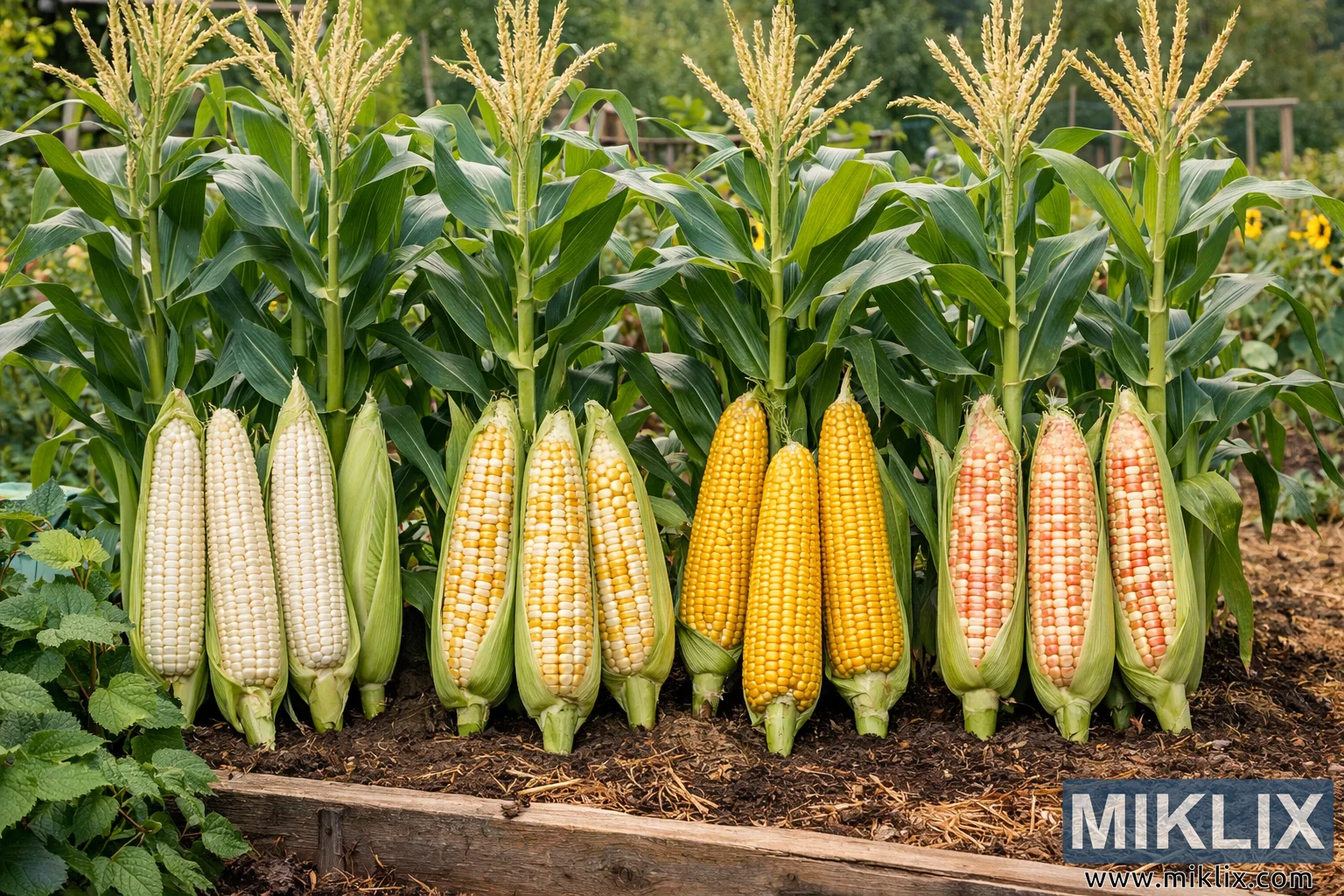
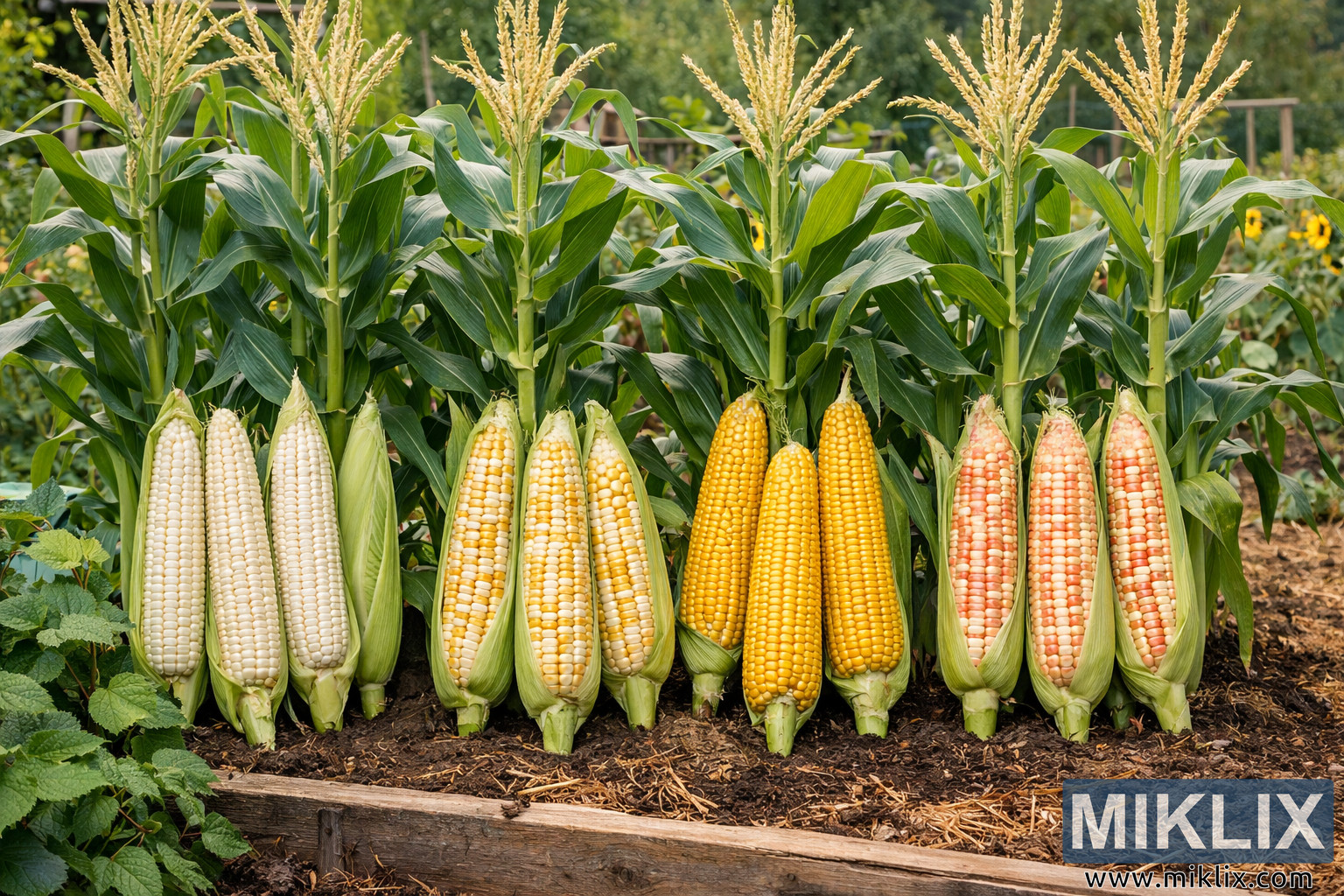
This high-resolution landscape photograph depicts four different warm-season sweet corn varieties growing side by side in a well-maintained vegetable garden. The scene is bright and vibrant, illuminated by warm natural sunlight that highlights the lush green foliage and the distinct kernel colors of each variety. The corn plants are tall and healthy, with broad green leaves and tasseled tops rising above the rows. In the foreground, several ears from each variety are partially husked and displayed upright at the base of the plants, allowing the kernels to be clearly seen and compared.
The first group on the left represents the Silver Queen variety. These ears feature creamy white kernels arranged in tight, uniform rows. The pale color contrasts softly with the deep green husks and leaves, giving the variety a clean and elegant appearance. Next to them are ears from the Peaches and Cream variety. This classic bi-color corn shows alternating rows and patches of pale yellow and creamy white kernels, creating a gentle marbled pattern that visually distinguishes it from the other varieties.
The third section displays Bodacious corn, known for its rich golden color. The ears in this row are filled with bright yellow kernels that appear plump and glossy, reflecting the sunlight and conveying a sense of sweetness and ripeness. Finally, the row on the right features Ambrosia corn, another popular bi-color variety. These ears display a more pronounced contrast between yellow and white kernels, producing a vibrant pattern that stands out strongly against the green foliage and the darker soil below.
All four varieties are planted in neat rows within a raised garden bed bordered by rustic wooden planks. The soil appears dark and well-cultivated, suggesting careful gardening and healthy growing conditions. Behind the corn, additional garden plants and flowers add texture and depth to the scene, while soft greenery in the background creates a natural garden atmosphere. The composition emphasizes both the diversity and beauty of sweet corn varieties, presenting them in a clear side-by-side comparison that highlights differences in kernel color, pattern, and visual character. Overall, the image conveys the abundance, productivity, and visual appeal of a thriving summer vegetable garden.
Die beeld hou verband met: Growing Corn: Your Complete Guide to Sweet Success in the Garden