
Beeld: Organic Compost and Soil Amendments for a Vegetable Garden
Gepubliseer:
Laas opgedateer: 22 Maart 2026 om 21:44:27 UTC
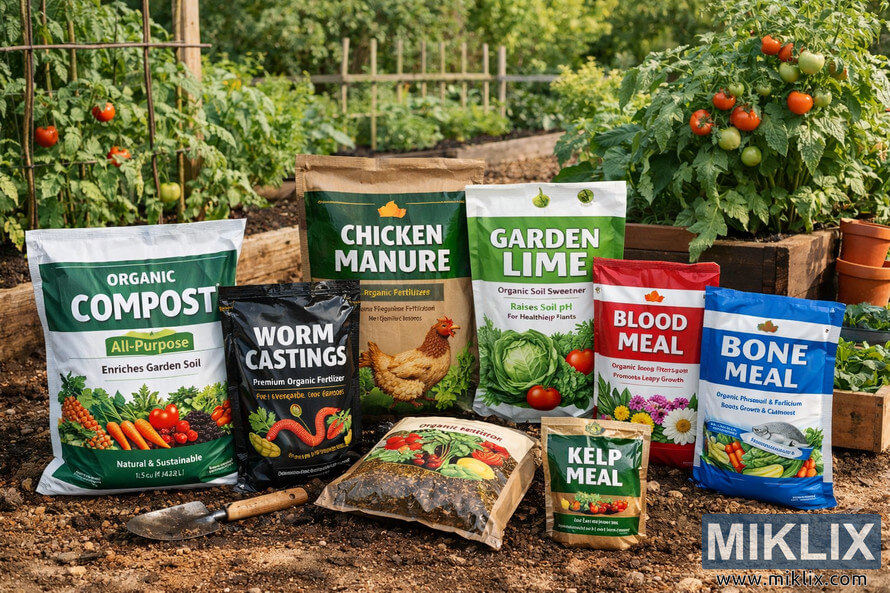
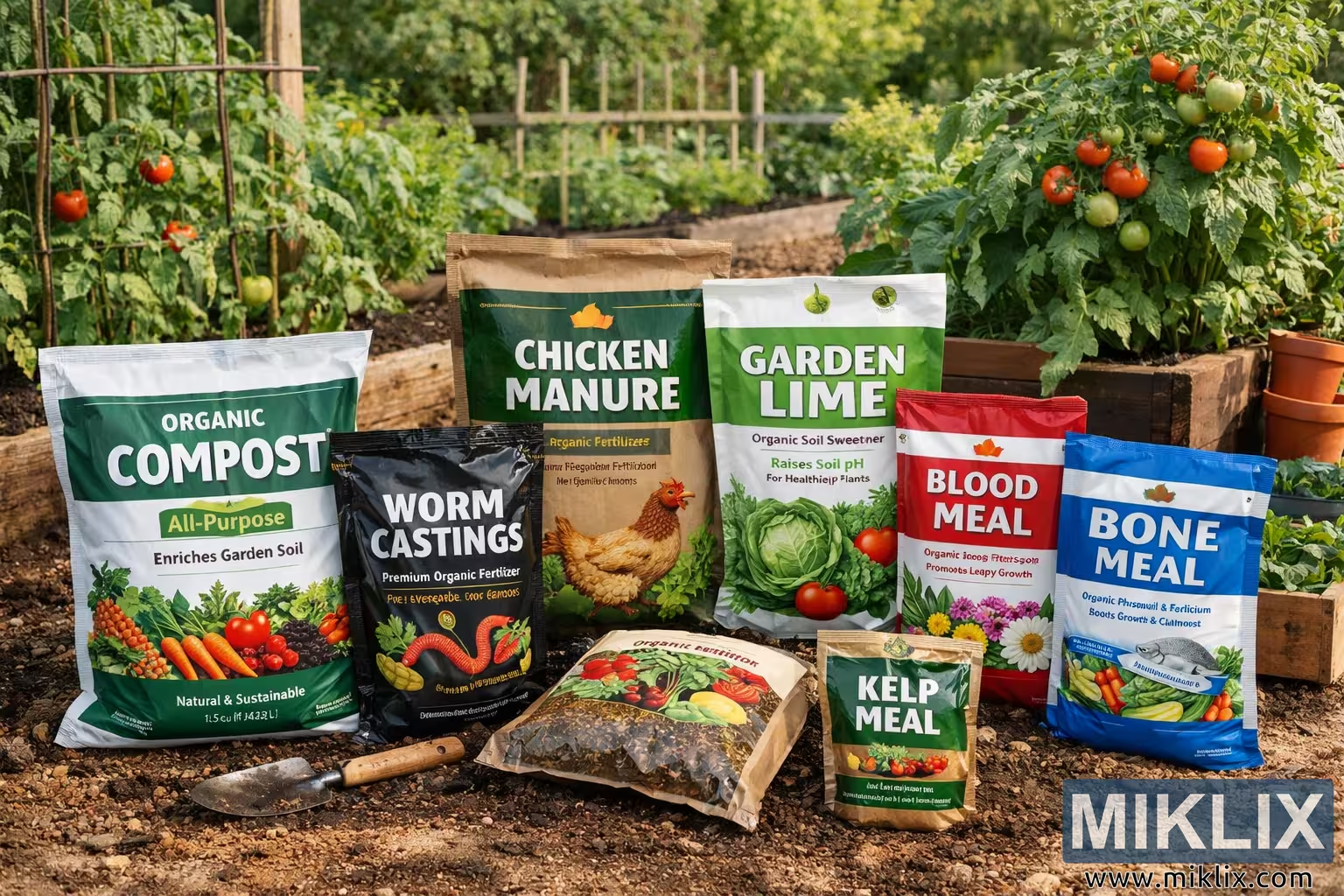
A collection of organic compost and natural soil amendments displayed in a vegetable garden, including worm castings, chicken manure, bone meal, and other fertilizers used to enrich soil and support healthy plant growth.
Organic Compost and Soil Amendments for a Vegetable Garden
Beskikbare weergawes van hierdie beeld
Die beeldlêers wat hieronder beskikbaar is om af te laai, is minder saamgepers en het 'n hoër resolusie - en gevolglik hoër gehalte - as die beelde wat in artikels en bladsye op hierdie webwerf ingebed is, wat meer geoptimaliseer is vir lêergrootte om bandwydteverbruik te verminder.
Gewone grootte (1,536 x 1,024)
Groot grootte (3,072 x 2,048)
Baie groot grootte (4,608 x 3,072)
Ekstra groot grootte (6,144 x 4,096)
Komies groot grootte (1,048,576 x 699,051)
- Laai steeds op... ;-)
Beskrywing van die beeld
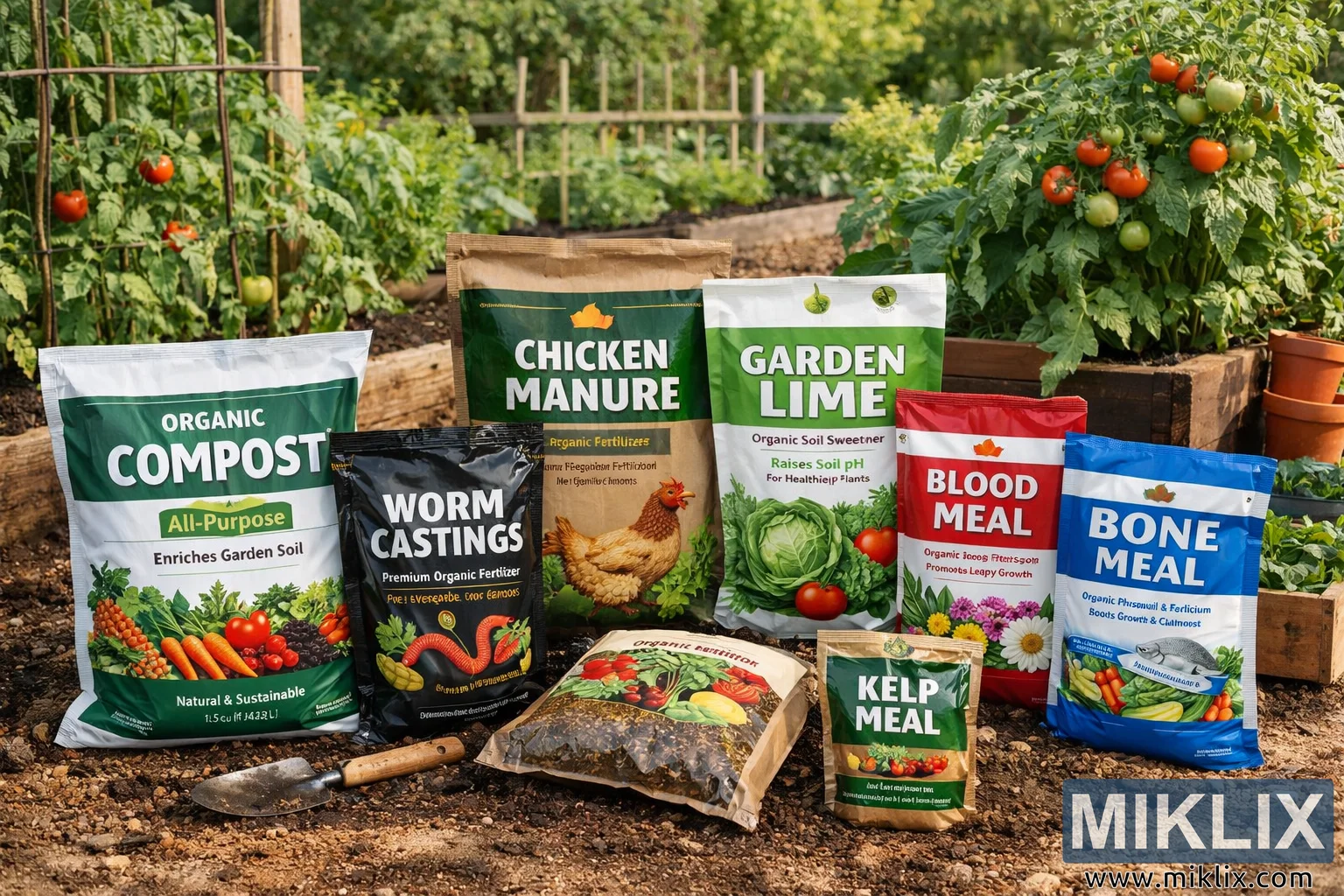
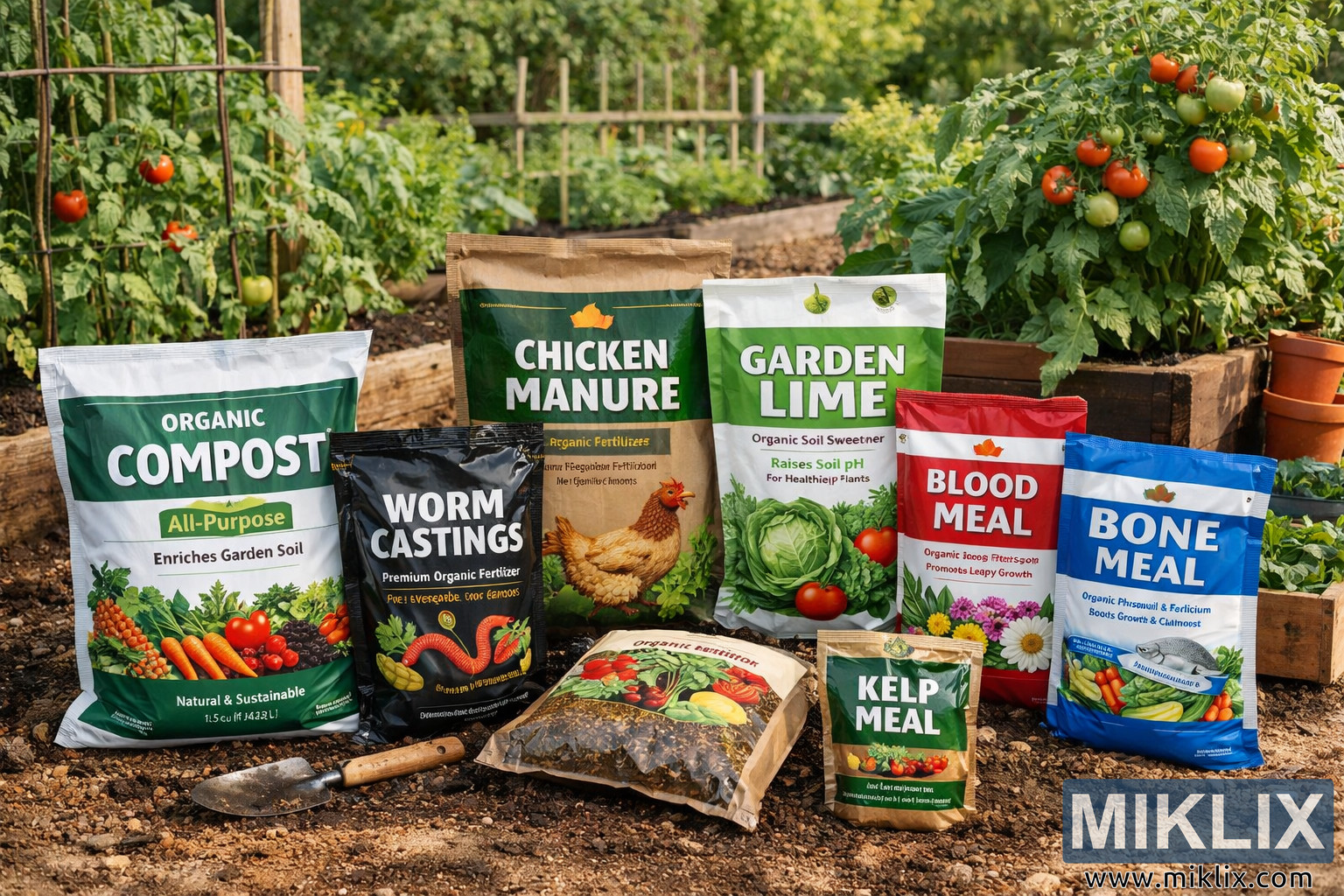
The image shows a bright outdoor scene in a thriving vegetable garden where a variety of organic compost products and natural soil amendments are arranged neatly on the soil in the foreground. Several colorful bags stand upright in a row, displaying different types of organic fertilizers commonly used by gardeners to enrich soil and promote healthy plant growth. Visible labels on the bags include organic compost, worm castings, chicken manure, garden lime, blood meal, bone meal, and kelp meal. Each bag features bold colors and illustrated vegetables, flowers, or farm imagery that highlight their intended use in sustainable gardening.
The bags are positioned directly on the loose garden soil, suggesting they are about to be used for preparing or improving the planting beds. A small hand trowel lies on the ground nearby, reinforcing the sense that active gardening work is taking place. The soil around the bags appears dark and rich, indicating fertile conditions suitable for growing vegetables.
Behind the bags, raised wooden garden beds are filled with lush green plants. Tomato plants dominate the scene, climbing a wooden trellis and bearing clusters of ripening tomatoes in shades of green and red. The trellis structure provides vertical support for the vines and adds visual depth to the garden environment. Additional leafy plants and vegetables can be seen growing in the beds further back, contributing to the feeling of a well-maintained and productive home garden.
The lighting in the image is natural daylight, creating soft shadows and vibrant colors throughout the scene. The greens of the plants, the earthy tones of the soil, and the colorful packaging of the soil amendments combine to produce a visually rich composition that emphasizes organic gardening practices. The setting appears calm and inviting, reflecting the idea of sustainable food production and hands-on gardening.
Overall, the photograph presents a clear visual example of the types of organic compost and soil supplements gardeners commonly use to improve soil structure, increase nutrient availability, and support healthy vegetable crops. The organized arrangement of the products in front of the flourishing garden beds visually connects the amendments with the productive garden behind them, illustrating the role these natural materials play in cultivating a healthy and abundant vegetable garden.
Die beeld hou verband met: Growing Shallots: Your Complete Guide to a Bountiful Harvest