
Beeld: Powdery Mildew Infection on Okra Leaves in Garden
Gepubliseer:
Laas opgedateer: 17 Maart 2026 om 21:38:25 UTC
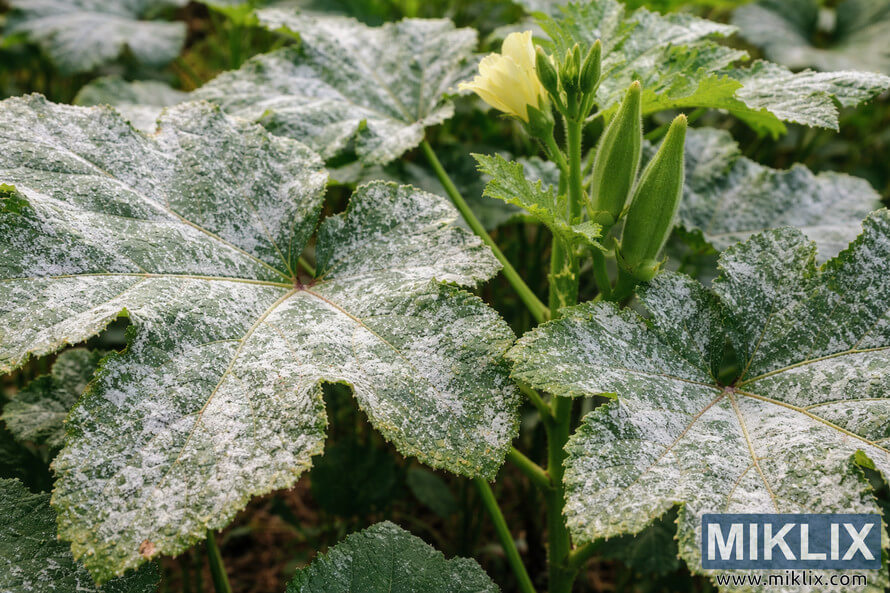
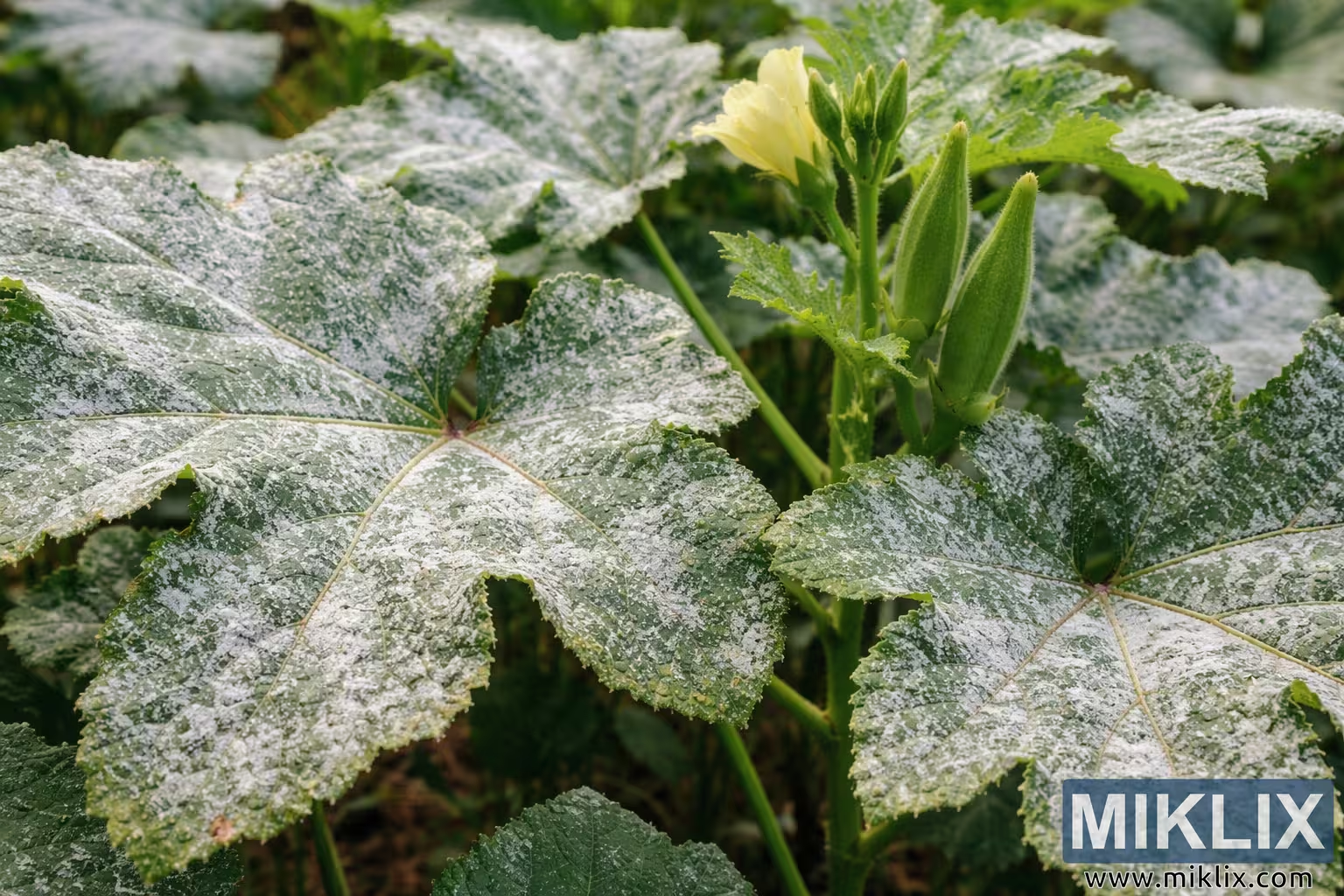
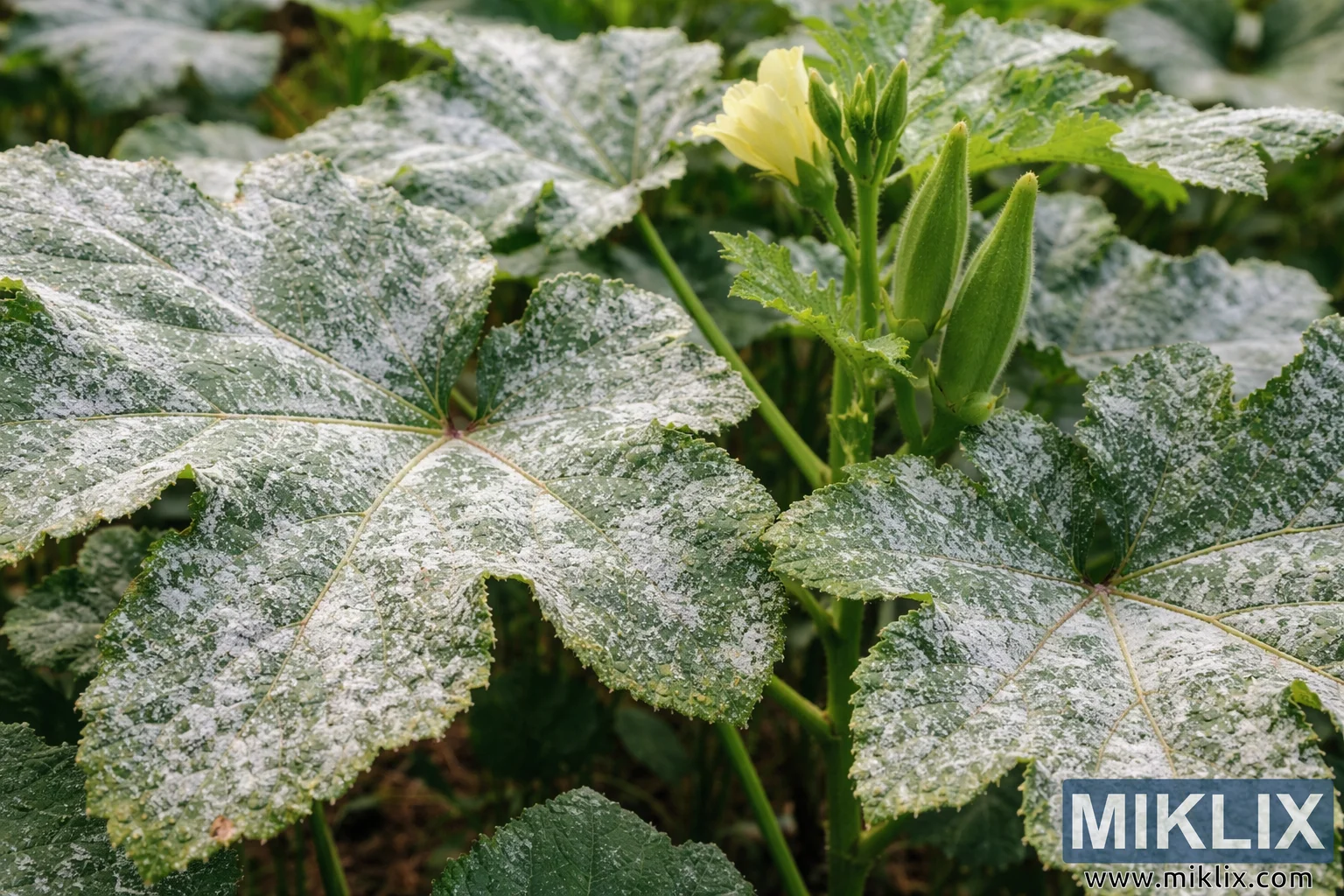
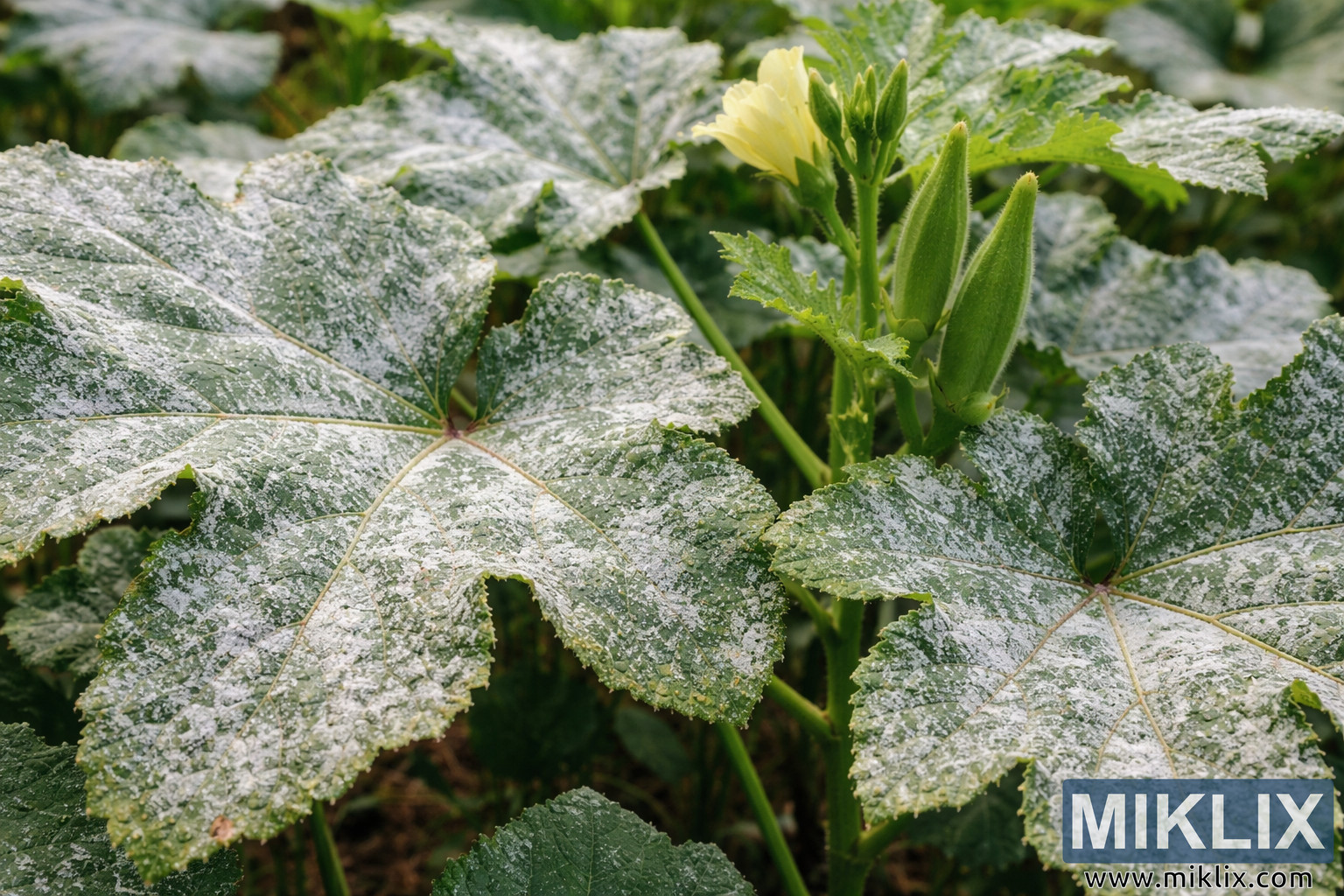
High-resolution close-up of okra leaves affected by powdery mildew, showing white fungal growth on green foliage alongside okra pods and a yellow flower.
Powdery Mildew Infection on Okra Leaves in Garden
Beskikbare weergawes van hierdie beeld
Die beeldlêers wat hieronder beskikbaar is om af te laai, is minder saamgepers en het 'n hoër resolusie - en gevolglik hoër gehalte - as die beelde wat in artikels en bladsye op hierdie webwerf ingebed is, wat meer geoptimaliseer is vir lêergrootte om bandwydteverbruik te verminder.
Gewone grootte (1,536 x 1,024)
Groot grootte (3,072 x 2,048)
Baie groot grootte (4,608 x 3,072)
Ekstra groot grootte (6,144 x 4,096)
Komies groot grootte (1,048,576 x 699,051)
- Laai steeds op... ;-)
Beskrywing van die beeld
This high-resolution landscape photograph presents a close-up view of an okra plant (Abelmoschus esculentus) displaying a visible powdery mildew infection on its leaves. The scene is set outdoors in a garden environment where the plant’s broad, lobed leaves dominate the frame. The most prominent leaf appears in the foreground, stretching across the image from left to center. Its surface is coated with a fine, white powder-like fungal growth that forms irregular patches across the green leaf tissue. The mildew gives the foliage a dusty appearance, partially obscuring the natural deep green color and highlighting the network of veins radiating outward from the leaf’s center.
Additional okra leaves fill the background and midground, many also affected by the same fungal infection. Their surfaces display scattered white speckling and cloudy patches typical of powdery mildew, indicating the disease has spread across multiple leaves on the plant. The texture of the mildew contrasts sharply with the smooth, slightly glossy surface of healthy portions of the leaves. Some areas remain vibrant green while others appear pale or muted due to the fungal coverage.
On the right side of the image, several young okra pods stand upright on a central green stem. The pods are elongated, ridged, and bright green, suggesting they are still developing. Just above them, a delicate pale yellow okra flower blooms. The flower has soft, slightly translucent petals that open outward from a darker central throat, adding a gentle splash of color that contrasts with the surrounding foliage and the powdery white fungus on the leaves.
The plant’s stems appear sturdy and green, branching upward through the leaves. Fine hairs and subtle surface textures are visible on the stems and pods due to the sharp focus of the photograph. The background is softly blurred, emphasizing the infected leaves and the fruiting structures in the foreground while still suggesting a dense garden bed or vegetable plot behind the plant.
Natural outdoor lighting illuminates the scene evenly, enhancing the visibility of the powdery mildew’s characteristic white coating. The lighting also accentuates the leaf veins, the ridges of the okra pods, and the delicate structure of the flower. The composition effectively documents the visual symptoms of powdery mildew on okra foliage while still capturing the plant’s reproductive structures, making the image useful both as a botanical illustration and as a reference for plant disease identification in agricultural or gardening contexts.
Die beeld hou verband met: The Complete Guide to Growing Okra in Your Home Garden