
صورة: Dry Hopping a Stainless-Steel Brewery Fermenter with Hop Pellets
نُشرت:
آخر تحديث: ١٩ سبتمبر ٢٠٢٦ م في ١٠:٢١:٣٥ ص UTC
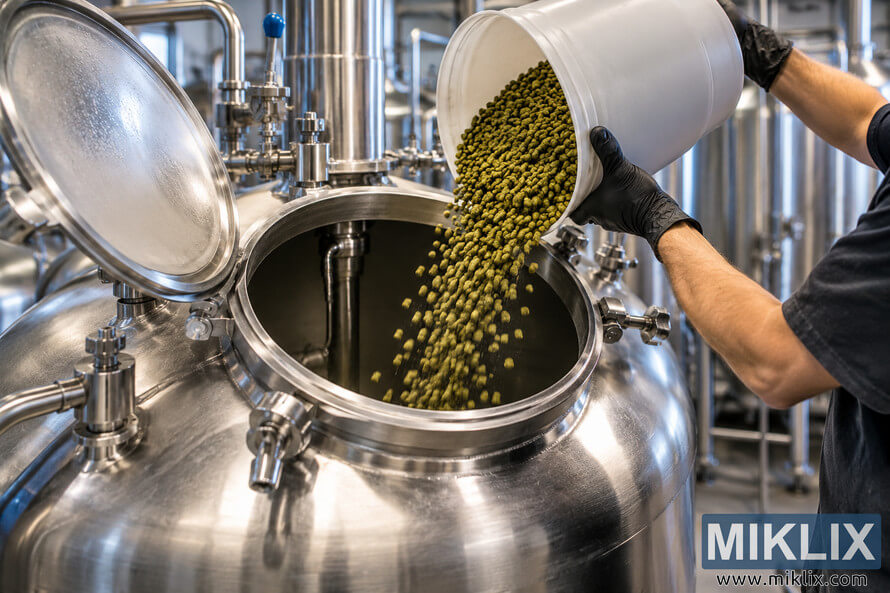
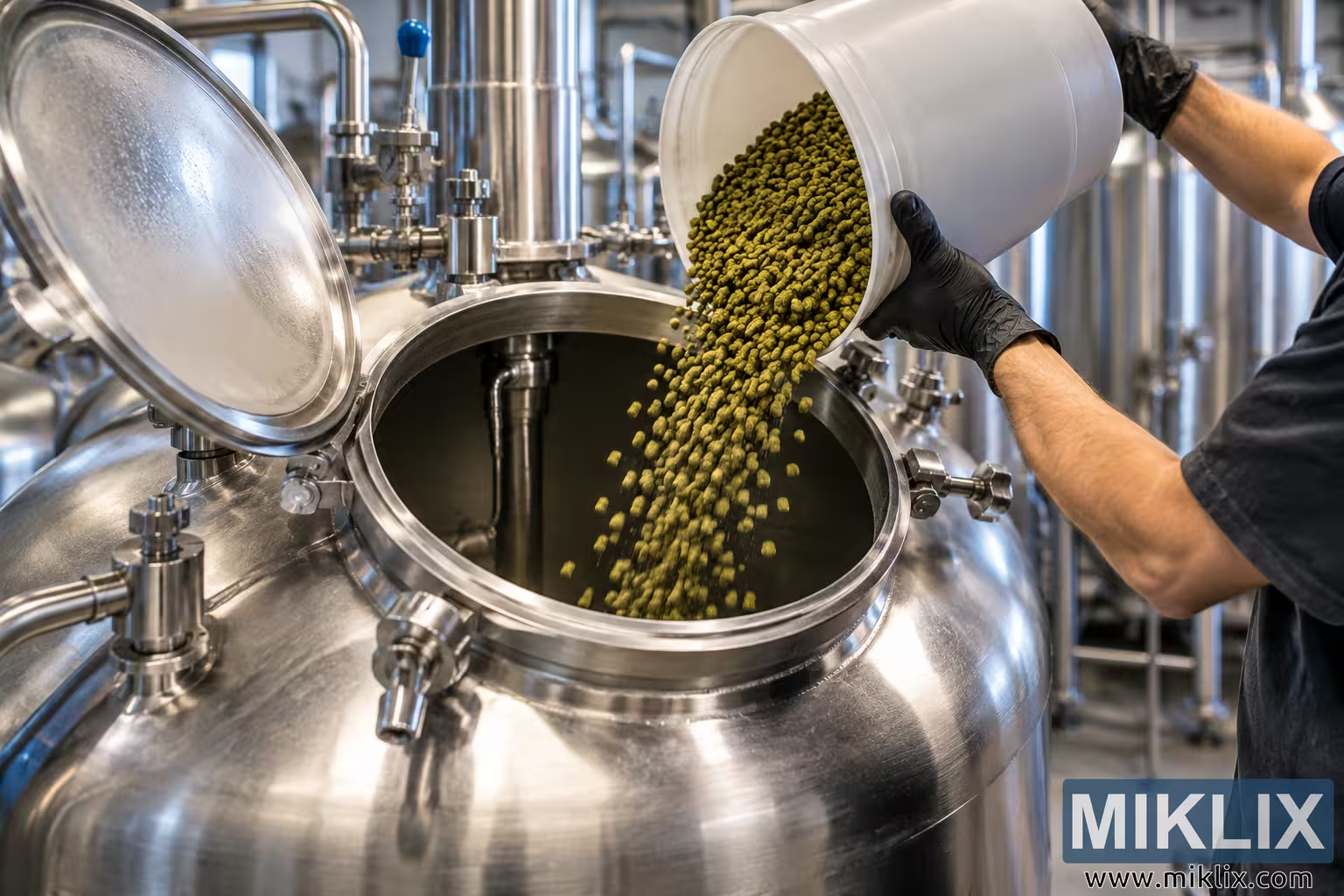
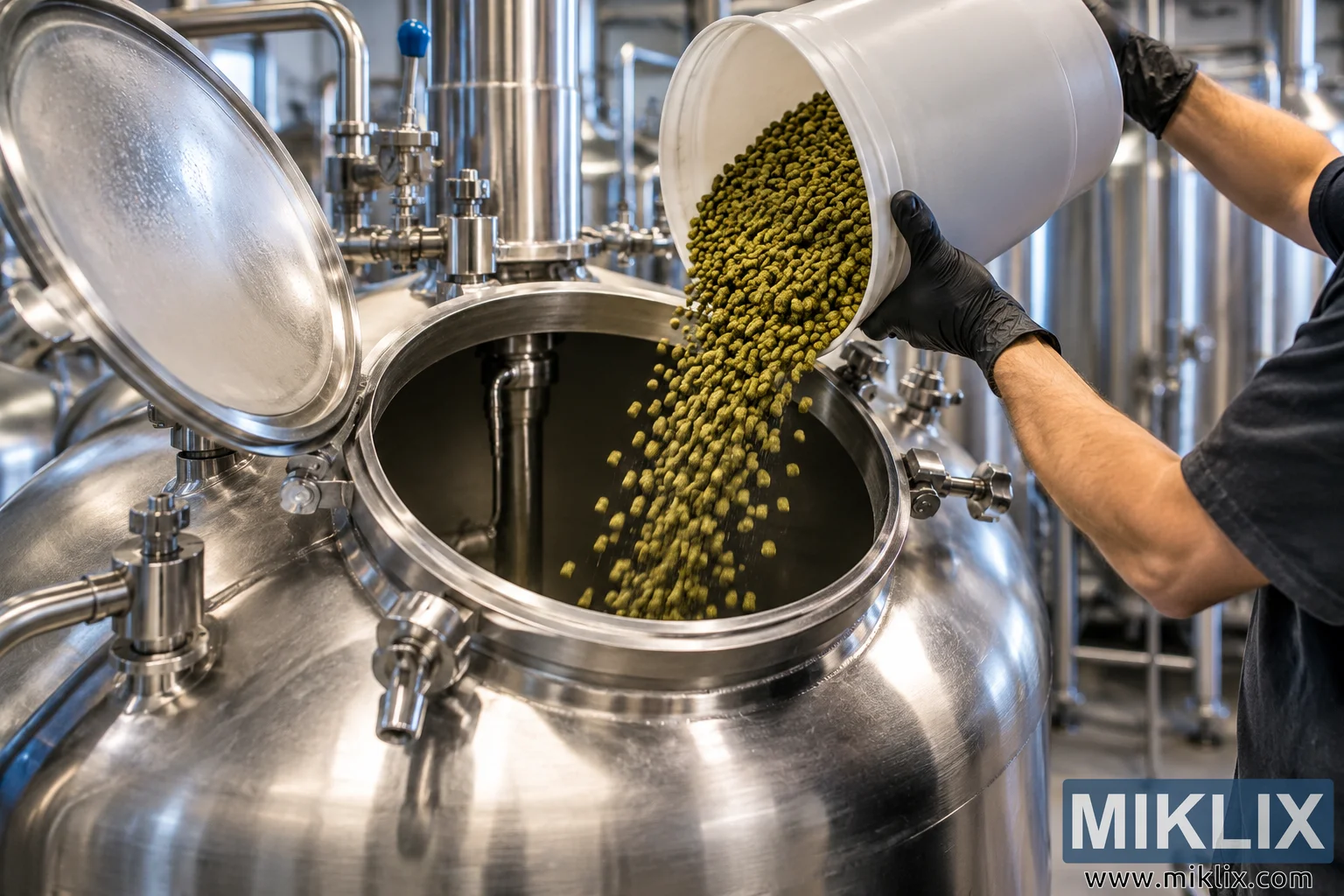
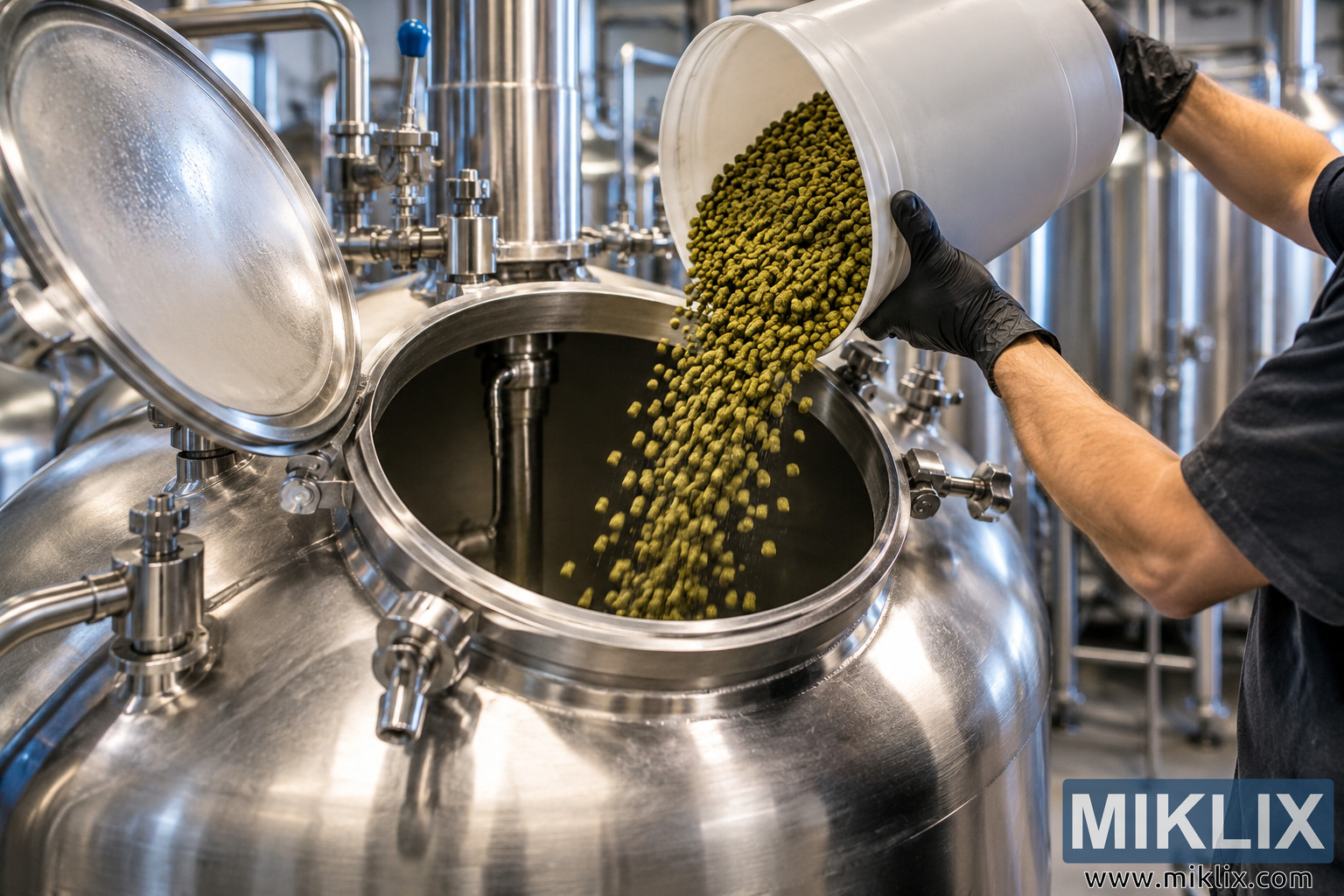
Photorealistic brewery scene showing green hop pellets being poured into an open stainless-steel fermenter during the dry-hopping process, with professional brewing equipment in the background.
Dry Hopping a Stainless-Steel Brewery Fermenter with Hop Pellets
الإصدارات المتوفرة من هذه الصورة
ملفات الصور المتاحة للتحميل أدناه أقل ضغطاً وأعلى دقة - ونتيجة لذلك أعلى جودة - من الصور المضمنة في المقالات والصفحات على هذا الموقع، والتي تم تحسينها من حيث حجم الملف من أجل تقليل استهلاك النطاق الترددي.
مقاس عادي (1,536 x 1,024)
حجم كبير (3,072 x 2,048)
حجم كبير جداً (4,608 x 3,072)
حجم كبير جداً (6,144 x 4,096)
حجم كبير بشكل كوميدي (1,048,576 x 699,051)
- ما زلت أقوم بالتحميل...؛-)
وصف الصورة
A wide, landscape-oriented photorealistic image captures the process of dry hopping inside a modern commercial brewery. The central subject is a large stainless-steel fermentation vessel with a broad circular opening at the top. Its polished metal surface dominates the foreground, reflecting the bright, cool-toned ambient light of the production space and creating a realistic mixture of highlights, subtle distortions, and softly mirrored shapes from the surrounding equipment. The fermenter's upper hatch is fully open and positioned toward the left side of the composition. The substantial circular lid is made from the same stainless steel as the tank and shows fine surface texture, condensation-like markings, and natural reflections that emphasize the sanitary industrial environment. Around the opening are heavy-duty clamps, fittings, valves, welded connections, and sections of stainless-steel pipework, giving the vessel the functional appearance expected of professional brewing equipment. The dark interior of the fermenter is visible through the open hatch, providing strong visual contrast with the bright metallic exterior. Internal pipework can also be seen descending into the vessel, adding depth and reinforcing the impression that this is an active piece of brewery production equipment rather than a decorative tank. On the right side of the image, a brewery worker is shown from approximately the shoulders downward, with the person's face remaining outside the frame. The worker wears a dark short-sleeved shirt and black protective gloves. Both hands securely hold a large, plain white plastic container that is being tipped toward the open fermenter. The container has no visible branding, logos, labels, product names, or identifying marks. A substantial quantity of green hop pellets pours from the bucket in a continuous stream. The pellets are the most visually distinctive non-metallic element in the scene. They have an earthy olive-green to yellow-green color and appear as numerous small, compact cylindrical pieces with slightly rough, compressed surfaces. Individual pellets can be distinguished clearly near the mouth of the container, while those falling toward the fermenter form a dynamic cascade. Some pellets are separated from the main stream and appear suspended in midair, creating a convincing sense of movement and capturing the precise moment when hops are being introduced into the vessel. The stream travels diagonally downward from the upper-right portion of the image toward the central opening of the fermenter. This diagonal movement guides the viewer's eye directly from the worker and container to the interior of the tank and makes the dry-hopping action immediately understandable. The green color of the hop pellets stands out naturally against the neutral palette of silver stainless steel, white plastic, black gloves, and dark clothing. The image therefore communicates the brewing ingredient and process without relying on written labels or recognizable commercial packaging. In the background, additional stainless-steel brewery tanks, vertical cylindrical vessels, pipes, connectors, and structural components fill the production area. These background elements are rendered with progressively softer focus, creating realistic depth of field while keeping attention on the open fermenter and falling hops. Vertical metallic forms repeat throughout the background and suggest a larger brewery installation extending beyond the frame. Small blue details on pieces of equipment provide occasional accents, but they do not carry any visible branding. The overall setting is exceptionally clean, orderly, and professional, with smooth industrial surfaces and sanitary brewing hardware throughout. Lighting appears to come from bright overhead and environmental sources within the brewery. It produces crisp highlights along the curved fermenter, hatch, valves, and pipework while retaining enough shadow to reveal the three-dimensional shapes of the equipment. The inside of the fermenter remains comparatively dark, making the falling hop pellets particularly easy to distinguish as they cross the rim and disappear into the vessel. The worker's arms are naturally illuminated, with realistic skin texture and subtle shadows around the gloves and sleeves. The composition is tightly framed around the brewing action rather than presenting a distant overview of the facility. The large fermenter occupies most of the lower and left portions of the frame, while the worker and tilted bucket occupy the upper-right and right edges. This arrangement creates a balanced industrial composition and conveys the physical scale of the fermentation vessel. The perspective places the viewer close to the tank, almost at the position of another brewery worker observing the addition of hops. The image depicts dry hopping: the addition of hop material to beer during or after fermentation to enhance hop aroma and flavor. Visually, this process is represented directly and clearly by the green pellets being poured into the open stainless-steel fermenter. The scene does not include bottles, cans, finished beer packaging, advertisements, logos, trademarks, or recognizable commercial brands. The emphasis is entirely on the brewing process, the raw hop pellets, the fermentation equipment, and the careful manual action of adding the ingredient. Fine details such as polished welds, clamps, threaded fittings, valve handles, reflections, subtle scratches in the stainless steel, the texture of the protective gloves, and the irregular arrangement of the hop pellets contribute to the photograph's realistic appearance. Overall, the image presents an authentic-looking, high-detail brewery production scene centered on dry hopping. It combines the clean precision of stainless-steel fermentation equipment with the organic green texture of compressed hop pellets and the human element of a brewery worker carrying out the addition. The result is a clear and visually engaging representation of hop pellets being introduced into a fermenter during the brewing process, suitable for illustrating brewing, fermentation, dry hopping, hop ingredients, craft beverage production, or professional brewery operations without displaying any actual brand identity.
الصورة مرتبطة بـ: Hops in Beer Brewing: Cekin