
صورة: Vacuum-Sealed Columbus Hops Stored in a Freezer
نُشرت:
آخر تحديث: ٢٠ سبتمبر ٢٠٢٦ م في ٩:٥٧:٢٢ ص UTC
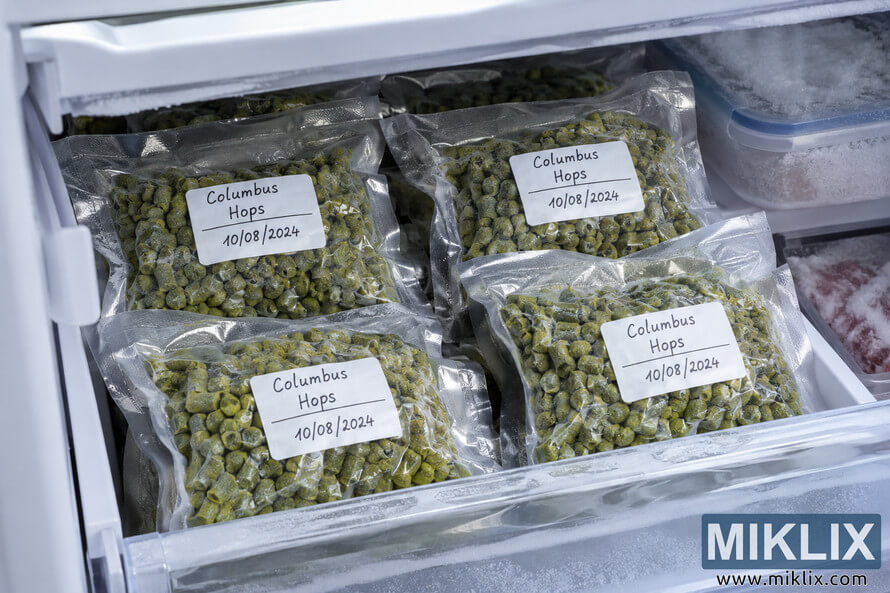
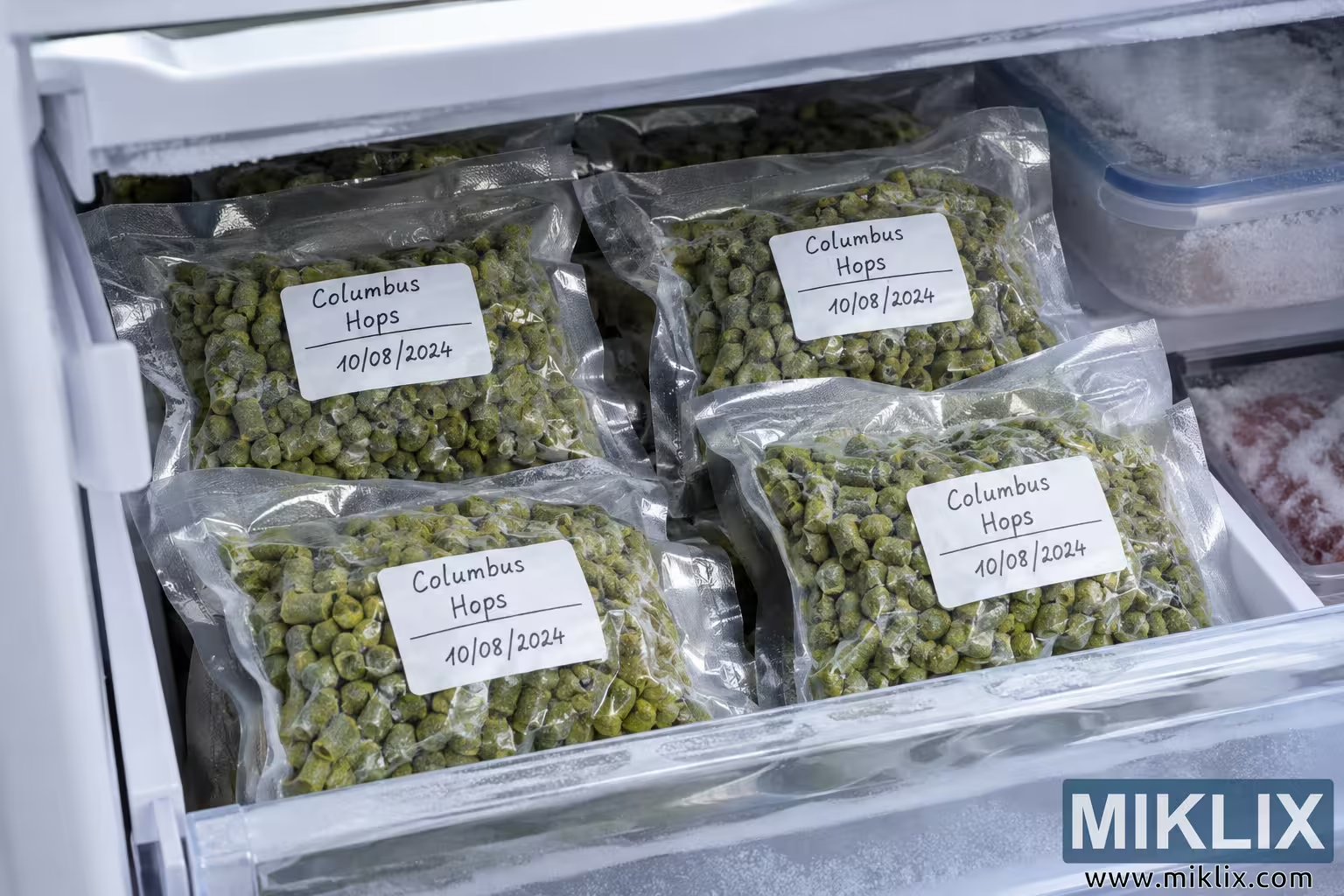
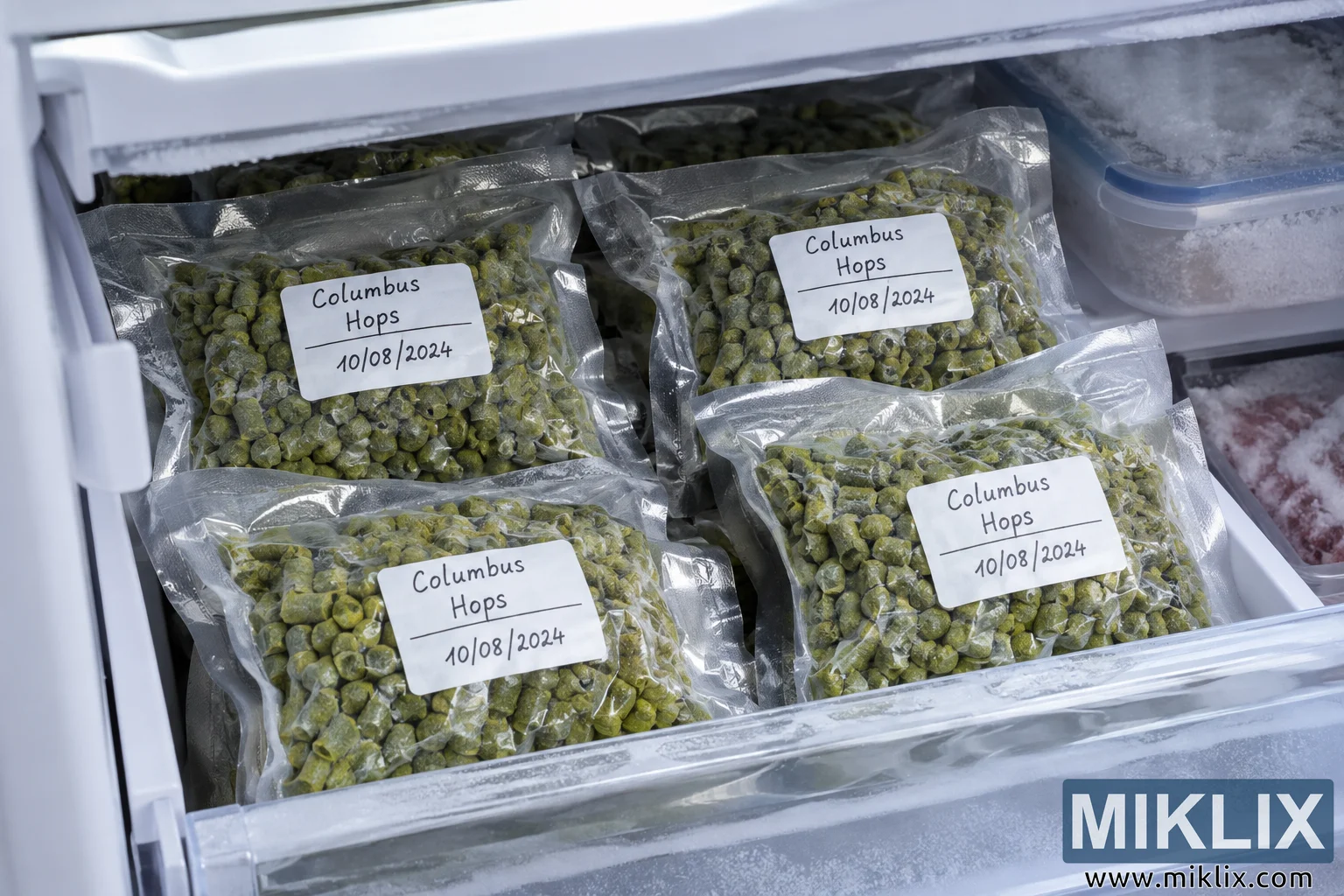
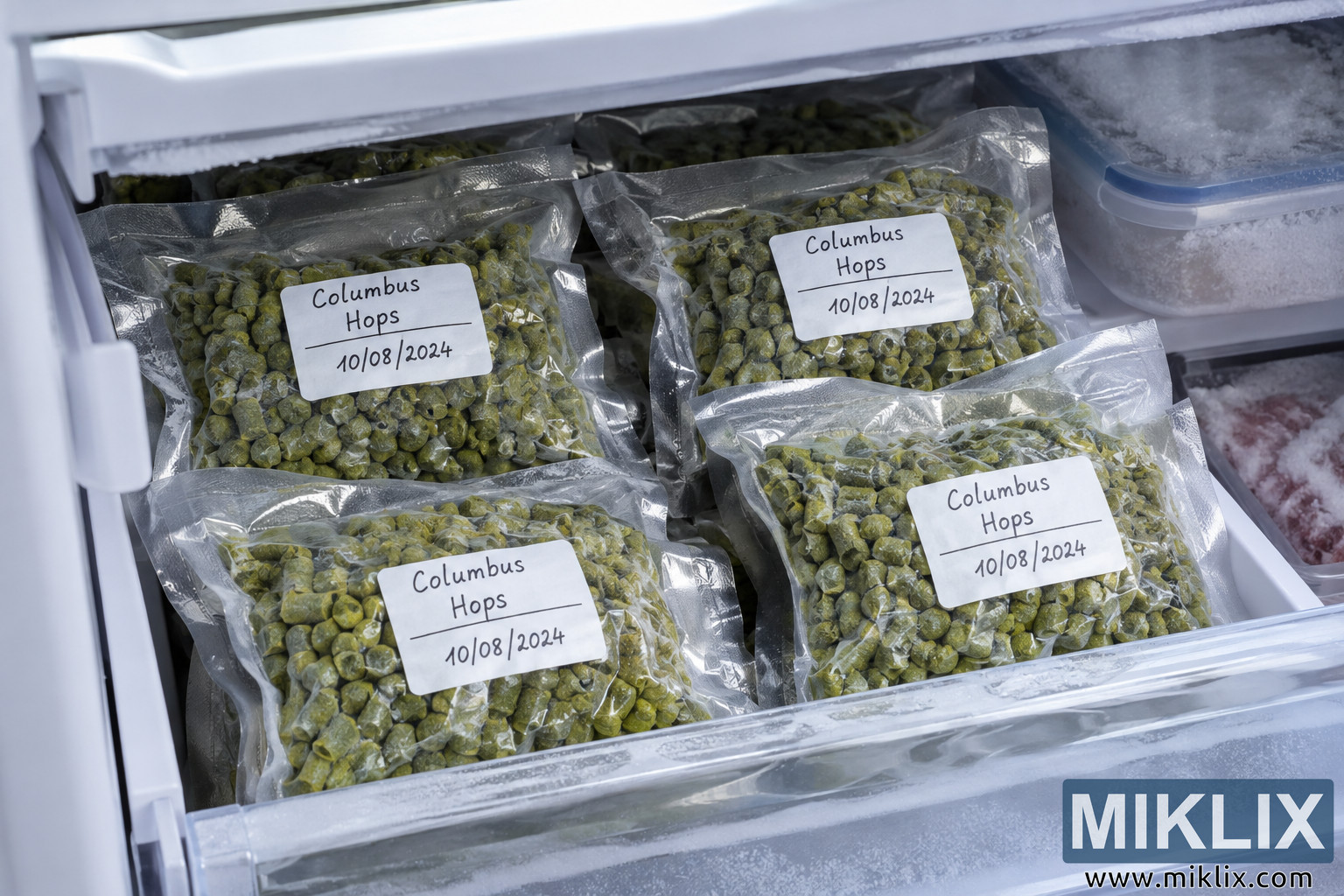
Properly stored Columbus hop pellets in labeled, vacuum-sealed bags inside a freezer, illustrating organized cold storage for preserving hop freshness.
Vacuum-Sealed Columbus Hops Stored in a Freezer
الإصدارات المتوفرة من هذه الصورة
ملفات الصور المتاحة للتحميل أدناه أقل ضغطاً وأعلى دقة - ونتيجة لذلك أعلى جودة - من الصور المضمنة في المقالات والصفحات على هذا الموقع، والتي تم تحسينها من حيث حجم الملف من أجل تقليل استهلاك النطاق الترددي.
مقاس عادي (1,536 x 1,024)
حجم كبير (3,072 x 2,048)
حجم كبير جداً (4,608 x 3,072)
حجم كبير جداً (6,144 x 4,096)
حجم كبير بشكل كوميدي (1,048,576 x 699,051)
- ما زلت أقوم بالتحميل...؛-)
وصف الصورة
A high-resolution landscape photograph shows the open interior of a clean household freezer drawer containing several neatly arranged vacuum-sealed bags of Columbus hops. The scene is photographed from slightly above and from the front, providing a clear view into the freezer compartment and making the stored hops the unmistakable focal point. Four large vacuum-sealed bags dominate the foreground and middle of the image, while additional bags can be seen partially obscured toward the rear. The careful arrangement communicates proper long-term storage of hops in a cold, protected environment.
Each prominent bag is made from transparent, slightly reflective vacuum-sealing material. The plastic has been pulled tightly around the contents, minimizing visible air pockets and giving the packages a compact, compressed appearance. Inside the bags are numerous olive-green hop pellets. The pellets vary subtly in tone from muted yellow-green to deeper moss and olive shades, creating a natural texture across the contents of each package. Their small cylindrical and irregular forms are clearly visible through the transparent material. Fine frost and cold condensation appear on portions of the bags and pellets, reinforcing the impression that the hops have been kept thoroughly frozen.
White rectangular labels are attached to the fronts of the four most visible packages. Each label contains simple handwritten-style dark lettering identifying the contents as “Columbus Hops,” with a horizontal dividing line beneath the name and the date “10/08/2024” written below it. The labels are plain and functional rather than commercial, with no logos, trademarks, branded packaging, or promotional graphics visible anywhere in the scene. This gives the image the appearance of carefully organized homebrewing or small-scale brewing supplies that have been portioned, labeled, vacuum sealed, and frozen for preservation.
The bag at the upper left sits at a slight angle and is densely packed with green hop pellets. Its white label is positioned prominently near the center of the package. To its right is another large bag positioned somewhat farther back in the drawer. Its label is similarly clear and readable. Two additional packages fill much of the lower half of the composition. The lower-left bag is angled toward the center and appears particularly full, with the transparent plastic conforming closely to the pellets. The lower-right bag is broad and prominent, with frost visible across parts of its surface. Together, these four packages create an orderly but natural arrangement rather than a perfectly symmetrical display.
Behind the main group, more vacuum-sealed hop packages are partially visible beneath the upper edge of the freezer compartment. Their darker green contents recede into the shadowed rear area, suggesting that the freezer contains a larger stored supply than the four labeled bags immediately visible. The depth created by these partially concealed packages helps the image feel like a genuine freezer-storage scene rather than an isolated studio arrangement.
The freezer itself is predominantly white and pale gray, with translucent plastic drawer components and a cool, slightly bluish cast from the interior lighting. Frost has accumulated along portions of the upper interior edge, drawer surfaces, and surrounding freezer walls. This visible frost provides a strong visual cue of sustained low temperature. At the right side of the frame, a translucent food-storage container with a blue-edged lid is tucked beside the hop packages. Other frozen contents are faintly visible farther to the right and below, but they remain secondary and partially obscured so that attention stays on the hops.
The transparent front lip of the freezer drawer crosses the bottom portion of the photograph. It has a lightly frosted surface and catches reflections from the cool interior light. The drawer edge provides a visual boundary for the composition while emphasizing that the packages are being stored inside an actual freezer rather than merely placed on a cold-looking surface. The upper portion of the image includes the freezer shelf or drawer housing, where a band of frost and ice crystals runs along the edge. These environmental details make the cold-storage setting immediately recognizable.
Lighting is soft, cool, and evenly distributed, resembling the illumination of a modern freezer interior. Highlights reflect from the vacuum-sealed plastic, revealing creases, wrinkles, sealed edges, and the tight fit of the packaging around the hop pellets. Shadows are relatively gentle, but the rear of the compartment is darker than the foreground, producing natural depth. The combination of reflective packaging, granular green hop pellets, white freezer surfaces, and scattered frost gives the photograph a crisp, practical, documentary quality.
The image visually illustrates an appropriate method for storing hops for extended freshness: the hops are portioned into airtight vacuum-sealed bags, clearly labeled for identification and dating, and kept frozen. The tightly sealed packages suggest reduced exposure to oxygen, while the freezer environment conveys protection through low-temperature storage. The scene is organized enough to communicate careful storage practices without appearing artificially pristine. No people, brewing equipment, bottles, commercial packaging, company names, or actual brand identities are present. The only identifying wording relates directly to the hop variety and storage date.
Overall, the photograph presents a realistic close-up of properly stored Columbus hop pellets in a domestic or small-production freezer. The landscape framing allows several packages and enough of the freezer environment to be visible simultaneously, giving useful context while maintaining a strong focus on the vacuum-sealed hops. The repeated handwritten labels, compact vacuum packaging, frost-covered freezer surfaces, and distinctly green pellets collectively communicate organization, freshness preservation, and responsible ingredient storage.
الصورة مرتبطة بـ: Hops in Beer Brewing: Columbus