
صورة: Hydroponic Watercress Growing System with Net Pots
نُشرت:
آخر تحديث: ١١ مايو ٢٠٢٦ م في ٨:٠٤:٣٦ م UTC
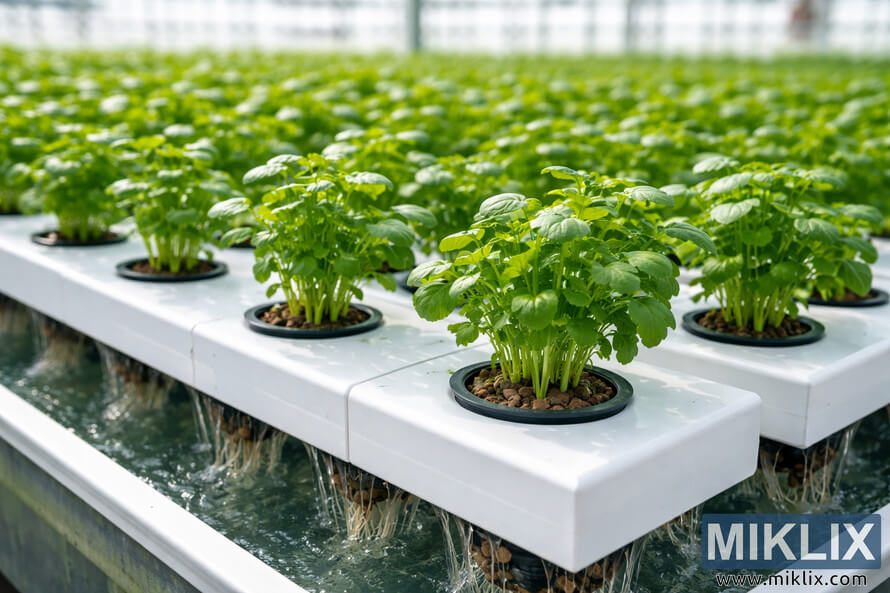
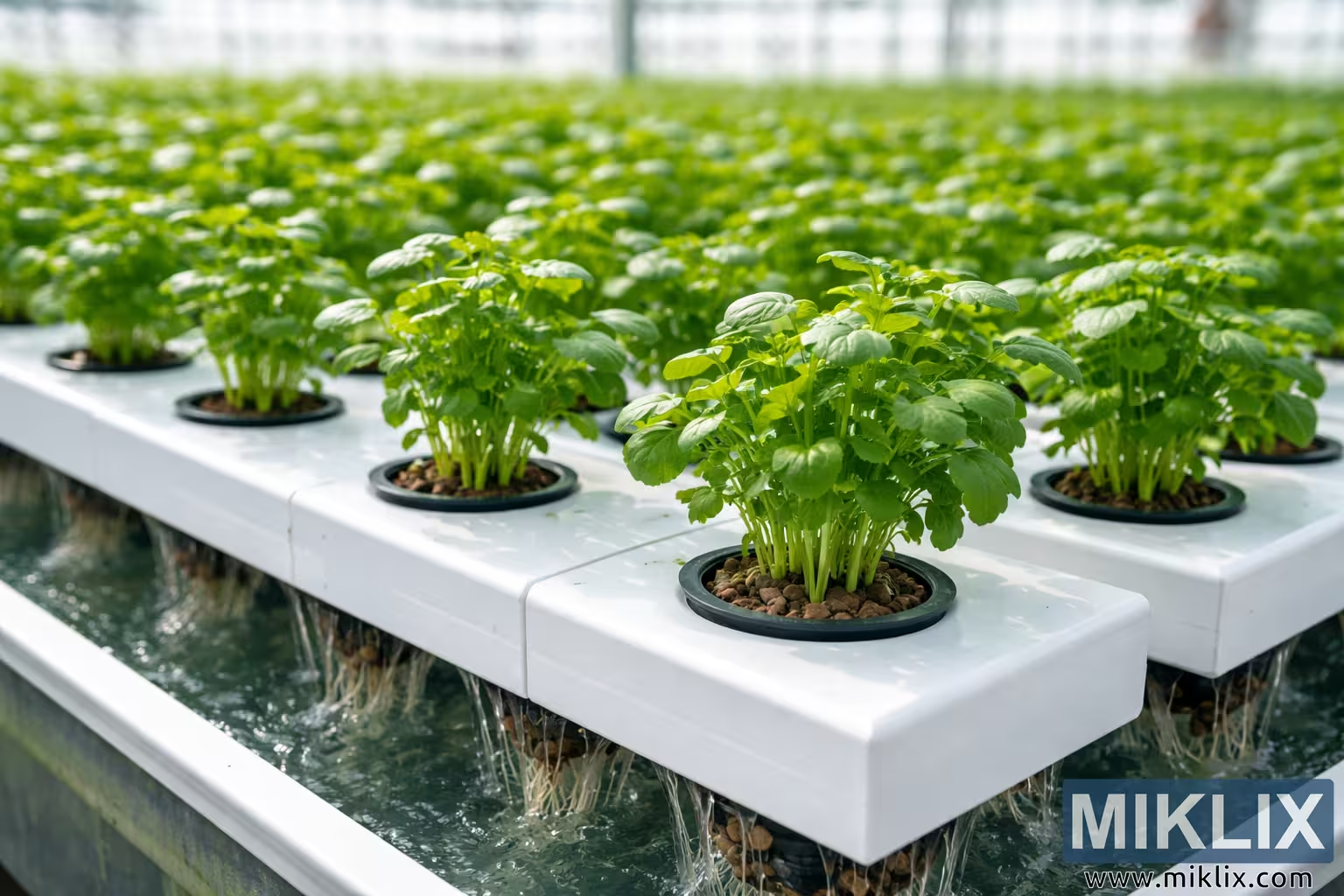
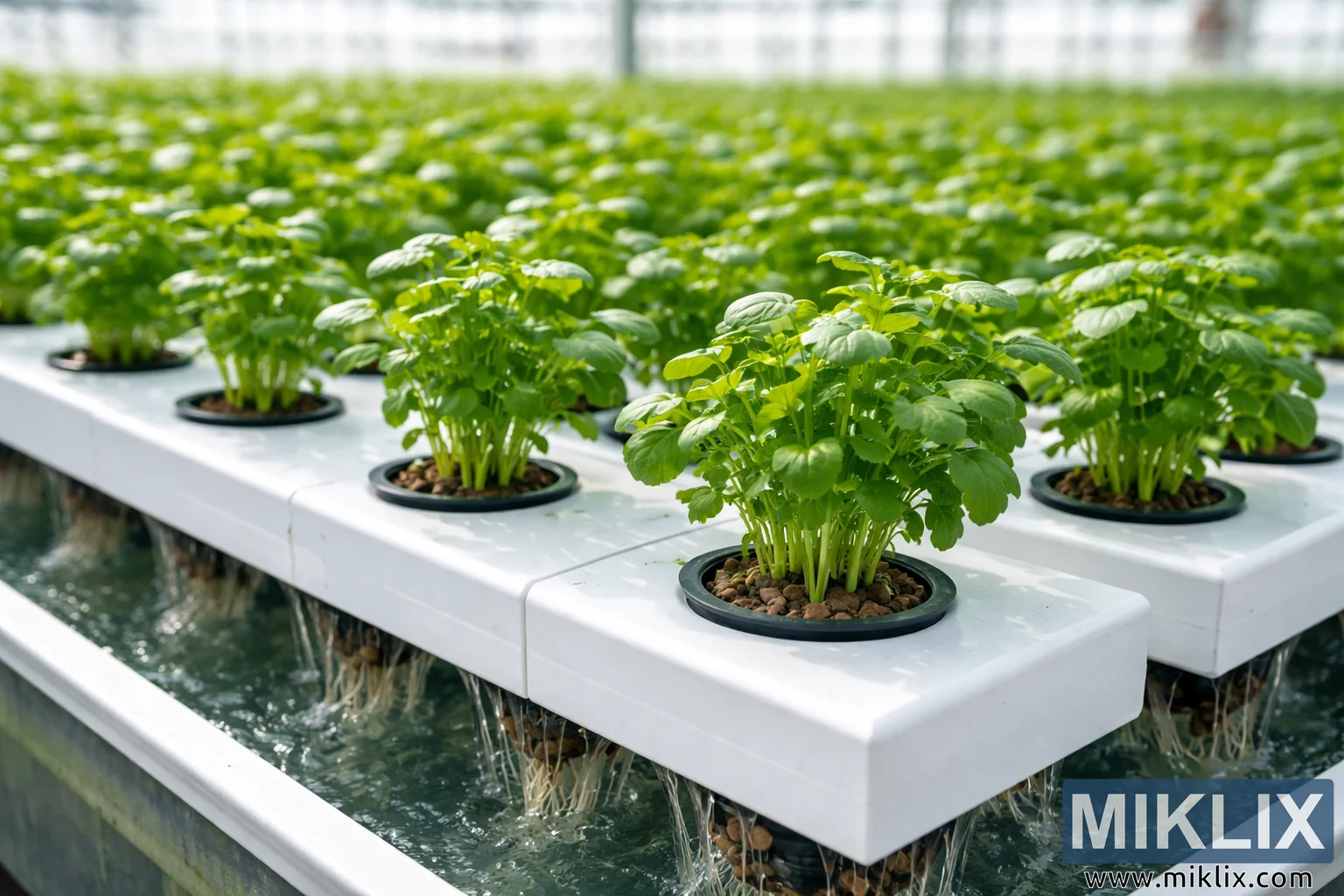
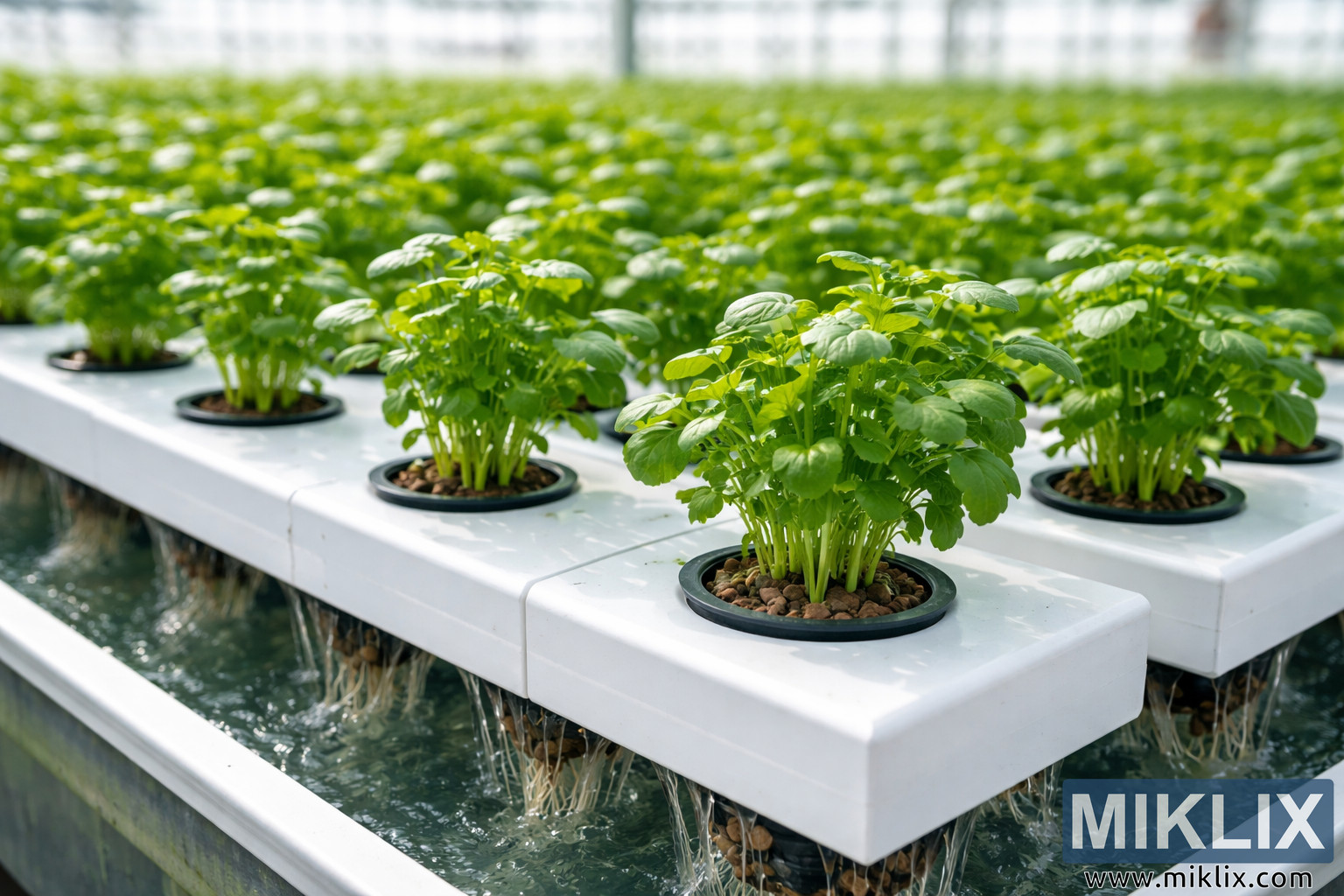
High-resolution image of a hydroponic watercress cultivation system featuring net pots, clay pebbles, and nutrient-rich flowing water inside a bright greenhouse.
Hydroponic Watercress Growing System with Net Pots
الإصدارات المتوفرة من هذه الصورة
ملفات الصور المتاحة للتحميل أدناه أقل ضغطاً وأعلى دقة - ونتيجة لذلك أعلى جودة - من الصور المضمنة في المقالات والصفحات على هذا الموقع، والتي تم تحسينها من حيث حجم الملف من أجل تقليل استهلاك النطاق الترددي.
مقاس عادي (1,536 x 1,024)
حجم كبير (3,072 x 2,048)
حجم كبير جداً (4,608 x 3,072)
حجم كبير جداً (6,144 x 4,096)
حجم كبير بشكل كوميدي (1,048,576 x 699,051)
- ما زلت أقوم بالتحميل...؛-)
وصف الصورة
The image shows a modern hydroponic cultivation system used for growing watercress in a bright greenhouse environment. In the foreground, several healthy clusters of vibrant green watercress plants grow from black circular net pots that are inserted into a clean, white hydroponic channel. Each net pot is filled with small brown clay pebbles that support the plant stems while allowing water and nutrients to flow freely around the roots. The watercress leaves appear lush and full, with rounded leaflets and delicate stems forming dense, fresh bunches. The plants are arranged in evenly spaced rows, giving the system a highly organized and efficient appearance.
Beneath the white channels, clear nutrient solution flows through a shallow reservoir. The roots of the plants extend downward through the net pots and hang into the moving water, where they absorb oxygen, nutrients, and moisture necessary for rapid growth. The water surface shows gentle movement, suggesting active circulation typical of hydroponic systems designed to maintain consistent nutrient distribution and oxygenation. Some roots can be seen trailing through the water, appearing pale and fibrous, demonstrating healthy development in the hydroponic environment.
The hydroponic channels themselves are smooth and rectangular, likely made of durable plastic or food-grade material designed for controlled agricultural production. Each channel contains multiple evenly spaced openings that hold the net pots securely. The clean white surfaces reflect the bright natural light coming from the greenhouse structure above, enhancing the vivid green color of the plants and creating a fresh, hygienic atmosphere associated with modern controlled-environment agriculture.
In the background, rows of additional watercress plants stretch across the greenhouse, becoming softly blurred due to shallow depth of field. This perspective emphasizes the plants in the foreground while still suggesting a larger commercial or semi-commercial growing operation. The greenhouse framework and translucent panels allow abundant sunlight to illuminate the crop, contributing to healthy photosynthesis and rapid plant development.
Overall, the scene illustrates an efficient hydroponic growing setup designed for leafy greens such as watercress. The use of net pots, inert growing media, circulating nutrient water, and structured channels highlights the principles of hydroponic farming: precise nutrient delivery, efficient water use, and high-density plant production. The image conveys a sense of freshness, sustainability, and modern agricultural technology, showing how watercress can be cultivated cleanly and productively without traditional soil.
الصورة مرتبطة بـ: How to Grow Watercress at Home: A Complete Beginner's Guide