
صورة: Calendar Guide to Optimal Okra Planting Time
نُشرت:
آخر تحديث: ١٧ مارس ٢٠٢٦ م في ٩:٣٧:٣٥ م UTC
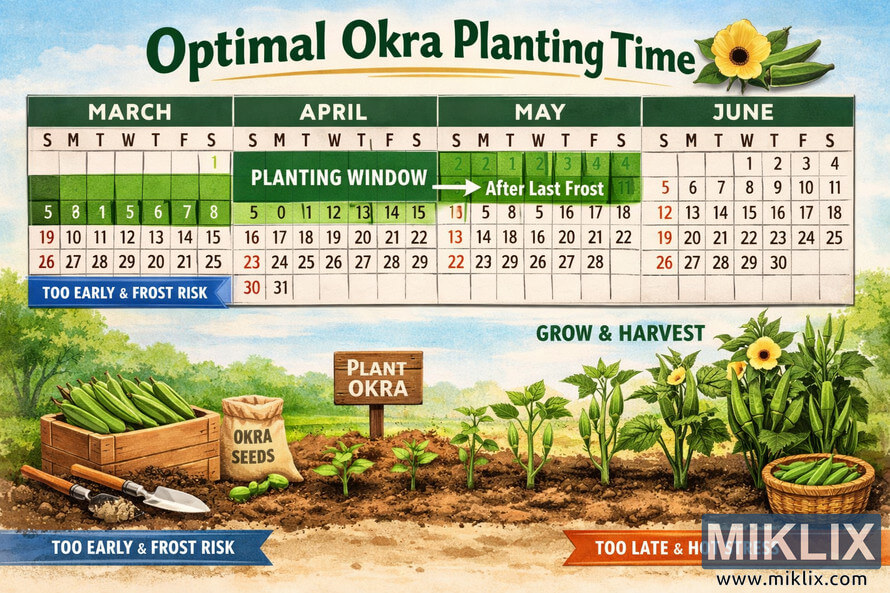
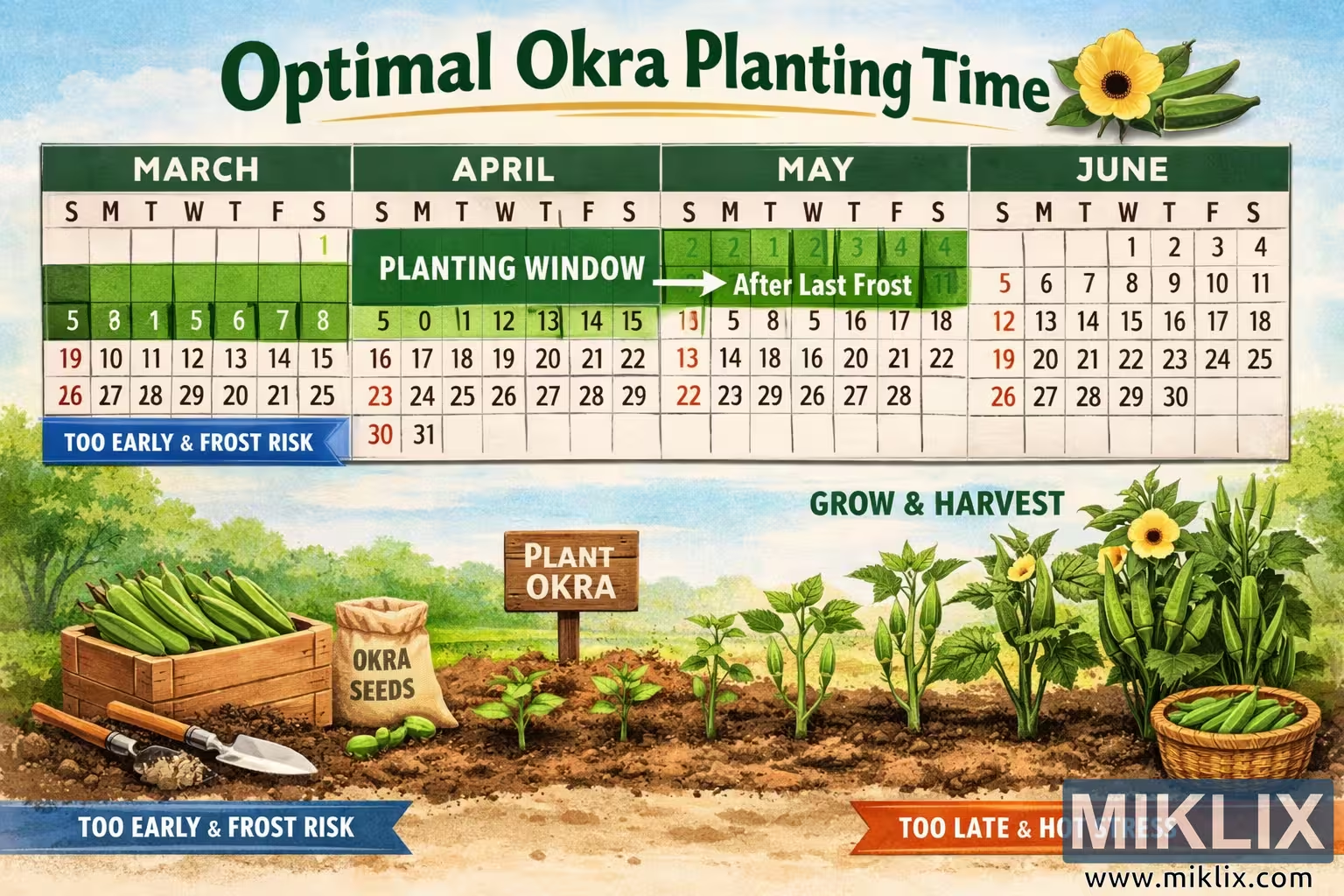
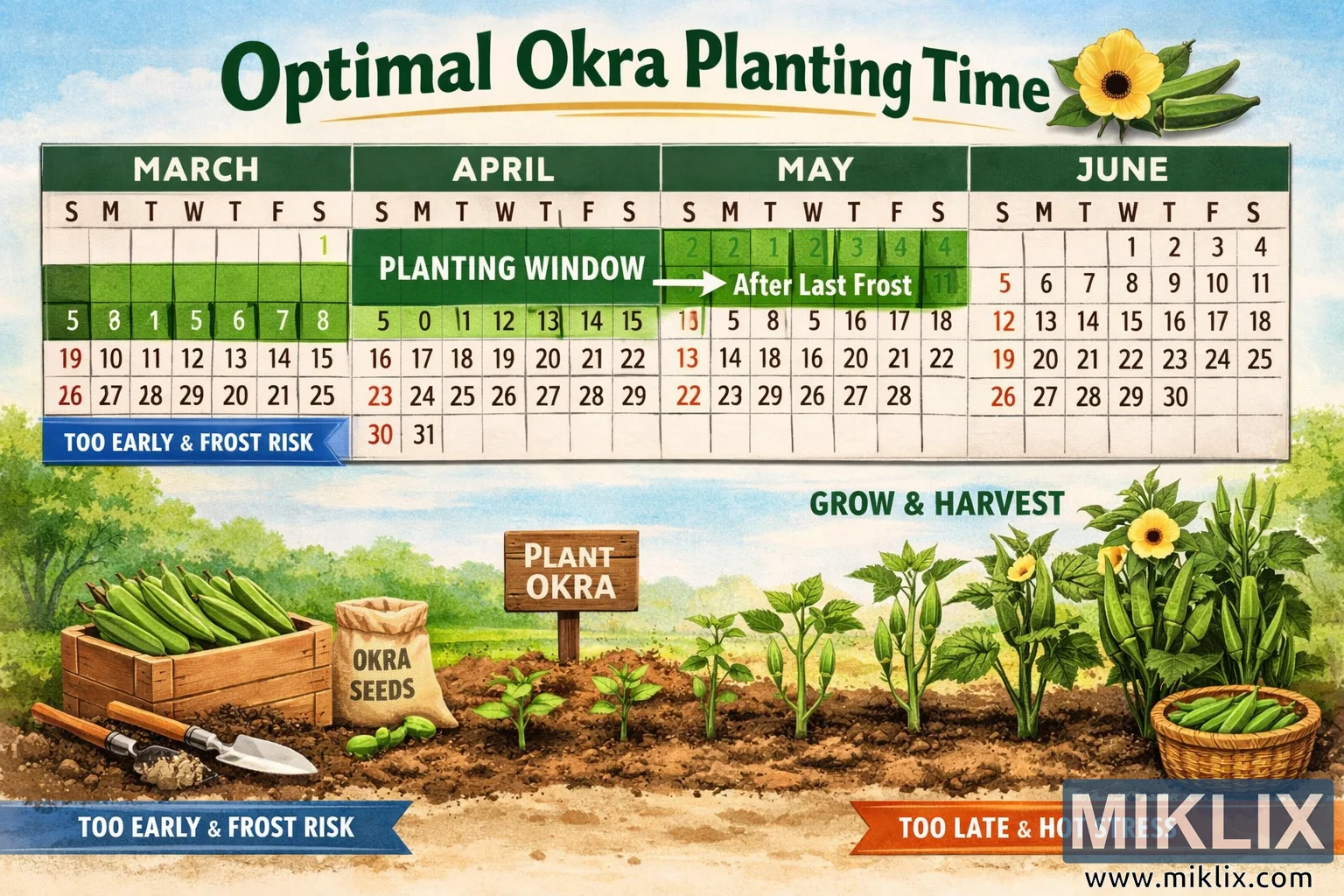
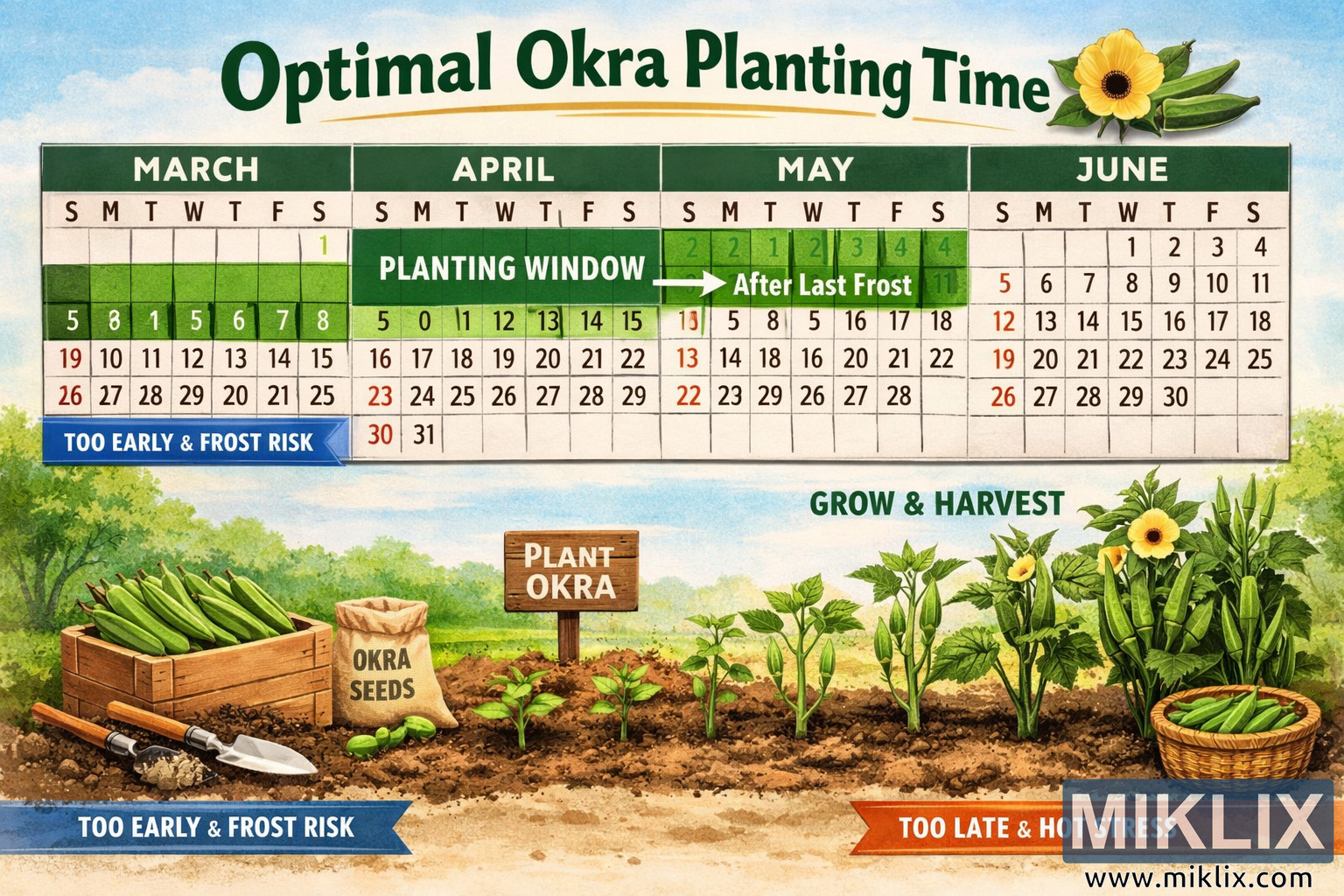
Infographic calendar highlighting the optimal okra planting window from late March to early May, plus illustrations of planting, growth stages, and harvest.
Calendar Guide to Optimal Okra Planting Time
الإصدارات المتوفرة من هذه الصورة
ملفات الصور المتاحة للتحميل أدناه أقل ضغطاً وأعلى دقة - ونتيجة لذلك أعلى جودة - من الصور المضمنة في المقالات والصفحات على هذا الموقع، والتي تم تحسينها من حيث حجم الملف من أجل تقليل استهلاك النطاق الترددي.
مقاس عادي (1,536 x 1,024)
حجم كبير (3,072 x 2,048)
حجم كبير جداً (4,608 x 3,072)
حجم كبير جداً (6,144 x 4,096)
حجم كبير بشكل كوميدي (1,048,576 x 699,051)
- ما زلت أقوم بالتحميل...؛-)
وصف الصورة
This landscape infographic presents a clear visual guide to the optimal planting time for okra using a calendar-style layout combined with garden illustrations. The design is divided into two main sections: a calendar timeline at the top and a gardening growth illustration along the bottom.
At the top of the image, a large green heading reads "Optimal Okra Planting Time." Decorative illustrations of okra pods and a yellow okra flower appear near the title, reinforcing the gardening theme. Beneath the title, a wide calendar spans four months—March, April, May, and June—each labeled with a bold green header and organized into weekly grids similar to a traditional wall calendar.
Across the calendar, a green highlighted band marks the recommended "Planting Window," stretching from late March through early May. An arrow labeled "After Last Frost" points toward the early May portion of the calendar, emphasizing that okra should be planted once frost danger has passed. Earlier dates in March are shown with cooler tones and warnings indicating "Too Early & Frost Risk," suggesting that planting too soon can damage the crop. The visual contrast between shaded and unshaded dates helps viewers quickly identify the safe planting period.
The bottom portion of the infographic transitions from the calendar to a colorful garden scene that illustrates the stages of growing okra. On the left side, gardening tools and a wooden crate filled with fresh green okra pods sit beside a bag labeled "Okra Seeds." A small wooden sign planted in the soil reads "Plant Okra," indicating the starting stage of the growing process.
Moving from left to right across the garden bed, a sequence of plants shows the development of okra from small seedlings to mature plants. The plants gradually grow taller and fuller, eventually displaying yellow okra flowers and fully formed pods ready for harvest. At the far right, a woven basket filled with freshly picked okra represents the harvest stage.
Color-coded banners at the bottom reinforce planting guidance. A blue banner on the left warns of "Too Early & Frost Risk," while a warm orange banner on the right cautions against "Too Late & Hot Stress," indicating that planting too late in the season can expose plants to excessive heat. The background features soft blue sky and green foliage, creating a bright, welcoming garden atmosphere.
Overall, the infographic combines calendar planning with visual storytelling to help gardeners understand when to plant okra and what to expect during the crop's growth cycle. The clear timeline, color cues, and illustrated stages make the information accessible for beginner and experienced gardeners alike.
الصورة مرتبطة بـ: The Complete Guide to Growing Okra in Your Home Garden