
صورة: Rustic Wheatgrass Powder with Measuring Spoon and Fresh Wheatgrass
نُشرت:
آخر تحديث: ١٦ يونيو ٢٠٢٦ م في ٢:٠٧:١٥ م UTC
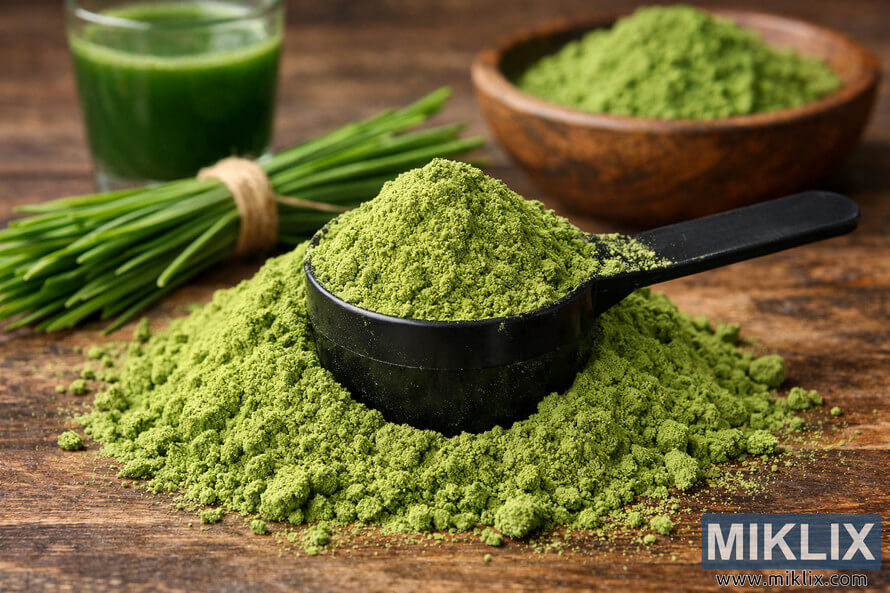
High-resolution landscape photo of wheatgrass powder with a black measuring scoop, fresh wheatgrass, and wheatgrass juice on a rustic wooden surface, conveying a natural, healthy, and organic nutrition theme without any visible brands.
Rustic Wheatgrass Powder with Measuring Spoon and Fresh Wheatgrass
الإصدارات المتوفرة من هذه الصورة
ملفات الصور المتاحة للتحميل أدناه أقل ضغطاً وأعلى دقة - ونتيجة لذلك أعلى جودة - من الصور المضمنة في المقالات والصفحات على هذا الموقع، والتي تم تحسينها من حيث حجم الملف من أجل تقليل استهلاك النطاق الترددي.
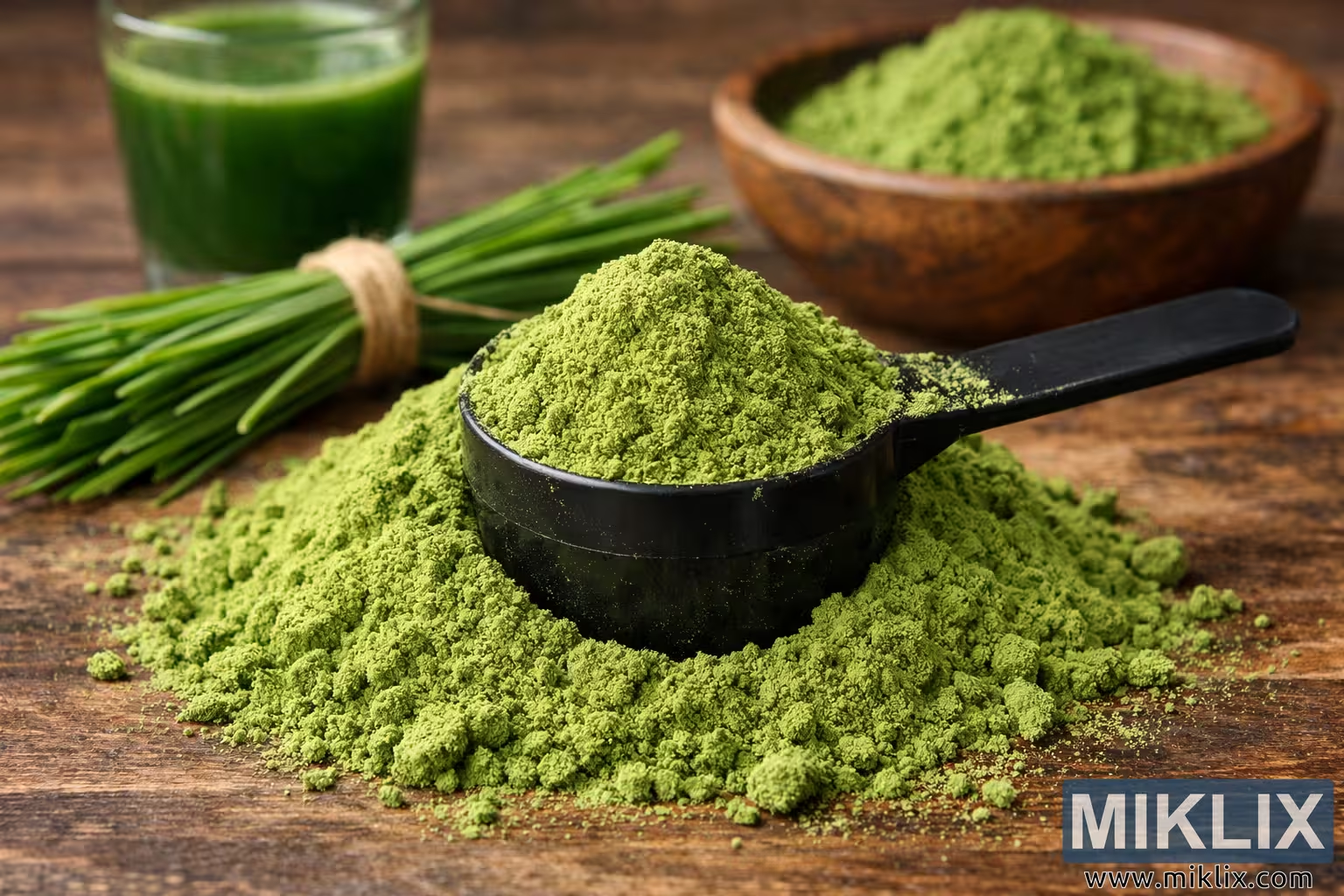
مقاس عادي (1,536 x 1,024)
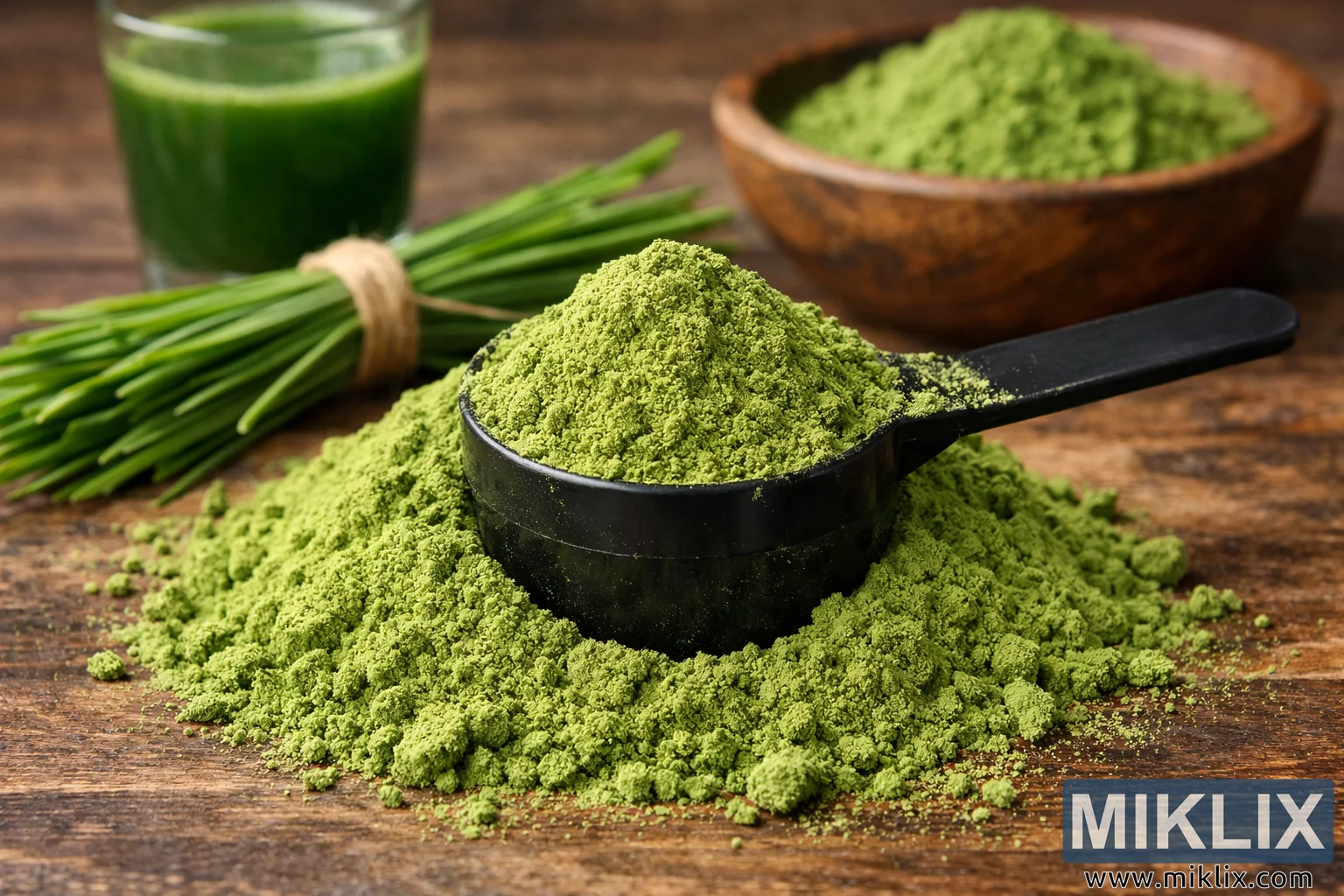
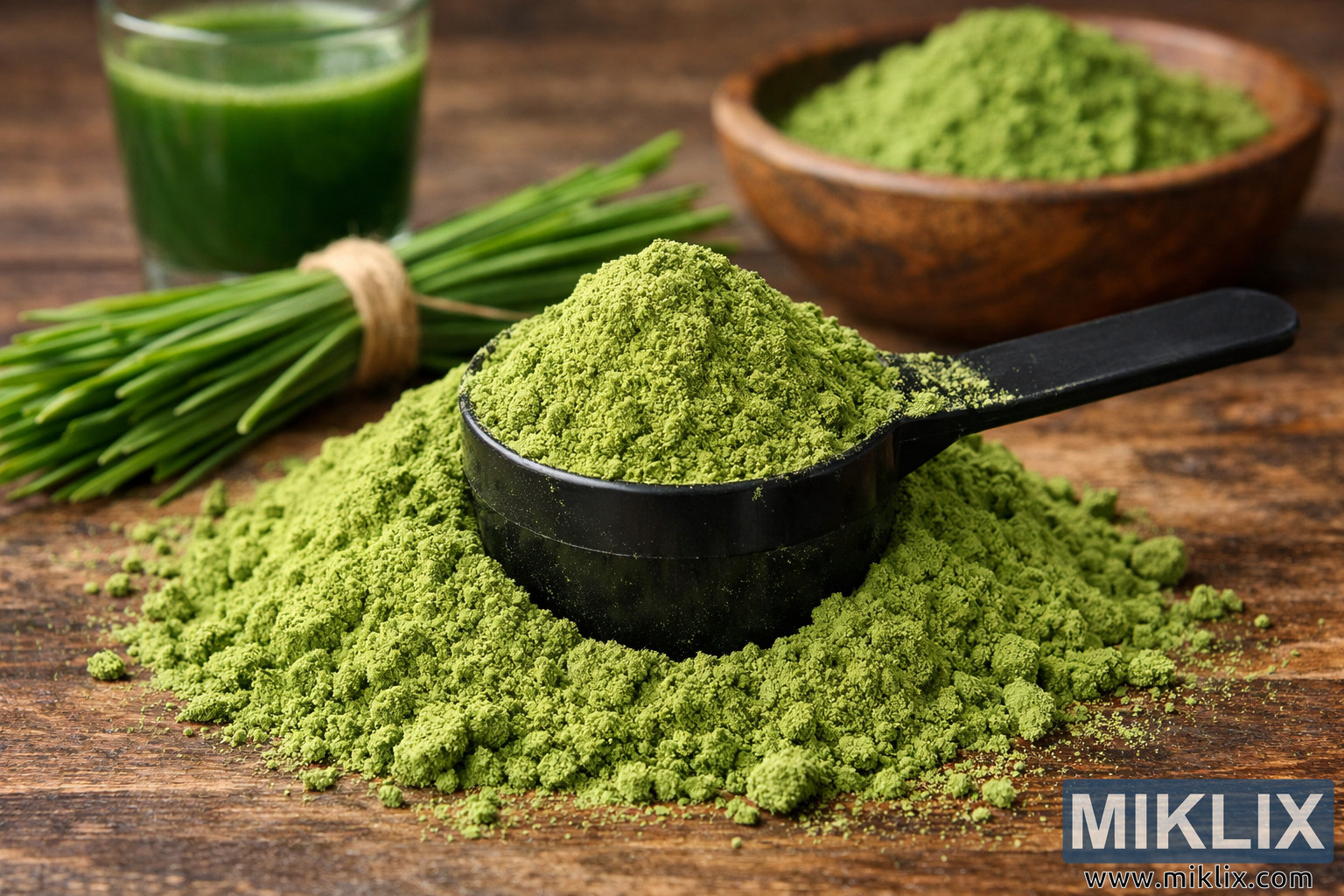
حجم كبير (3,072 x 2,048)
حجم كبير جداً (4,608 x 3,072)
حجم كبير جداً (6,144 x 4,096)
حجم كبير بشكل كوميدي (1,048,576 x 699,051)
- ما زلت أقوم بالتحميل...؛-)
وصف الصورة
A high-resolution, landscape-oriented photograph presents a carefully arranged scene centered around vibrant green wheatgrass powder and a black measuring spoon, all set on a rustic wooden surface. The composition is thoughtfully balanced, drawing the viewer’s eye first to the rich, finely ground wheatgrass powder in the foreground, then gradually leading it toward the supporting elements in the background. The overall mood of the image is natural, wholesome, and earthy, emphasizing themes of health, nutrition, and organic simplicity.
In the center of the frame, there is a generous mound of wheatgrass powder resting directly on the wooden surface. The powder is a vivid, almost luminous green, with a fine, soft texture that suggests it has been carefully milled. The heap is slightly irregular, with gentle slopes and small ridges that catch the light and create subtle shadows. This variation in texture adds depth and realism, making the powder appear tangible and almost touchable. Tiny granules and dust-like particles are visible along the edges of the mound, reinforcing the sense of detail and authenticity.
Partially embedded in this mound of powder is a black plastic measuring scoop, which serves as a strong focal point. The scoop is positioned at a slight angle, with its bowl resting in the powder and its handle extending horizontally toward the right side of the image. The handle is flat and elongated, with a simple, functional design that suggests everyday kitchen use rather than anything ornate or branded. The bowl of the scoop is filled to the brim with wheatgrass powder, and the powder is slightly heaped above the rim, creating a rounded, dome-like top. Some of the powder spills gently over the edge of the scoop, forming small cascades that merge back into the main mound below.
A thin layer of powder clings to the inner and outer surfaces of the scoop, especially near the rim and along the base where it meets the mound. This dusting of powder softens the transition between the scoop and the heap, making it look as though the scoop has just been used to measure or stir the wheatgrass. The handle also shows faint traces of powder, particularly near the bowl, suggesting recent handling and reinforcing the sense of an active, functional scene rather than a purely decorative arrangement.
To the left of the central mound of powder, lying directly on the same wooden surface, is a small bundle of fresh wheatgrass blades. The blades are long, slender, and a deep, healthy green, with a slightly glossy surface that reflects the light. They are gathered together near their base and tied with a simple piece of natural twine, which adds a rustic, handmade touch to the composition. The tips of the blades fan out gently toward the upper left corner of the image, creating a diagonal line that contrasts with the horizontal orientation of the scoop’s handle. This diagonal movement adds visual dynamism and helps guide the viewer’s gaze across the frame.
The fresh wheatgrass provides a visual and conceptual counterpart to the powdered form in the center. While the powder appears dense, matte, and finely textured, the fresh blades are smooth, flexible, and slightly reflective. Together, they tell a small story about the transformation of raw plant material into a concentrated, powdered supplement. The presence of both forms in the same frame subtly communicates ideas of natural origin, minimal processing, and the continuity between plant and product.
In the background, slightly out of focus to create a shallow depth of field, there are two additional elements that further enrich the narrative. On the left side of the background, behind the fresh wheatgrass and slightly above the central mound, stands a small glass filled with wheatgrass juice. The juice is a bright, saturated green, similar in hue to the powder but with a translucent, liquid quality. The glass itself is simple and unadorned, with straight sides and a clear surface that allows the color of the juice to stand out. Because it is softly blurred, the glass does not compete with the foreground for attention, but it remains clearly recognizable as a drinkable preparation of wheatgrass.
To the right of the glass, also in the background and slightly out of focus, is a shallow wooden bowl containing more wheatgrass powder. The bowl is round and low, with a natural wood tone that harmonizes with the wooden surface beneath it. The powder inside the bowl appears similar in color and texture to the mound in the foreground, reinforcing the idea that they are the same substance presented in different quantities and contexts. The soft blur applied to the bowl and glass helps maintain the viewer’s focus on the central scoop and mound, while still providing context and depth.
The wooden surface on which all these elements rest is a key part of the image’s atmosphere. It is medium to dark brown, with visible grain patterns, knots, and subtle variations in tone. These natural imperfections give the surface a weathered, rustic character, suggesting a farmhouse kitchen, a natural health shop, or a cozy home environment. The texture of the wood contrasts nicely with the fine, powdery texture of the wheatgrass and the smooth surfaces of the glass and scoop, creating a rich interplay of materials.
Lighting in the scene is soft and even, likely coming from a diffused source positioned slightly above and to one side. This lighting gently illuminates the wheatgrass powder, highlighting its vibrant color without creating harsh reflections or deep shadows. The scoop casts a mild shadow on the mound and the wooden surface, adding dimensionality without obscuring any important details. The fresh wheatgrass blades catch the light along their edges, emphasizing their shape and giving them a lively, fresh appearance.
The overall color palette of the image is dominated by natural greens and warm browns. The greens of the powder, juice, and fresh blades are rich and saturated, conveying a sense of vitality and health. The browns of the wood and the wooden bowl provide a grounding, earthy counterbalance, preventing the scene from feeling too clinical or artificial. The black scoop, though simple, adds a neutral, contrasting element that helps anchor the composition visually.
There are no visible logos, labels, or brand markings anywhere in the image. All objects are generic and unbranded, focusing attention on the ingredients and the natural materials rather than on any commercial identity. This absence of branding reinforces the impression that the scene is about wholesome, natural nutrition rather than product promotion.
Overall, the photograph conveys a strong sense of organic simplicity and health-focused living. The central mound of wheatgrass powder with the measuring scoop suggests preparation, portioning, and daily use, while the fresh wheatgrass, juice, and wooden bowl in the background provide context and narrative depth. The rustic wooden surface, soft lighting, and harmonious color palette all work together to create an inviting, grounded image that celebrates the natural qualities of wheatgrass in both its fresh and powdered forms.
الصورة مرتبطة بـ: A Guide to the Health Benefits of Wheatgrass