
صورة: Comparison of Alfalfa Sprouts With Other Nutritious Greens
نُشرت:
آخر تحديث: ١٣ مايو ٢٠٢٦ م في ٤:٢٨:٣٠ م UTC
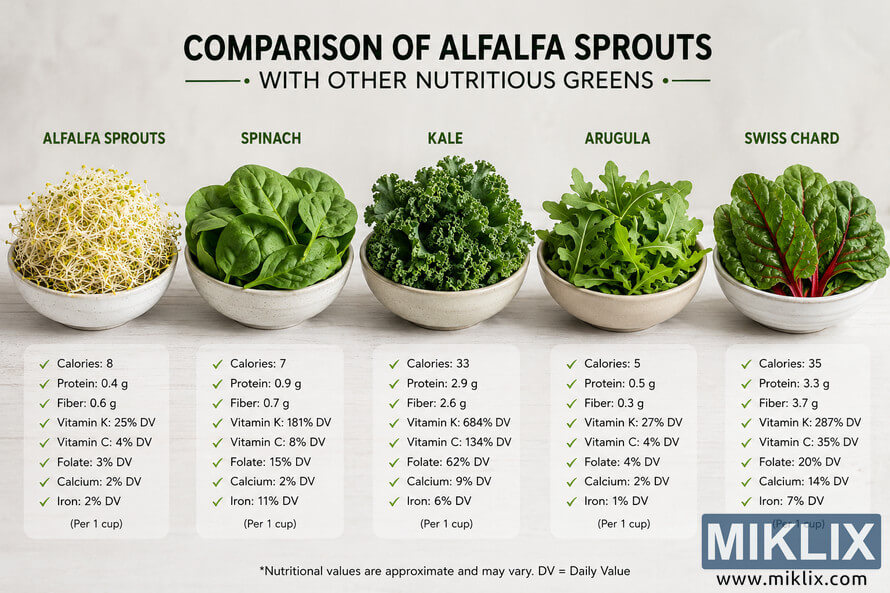
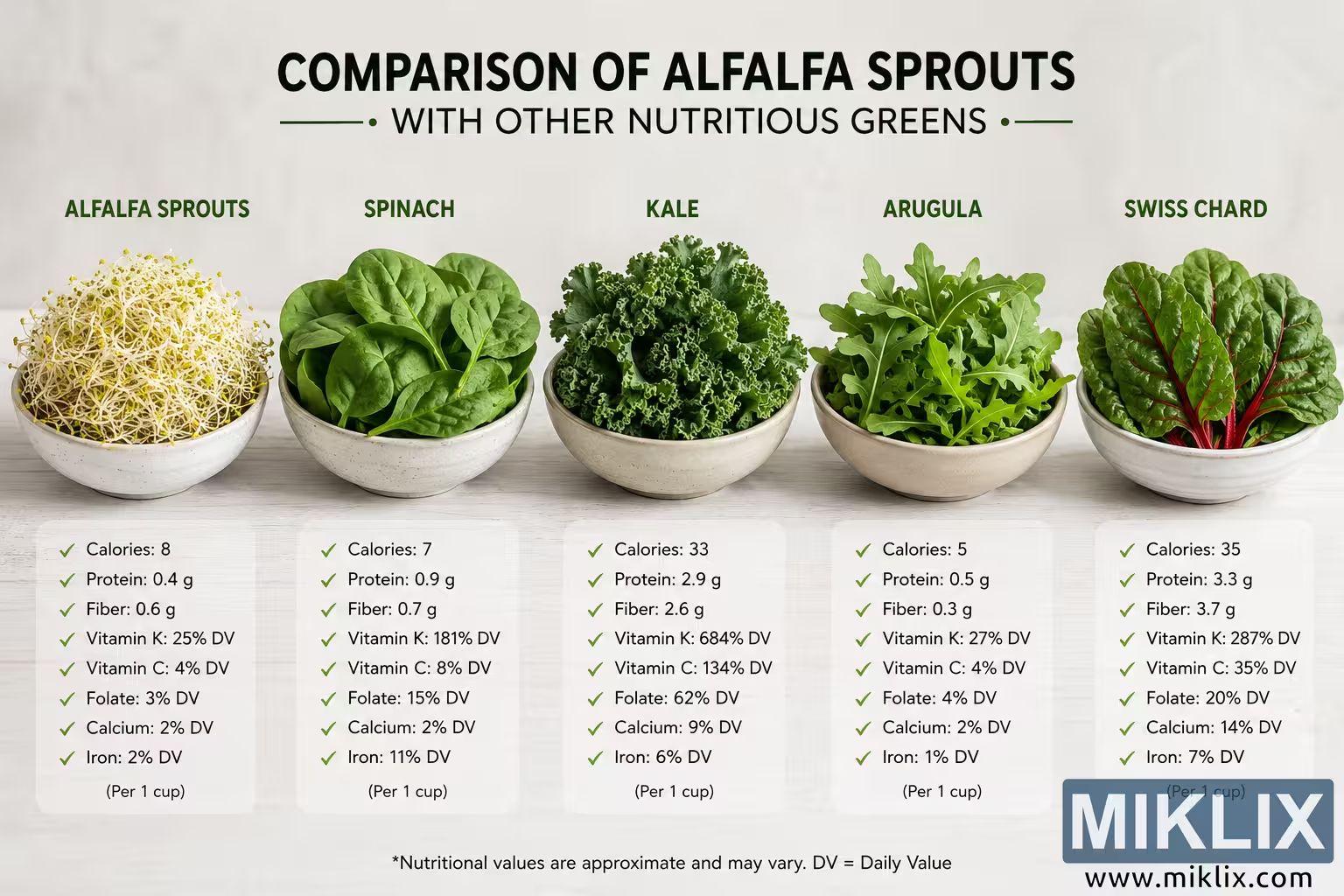
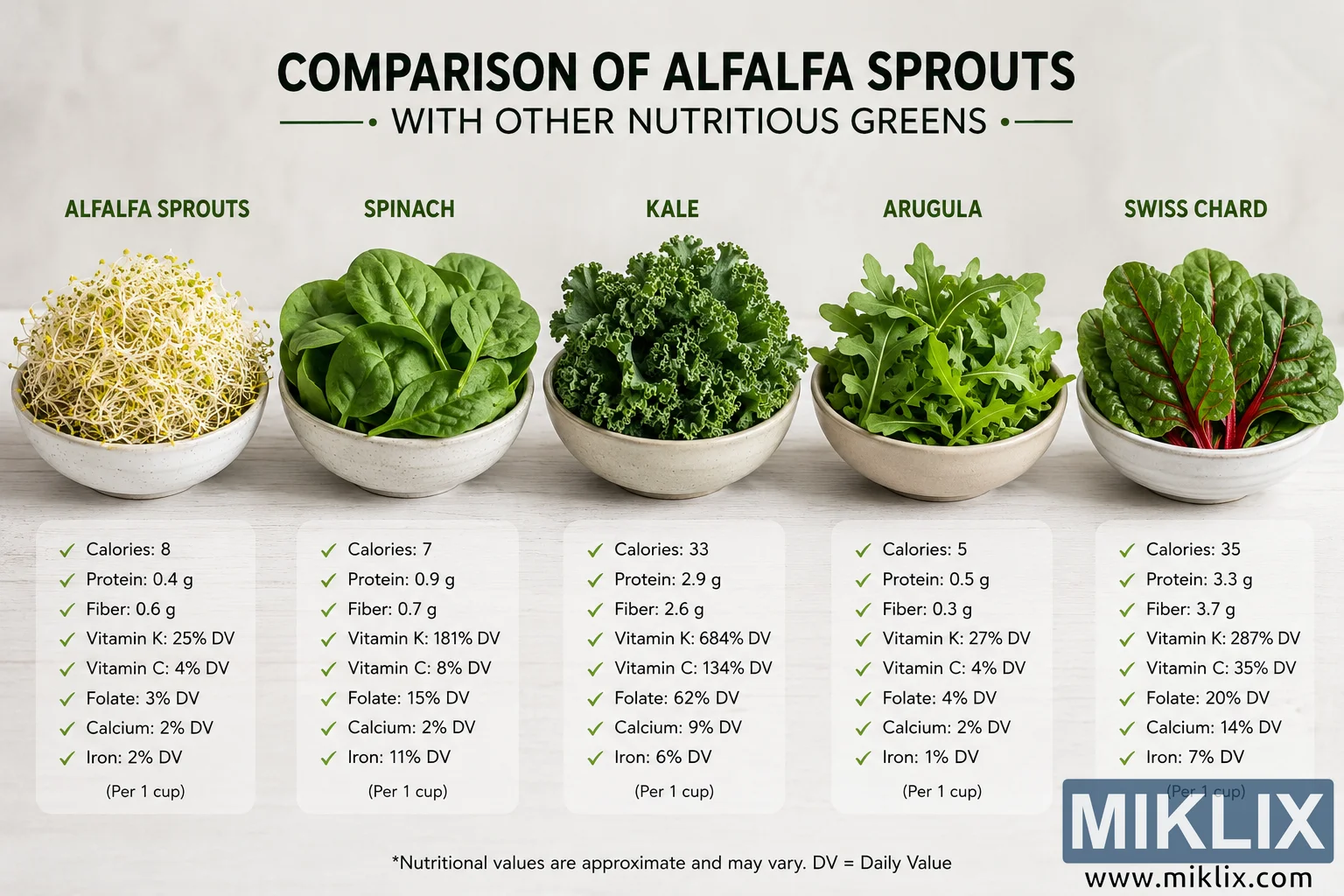
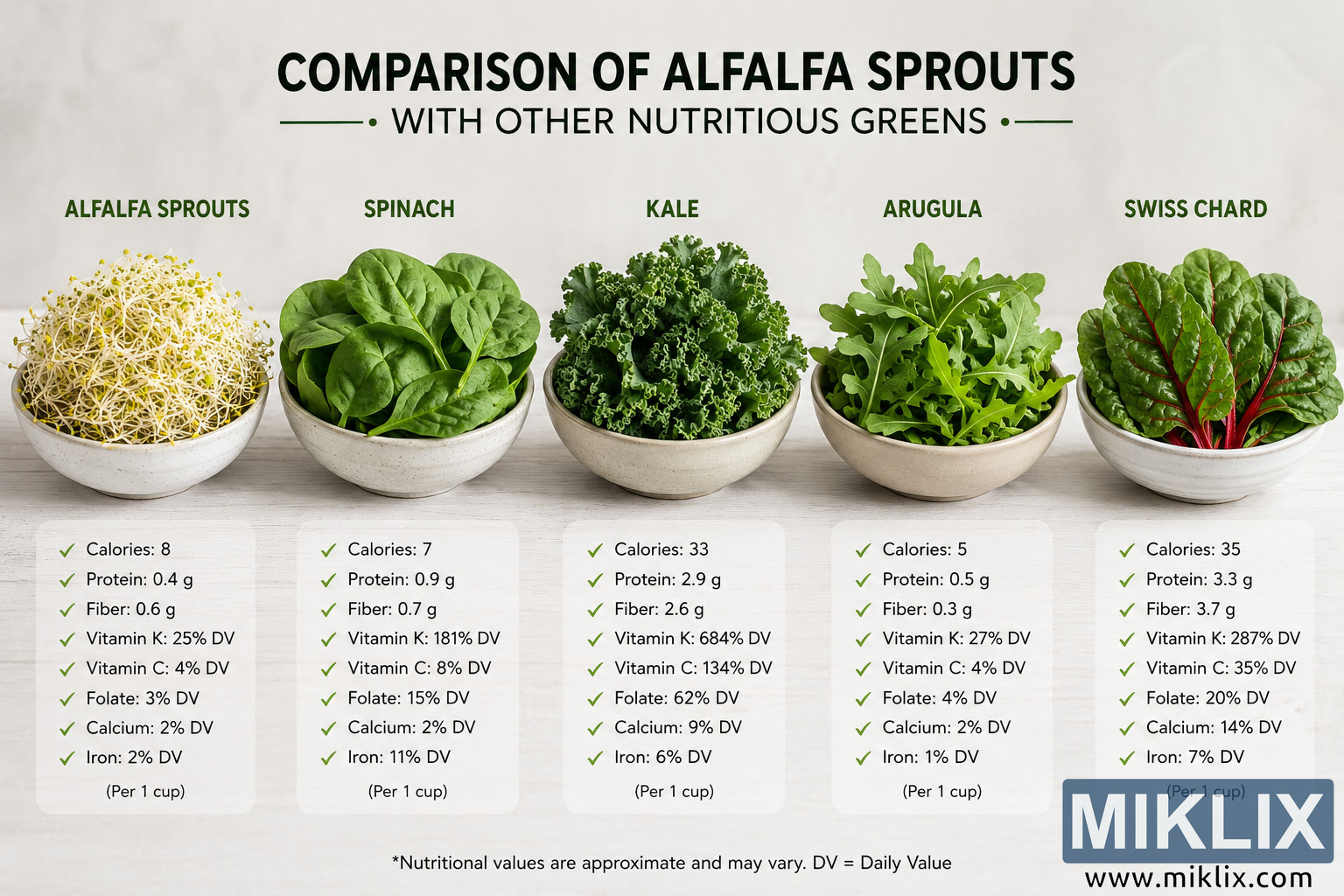
Explore a visual comparison of alfalfa sprouts and other nutrient-rich greens including spinach, kale, arugula, and Swiss chard. This infographic highlights calories, protein, fiber, vitamins, calcium, iron, and folate content in an easy-to-read format.
Comparison of Alfalfa Sprouts With Other Nutritious Greens
الإصدارات المتوفرة من هذه الصورة
ملفات الصور المتاحة للتحميل أدناه أقل ضغطاً وأعلى دقة - ونتيجة لذلك أعلى جودة - من الصور المضمنة في المقالات والصفحات على هذا الموقع، والتي تم تحسينها من حيث حجم الملف من أجل تقليل استهلاك النطاق الترددي.
مقاس عادي (1,536 x 1,024)
حجم كبير (3,072 x 2,048)
حجم كبير جداً (4,608 x 3,072)
حجم كبير جداً (6,144 x 4,096)
حجم كبير بشكل كوميدي (1,048,576 x 699,051)
- ما زلت أقوم بالتحميل...؛-)
وصف الصورة
A clean, modern infographic-style image in landscape orientation presents a side-by-side nutritional comparison of five popular leafy greens and sprouts against a bright neutral background. The overall design is minimal, fresh, and health-focused, using natural green tones and soft lighting to emphasize freshness and nutrition. At the top center of the image is a large bold headline reading “Comparison of Alfalfa Sprouts With Other Nutritious Greens.” The title is styled in dark green typography with decorative horizontal divider lines that reinforce the organic wellness theme.
Below the heading, five ceramic bowls are arranged evenly across a light wooden tabletop. Each bowl contains a different nutritious green ingredient photographed in high detail with crisp textures and vivid natural coloring. Above every bowl is a clear uppercase label identifying the featured green.
On the far left is a bowl labeled “Alfalfa Sprouts.” The bowl contains a dense pile of pale white and yellow sprouts with tiny green seed leaves and delicate tangled stems. Beneath the bowl is a rounded white information panel listing approximate nutritional values per one cup serving. The panel includes calories, protein, fiber, vitamin K, vitamin C, folate, calcium, and iron values.
Next is a bowl labeled “Spinach.” It contains vibrant green spinach leaves with smooth rounded surfaces and visible leaf veins. The corresponding nutrition panel underneath highlights spinach’s low calorie content and higher vitamin K and iron levels.
At the center of the composition is “Kale.” The bowl is filled with curly dark green kale leaves featuring highly textured edges and layered foliage. The nutrition panel below emphasizes kale’s strong vitamin K and vitamin C content along with protein and fiber information.
To the right of kale is a bowl labeled “Arugula.” The arugula leaves are lighter green with elongated jagged shapes that create a more delicate visual appearance. Its nutritional panel displays lower calorie values along with vitamin and mineral percentages.
On the far right is “Swiss Chard.” The bowl contains glossy dark green leaves with prominent red stems and veins, creating the most colorful contrast in the image. The nutrition panel beneath lists fiber, protein, vitamin K, folate, calcium, and iron values.
All nutritional panels are presented in matching rounded white cards with green checkmark icons next to each listed nutrient. At the bottom center of the infographic is a small disclaimer note stating that nutritional values are approximate and may vary, with an explanation that “DV” refers to Daily Value. The composition is balanced, highly legible, and visually appealing, designed to communicate healthy eating and nutritional education in a polished editorial style.
الصورة مرتبطة بـ: Alfalfa Sprouts: Complete Guide to Health Benefits