
صورة: Laboratory Research on Anti-Inflammatory Compounds
نُشرت:
آخر تحديث: ١٦ يوليو ٢٠٢٦ م في ٨:٤٣:٣٨ م UTC
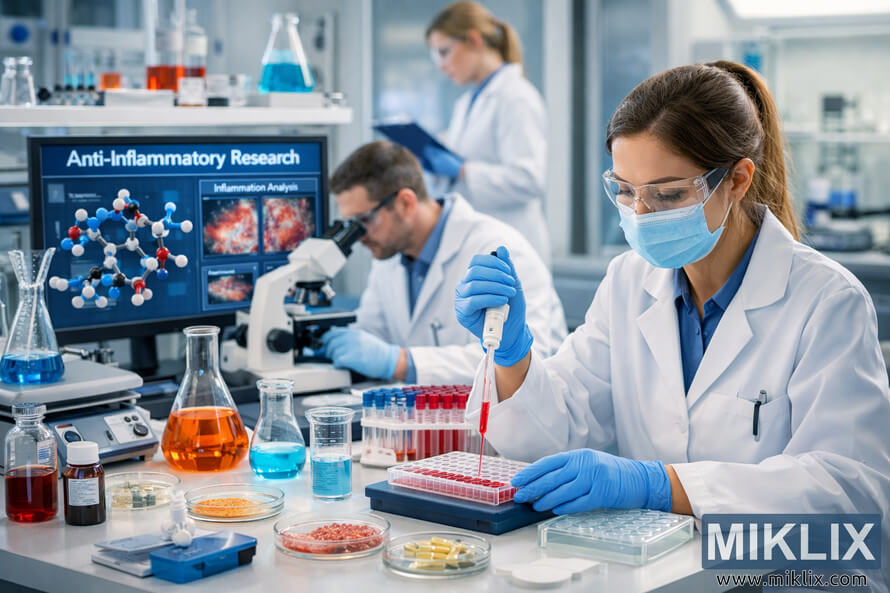
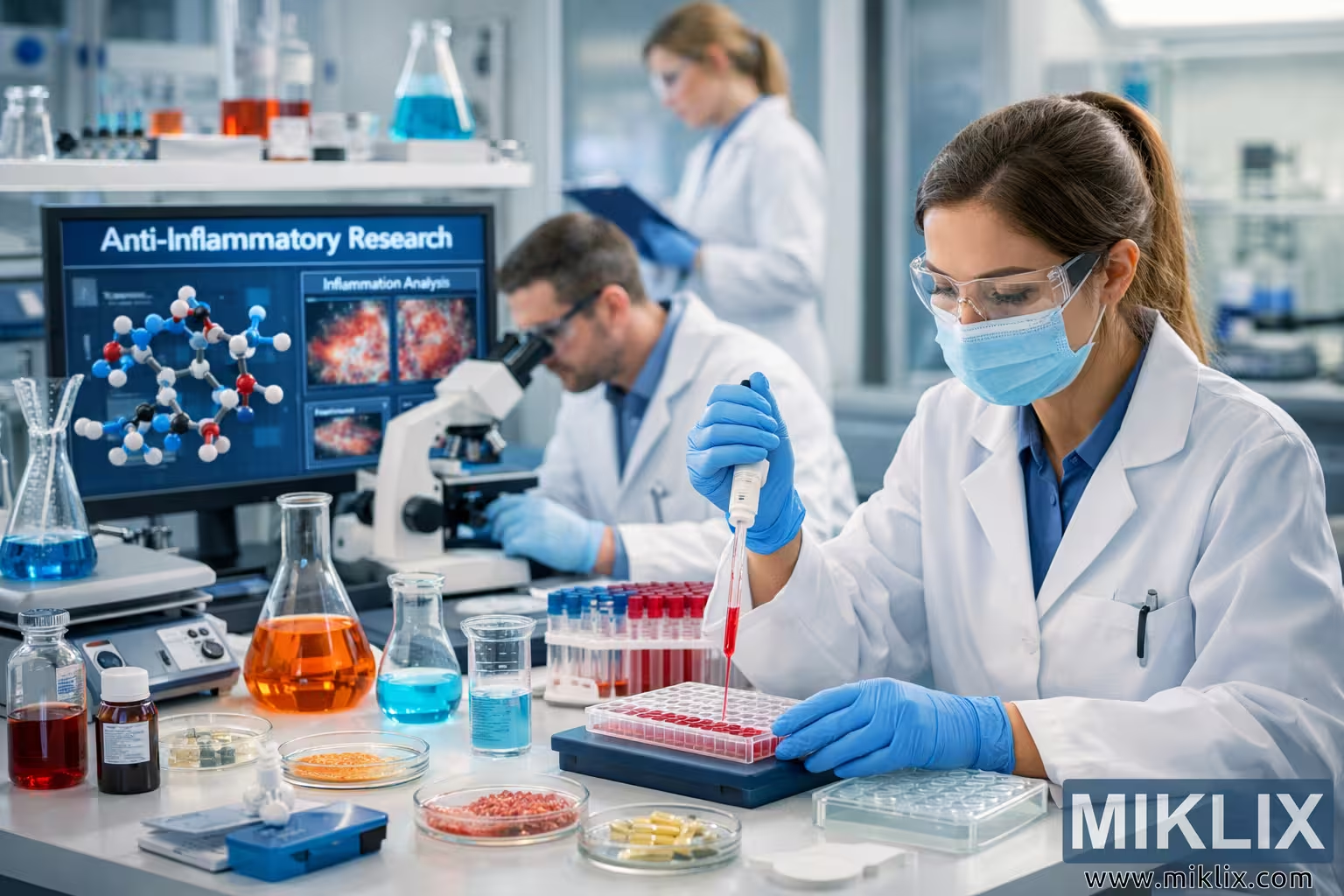
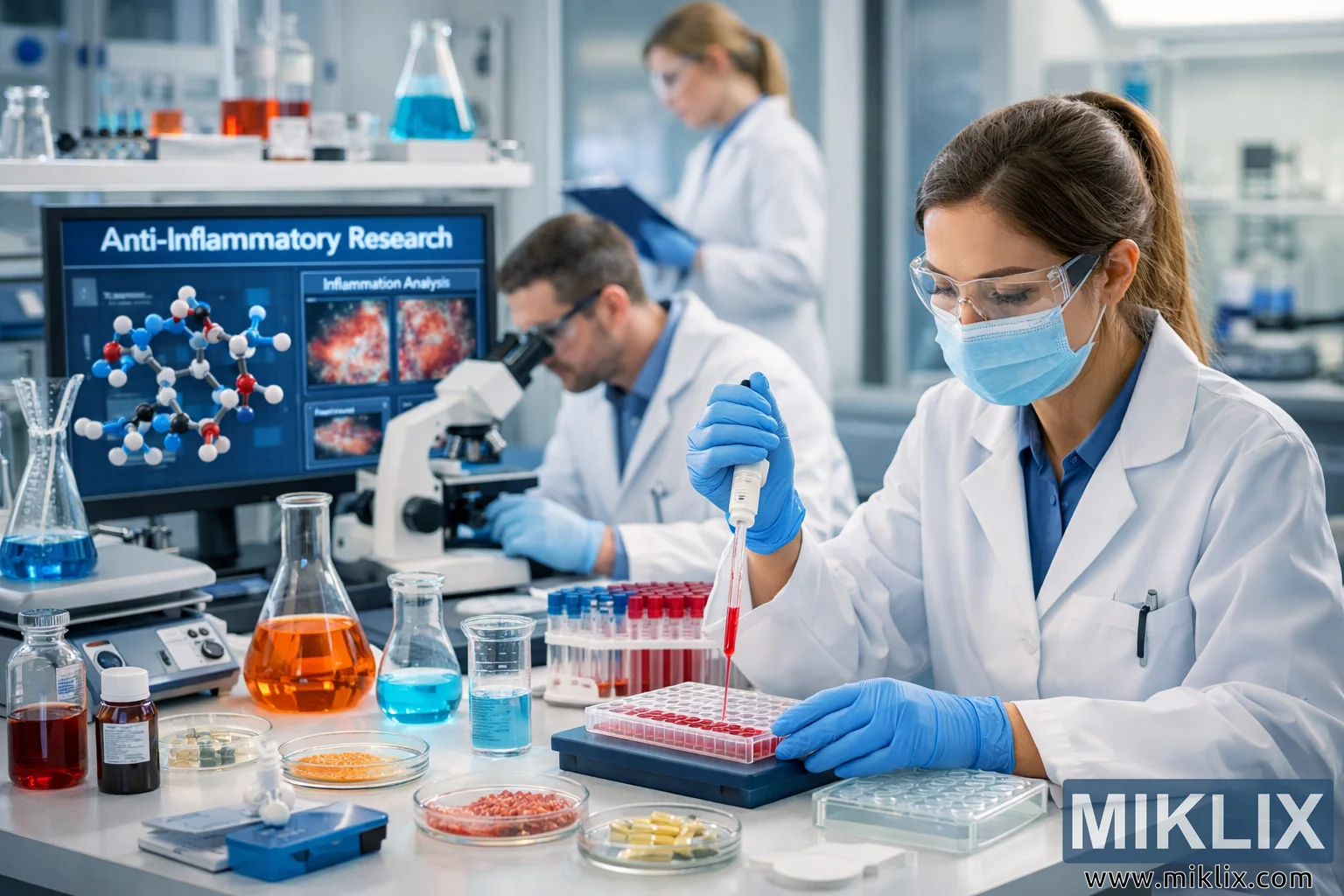
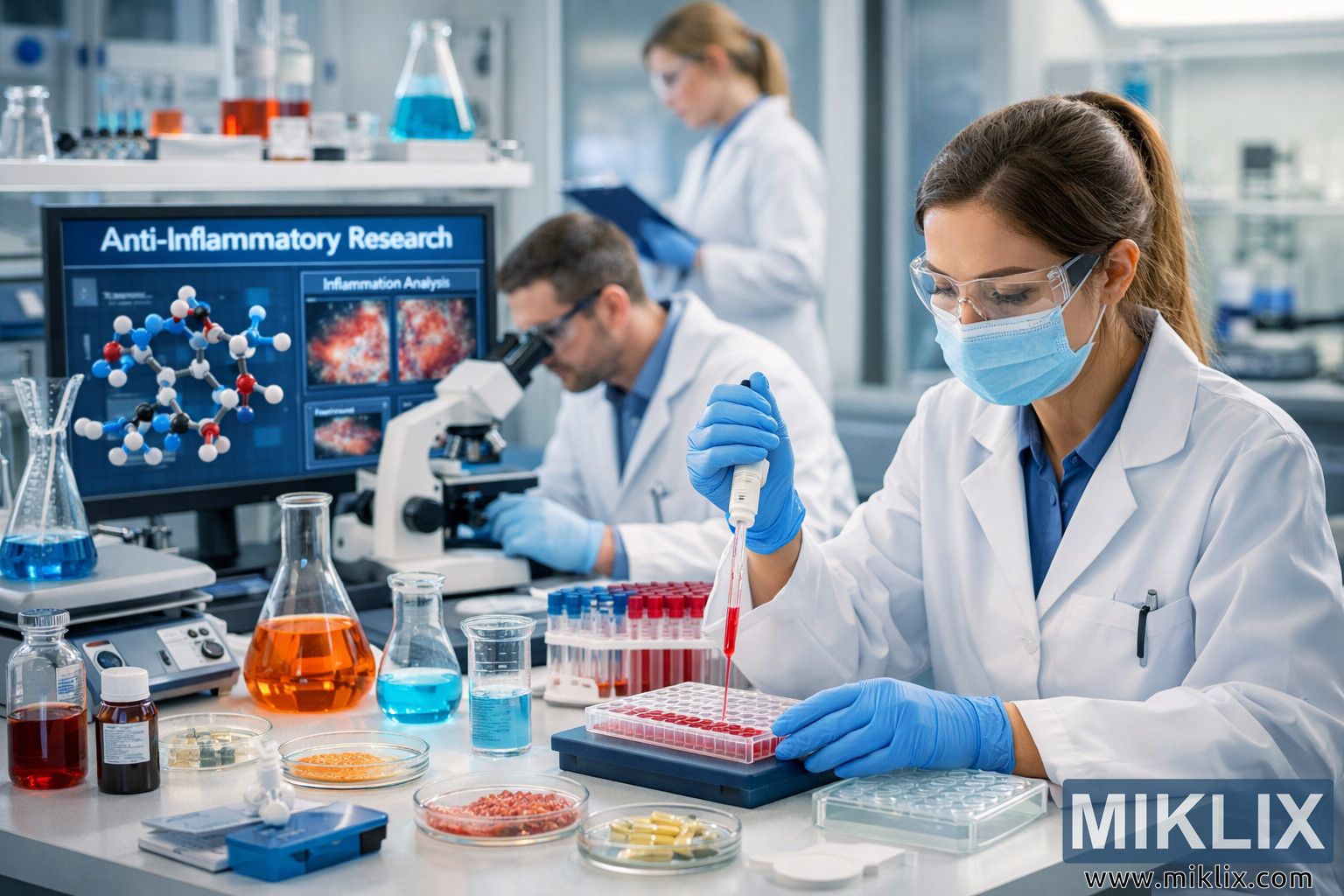
High-resolution landscape photo of researchers studying anti-inflammatory compounds in a modern lab, featuring pipetting, microscopy, molecular modeling, and data analysis in a clean, professional environment.
Laboratory Research on Anti-Inflammatory Compounds
الإصدارات المتوفرة من هذه الصورة
ملفات الصور المتاحة للتحميل أدناه أقل ضغطاً وأعلى دقة - ونتيجة لذلك أعلى جودة - من الصور المضمنة في المقالات والصفحات على هذا الموقع، والتي تم تحسينها من حيث حجم الملف من أجل تقليل استهلاك النطاق الترددي.
مقاس عادي (1,536 x 1,024)
حجم كبير (3,072 x 2,048)
حجم كبير جداً (4,608 x 3,072)
حجم كبير جداً (6,144 x 4,096)
حجم كبير بشكل كوميدي (1,048,576 x 699,051)
- ما زلت أقوم بالتحميل...؛-)
وصف الصورة
A high-resolution landscape photograph captures a modern biomedical laboratory where multiple scientists collaborate on the development and testing of anti-inflammatory compounds.
In the foreground, a female researcher in a white lab coat, blue gloves, a face mask, and safety goggles is pipetting a vivid red liquid into a transparent multi-well plate. Her movements are precise, reflecting the controlled environment required for chemical and biological experimentation. The bench in front of her is organized but busy, containing glass beakers and flasks filled with orange, blue, and clear solutions. A colorful molecular model sits nearby, illustrating the structural complexity of a compound under investigation. Labeled petri dishes are arranged neatly, each containing samples or cultures relevant to inflammation studies.
Behind her, a male scientist leans toward a high-powered microscope, examining cellular or tissue samples. He wears similar protective gear, and his posture conveys deep concentration. The microscope is surrounded by slides, small containers, and a rack of test tubes filled with red and blue liquids, suggesting parallel experiments or different formulations being evaluated.
A computer monitor next to him displays the title "Anti-Inflammatory Research" along with a 3D molecular structure and a set of images labeled "Inflammation Analysis." These images show inflamed tissue samples, highlighting differences in coloration and density that may indicate the effects of experimental treatments. The digital interface suggests advanced analytical software used to compare molecular behavior with biological responses.
To the right of the monitor, a rack of test tubes stands upright, each containing brightly colored liquids that add visual rhythm to the workspace. A flask filled with blue liquid rests on a magnetic stirrer, its contents gently swirling. Additional equipment—pipette stands, reagent bottles, timers, and small electronic devices—reinforces the sense of a fully equipped research environment.
In the background, another female scientist reviews notes on a clipboard. Her presence adds depth and emphasizes the collaborative nature of the research. A fume hood is visible behind her, containing more glassware and suggesting that some experiments involve volatile or sensitive materials requiring controlled ventilation.
The overall composition highlights the workflow of anti-inflammatory research: chemical preparation, biological testing, microscopic evaluation, and data interpretation. Bright, even lighting enhances the clarity of the scene, while the neutral palette of lab coats and equipment contrasts with the vivid colors of experimental liquids. The image conveys professionalism, scientific rigor, and the hope that ongoing research may lead to improved treatments for inflammatory conditions.
الصورة مرتبطة بـ: Health Benefits of Chives: Nature's Nutritional Powerhouse