
صورة: Pumpkin Nutrition Infographic: Vitamins, Minerals, and Health Benefits
نُشرت:
آخر تحديث: ٧ سبتمبر ٢٠٢٦ م في ٦:٣٠:٠٠ ص UTC
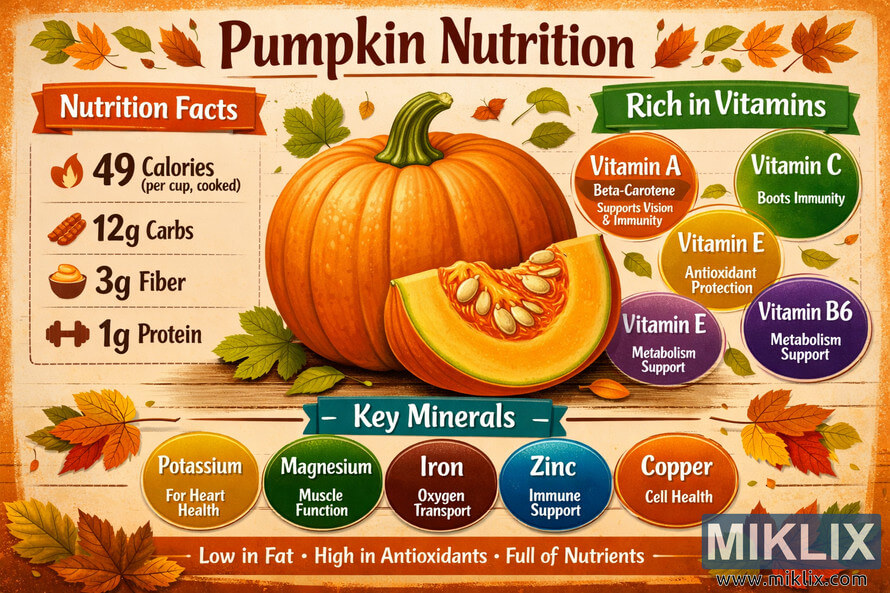
Explore a vibrant pumpkin nutrition infographic highlighting calories, carbohydrates, fiber, protein, vitamins A, C, E, B6, and minerals like potassium, magnesium, iron, zinc, and copper. Learn how pumpkins support vision, immunity, and heart health through their rich nutrient profile.
Pumpkin Nutrition Infographic: Vitamins, Minerals, and Health Benefits
الإصدارات المتوفرة من هذه الصورة
ملفات الصور المتاحة للتحميل أدناه أقل ضغطاً وأعلى دقة - ونتيجة لذلك أعلى جودة - من الصور المضمنة في المقالات والصفحات على هذا الموقع، والتي تم تحسينها من حيث حجم الملف من أجل تقليل استهلاك النطاق الترددي.
مقاس عادي (1,536 x 1,024)
حجم كبير (3,072 x 2,048)
حجم كبير جداً (4,608 x 3,072)
حجم كبير جداً (6,144 x 4,096)
حجم كبير بشكل كوميدي (1,048,576 x 699,051)
- ما زلت أقوم بالتحميل...؛-)
وصف الصورة
The image is a detailed and visually engaging infographic titled "Pumpkin Nutrition," designed in a warm, autumnal color palette dominated by shades of orange, gold, green, and brown. At the center of the composition sits a large, realistic illustration of a whole pumpkin with a sliced section revealing its bright orange flesh and seeds. The pumpkin rests on a wooden surface, surrounded by scattered autumn leaves in hues of red, yellow, and orange, reinforcing the seasonal theme and natural context of the vegetable.
Above the central pumpkin, the title "Pumpkin Nutrition" is displayed in bold, serif lettering with a subtle gradient that transitions from deep orange to lighter tones, giving it a rustic yet polished appearance. The typography evokes a sense of warmth and healthfulness, inviting viewers to explore the nutritional information presented throughout the infographic.
On the left side of the image, a rectangular orange box labeled "Nutrition Facts" organizes key macronutrient data. Inside this section, four distinct icons accompany the text: a flame icon next to "49 Calories (per cup, cooked)," a grain icon beside "12g Carbs," a bowl of grains icon next to "3g Fiber," and a dumbbell icon beside "1g Protein." Each icon is rendered in a simple, flat design style with soft shadows, ensuring clarity and visual harmony. The layout is clean and balanced, making the information easy to read while maintaining aesthetic appeal.
To the right of the pumpkin, a green box titled "Rich in Vitamins" highlights the micronutrient content. Circular icons radiate outward from the title, each representing a specific vitamin. The orange circle for "Vitamin A" includes the subtext "Beta-Carotene" and the phrase "Supports Vision & Immunity," emphasizing the pumpkin’s well-known role in eye health and immune function. A green circle for "Vitamin C" reads "Boosts Immunity," a yellow circle for "Vitamin E" states "Antioxidant Protection," and a purple circle for "Vitamin B6" notes "Metabolism Support." These circles are arranged in a semi-circular pattern, visually echoing the roundness of the pumpkin and creating a sense of cohesion between the central illustration and the surrounding data.
Below the pumpkin, a teal box titled "Key Minerals" presents five circular icons, each with a distinct color-coded background and concise explanatory text. The yellow circle for "Potassium" reads "For Heart Health," the dark green circle for "Magnesium" says "Muscle Function," the brown circle for "Iron" indicates "Oxygen Transport," the blue circle for "Zinc" highlights "Immune Support," and the orange circle for "Copper" mentions "Cell Health." These icons are evenly spaced along the bottom edge of the infographic, forming a visual foundation that balances the composition.
At the very bottom, an orange banner stretches across the width of the image, containing the text "Low in Fat • High in Antioxidants • Full of Nutrients" in off-white lettering. This closing statement reinforces the overall message of the infographic: pumpkins are nutrient-dense, low-calorie foods that contribute to a balanced diet and promote overall wellness.
The design employs a harmonious blend of illustrative and typographic elements. The pumpkin illustration is detailed enough to convey realism but stylized to fit the infographic’s cohesive aesthetic. The use of color is both functional and expressive—orange tones evoke warmth and vitality, greens suggest freshness and health, and complementary hues like teal and purple add visual interest without overwhelming the viewer.
The infographic’s layout follows a clear hierarchy: the title at the top draws attention first, followed by the central pumpkin image, then the surrounding nutrient sections. Each section is visually distinct yet unified through consistent iconography and color schemes. The overall composition is symmetrical and well-balanced, with the pumpkin serving as the focal point and the nutrient data radiating outward like spokes on a wheel.
The image communicates not only factual nutritional information but also an emotional connection to seasonal eating and wholesome living. The autumn leaves and wooden background evoke a sense of harvest and natural abundance, while the clean typography and modern icons ensure that the design feels contemporary and accessible.
In total, the infographic effectively combines educational content with artistic presentation. It provides a comprehensive overview of pumpkin nutrition—covering calories, macronutrients, vitamins, and minerals—while maintaining visual appeal through thoughtful design choices. The result is an image that is both informative and aesthetically pleasing, ideal for use in health education materials, food blogs, or wellness campaigns promoting the benefits of nutrient-rich vegetables like pumpkin.
الصورة مرتبطة بـ: Pumpkins: The Nutrient-Packed Superfood You Should Eat Year-Round