
صورة: Backyard Persimmon Tree Cultivation and Home Growing Guide
نُشرت:
آخر تحديث: ٤ يونيو ٢٠٢٦ م في ٦:٣٢:٢٩ م UTC
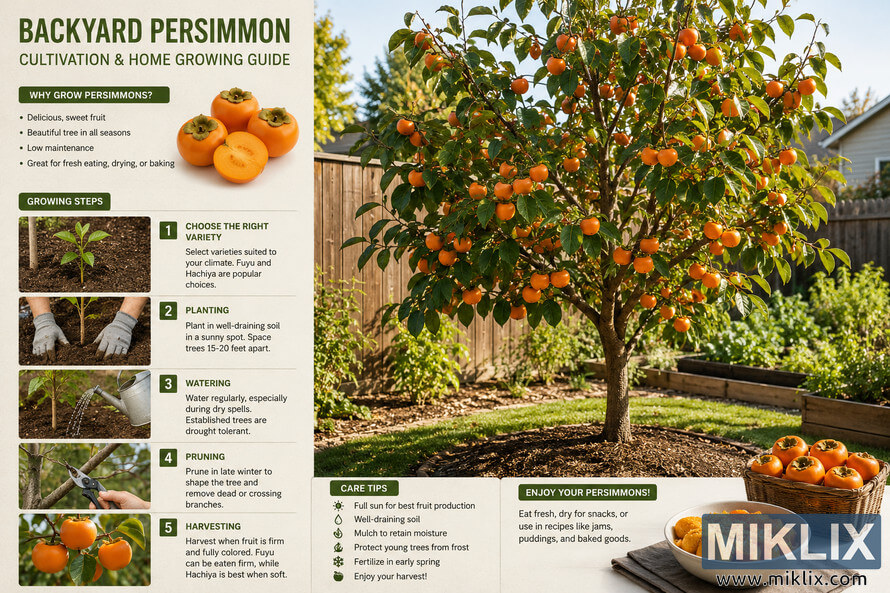
Comprehensive backyard persimmon cultivation infographic featuring a productive fruit tree, planting advice, watering and pruning tips, harvesting guidance, and practical care instructions for successful home growing.
Backyard Persimmon Tree Cultivation and Home Growing Guide
الإصدارات المتوفرة من هذه الصورة
ملفات الصور المتاحة للتحميل أدناه أقل ضغطاً وأعلى دقة - ونتيجة لذلك أعلى جودة - من الصور المضمنة في المقالات والصفحات على هذا الموقع، والتي تم تحسينها من حيث حجم الملف من أجل تقليل استهلاك النطاق الترددي.
مقاس عادي (1,536 x 1,024)
حجم كبير (3,072 x 2,048)
حجم كبير جداً (4,608 x 3,072)
حجم كبير جداً (6,144 x 4,096)
حجم كبير بشكل كوميدي (1,048,576 x 699,051)
- ما زلت أقوم بالتحميل...؛-)
وصف الصورة
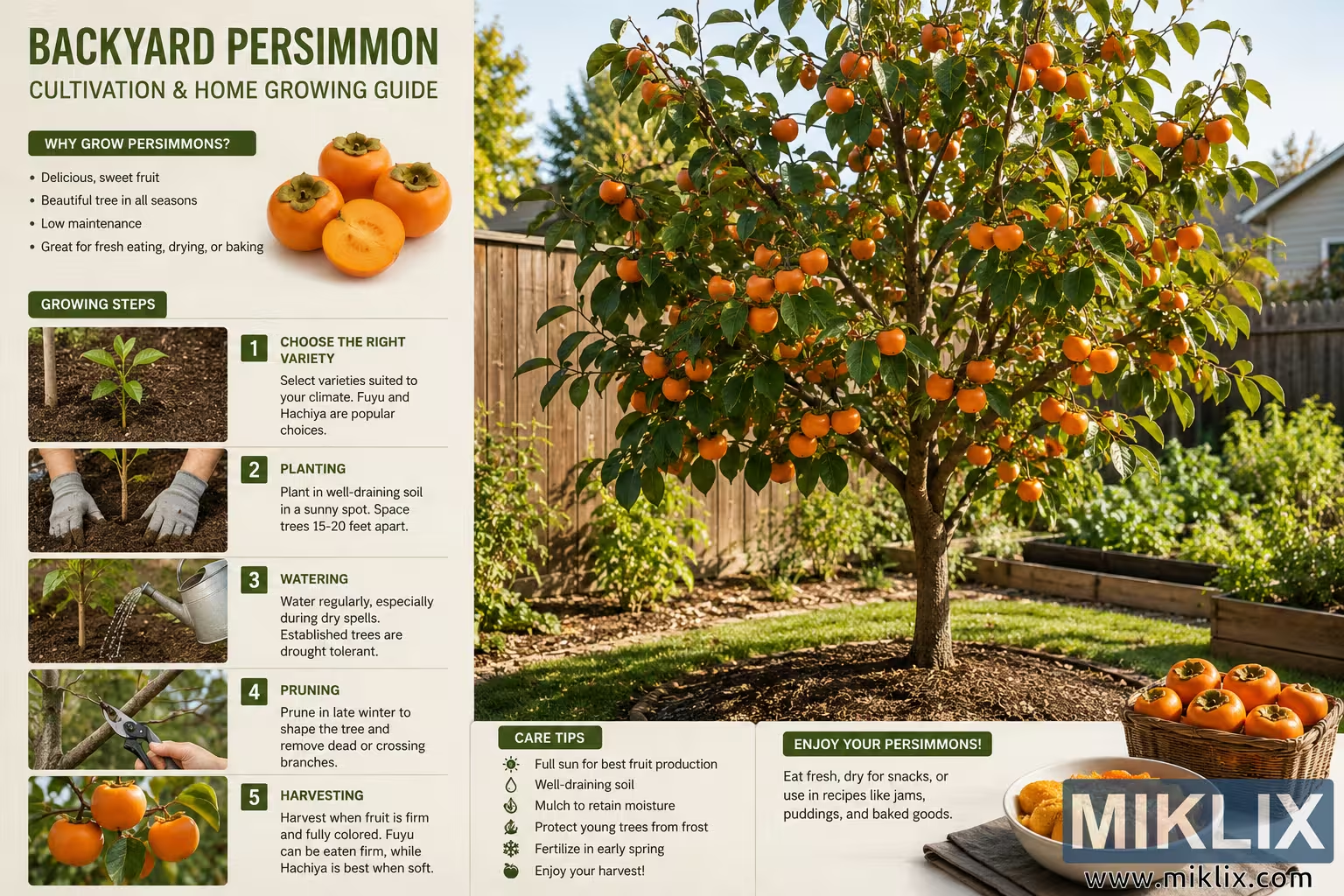
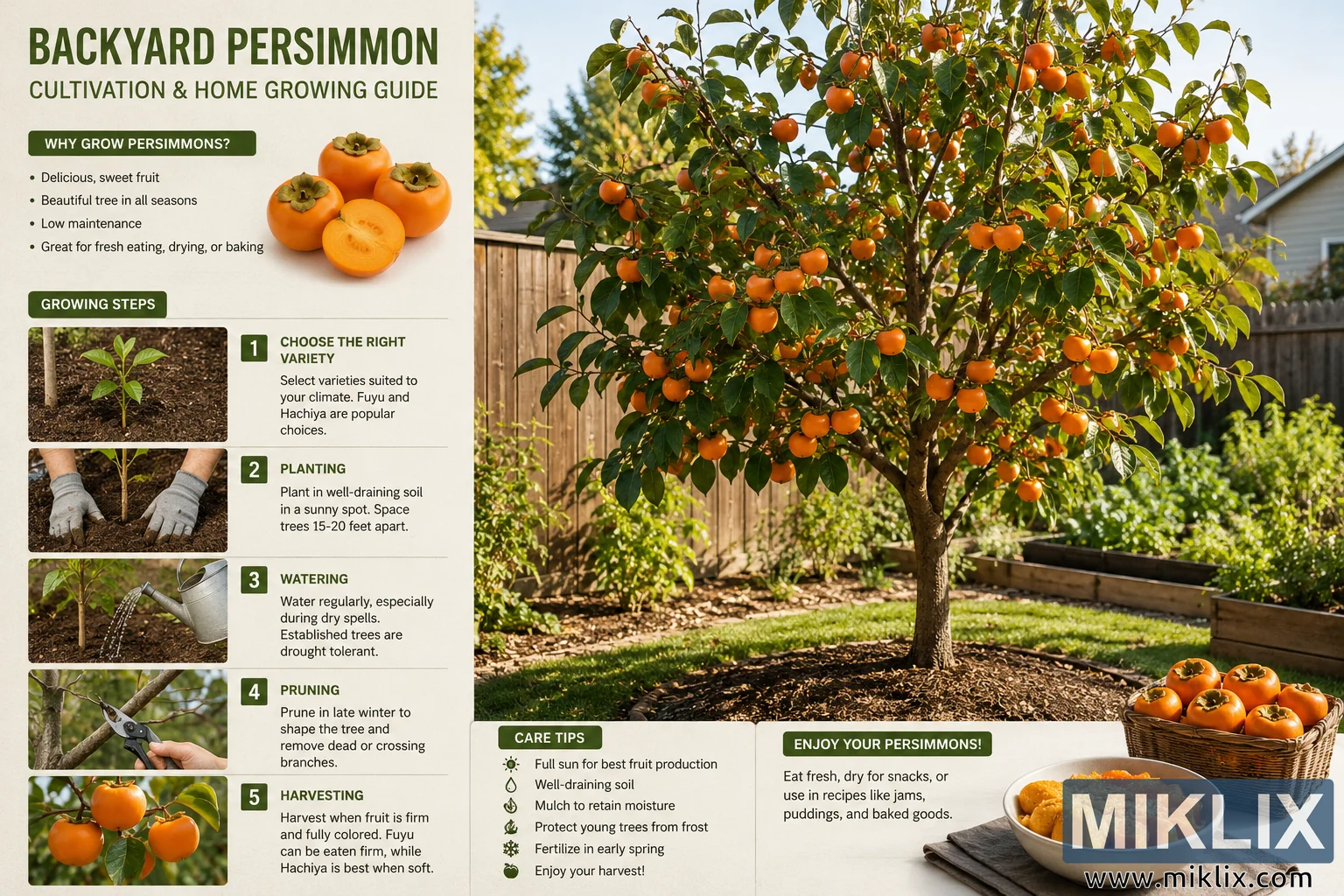
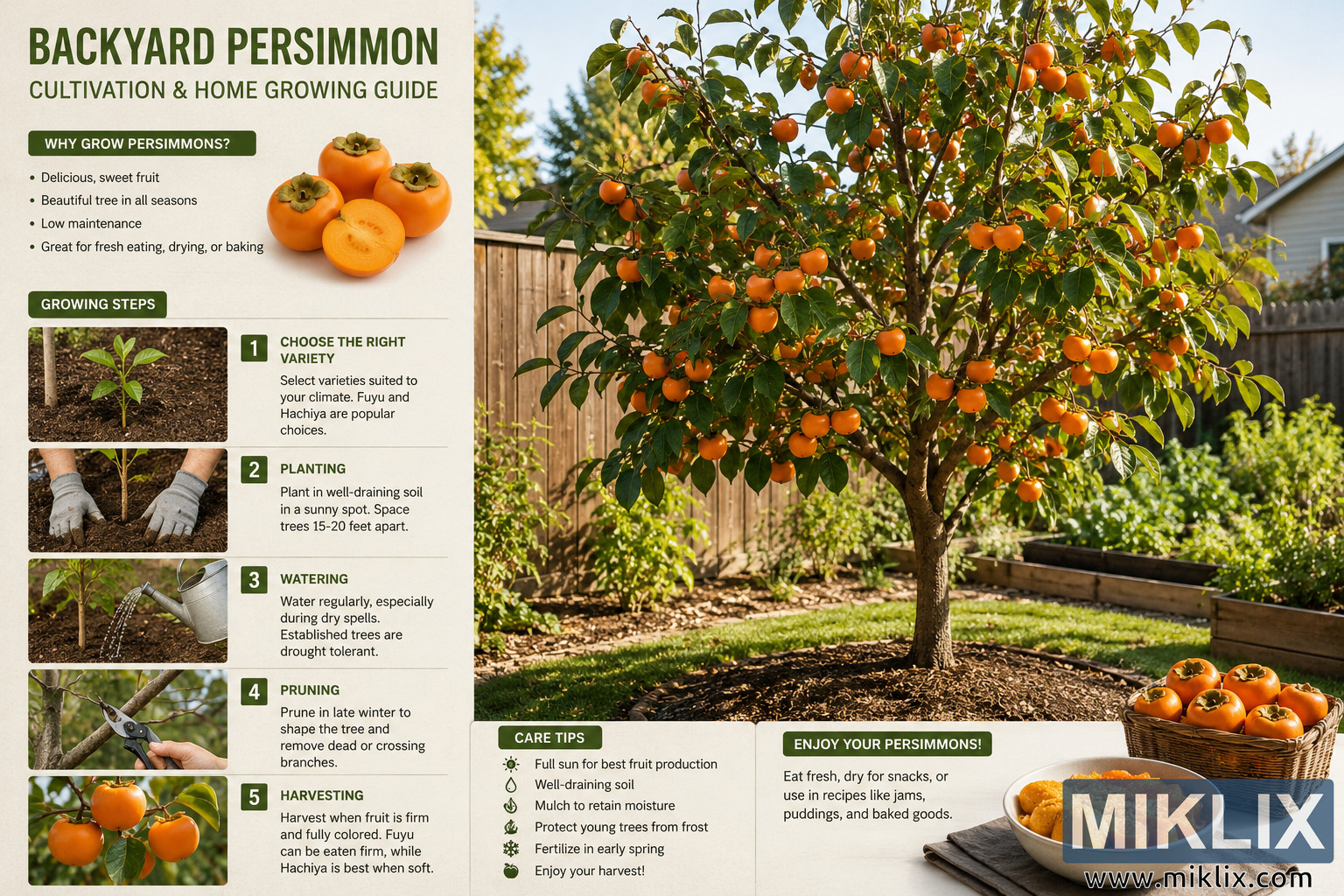
This high-resolution landscape infographic presents a comprehensive and visually engaging guide to backyard persimmon tree cultivation and home growing. The overall design combines realistic photography with clean editorial layout elements, creating the appearance of a professional gardening magazine spread or educational horticulture poster. The composition is divided into two main sections: an instructional column on the left and a large feature image of a mature persimmon tree on the right. Warm natural lighting, earthy tones, and vibrant orange fruit create an inviting and productive gardening atmosphere throughout the image.
At the top left of the infographic is a bold title rendered in large dark green uppercase lettering that reads “BACKYARD PERSIMMON CULTIVATION & HOME GROWING GUIDE.” The typography is clean, modern, and easy to read against a light cream-colored background. Below the title is a section labeled “WHY GROW PERSIMMONS?” displayed inside a rounded green banner. Beneath this heading is a concise bulleted list explaining the benefits of persimmon cultivation. The points mention the fruit’s sweet flavor, the tree’s beauty throughout the seasons, its relatively low maintenance requirements, and the many culinary uses of persimmons including fresh eating, drying, and baking. Adjacent to this text is a realistic cluster of bright orange persimmons arranged decoratively, including one sliced fruit revealing smooth orange flesh and seeds inside.
The left column continues with a vertical sequence of instructional panels under another green heading labeled “GROWING STEPS.” Each step is numbered inside a dark green square and paired with a corresponding photographic image. The first panel, titled “CHOOSE THE RIGHT VARIETY,” includes a close-up photograph of a young persimmon seedling planted in rich brown soil. The accompanying text recommends selecting varieties suited to the local climate and references common types such as Fuyu and Hachiya.
The second instructional panel is titled “PLANTING.” It shows gloved hands carefully placing soil around the base of a newly planted sapling. The text explains that persimmons should be planted in sunny locations with well-draining soil and spaced appropriately for healthy growth. The third panel, labeled “WATERING,” depicts a watering can pouring water around the base of a small tree. The written guidance recommends regular watering during dry periods while noting that mature persimmon trees become relatively drought tolerant over time.
The fourth panel is labeled “PRUNING” and contains a close-up image of pruning shears cutting a small branch. The instructional text recommends pruning during late winter to shape the tree and remove damaged or crossing branches. The fifth and final panel is titled “HARVESTING.” It features ripe persimmons hanging from a branch surrounded by green leaves. The text explains the differences between harvesting firmer non-astringent varieties and softer astringent varieties, encouraging growers to pick fruit when fully colored and appropriately ripe.
Dominating the right side of the infographic is a large, photorealistic image of a mature persimmon tree growing in a backyard garden. The tree is healthy and symmetrical, with a strong trunk and dense green foliage covered in dozens of ripe orange persimmons. Golden late-afternoon sunlight filters through the leaves, creating natural highlights and soft shadows across the branches and fruit. The tree is planted in a circular mulched bed surrounded by neatly maintained grass. A wooden privacy fence stretches across the background, reinforcing the suburban backyard setting. Raised garden beds and additional plants are visible in the distance, adding depth and realism to the home gardening environment.
Near the bottom center of the infographic is a section labeled “CARE TIPS” inside another green banner. A list of practical maintenance suggestions appears alongside small decorative gardening icons. The recommendations include providing full sun for best fruit production, ensuring well-draining soil, mulching to retain moisture, protecting young trees from frost, fertilizing in early spring, and enjoying the eventual harvest.
To the lower right is a final section titled “ENJOY YOUR PERSIMMONS!” The text encourages using persimmons fresh, dried, or incorporated into recipes such as jams, puddings, and baked goods. Beside this text is a realistic bowl filled with sliced persimmons resting on a folded cloth. A woven basket overflowing with freshly harvested fruit sits nearby, reinforcing the rewarding harvest theme of the guide.
The overall visual style is polished, educational, and highly accessible. The infographic balances informative text with rich imagery and maintains a cohesive natural color palette dominated by greens, warm browns, creams, and vivid orange fruit tones. Every element contributes to the theme of successful backyard fruit cultivation, making the image suitable for gardening blogs, educational materials, home orchard guides, horticultural magazines, or lifestyle content focused on sustainable food production and home gardening.
الصورة مرتبطة بـ: The Complete Guide to the Health Benefits of Persimmons