
صورة: Golden Roasted Turnips on Rustic Baking Sheet
نُشرت:
آخر تحديث: ١٤ سبتمبر ٢٠٢٦ م في ٢:٤٩:٠١ م UTC
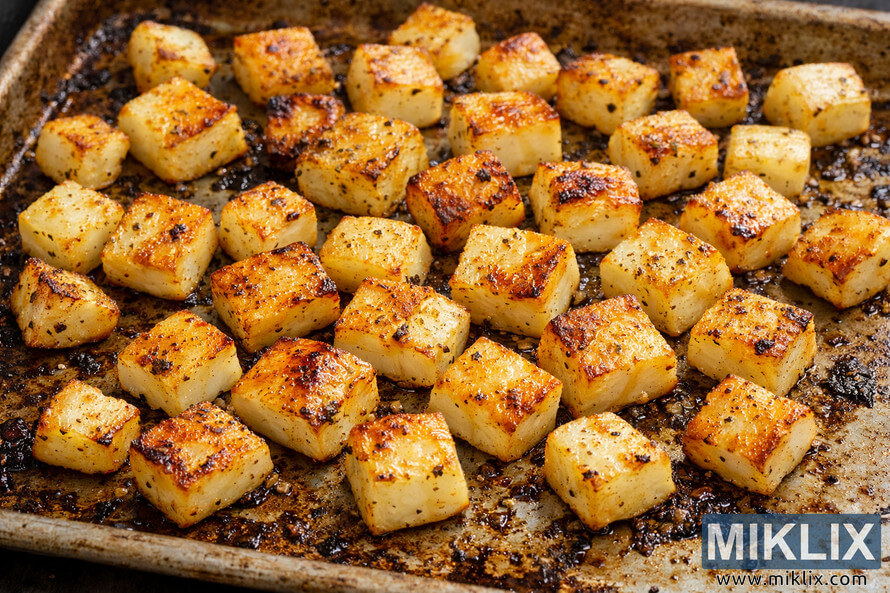
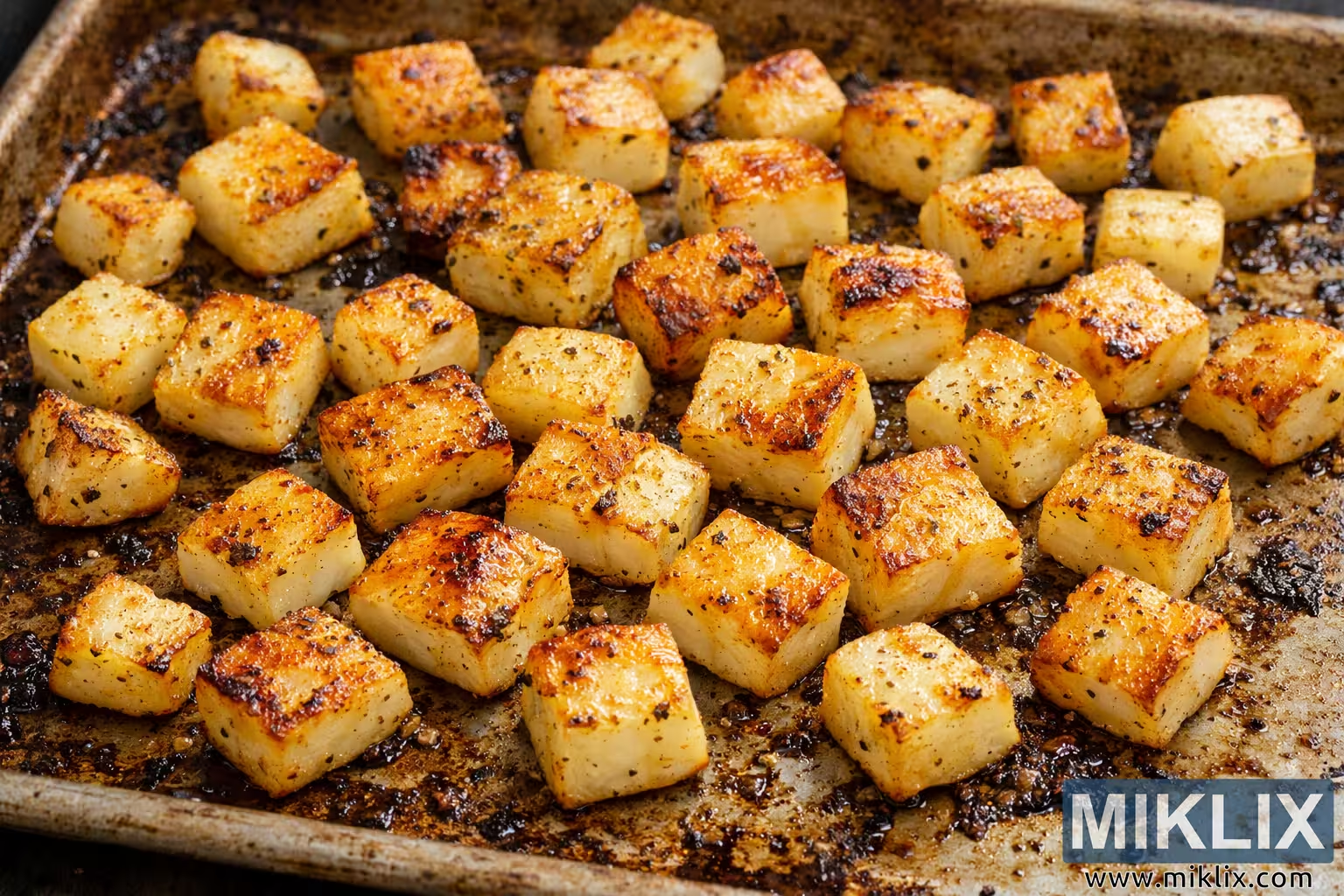
High-resolution close-up of golden roasted turnip cubes on a rustic baking sheet, featuring crisp, caramelized edges, visible pepper and herb seasoning, and warm, natural lighting that emphasizes the glistening oil and rich golden-brown color. Perfect visual for recipes or articles about roasted root vegetables and simple home cooking.
Golden Roasted Turnips on Rustic Baking Sheet
الإصدارات المتوفرة من هذه الصورة
ملفات الصور المتاحة للتحميل أدناه أقل ضغطاً وأعلى دقة - ونتيجة لذلك أعلى جودة - من الصور المضمنة في المقالات والصفحات على هذا الموقع، والتي تم تحسينها من حيث حجم الملف من أجل تقليل استهلاك النطاق الترددي.
مقاس عادي (1,536 x 1,024)
حجم كبير (3,072 x 2,048)
حجم كبير جداً (4,608 x 3,072)
حجم كبير جداً (6,144 x 4,096)
حجم كبير بشكل كوميدي (1,048,576 x 699,051)
- ما زلت أقوم بالتحميل...؛-)
وصف الصورة
The image presents a close-up, high-resolution view of golden roasted turnip cubes scattered across a large, well-used baking sheet, capturing the inviting warmth and texture of a simple yet beautifully prepared dish. Each turnip cube is cut into roughly uniform pieces, though with slight natural irregularities that emphasize the hand-prepared, rustic character of the food. The cubes range in size but generally appear to be about bite-sized, making them look ready to be served as a side dish or enjoyed straight from the pan.
The turnips themselves are roasted to a rich golden brown, with many pieces showing deeper caramelization along their edges and corners. Some cubes have crisp, slightly charred edges that suggest they have spent just the right amount of time in a hot oven, allowing the natural sugars in the turnips to brown and intensify in flavor. The surfaces of the turnips glisten subtly with a thin coating of oil, giving them a gentle sheen that enhances their visual appeal and hints at a satisfying, tender interior beneath the crisp exterior.
Seasoning is clearly visible on the turnip cubes. Tiny black flecks of freshly ground pepper are scattered across the surfaces, clinging to the oil and nestling into the crevices of the roasted vegetables. Alongside the pepper, small specks of green herbs—likely dried or finely chopped fresh herbs such as thyme, rosemary, or parsley—add a touch of color and suggest aromatic depth. These herbs are distributed unevenly, which contributes to the natural, unstyled feel of the dish, as though it has just been pulled from the oven and set down for a moment of appreciation before serving.
The baking sheet itself plays an important role in the overall mood of the image. It has a darkened, well-used surface, marked by years of cooking and countless batches of roasted vegetables, cookies, or other dishes. The metal is stained with baked-on oil and caramelized residue, forming irregular patches of brown and dark amber tones. These stains and marks give the sheet a distinctly rustic, lived-in character, suggesting a kitchen where cooking is frequent, enthusiastic, and perhaps a bit informal. The sheet’s patina contrasts with the bright golden color of the turnips, making them stand out more vividly.
Across the baking sheet, there are small pools and streaks of glistening oil, particularly in the spaces between the turnip cubes. In some areas, the oil has mixed with browned bits of seasoning and caramelized vegetable juices, forming darker, slightly sticky-looking patches that cling to the metal. These details add to the sense of realism and emphasize the tactile qualities of the dish—one can almost imagine scraping up those flavorful bits with a spatula or savoring them as concentrated bursts of taste.
The composition of the photograph focuses primarily on the central portion of the baking sheet, where the turnip cubes are most densely arranged. The camera angle is slightly elevated, looking down at the sheet from above but not perfectly overhead, which creates a subtle sense of depth and perspective. The foreground turnip cubes, closest to the viewer, are sharply in focus, revealing fine details such as the delicate wrinkles in the roasted surfaces, the tiny bubbles formed by heat, and the crisp edges where the turnips have browned. In contrast, the turnips in the background gradually blur, creating a shallow depth of field that draws the eye toward the central, most detailed area of the image.
The lighting in the image appears natural and even, as though the baking sheet is placed near a window or under soft, diffused kitchen lighting. There are no harsh shadows or overly bright highlights; instead, the light gently illuminates the turnips, enhancing their golden tones and making the oil glisten without appearing greasy. The overall effect is warm and inviting, evoking the comforting atmosphere of home cooking and the satisfaction of a well-prepared, simple dish.
Color plays a subtle but important role in the image’s appeal. The turnip cubes display a range of hues from pale yellow to deep golden brown, with some pieces showing darker caramelized spots. These warm colors contrast with the cooler, darker tones of the baking sheet, which includes shades of gray, brown, and near-black where the metal is most heavily stained. The green flecks of herbs add small bursts of color that break up the monotony of the browns and yellows, suggesting freshness and flavor. Overall, the color palette is earthy and natural, reinforcing the idea of wholesome, straightforward cooking.
The texture of the roasted turnips is a key visual element. The surfaces of the cubes appear slightly rough and uneven, with tiny ridges and cracks formed during roasting. The edges look crisp and firm, while the interiors, glimpsed where some cubes have slightly split or where the browning is less intense, appear soft and tender. This contrast between crisp exterior and soft interior is visually communicated through the interplay of light and shadow on the turnip surfaces. The baking sheet’s texture also contributes to the scene: its worn, slightly mottled surface, with patches of smooth metal and areas of baked-on residue, provides a visually interesting backdrop that complements the turnips without distracting from them.
The overall mood of the image is one of warmth, comfort, and authenticity. There is no sense of overly polished food styling or artificial perfection; instead, the roasted turnips look like they were prepared in a real kitchen, perhaps as part of a family meal or a casual gathering. The slightly irregular shapes of the cubes, the uneven distribution of seasoning, and the well-used baking sheet all contribute to a feeling of genuine, everyday cooking. It is easy to imagine the aroma of the roasted turnips—earthy, slightly sweet, with hints of pepper and herbs—filling the kitchen.
The photograph could easily be used to illustrate a recipe for roasted turnips or a broader article about root vegetables, roasting techniques, or simple, plant-focused cooking. Its close-up perspective and emphasis on texture and color make it particularly effective at conveying the sensory qualities of the dish. Viewers might be inspired to try roasting turnips themselves, experimenting with different herbs, spices, or oils while aiming for the same golden, crisp exterior and tender interior shown in the image.
In summary, the image captures a beautifully simple culinary moment: golden roasted turnip cubes scattered across a rustic baking sheet, glistening with oil, speckled with pepper and herbs, and presented in warm, natural light. The combination of color, texture, and composition creates a visually appealing scene that celebrates the humble turnip and the pleasures of straightforward, home-style roasting.
الصورة مرتبطة بـ: Turnip: The Root Vegetable That Supports Better Health