
صورة: Anti-inflammatory Plant Compounds in Watermelon – Scientific Food Photography
نُشرت:
آخر تحديث: ١٦ أغسطس ٢٠٢٦ م في ٧:٠٧:٣٩ م UTC
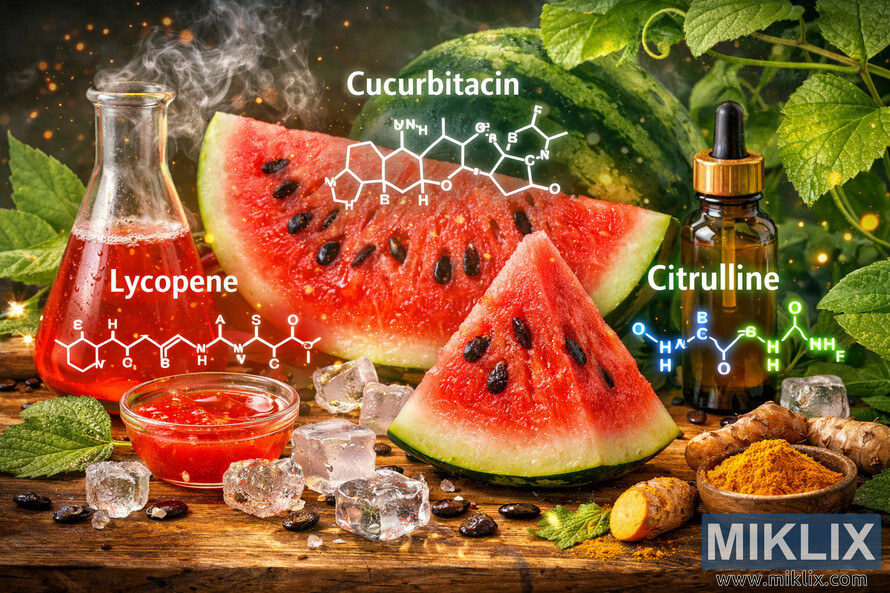
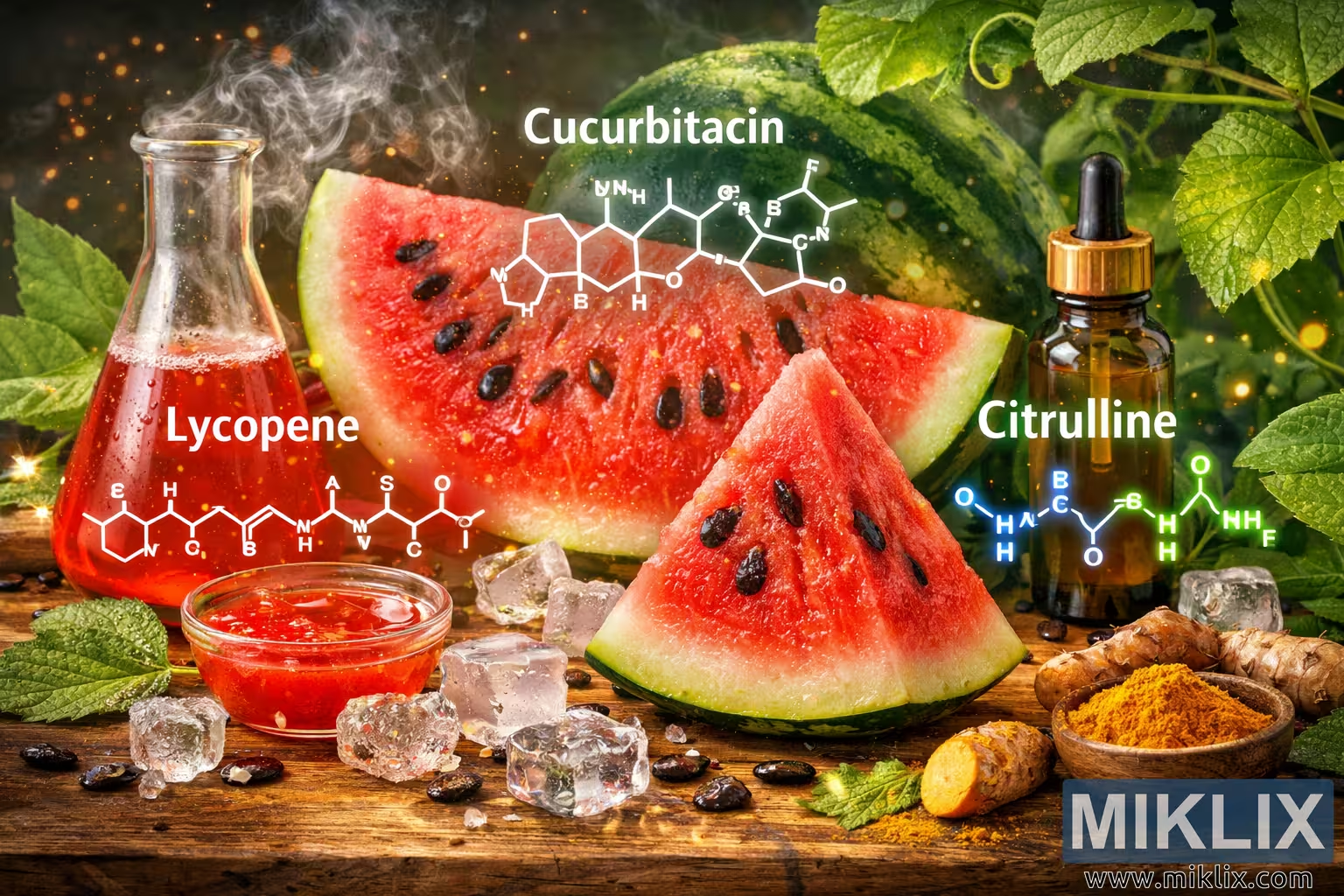
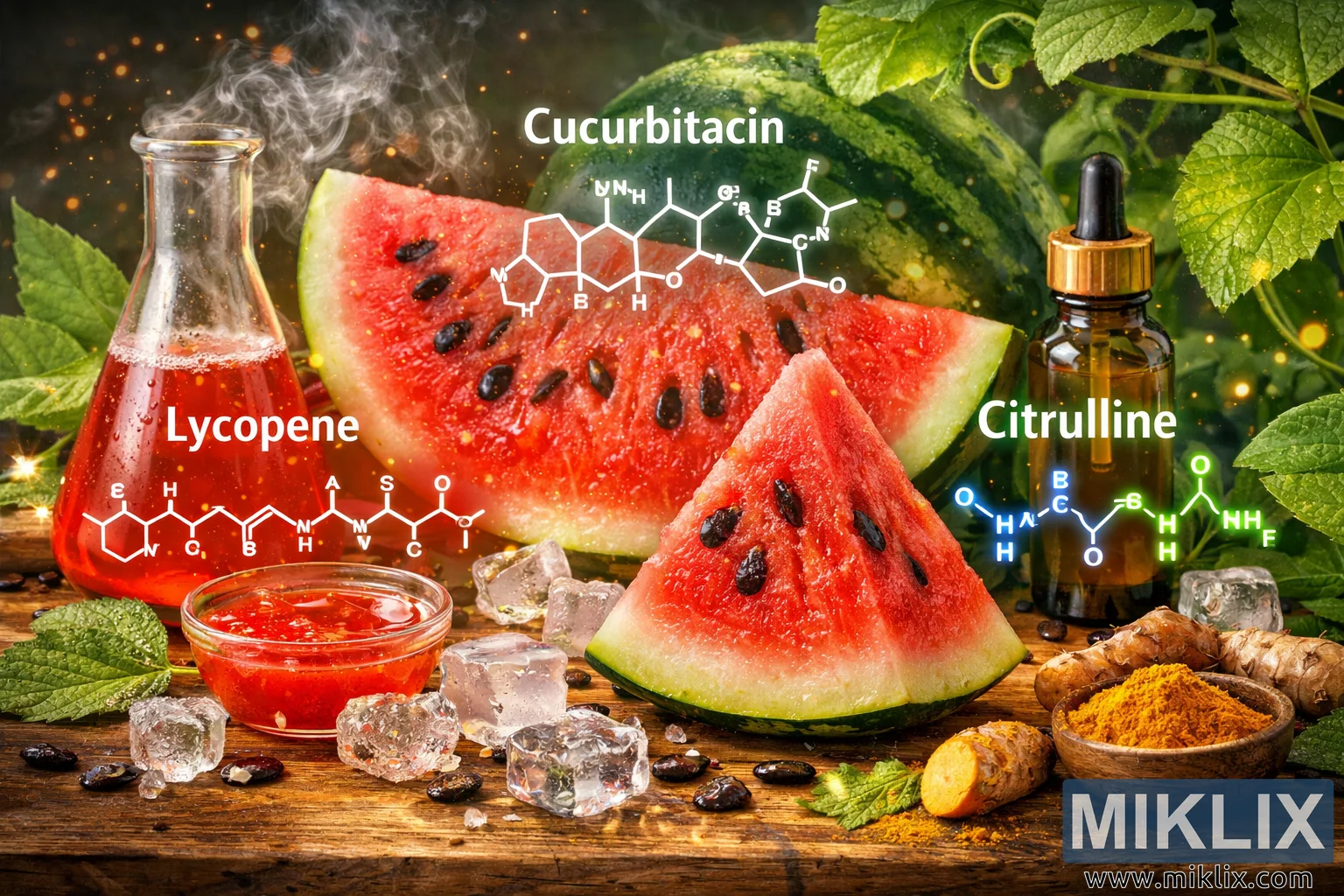
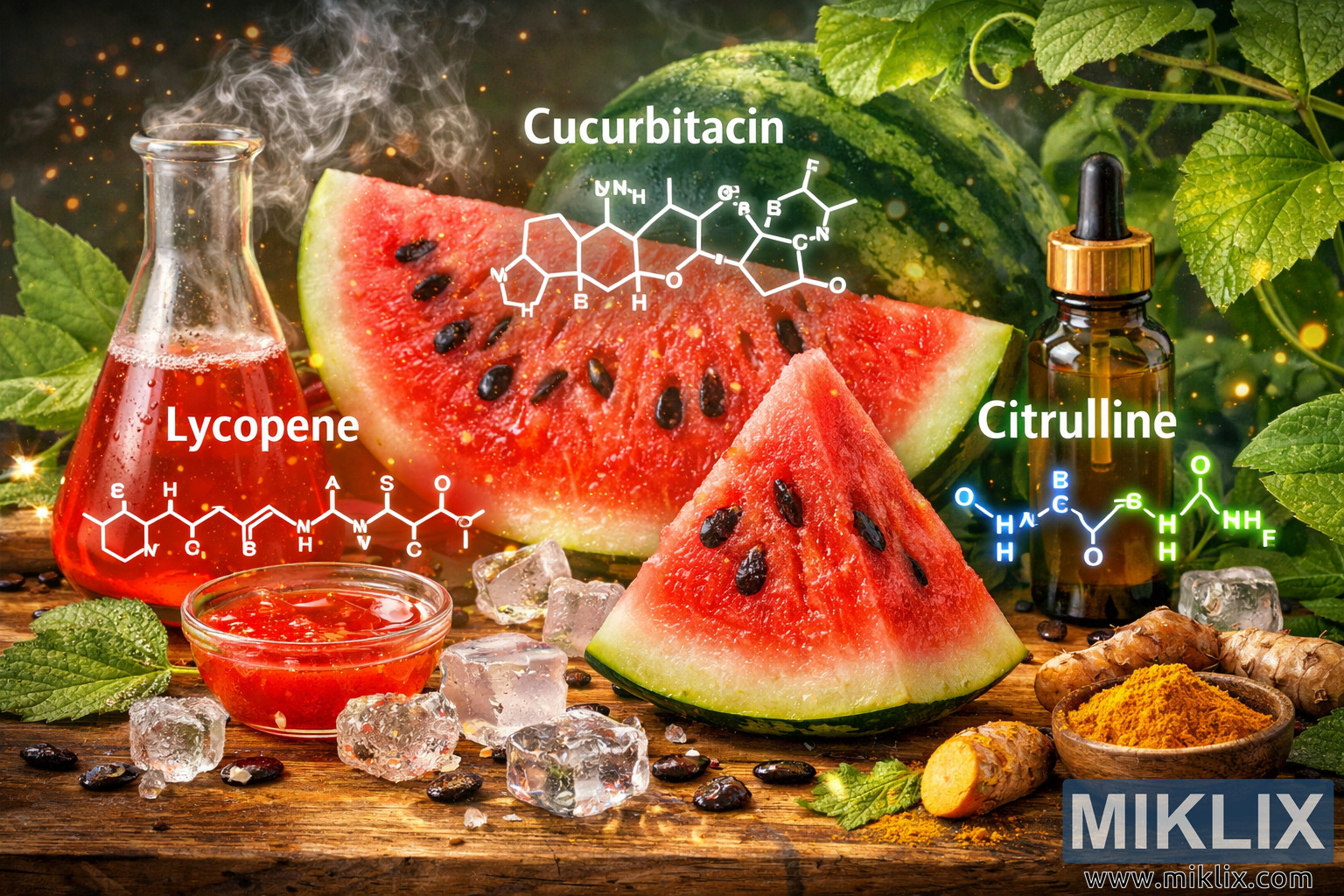
High-detail scientific food photograph depicting anti-inflammatory plant compounds in watermelon. The image features ripe watermelon slices, ice cubes, seeds, a glass flask with red liquid, an amber dropper bottle, and digitally overlaid molecular structures labeled Lycopene, Cucurbitacin, and Citrulline. Green leaves, glowing particles, and turmeric roots and powder complete the composition, visually linking watermelon and other botanicals to anti-inflammatory properties.
Anti-inflammatory Plant Compounds in Watermelon – Scientific Food Photography
الإصدارات المتوفرة من هذه الصورة
ملفات الصور المتاحة للتحميل أدناه أقل ضغطاً وأعلى دقة - ونتيجة لذلك أعلى جودة - من الصور المضمنة في المقالات والصفحات على هذا الموقع، والتي تم تحسينها من حيث حجم الملف من أجل تقليل استهلاك النطاق الترددي.
مقاس عادي (1,536 x 1,024)
حجم كبير (3,072 x 2,048)
حجم كبير جداً (4,608 x 3,072)
حجم كبير جداً (6,144 x 4,096)
حجم كبير بشكل كوميدي (1,048,576 x 699,051)
- ما زلت أقوم بالتحميل...؛-)
وصف الصورة
This high-resolution landscape photograph presents a vivid, science-inspired visualization of anti-inflammatory plant compounds found in watermelon. At the center of the composition, a large, ripe slice of watermelon immediately draws the eye. Its red flesh is richly saturated, dotted with glossy black seeds, and framed by a thick green rind that curves gently along the left side of the image. The surface of the watermelon appears moist and freshly cut, suggesting juiciness and natural freshness.
In the foreground, slightly to the right, a triangular wedge of watermelon rests on a rustic wooden surface. The wood grain runs horizontally, adding warmth and texture that contrasts with the smooth, watery flesh of the fruit. Around the wedge, several ice cubes glisten with condensation, their transparent edges catching the light and creating tiny reflections. Scattered watermelon seeds lie nearby, some partially embedded in small droplets of moisture, reinforcing the sense of a freshly prepared, cooling snack. To the left of the wedge, a small glass bowl holds a pool of deep red watermelon juice. The liquid’s surface reflects the ambient light, and faint ripples suggest it has just been poured.
On the left side of the scene, behind the central watermelon slice, stands a clear glass Erlenmeyer flask filled with a red liquid that visually echoes the color of the fruit. From the mouth of the flask, a wispy, glowing vapor rises and curls upward, adding a subtle sense of laboratory experimentation and scientific discovery. The vapor is softly illuminated, with tiny sparkling particles that hint at active compounds or energetic reactions. This scientific element bridges the gap between everyday food and biochemical research, suggesting that the watermelon’s vivid color is more than aesthetic—it is tied to beneficial plant molecules.
To the right of the central watermelon slice, a small amber glass bottle with a dropper cap introduces another layer of scientific symbolism. The bottle contains a golden liquid, and the dropper is held just above the opening, with a single droplet of oil suspended mid-air. The droplet catches the light, appearing almost luminous, as if it concentrates the essence of anti-inflammatory properties. The amber glass and dropper evoke the world of herbal extracts, nutraceuticals, or essential oils, reinforcing the idea that compounds derived from plants can be isolated, studied, and potentially used in targeted health applications.
Digitally overlaid across the scene are three molecular structures, each labeled with glowing text that identifies a specific compound associated with watermelon and anti-inflammatory effects. On the left side, near the flask and the large watermelon slice, a red molecular diagram is labeled "Lycopene." The structure is represented as a chain of interconnected hexagonal rings, stylized yet recognizable as a complex organic molecule. The red hue of the diagram mirrors the watermelon flesh and the liquid in the flask, visually linking lycopene to the fruit’s characteristic color and suggesting its role as a bioactive pigment with antioxidant and anti-inflammatory potential.
In the center of the image, overlaying the space above the watermelon and slightly toward the background, a white molecular structure is labeled "Cucurbitacin." This diagram consists of multiple hexagons and oxygen atoms, arranged in a more intricate, branching pattern. The white color stands out against the rich reds and greens of the scene, giving it a clinical, precise feel. The glowing text "Cucurbitacin" appears just above or beside the structure, making it clear that this is another key plant compound. Its placement in the center emphasizes its importance, suggesting that cucurbitacins are central to the anti-inflammatory narrative being depicted.
On the right side of the image, near the amber bottle and the suspended droplet of golden liquid, a green and blue molecular structure is labeled "Citrulline." This diagram features nitrogen, hydrogen, and oxygen atoms connected in a distinctive pattern, rendered in cool tones that contrast with the warm reds and golds elsewhere. The glowing text "Citrulline" appears beneath the structure, and the color palette hints at freshness, vitality, and a more physiological connection, as citrulline is often associated with vascular and metabolic benefits. Together, these three labeled molecules—lycopene, cucurbitacin, and citrulline—form a visual triad that communicates the scientific foundation of watermelon’s anti-inflammatory properties.
The background of the photograph is filled with soft-focus green leaves and curling tendrils, suggesting a lush, living plant environment. These botanical elements frame the central subjects without distracting from them, and they are interspersed with tiny glowing particles that float in the air. The particles resemble microscopic spores, dust motes, or energetic sparks, subtly implying that the entire scene is suffused with active plant chemistry. The lighting is vibrant and well-balanced, with highlights on the watermelon flesh, reflections on the glass surfaces, and gentle shadows that give depth to the composition. The overall color balance harmonizes rich reds, fresh greens, and warm golden tones, creating a visually appealing and cohesive palette.
In the lower right corner of the image, a small cluster of turmeric roots and a wooden bowl filled with bright turmeric powder introduce an additional visual reference to anti-inflammatory botanicals. The roots are knobby and irregular, with a warm orange-brown skin, while the powder in the bowl is a vivid yellow-orange. This secondary ingredient is placed carefully so it does not dominate the scene but instead complements the watermelon and the molecular overlays. It suggests a broader context in which multiple plant sources—such as watermelon and turmeric—contribute to anti-inflammatory dietary patterns.
The surface on which all these elements rest is adorned with more ice cubes, each with visible condensation, and scattered watermelon seeds that add small, organic details. The combination of ice, juice, seeds, and wooden textures creates a tactile, sensory-rich environment. The viewer can almost feel the coolness of the ice, the smoothness of the seeds, and the roughness of the wood. The scientific glassware, molecular diagrams, and labeled compounds overlay this sensory foundation, merging the worlds of culinary enjoyment and biochemical insight.
Overall, the photograph communicates the idea that watermelon is not just a refreshing fruit but a source of meaningful plant compounds with potential anti-inflammatory benefits. The central watermelon slice and wedge anchor the image in familiar, appetizing reality, while the flask, amber bottle, and molecular structures elevate the scene into a conceptual, educational space. The glowing labels "Lycopene," "Cucurbitacin," and "Citrulline" guide the viewer’s understanding, making the invisible chemistry of the fruit visible and engaging. The inclusion of turmeric roots and powder, along with the lush green background and floating particles, reinforces a holistic view of plant-based nutrition, where multiple botanicals contribute to health-supporting properties. The result is a detailed, visually rich, and scientifically themed representation of anti-inflammatory plant compounds in watermelon.
الصورة مرتبطة بـ: Watermelon: The Hydrating Superfruit You Should Eat More Often