
Hops in Beer Brewing: Canterbury Whitebine
Публикувано:
Последна актуализация: 13 юли 2026 г. в 19:44:40 ч. UTC
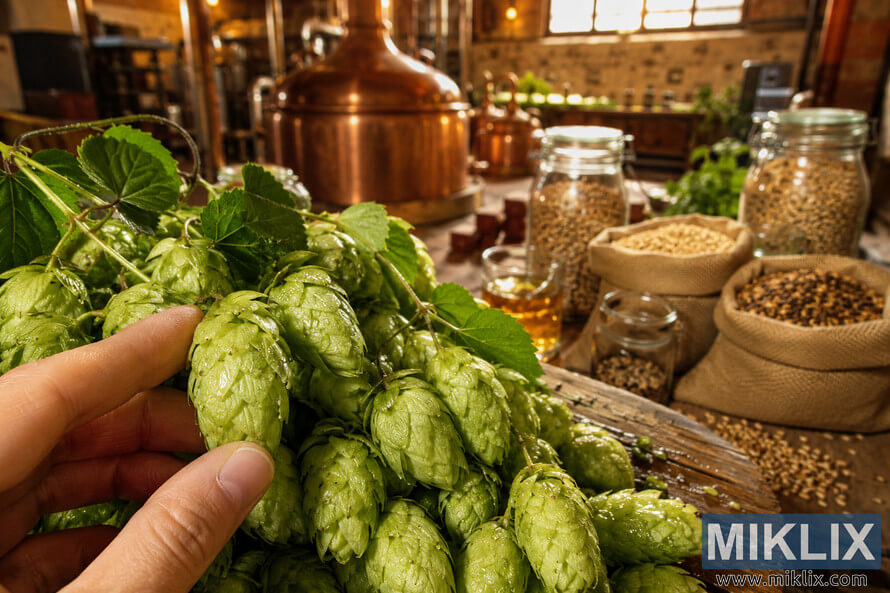
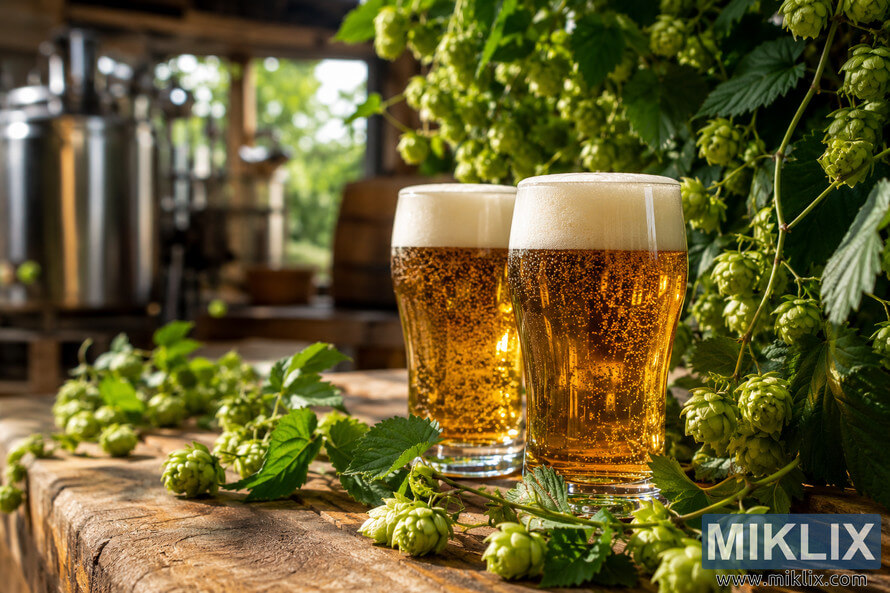
Canterbury Whitebine is celebrated for its vibrant citrus, floral, and herbal notes. These attributes are particularly suited for pale ales and modern IPAs. Its availability in New Zealand and limited cultivation in the U.S. make it an attractive option for brewers seeking to enhance their beer's aroma.
Hops in Beer Brewing: Canterbury Whitebine
Кликнете или докоснете изображението за повече информация и по-висока резолюция.
The art of brewing with Whitebine combines sensory complexity with technical precision. This article delves into its origins, flavor and aroma profile, and the chemical makeup of its alpha and beta acids. It also covers essential oils, recipe development, and the optimal timing for hop additions. Additionally, it discusses pairing with malt and yeast, the importance of water chemistry, and scaling up from homebrew to commercial batches. Troubleshooting, sensory evaluation, and considerations for suppliers and labeling are also addressed.
Targeted at American homebrewers, professional brewers, and educators, this guide aims to be both practical and evidence-based. It offers actionable advice on hop quantities, utilization, and dry-hop strategies. It shows how Canterbury hops can elevate beer aroma without disrupting balance. This guide serves as a valuable resource for experimenting with Whitebine hops in both pilot brews and larger-scale productions.
Key Takeaways
- Whitebine hops offer a distinctive citrus-floral-herbal profile useful in hop-forward styles.
- Canterbury Whitebine is grown in New Zealand and in limited U.S. plantings, giving sourcing options.
- Brewing with Whitebine requires attention to timing and oil preservation for peak aroma.
- Adjust malt and yeast choices to complement Whitebine rather than mask it.
- This guide provides technical and sensory steps to scale recipes from homebrew to commercial batches.
Introduction to Canterbury Whitebine hops
Canterbury Whitebine, a new cultivar from New Zealand, is gaining attention among brewers and growers. It boasts a bright citrus-floral-herbal character, ideal for late-kettle additions and dry hopping. Early assessments highlight its clarity in aroma and clean finish, making it perfect for modern hop-forward beers.
Origins and breeding background
The breeding of Whitebine started in Canterbury, New Zealand, under the guidance of Plant & Food Research and local nurseries. The aim was to develop a unique aroma profile, enhance disease resistance, and adapt to cooler climates. The process involves several years of field trials, patenting, and propagation before it reaches the market. This journey can span over a decade.
Where Canterbury Whitebine is grown in the United States and New Zealand
In New Zealand, Whitebine is cultivated in Canterbury and other regions influenced by the sea. In the Pacific Northwest, growers are conducting trials with US-grown Whitebine. They aim to understand how different terroirs affect its flavor. The shift in sunlight, soil, and summer heat can alter the hop's citrus and herbal notes compared to New Zealand-grown varieties.
Why brewers are excited about this hops variety
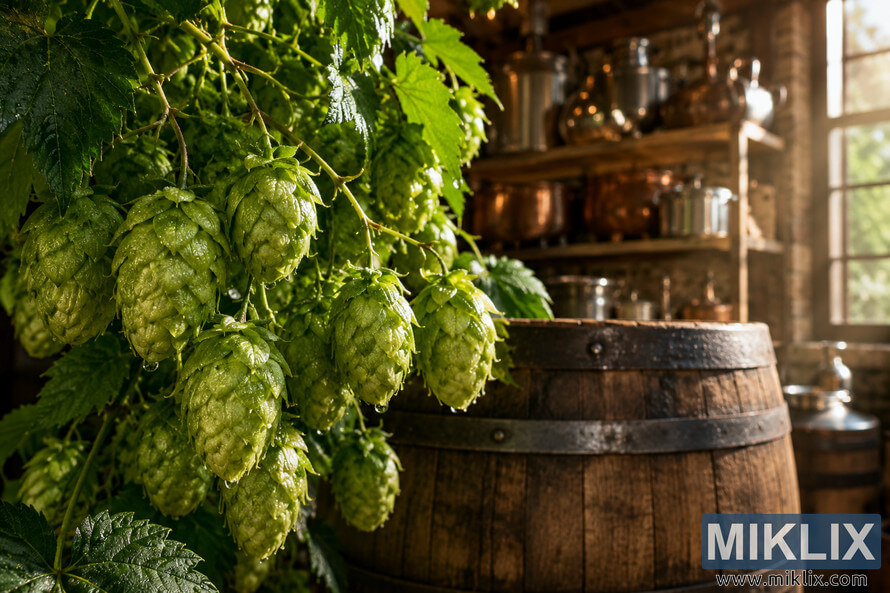
Hop breeders and craft breweries view Whitebine as a promising addition to the market. Its versatile citrus and floral notes are ideal for a range of beer styles, from pale ales to IPAs. Trials in the US suggest regional variations that could help brewers create unique offerings. Early adopters are excited about its potential to enhance beer without overpowering malt or yeast flavors.
Кликнете или докоснете изображението за повече информация и по-висока резолюция.
Flavor and aroma profile of Whitebine hops
Whitebine exhibits a clear, approachable character, fitting many beer styles. Its flavor profile is a balance of bright citrus and soft florals, with a clean herbal edge. This mix is prized by brewers for enhancing a brew without overpowering malt or yeast nuances.
Taste descriptors: citrus, floral, and herbal notes
On the palate, Whitebine offers a lively citrus profile, with notes of lemon, lime, and orange peel. Delicate floral tones, such as honeysuckle and jasmine, add a gentle perfume. A subtle herbal layer, including green tea, lemongrass, and light grassy facets, rounds out the hop's character.
Aroma characteristics at different usage rates
At low rates (0.5–1.0 oz per 5 gal), Whitebine aroma provides a soft floral lift. This enhances the headspace without overpowering the beer. Moderate rates (1–2 oz per 5 gal) emphasize pronounced citrus and herbal notes, creating a bright, lively nose.
High rates (2+ oz per 5 gal) or heavy dry-hop regimes intensify the citrus-fruit presence. However, intense use can introduce resinous or pithy edges. Therefore, kettle additions and dry hopping should be carefully chosen to control intensity and preserve the volatile floral hops.
How Whitebine compares to other aroma hops
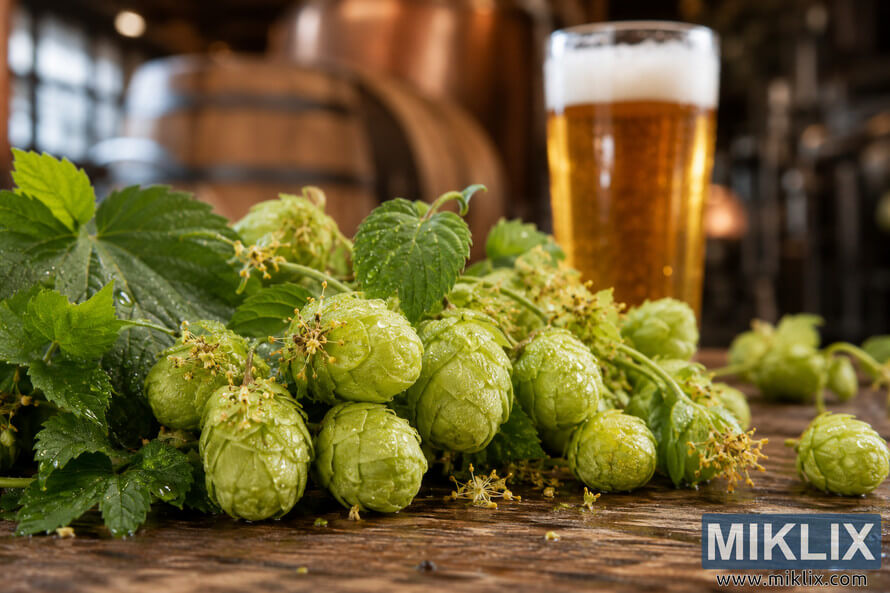
Whitebine shares lemon-lime clarity with Motueka but lacks Motueka's bready malt suggestion. Compared to Nelson Sauvin, Whitebine is less tropical and lacks sauvignon-like white grape notes. Against Cascade, Whitebine offers a softer citrus and floral balance, trading grapefruit and pine for a more nuanced profile.
This middle-ground profile makes Whitebine a versatile choice for brewers. It allows for citrus hops with floral nuances without venturing into extreme tropical or resinous territories.
Кликнете или докоснете изображението за повече информация и по-висока резолюция.
Alpha acids, beta acids, and essential oils
Understanding Whitebine chemistry is crucial for brewers to make informed decisions about additions and timing. This hop is best suited for enhancing aroma rather than providing heavy bitterness. The interplay between alpha acids, beta acids Whitebine, and hop essential oils determines both bitterness and aroma impact.
Typical alpha acid range and bitterness contribution
Whitebine alpha acids fall within a moderate range, typically between 4–7%. This positioning makes Whitebine more suitable for aroma enhancement rather than bittering. Early boil additions result in lower utilization compared to high-alpha hops. Therefore, achieving high IBUs necessitates larger quantities or blending with a bittering hop.
When planning hop additions, consider the boil's gravity and duration. Aroma-focused alpha acids contribute a gentle bitterness. This preserves the delicate citrus and floral notes when added late in the brewing process.
Essential oil composition and its impact on aroma
The essential oils in Whitebine include myrcene, humulene, caryophyllene, farnesene, limonene, linalool, and geraniol. Myrcene imparts citrus and resinous flavors. Humulene adds earthy and woody notes. Meanwhile, linalool and geraniol contribute floral and perfume-like qualities.
The percentages of these oils can vary by year, region, and handling practices. Harvest timing and rapid drying help preserve volatile compounds. For consistent aroma, it's essential to review supplier COAs and oil breakdowns rather than relying on a single number.
How oil composition influences dry hopping choices
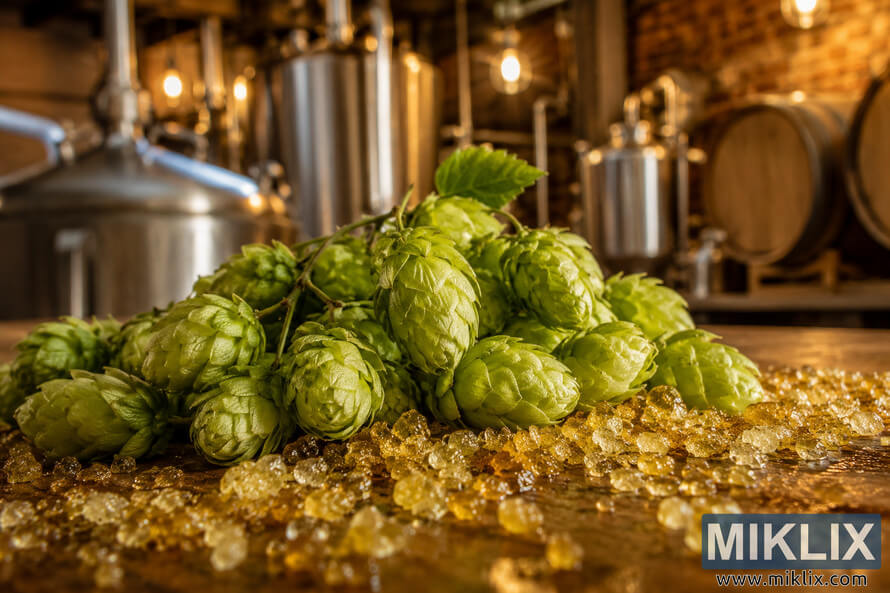
Higher levels of linalool, geraniol, and limonene are ideal for late kettle additions and dry hopping. This approach extracts bright, floral-citrus aromas. These volatile oils benefit from cool, short contact during dry hopping and minimal oxygen exposure.
Myrcene-rich profiles offer bold citrus but oxidize faster, potentially altering to resinous or green notes with excessive exposure. To safeguard delicate hop essential oils, employ cold dry hop temperatures, limit contact time, and consider cryo or pellet formats to reduce oxidation.
- Check beta acids Whitebine on COAs to anticipate aging behavior.
- For stable aroma, plan late additions or short dry-hop windows.
- Blend with a neutral bittering hop when higher IBUs are needed.
Кликнете или докоснете изображението за повече информация и по-висока резолюция.
Best beer styles to showcase Whitebine hops
Canterbury Whitebine adds a clear citrus and floral lift to various beer styles. It can be used as a single-hop showcase or a subtle component in small blends. Below are practical style choices and brewing targets to help you highlight Whitebine's character.
Pale ales and American-style ales
- Why it works: Whitebine's citrus-floral profile lifts malt without overpowering it. Use it in single-hop pale ales to achieve aromatic clarity.
- Targets: Original gravity (OG) 1.045–1.054, final gravity (FG) 1.010–1.014, 25–40 IBU for balanced bitterness.
- Malt and yeast: Use Maris Otter, pale 2-row, or a modest Munich malt to support biscuit and bread notes. Choose a clean American ale yeast like Wyeast 1056 or Safale US-05 to let hop aroma shine.
- Serving idea: A Whitebine pale ale works well for drinkers who want floral brightness with moderate body.
IPA variations: Session, West Coast, and New England
- Session IPA: Lower ABV (3.5–4.5%) with high late and dry hop rates. Emphasize Whitebine in late kettle hops and dry hop for aromatic impact without heavy bitterness.
- West Coast IPA: Aim for crisp fermentation and 60–80 IBU to create a bright, citrus-forward finish. Whitebine complements piney or resinous hops when used at 30–50% of the dry-hop bill for citrus brightness.
- New England IPA: Use Whitebine as a supporting floral-citrus member alongside tropical varieties like Citra or Mosaic. Keep protein- and dextrin-rich malts for mouthfeel. Blend ratios around 10–25% Whitebine maintain haze and let delicate floral notes come through.
- Practical tip: For Whitebine in IPA focus on late additions and whirlpool temperatures near 175°F to preserve volatile oils.
Belgian and hybrid styles that benefit from Whitebine
- Styles to try: Belgian pales, saisons, and farmhouse hybrids gain complexity from restrained use of Whitebine.
- Hopping approach: Keep hopping rates modest. Use Whitebine at lower quantities so yeast esters and phenolics remain dominant while floral and herbal facets add nuance.
- Yeast pairing: Trappist and saison strains work well. Ferment warmer for saison esters, then add Whitebine late to preserve aroma.
- Creative note: Small additions in mixed-fermentation or barrel-aged hybrids can lift aroma without masking barrel or yeast-derived complexity.
Across styles, starting points and hopping schedules let brewers control how Whitebine expresses itself. Thoughtful mash bills, clean fermentation, and timing of additions help craft beers with Whitebine that highlight its best qualities.
Кликнете или докоснете изображението за повече информация и по-висока резолюция.
Recipe development with Whitebine hops
Creating reliable Whitebine hop recipes requires clear goals for intensity, balance, and aroma. Below are guidelines for homebrew and scaling, malt choices that enhance hop character, and simple templates to start brewing quickly.
First, determine the hop quantities needed for the desired intensity. For a 5-gallon batch, use these ranges:
- Aroma lift: 0.5–1.5 oz total.
- Hop-forward single-hop pale ale: 2–4 oz split between late-kettle and dry-hop.
- Heavy dry-hop treatment: 3–6 oz for intense aroma and mouthfeel.
For commercial scaling, scale weights proportionally and adjust for utilization differences. Convert ounces to kilograms by using 1 oz ≈ 0.02835 kg. Larger kettles may have slightly lower utilization; adjust bittering hops upward if target IBUs matter.
Balancing malt backbone and hop-forward character is key. Use a neutral base malt like pilsner or Maris Otter. Add small portions of Carapils or Vienna to improve body without adding roast or caramel notes.
Target original gravities based on style. For single-hop pale ales aim for OG near 1.048. For NEIPA styles, push toward 1.060 to support fuller mouthfeel. Bitterness should complement citrus notes without harshness. Use 40–60 IBU for West Coast IPAs and 30–40 IBU for hazy New England approaches.
Hop quantities Whitebine will vary with technique. Late kettle and whirlpool additions preserve volatile oils. Dry hopping yields peak aroma. Combine methods to create layered profiles.
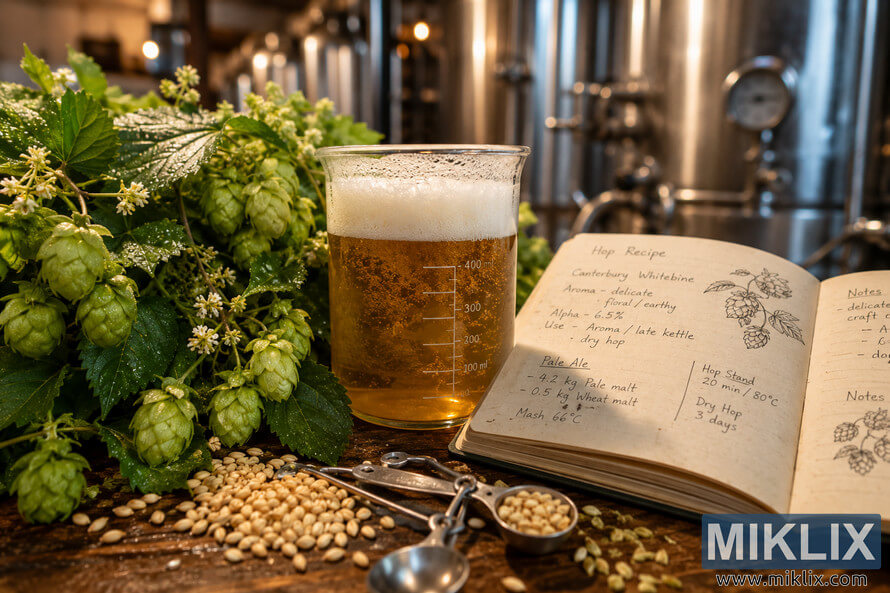
Examples of recipe templates using Whitebine are useful starting points. These templates assume a 5-gallon batch and common brewing practices.
- Single-hop Whitebine APA
- OG 1.048, FG ~1.012
- 30 IBU bittering with a neutral high-alpha hop at 60 minutes
- Whitebine additions at 15 and 5 minutes
- Dry-hop 1–2 oz for 3–5 days
- Whitebine-forward NEIPA
- OG 1.060, soft water profile
- Minimal early bittering, target 30–35 IBU
- Late-kettle/whirlpool Whitebine plus complementary fruity hops
- Heavy dry-hop 3–6 oz split across two additions
- Belgian pale with floral lift
- OG 1.050 with Belgian pale malt and a touch of aromatic malt
- Light bitterness, late single addition of Whitebine
- Restrained dry-hop (0.5–1 oz) to let yeast esters remain prominent
When testing recipes, record hop quantities Whitebine and tasting notes for every iteration. Small changes to timing and weight reveal how Whitebine interacts with yeast and malt. Repeat trials at consistent conditions to refine aroma, bitterness, and balance.
Кликнете или докоснете изображението за повече информация и по-висока резолюция.
Hop addition timing and techniques
Deciding when and how to add Canterbury Whitebine hops is crucial for aroma, flavor, and bitterness. Whitebine's lower alpha acids make it ideal for late-kettle additions, enhancing delicate oils. Employ specific techniques at the boil, whirlpool, and in the fermenter to maximize Whitebine's potential.
Early boil additions boost IBUs but can strip away the floral and citrus oils that define Whitebine. For bittering, consider an early addition of a high-alpha hop like Magnum or Warrior. Then, reserve Whitebine for late-kettle use to preserve its unique character.
Late-kettle or flameout additions are key for preserving aroma and bright top notes. Add Whitebine within the last 5–0 minutes to capture its signature character without introducing harshness.
Whirlpool and hopstand strategies to preserve aroma
Whirlpool Whitebine at controlled temperatures to extract desirable oils while limiting harsh polyphenols. Aim for a whirlpool or hopstand range of 160–180°F (70–82°C).
- Hold around 170°F (77°C) for 20–30 minutes to maximize aroma extraction.
- Use gentle recirculation to keep the hops in contact with wort without excessive agitation.
- Chill quickly after the whirlpool to lock in volatile compounds and reduce oxidation risk.
Best practices for dry hopping with Whitebine
Dry hopping Whitebine enhances late aroma intensity and lift. Target a temperature range of 50–68°F (10–20°C) and contact times of 2–7 days, depending on desired intensity.
- Start with moderate rates and increase for packed-hop styles; keep track of batch records to refine amounts.
- Consider a short cold crash before packaging to drop yeast and trub, which clarifies beer and reduces grassy extraction.
- Avoid extended contact beyond a week at warm cellar temps to prevent vegetal or astringent notes.
- When keg conditioning, purge oxygen and minimize transfers to protect bright hop aroma during service.
Pairing Whitebine hops with malt and yeast
Choosing the right malt and yeast is key to bringing out Whitebine's citrus and floral notes. A light, neutral grain bill ensures those bright hop notes shine through. Small adjustments to body and esters allow brewers to tailor the beer to their liking, whether it's for West Coast clarity, New England softness, or Belgian complexity.
Malt choices to complement floral and citrus notes
- Pilsner malt or pale 2-row creates a clean platform that highlights Whitebine's top notes.
- Maris Otter offers a subtle biscuity backbone without masking aroma.
- Add 3–6% Carapils or other dextrin malt to boost head retention and mouthfeel while keeping hop clarity.
- For Belgian or hybrid beers, use a pilsner or pale base plus a light portion of candy sugar to lift alcohol and dry the finish.
Yeast strains that enhance hop character
- Use clean American ale strains like Safale US-05, Wyeast 1056, or White Labs WLP001 for the best yeast for Whitebine in West Coast and American pale styles.
- Choose ester-forward English or Belgian strains when you want yeast-hops interplay and extra fruity complexity.
- For New England IPAs, select London Ale III or Conan-like strains to soften bitterness and enhance haze with a pillowy mouthfeel.
- Think of pairing Whitebine malt yeast as a trio choice: malt base, hop schedule, and yeast strain must align for clarity or haze, depending on style goals.
Fermentation temperature considerations
- Keep fermentations within manufacturer guidelines. Aim for 64–68°F for clean American ales to let hops shine.
- Raise temperatures slightly to 68–72°F when you want more esters in hybrid or Belgian styles, but monitor closely so fruity esters do not clash with delicate floral notes.
- Plan a diacetyl rest near the end of fermentation and condition at cooler temperatures to preserve volatile hop aromatics.
Pairing Whitebine with the right malt and yeast combination yields beers that express the hop’s best traits. Thoughtful malt selection, careful yeast choice, and tight temperature control ensure consistent, expressive results.
Harvest and storage considerations for Whitebine
Timing and handling are crucial for the aroma and performance of Canterbury Whitebine hops. Small decisions at harvest and storage can affect the delicate oils or shift the flavor towards greener, resinous notes. Here are practical steps for a successful Whitebine harvest and inventory management.
Optimal harvest timing for peak aroma
Check cone maturity by assessing brix, cone feel, lupulin color, and aroma. Aim for a brix level as advised by your supplier. Cones should feel slightly papery with a sticky lupulin that's golden to deep yellow.
Smell the lupulin regularly in the week before harvest. Early picks are greener and more floral. Later picks have stronger citrus and resin notes. Plan your harvest windows to achieve the desired aroma in your beer.
Packaging formats: pellets, whole cone, and cryo
- Hop pellets Whitebine: Pellets provide density, uniform dosing, and consistent extraction. They're easier to meter in both homebrew and production systems. Expect faster utilization in the kettle compared to whole cone.
- Whole cones: Brewers prefer perceived freshness and lower processing. Whole cones yield a softer, more complex aroma in dry hopping. They require more space and can be harder to dose evenly.
- Cryo hops: Cryo hops concentrate lupulin and reduce vegetal matter. They deliver intense aroma with less product needed. Handling is cleaner, but cost per aroma unit is higher. Cryo hops can alter bitterness perception, so adjust recipes accordingly.
Storage tips to retain freshness and oil integrity
Use oxygen-barrier, vacuum-sealed packaging and keep hops frozen at 0°F (-18°C) or colder. Low temperature and minimal oxygen slow essential oil oxidation that dulls aroma. Check COAs and harvest dates from suppliers when receiving stock.
Rotate inventory using FIFO and buy quantities matched to usage. For short-term use, refrigerated storage at 32–40°F helps. For long-term holding, freeze. When storing Whitebine hops, avoid heat and light and limit bag punctures to reduce oxygen ingress.
Water chemistry adjustments when using Whitebine
Adjusting water chemistry for Canterbury Whitebine impacts the hop's citrus and floral notes in the beer. Tweaks to mineral balance and mash pH are crucial. They shape the beer's bitterness, body, and aroma clarity. Below are practical targets and steps to test and adjust your source water before brewing.
Recommended sulfate-to-chloride guidance
- For crisp West Coast beers, aim for a higher sulfate chloride ratio hops in the range of 2:1 to 3:1. Target sulfate around 150–300 ppm and chloride 50–100 ppm to sharpen hop snap and perceived dryness.
- For New England–style beers, favor chloride to enhance roundness and mouthfeel. A 1:1 to 1:2 sulfate chloride ratio hops works well, with chloride in the 100–200 ppm band and sulfate nearer 50–150 ppm.
- Avoid over-salting the mash. Add minerals gradually and taste. Excess sulfates can become harsh; excess chloride can flatten hop lift.
Targets for mash pH and fermentation
- Keep mash pH Whitebine between 5.2 and 5.6, with an ideal zone around 5.3–5.5. This range optimizes enzyme activity and gives balanced malt extraction that supports hop clarity.
- Monitor fermentation pH; typical finished beer pH sits near 4.2–4.6 depending on style. Higher beer pH can make bitterness seem more aggressive, which matters for hop-forward brews.
How water profile changes perception
- Higher sulfate accentuates perceived bitterness and a dryer finish. Use it to highlight Whitebine's hop snap in pale ales and West Coast IPAs.
- Higher chloride emphasizes malt sweetness and fuller body. Use this to soften hop edge and boost mid-palate aroma in softer IPAs and hybrid styles.
- Balance is key. Test with small batches and use calculators like Bru’n Water or other water adjustment tools to predict ion targets before adding gypsum or calcium chloride.
Practical testing and tools
- Get a lab water report if possible. If not, use TDS meters and ion strips for a rough read, then fine-tune with small additions.
- Record outcomes. Note sulfate chloride ratio hops, mash pH Whitebine, and sensory results so you can repeat successful batches at larger scale.
Scaling Whitebine recipes from homebrew to commercial
Scaling up a Whitebine recipe from a small batch to a large commercial brew is complex. It involves more than just multiplying ingredients. The way hops extract their oils and alpha acids changes with the size of the brew. Adjustments are needed to keep the flavor, bitterness, and aroma consistent.
Calculating hop utilization at different batch sizes
Hop utilization drops as batch size and kettle size increase. Use Tinseth or Rager formulas as a starting point. Then, apply a vessel-specific correction factor based on boil vigor and hop form. Pellets generally have higher utilization than whole cone hops, and cryo products concentrate oils, affecting bitterness.
Recalculate IBUs for late additions and whirlpool hops. Larger kettles have lower hop extraction due to whirlpool temperatures, contact time, and trub loss. Test brews or pilot cellars are essential to compare measured IBUs with predictions, refining your kettle factor.
Process control and consistency strategies
Commercial brewing of Whitebine requires standard operating procedures for consistency. Track hop lot specs, including alpha acid, oil content, and harvest date on every Certificate of Analysis. Keep batch records that detail timings, temperatures, and sensory notes for each production run.
- Use COA tracking and inventory tagging for each hop lot.
- Run sensory panels to validate aroma and flavor between batches.
- Enforce sanitation and oxygen control during transfers, whirlpool, and dry hopping.
Consistent whirlpool temperatures and fixed contact times are key for aroma extraction consistency. Control dissolved oxygen when adding hops by purging vessels with CO2 and minimizing splash during recirculation.
Equipment considerations for large-scale dry hopping
Large-scale dry hopping demands specialized equipment to handle solids and prevent oxygen pickup. Consider inline hop dosing for precise additions, hop-back systems for flavor capture, and stainless steel dry-hop canisters for easy loading and removal.
Design piping and screens to prevent clogging and enable gentle recirculation. Use low-shear pumps or CO2-assisted mixing to disperse hop material evenly. Implement CO2 purging and closed transfer loops to protect hop oils and preserve aromas.
Document hop utilization scaling and equipment settings for each batch size. This ensures a reproducible path from homebrew trials to full-scale production, preserving Whitebine's delicate citrus and floral character.
Common problems and troubleshooting with Whitebine
Whitebine hops offer a vibrant aroma and flavor when used correctly. This guide addresses common issues brewers face with Whitebine. It provides practical steps to protect the hop's volatile oils and preserve its character.
Addressing muted aroma or off-flavors
- First, check the hop's freshness. Old or poorly stored hops lose their volatile oils, leading to a muted aroma. Ensure to buy from trusted suppliers and verify the Certificate of Analysis (COA).
- Timing of aromatic additions is crucial. Late kettle additions, whirlpool at lower temperatures, and targeted dry-hopping help preserve Whitebine's delicate notes.
- Be mindful of boil vigor and contact time. High temperatures and prolonged exposure can drive off aromatics, resulting in pithy bitterness.
- Review fermentation activity. Aggressive fermentation can scrub hop volatiles. Select yeast carefully and control fermentation temperature to avoid yeast-derived off-flavors.
Controlling vegetative or grassy notes
- Avoid long warm contact with whole-cone hops. Extended dry-hop periods at room temperature extract vegetal compounds.
- Choose pellets or cryo lupulin to reduce vegetal matter. These forms concentrate oils and cut back on green, leafy extraction.
- Limit dry-hop windows to recommended ranges, typically 48–72 hours at cooler conditioning temps. Consider a cold crash before packaging to drop particulates.
- Monitor hop dosage. Overusing hops can push vegetal tones, especially in lighter malt frames.
Oxidation prevention for hop-forward beers
- Minimize oxygen pickup during transfers and packaging. Closed transfers and purging tanks with CO2 reduce headspace oxygen.
- Use inerting techniques when handling hops and vessels. Purge kegs, fermenters, and bright tanks prior to filling.
- Limit hot-side aeration. Vigorous splashing during lautering or transfers introduces oxygen that degrades hop oils.
- Chill wort quickly after the hop stand. Fast chilling preserves volatile aromatics and lowers the chance of oxidative reactions.
Sensory evaluation and tasting notes for Whitebine beers
Reliable tasting starts with a clear process. Ensure the tasting environment is set up properly. Use consistent glassware and serving temperatures. Randomize coded samples to reduce bias. This approach makes tasting Whitebine beers repeatable and useful for recipe development.
Begin by forming a Whitebine tasting panel with four to eight trained tasters. Train panelists on the language for key attributes. This includes lemon, lime, orange, honeysuckle, jasmine, herbal green notes, resin, and pith. Brief sessions help panelists calibrate intensity scales before formal scoring.
- Controlled samples: randomized and coded.
- Consistent glassware and temperature for all pours.
- Panel size: 4–8 trained tasters for reliable results.
Setting up a tasting panel and scorecard
Use a scorecard with clear categories and a uniform scale. Recommended fields include aroma, flavor, bitterness, mouthfeel, balance, and overall impression. Offer numerical options from 1 to 10, or adapt BJCP-style metrics for granular feedback.
Provide definitions on the scorecard so panelists know what each category covers. Include space to note specific descriptors and the persistence of aroma or aftertaste. Collect individual sheets to enable statistical analysis of results.
Describing aroma, flavor, mouthfeel, and aftertaste
Encourage descriptive, concrete notes. For aroma, prompt tasters to identify citrus types—lemon, lime, or orange—and floral facets such as honeysuckle or jasmine. Note any herbal or green character and presence of resin or pith.
Ask panelists to rate intensity and persistence. For flavor, capture how citrus and floral elements translate on the palate. For mouthfeel, record body, carbonation level, and perceived weight. For aftertaste, note duration and any late bitterness or vegetal tones.
Recording iterations to refine future recipes
Keep detailed logs that pair sensory results with recipe and process data. Save hop lot details such as COA, alpha range, and harvest date next to tasting notes. Document mash profiles, fermentation temps, yeast strain, dry-hop timing, and hop rates.
Aggregate panel feedback to spot consistent trends. Make one change at a time—adjust timing, hop quantity, or yeast strain—and repeat the tasting with replicated brews to validate improvements. This cycle of tasting Whitebine beers and refining recipes makes each iteration more predictable and effective.
Maintain an archive of scorecards and lab data for future comparisons. Regular sensory evaluation Whitebine sessions with a dedicated Whitebine tasting panel build institutional memory. This helps craft beers that express the variety’s best traits.
Supplier and purchasing guidance for Whitebine hops
Acquiring Canterbury Whitebine requires identifying the right sources and understanding the necessary details. Brewers should explore established U.S. distributors and specialty brokers. It's crucial to verify lab documentation and consider the costs of different formats and shipment options before making a purchase.
Well-known hop distributors in the U.S. include Hopsteiner, Yakima Chief Hops, HopsDirect, and John I. Haas. For limited quantities, regional craft suppliers and specialty brokers can be invaluable. Additionally, New Zealand exporters may offer Whitebine directly; contacting brokers can expedite availability checks.
- Ask your supplier about lead times and minimum order sizes.
- Compare inventory across multiple Whitebine hop suppliers to get a clear view of supply and delivery options.
Reputable hop suppliers in the United States
Begin with national distributors like those mentioned above, then explore regional craft suppliers in hops hubs such as Yakima Valley and Oregon. For small trials, opt for suppliers offering smaller lot sizes. Commercial brewers should seek broker contacts for direct New Zealand sourcing when domestic stock is depleted.
What to look for on spec sheets and COAs
Examine spec sheets for alpha acid percentage, beta acids, total oil content, oil breakdown if available, moisture, harvest date, and lot traceability. Request the Whitebine COA for the exact lot you will receive. The COA's storage and handling notes are crucial for preserving aroma and oil integrity.
- Verify harvest and pack dates to assess freshness.
- Confirm lot traceability for quality control and any future recalls.
- Ask for lab methods used to generate the Whitebine COA when results seem inconsistent.
Cost considerations and sourcing strategies
Whitebine pricing is influenced by new variety premiums, limited crop volumes, format choice, and international freight when shipped from New Zealand. Cryo hops are more expensive but offer stronger aroma per gram. Pellet formats are less costly per pound and easier to store.
- Buy small lots to trial Whitebine before scaling recipes.
- Form buying groups with other craft brewers to reduce per-unit Whitebine pricing on larger purchases.
- Consider forward contracts for seasonal needs to lock supply and stabilize Whitebine pricing for commercial runs.
Request full documentation from any Whitebine hop suppliers and compare quotes that include packaging, cold-chain handling, and import fees when relevant. This approach reduces risk and ensures breweries match purchase size to projected usage without overspending.
Conclusion
This Whitebine summary delves into its Canterbury roots and its distinct citrus, floral, and herbal notes. It's an excellent choice for pale ales, American-style IPAs, and certain Belgian or hybrid beers. Its use in late-kettle, whirlpool, and dry-hop stages enhances the brew's character. The key to preserving its aroma lies in freshness and proper storage.
For those looking to brew with Whitebine, start with small batches. Incorporate modest late-kettle additions and conservative dry-hop rates. Always refer to lot-specific certificates of analysis. Adjust your water chemistry and yeast selection to highlight the hop's unique qualities without being overpowered by malt or yeast phenolics.
Next steps for Whitebine include sourcing a trial lot from a trusted supplier. Plan a single-hop test brew and conduct detailed sensory sessions. Record the aroma, flavor, and mouthfeel. If the recipe succeeds, scale it up while maintaining strict control over process and oxygen management. Share your findings to contribute to the collective knowledge of Whitebine among brewers.
FAQ
What is Canterbury Whitebine hops and why is it noteworthy for American brewers?
Canterbury Whitebine is a hop variety from Canterbury, New Zealand. It's known for its citrus, floral, and herbal notes. It's also disease-resistant, making it ideal for cooler climates. American brewers find it appealing because it offers a unique aroma profile, blending citrus with floral notes.
Its availability in the U.S. is limited, but its distinct character makes it a sought-after ingredient. It's perfect for pale ales, IPAs, and hybrid styles, adding a fresh twist to beer flavors.
Where is Whitebine grown and can U.S. breweries source it domestically?
Whitebine primarily grows in Canterbury and other New Zealand hop regions. Some U.S. growers in Washington, Oregon, and Idaho cultivate it. However, most commercial supply comes from New Zealand exporters.
U.S. breweries can find Whitebine through Hopsteiner, Yakima Chief Hops, John I. Haas, HopsDirect, or specialty brokers. They should request COAs, harvest dates, and lot traceability.
What are the primary flavor and aroma notes brewers can expect from Whitebine?
Whitebine offers a bright citrus profile with notes of lemon, lime, and orange peel. It also has delicate floral tones, such as honeysuckle or jasmine. Subtle herbal or lemongrass and green-tea facets add depth to its aroma.
At moderate rates, the citrus and floral notes are pronounced. However, high rates or prolonged contact can introduce a resinous or pithy edge. This balance makes Whitebine ideal for adding a clean citrus lift without overpowering malt or yeast character.
What is the typical alpha acid range and does Whitebine work as a bittering hop?
Whitebine is primarily an aroma hop with a modest alpha acid range. It typically falls in the low-to-mid single digits (approx. 4–7%). While it can contribute some bitterness, brewers often use a high-alpha bittering hop for early kettle additions.
Whitebine is best reserved for late-kettle, whirlpool, and dry-hop uses. This preserves the volatile oils responsible for its distinctive aroma.
Which essential oils in Whitebine drive its aroma, and how do they affect hop handling?
Key oil components in Whitebine include myrcene, humulene, caryophyllene, limonene, linalool, and geraniol. Higher proportions of linalool, geraniol, and limonene favor late additions and dry hopping. Myrcene oxidizes more readily, so freshness and cold, oxygen-free storage are critical.
Brewers should review supplier COAs for oil breakdown when precision is required. This ensures the desired aroma profile in their beers.
What beer styles best showcase Whitebine hops?
Whitebine performs well in American pale ales and single-hop test beers. It's also suitable for session IPAs, West Coast IPAs for citrus brightness, and New England–style IPAs when blended thoughtfully with fruitier hops.
It can add floral-herbal complexity to Belgian pales, saisons, and hybrid beers. Use it restrainedly so yeast esters remain perceptible.
How much Whitebine should I use in a 5-gallon homebrew?
Guidelines suggest using 0.5–1.5 oz total for light aroma lift. For a hop-forward single-hop pale ale, plan 2–4 oz split between late-kettle and dry-hop. Heavy dry-hop programs often run 3–6 oz.
For bittering, rely on a neutral high-alpha hop early and reserve Whitebine for late additions, whirlpool, and dry-hop to preserve aroma.
When should I add Whitebine during the brew to maximize aroma?
Favor late-kettle additions, flameout, whirlpool/hopstand, and dry hopping. Avoid lengthy early-boil use if aroma is the goal. For whirlpool, aim for ~160–180°F (70–82°C) for 15–30 minutes, then chill quickly.
Dry hop at 50–68°F (10–20°C) for 2–7 days depending on intensity desired. Consider a short cold crash to reduce vegetal extraction before packaging.
Which malts and yeast strains complement Whitebine?
Neutral pale bases like pilsner malt or Maris Otter with small amounts of dextrin malts (carapils) allow Whitebine to shine. For yeast, clean American strains (Safale US-05, Wyeast 1056/White Labs WLP001) highlight hop clarity.
For NEIPAs, use haze-friendly strains (London Ale III, Conan-like) to pair soft mouthfeel with hop aroma. Belgian or English strains can work in hybrids but use lower hopping rates to avoid masking yeast character.
What harvest and storage practices preserve Whitebine’s aroma?
Harvest at optimal cone maturity for desired oil profile. Prefer vacuum-sealed, oxygen-barrier packaging and frozen storage at or below 0°F (-18°C). Rotate stock FIFO, check COAs for pack/harvest dates, and buy amounts aligned with use.
Pellets offer density and uniform dosing; whole cones and cryo have different handling and extraction profiles—cryo yields concentrated lupulin but at higher cost.
How should I adjust water chemistry when brewing with Whitebine?
For crisp West Coast bitterness aim for a sulfate-to-chloride ratio around 2:1 to 3:1 with sulfate in the 150–300 ppm range. For NEIPA or fuller mouthfeel favor higher chloride (1:1 up to 1:2 chloride:sulfate) with chloride in the 50–150 ppm range.
Target mash pH 5.2–5.6 (ideal ~5.3–5.5). Use water calculators and test your source water for ions before adjusting.
How do I scale Whitebine recipes from a 5-gallon batch to commercial sizes?
Recalculate IBUs with formulas like Tinseth or Rager and adjust for kettle geometry, boil vigor, and hop form. Track lot-specific alpha and oil values from COAs. Implement SOPs for whirlpool and dry-hop timing and temperatures.
For large-scale dry hopping, use inline dosing, hop-back systems, stainless canisters, and CO2 purging to minimize oxygen pickup while ensuring even extraction.
What common problems occur with Whitebine and how can I troubleshoot them?
Muted aroma often stems from old hops, poor storage, excessive early-boil addition, or process issues—use fresh hops, push additions later, and check fermentation health. Vegetal or grassy notes arise from long warm dry-hop contact or whole-cone debris—limit contact time, cold crash, or use pellets/cryo.
To prevent oxidation, minimize headspace, purge with CO2, close transfers, and chill rapidly after whirlpool.
How should I conduct sensory evaluation of beers brewed with Whitebine?
Use a 4–8 person panel, randomized coded samples, consistent glassware, and controlled serving temps. Score aroma, flavor, bitterness, mouthfeel, balance, and overall impression. Train panelists to identify lemon/lime/orange peel, honeysuckle/jasmine, herbal notes, and any resin or pith.
Keep detailed logs of hop lot, additions, timing, and process to iterate recipes.
Who supplies Whitebine hops and what should I look for on spec sheets?
Check well-known distributors—Hopsteiner, Yakima Chief Hops, John I. Haas, HopsDirect—and specialty brokers or New Zealand exporters for Whitebine. On spec sheets and COAs, verify alpha/beta acids, total oil content, oil breakdown (if available), moisture, harvest/pack date, and lot traceability.
These details help predict aroma and dosing for both pilot and commercial runs.
Are there labeling or legal considerations when marketing beers brewed with Whitebine?
U.S. TTB rules require accurate manufacturer/bottler info, net contents, ABV, and health warnings. Claims such as “contains Canterbury Whitebine hops” are permissible if truthful and substantiated with purchase records or lot IDs. Avoid implying geographic origin for the beer itself if brewed in the U.S.; instead use factual storytelling like “Contains Canterbury Whitebine hops sourced from New Zealand.”
Допълнително четене
Ако ви е харесала тази публикация, може да ви харесат и тези предложения:
- Хмелът в пивоварството: Гордостта на Рингвуд
- Хмел в пивоварството: Boadicea
- Хмел в пивоварството: Средният сезон на Кийуърт