
Изображение: Shallot Plants Affected by Common Garden Pests
Публикувано:
Последна актуализация: 22 март 2026 г. в 21:44:01 ч. UTC
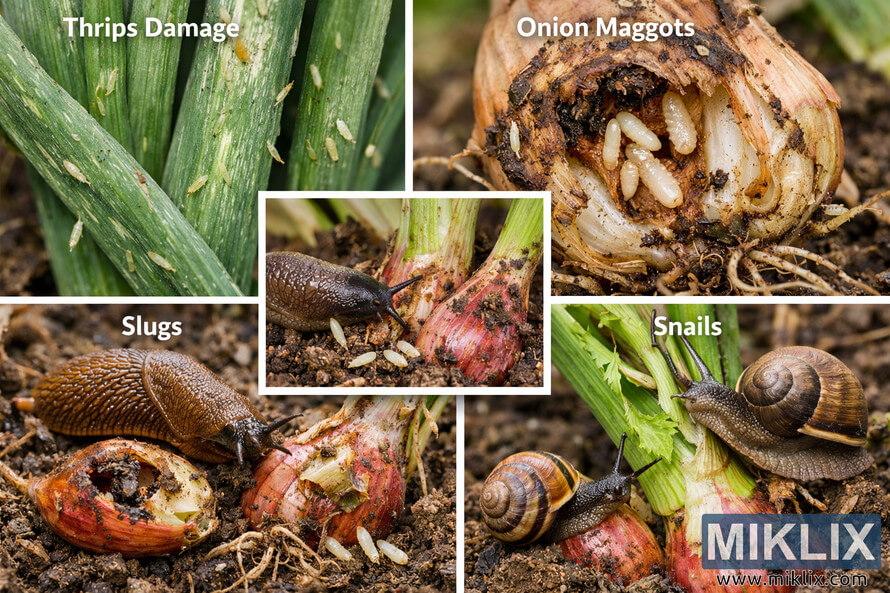
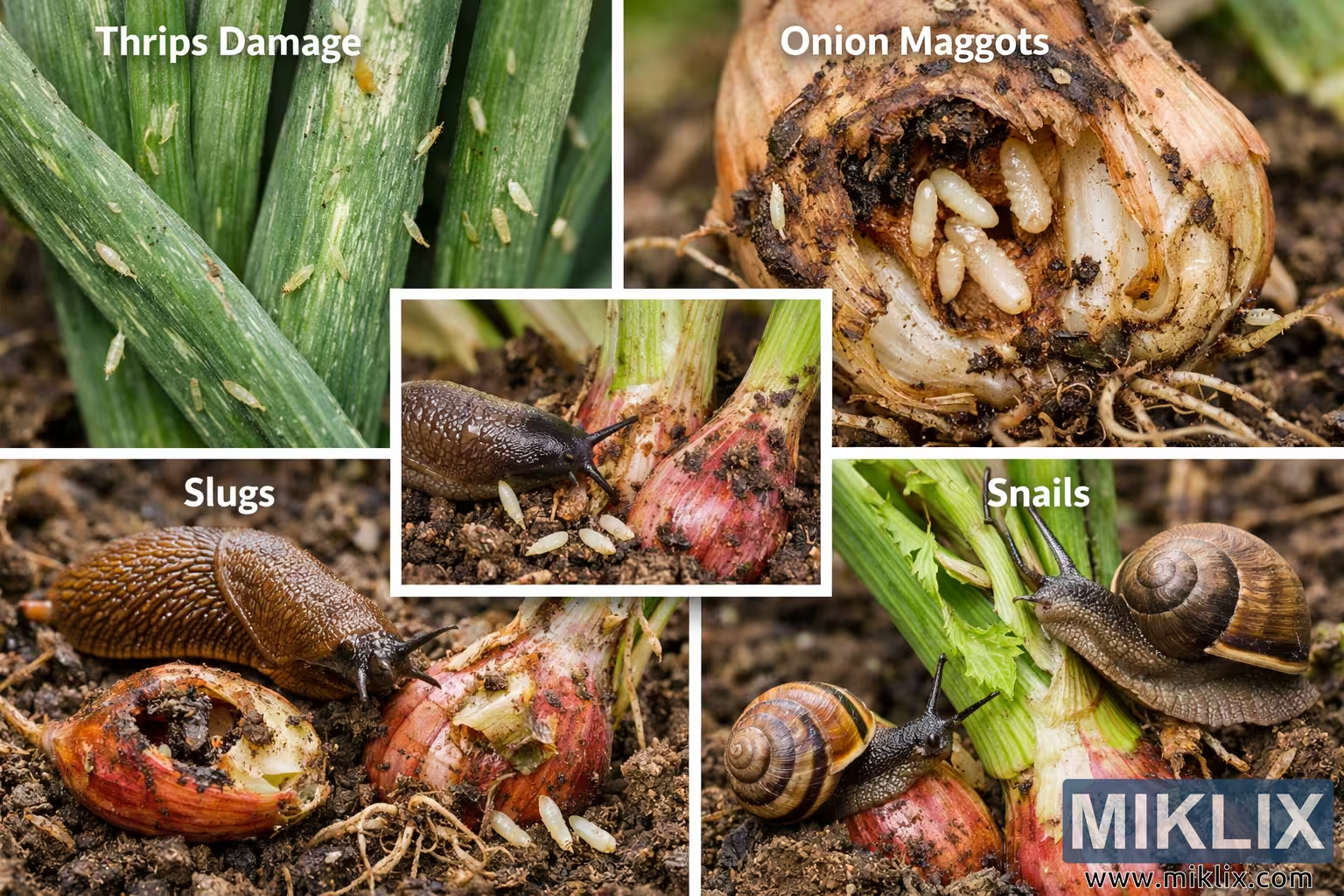
Photographic collage illustrating shallot plants damaged by common pests including thrips, onion maggots, slugs and snails.
Shallot Plants Affected by Common Garden Pests
Налични версии на това изображение
Файловете с изображения, достъпни за изтегляне по-долу, са по-малко компресирани и с по-висока разделителна способност - и в резултат на това с по-високо качество - от изображенията, вградени в статиите и страниците на този уебсайт, които са по-оптимизирани по отношение на размера на файловете, за да се намали потреблението на честотна лента.
Редовен размер (1,536 x 1,024)
Голям размер (3,072 x 2,048)
Много голям размер (4,608 x 3,072)
Изключително голям размер (6,144 x 4,096)
Комично голям размер (1,048,576 x 699,051)
- Все още качвам... ;-)
Описание на изображението
A high-resolution photographic collage in landscape orientation presents several close-up views of shallot plants affected by common garden pests. The image is divided into multiple sections, each highlighting a different pest and the type of damage it causes to shallots. The collage uses natural outdoor lighting and highly detailed macro photography to emphasize the textures of plant leaves, soil, bulbs, and insects.
In the upper left section, green shallot leaves are shown heavily infested with thrips. The long, narrow leaves display small pale streaks and patches typical of thrips feeding damage. Numerous tiny, slender insects can be seen scattered across the leaf surfaces, appearing pale yellow to light brown. Their elongated bodies and small legs cling to the leaf blades, while the plant tissue shows slight discoloration and speckling caused by their feeding.
The upper right section focuses on onion maggots inside a damaged shallot bulb. The bulb is partially split open, revealing several creamy white maggot larvae feeding within the soft inner tissue. The surrounding bulb layers appear decayed and darkened, with moist soil and fragments of plant material around the opening. The larvae are smooth, legless, and slightly tapered, clearly illustrating the destructive stage of the pest inside the plant.
In the lower left portion of the collage, a brown slug crawls across the soil beside a damaged shallot bulb. The slug’s moist, textured body glistens slightly under the light. The nearby bulb shows signs of feeding damage, with holes and softened tissue. Soil particles cling to the bulb surface and the surrounding roots are partially exposed, emphasizing the ground-level environment where slugs typically attack young or weakened plants.
The lower right section displays two snails feeding on a shallot plant. Their spiral shells are brown with lighter banding, while their soft gray bodies extend across the leaves. The shallot foliage beneath them shows chewed edges and irregular holes where the snails have been feeding. The leaves appear bent and partially torn, contrasting with the healthy green color of unaffected areas.
Overall, the collage provides a visual comparison of several major pests that can affect shallot cultivation. By presenting thrips, onion maggots, slugs, and snails alongside the visible damage they cause, the image serves as an educational reference for gardeners, farmers, and horticulture students learning to recognize pest problems in allium crops.
Изображението е свързано с: Growing Shallots: Your Complete Guide to a Bountiful Harvest