
Image: Macro View of Hop Cones and Golden Lupulin Glands
Published: September 17, 2026 at 4:26:10 PM UTC
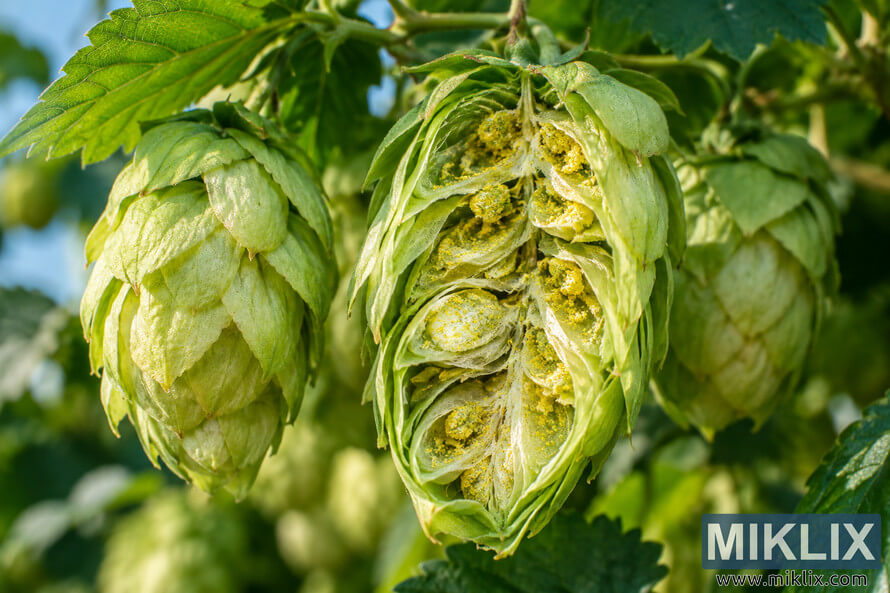
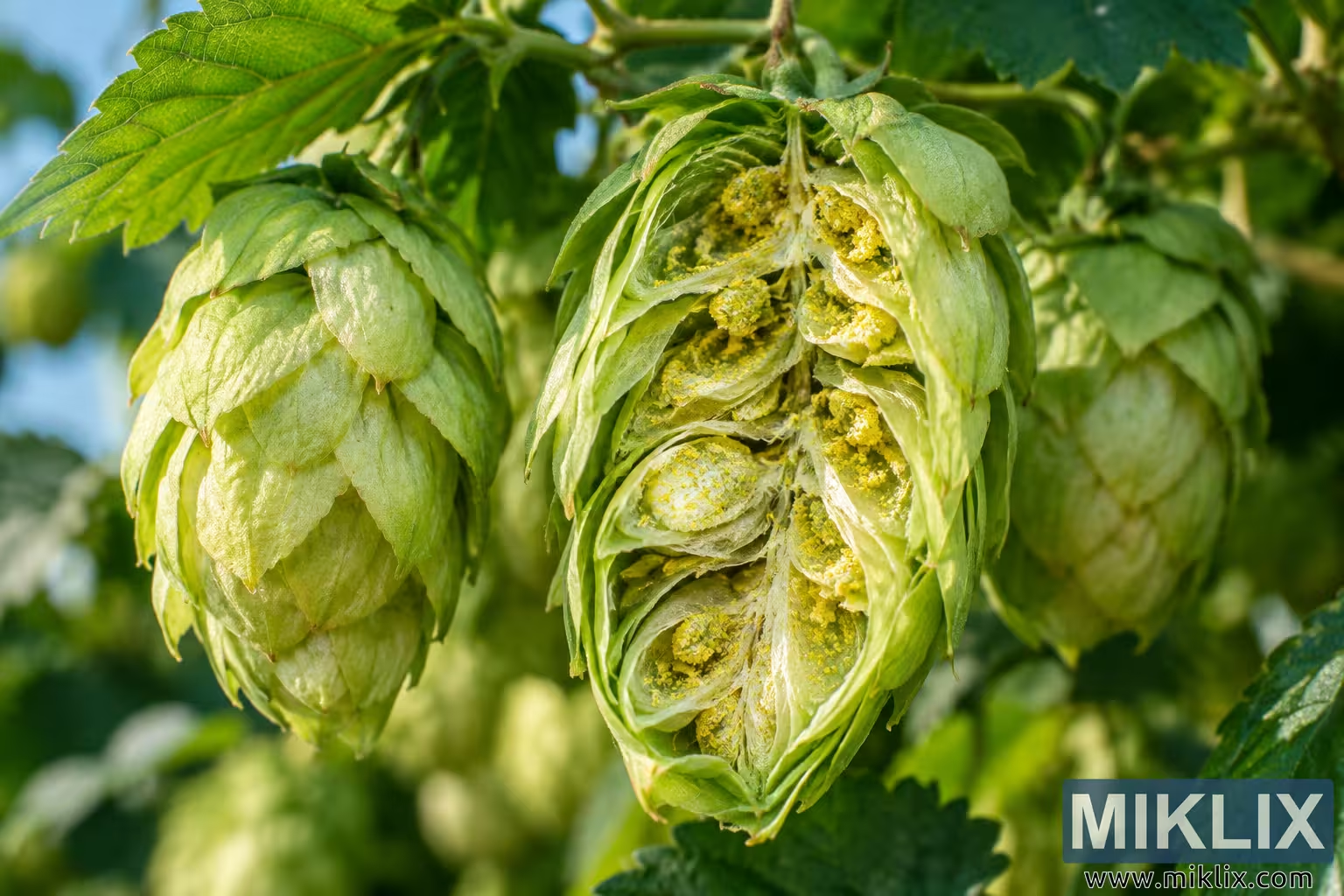
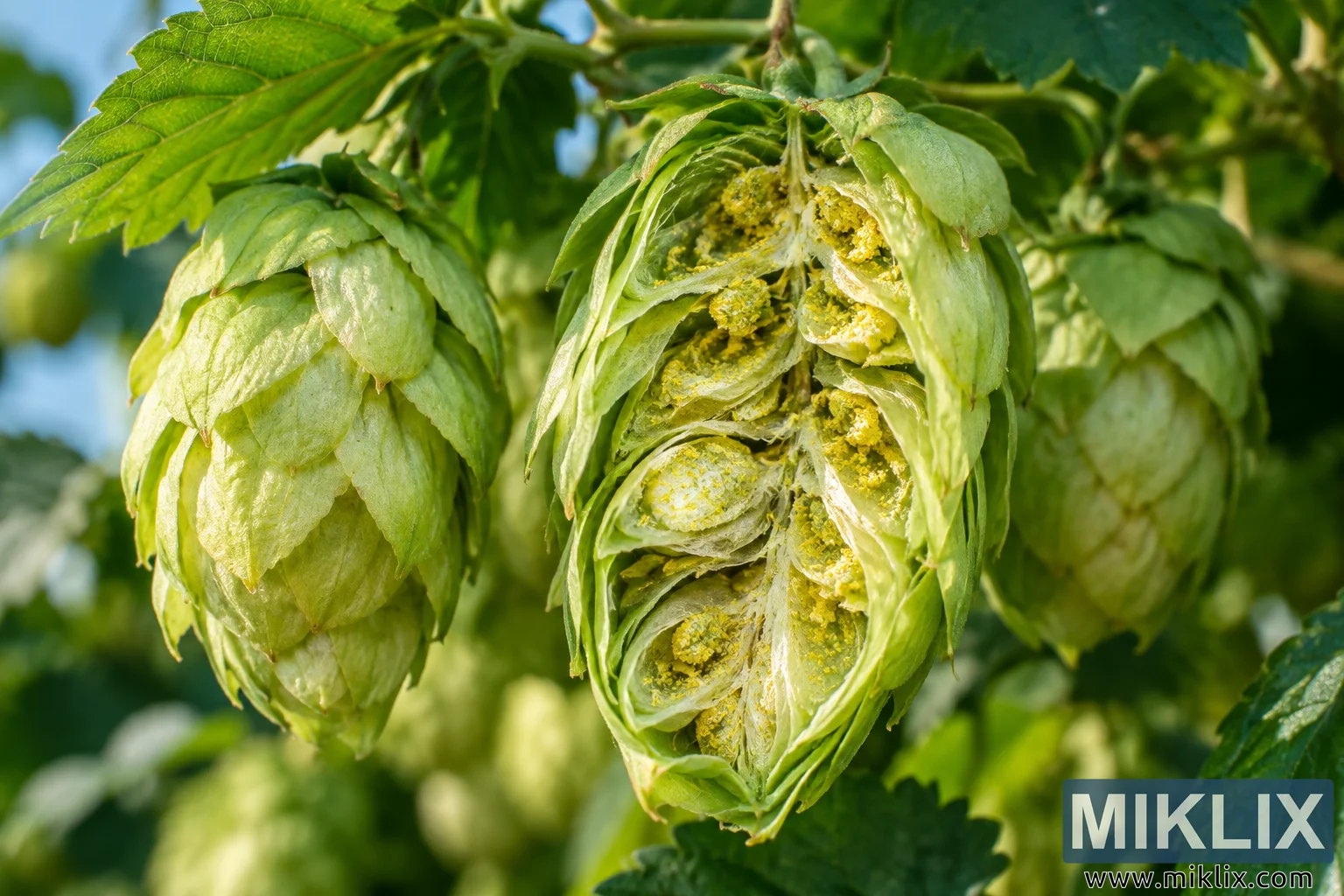
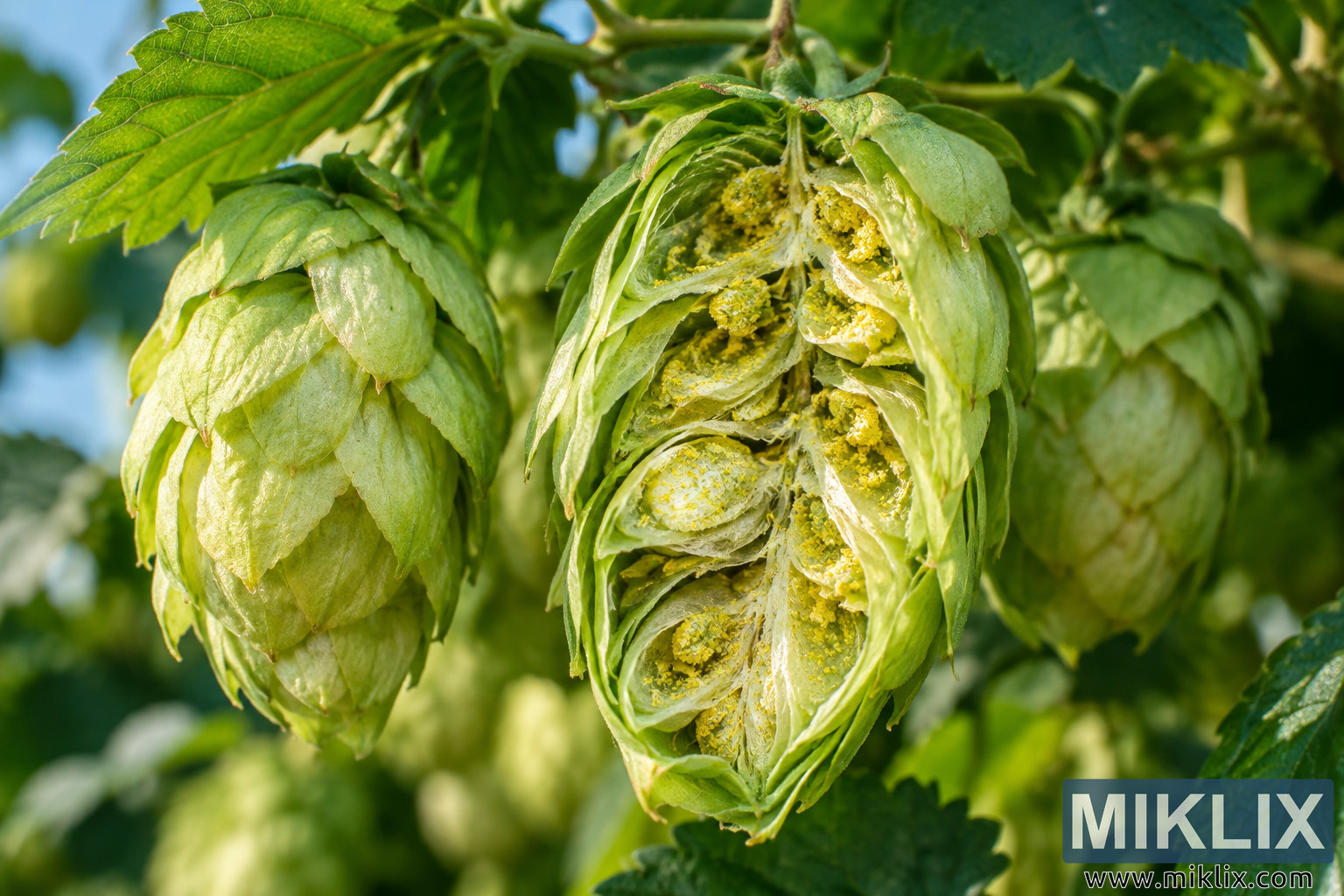
Detailed macro photograph of fresh green hop cones, highlighting the layered cone structure and golden-yellow lupulin glands inside an opened cone.
Available versions of this image
The image files available for download below are less compressed and higher resolution - and as a result of that, higher quality - than the images embedded in articles and pages on this website, which are more optimized for file size in order to reduce bandwidth consumption.
Regular size (1,536 x 1,024)
Large size (3,072 x 2,048)
Very large size (4,608 x 3,072)
Extra large size (6,144 x 4,096)
Comically large size (1,048,576 x 699,051)
- Still uploading... ;-)
Image description
A highly detailed landscape-oriented botanical macro photograph shows several fresh hop cones hanging naturally from a vigorous hop plant, with the composition centered on one partially opened cone that reveals its internal structure and distinctive golden-yellow lupulin glands. The central hop cone dominates the frame and is presented in exceptionally close detail, allowing the overlapping layers of its pale green bracts to be clearly distinguished. These thin, leaf-like bracts curve outward around the cone and expose the inner surfaces, where dense deposits of yellow lupulin appear as granular, resinous clusters. The lupulin has a warm golden to mustard-yellow coloration that contrasts strongly with the surrounding green plant tissue. Its powdery and slightly sticky-looking texture is visible across many of the inner bracts, emphasizing the botanical feature for which mature hop cones are particularly valued. The opened cone also reveals a pale central axis running vertically through its interior, with individual bracts attached around it in an orderly, layered arrangement. Fine fibrous plant structures and delicate veins can be seen along the inner surfaces, giving the image a scientific and educational quality while retaining the natural appearance of a field photograph.
To the left of the opened cone hangs a second, intact hop cone. It is plump and elongated, with numerous overlapping green bracts arranged in the characteristic compact pattern of a mature hop flower. Sunlight catches the thin surfaces of these bracts, producing luminous yellow-green highlights along their edges and subtle variations in translucency. The individual bracts taper to small pointed tips and overlap like scales, clearly illustrating the external architecture of the cone. A third prominent intact cone appears behind and to the right of the central subject. It is slightly softer in focus because of the shallow depth of field, but its characteristic shape and layered construction remain immediately recognizable. Additional hop cones are visible farther into the background as softly blurred green forms, suggesting that the photographed subjects are growing on a productive hop plant rather than being isolated specimens.
The upper portion of the photograph contains green stems, petioles, and broad hop leaves. Several leaves show sharply serrated margins and pronounced veins, providing additional botanical context for the cones. A large leaf extends across the upper-left area of the image, illuminated by natural sunlight that reveals its fine surface texture and branching network of veins. Other leaves and stems form a dense green canopy behind the cones. Small openings between the foliage reveal patches of clear blue sky, contributing cool blue accents that balance the predominantly green and yellow palette. The vegetation becomes increasingly blurred away from the focal plane, producing a natural bokeh effect and visually separating the foreground cones from the surrounding plant growth.
Lighting is bright, warm, and directional, resembling late-morning or afternoon sunlight in a hop field. The light comes strongly across the cones, creating crisp highlights on the exposed bracts while deeper folds remain shaded. This interplay between light and shadow enhances the three-dimensional form of each cone and makes the layered structure particularly easy to examine. The central opened cone receives enough direct illumination for the golden lupulin glands to stand out vividly. Tiny irregular clumps and granular particles of lupulin are visible along the inner bracts, with some areas appearing densely coated and others showing scattered yellow deposits. The contrast between the resinous yellow material, the pale whitish-green internal tissues, and the darker outer bracts gives the center of the photograph substantial visual depth.
The image uses a shallow depth of field typical of macro botanical photography. The central opened cone and much of the intact cone on the left are rendered with strong clarity, while foliage and cones at greater distances transition gradually into soft focus. This selective focus directs attention toward the physical anatomy of the hop flower, especially the relationship between the overlapping bracts and the lupulin-bearing inner surfaces. Despite the close viewpoint, the landscape framing provides enough surrounding vegetation to establish the natural growing environment. The composition therefore combines the intimacy of a botanical specimen photograph with the atmosphere of an outdoor agricultural scene.
Color is dominated by fresh shades of green, ranging from pale lime and yellow-green on sunlit bracts to rich, dark green in shaded leaves. Golden-yellow lupulin provides the most distinctive accent, concentrated inside the central cone and clearly differentiated from the surrounding plant tissue. Small areas of blue sky appear in the softly focused background. The photograph has a crisp, naturalistic appearance with abundant fine detail rather than a stylized or illustrated treatment. Surface textures are especially prominent: thin papery bracts show subtle wrinkles and veins, leaves display serrated edges and textured surfaces, stems have a firm fibrous appearance, and the lupulin glands form visibly granular deposits.
The central cone appears intentionally opened or naturally separated enough to provide a cross-sectional view without losing its recognizable hop-cone shape. Its outer bracts frame the exposed interior on both sides, almost like green petals surrounding a golden core. This makes the photograph particularly effective for demonstrating where lupulin occurs within a hop cone. The viewer can simultaneously compare the exposed internal anatomy with the intact external form represented by the neighboring cones. The image communicates botanical maturity, freshness, and resin development through the combination of full cones, abundant foliage, and conspicuous yellow lupulin. No labels, logos, packaging, text, commercial marks, or identifiable brands are present anywhere in the scene. The entire photograph is devoted to the natural appearance and structure of the hop plant, with the close-up perspective emphasizing the distinctive cone morphology and the golden lupulin glands contained beneath its overlapping bracts.
The image is related to: Hops in Beer Brewing: Bor