
Image: Craft Beer Styles with Fresh Hops in a Rustic Brewery
Published: September 17, 2026 at 4:26:10 PM UTC
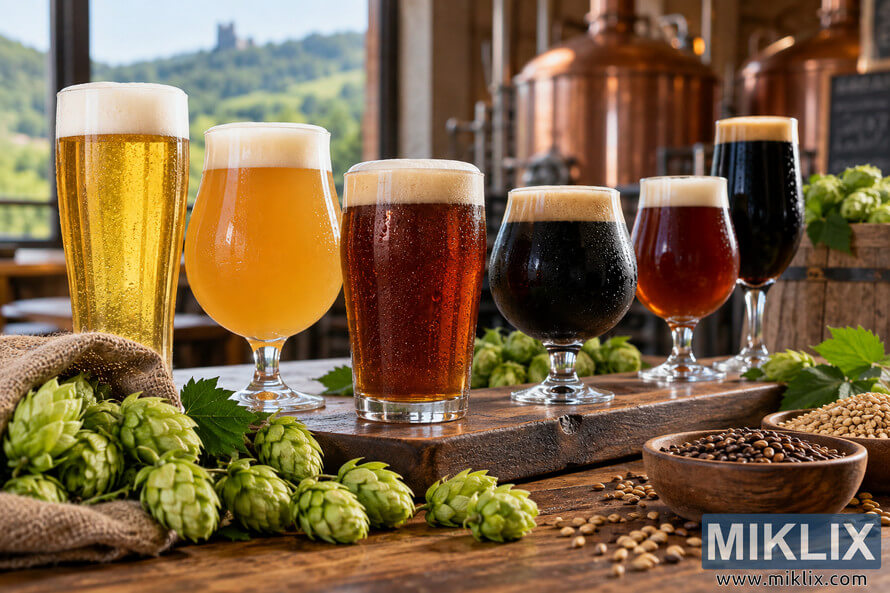
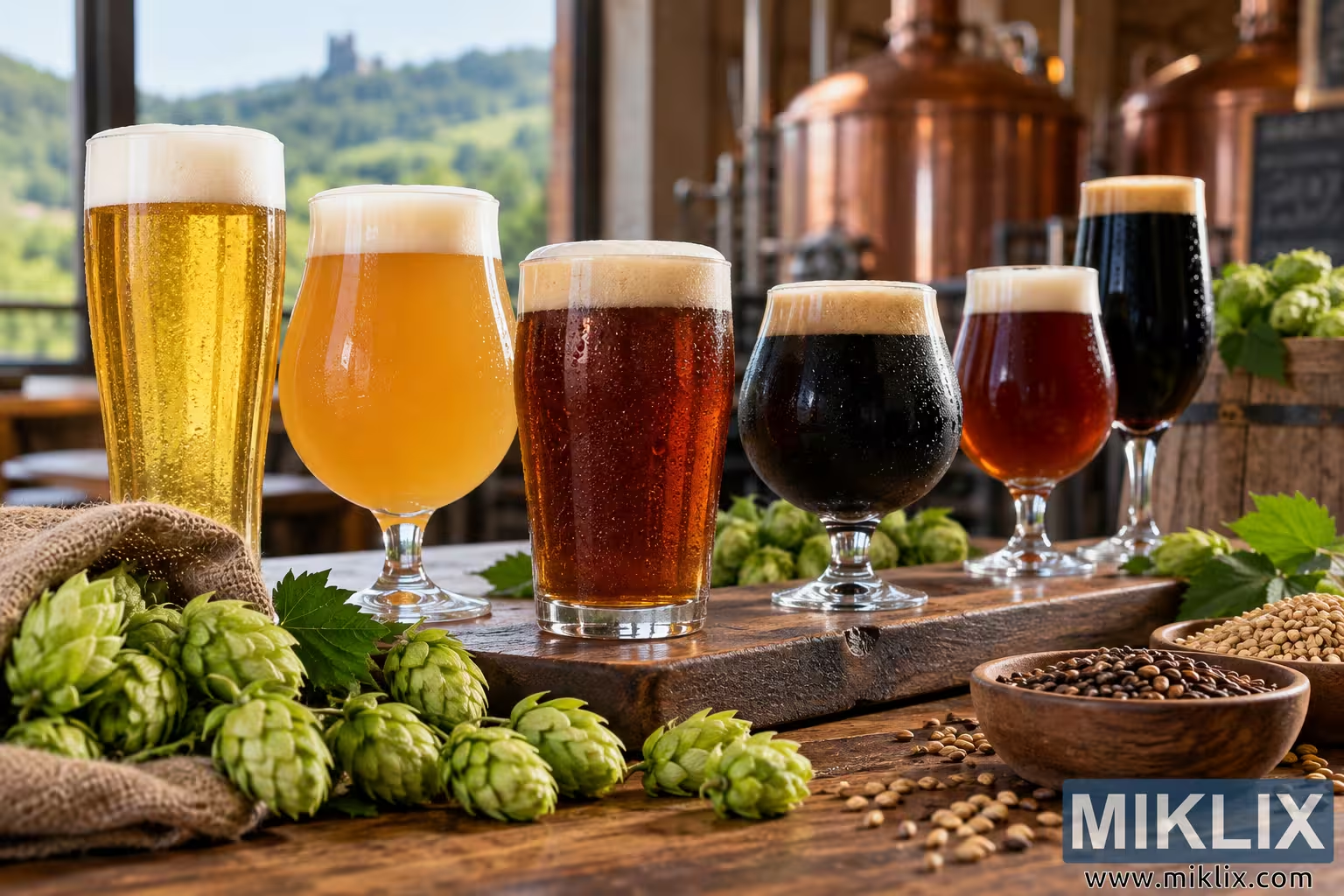
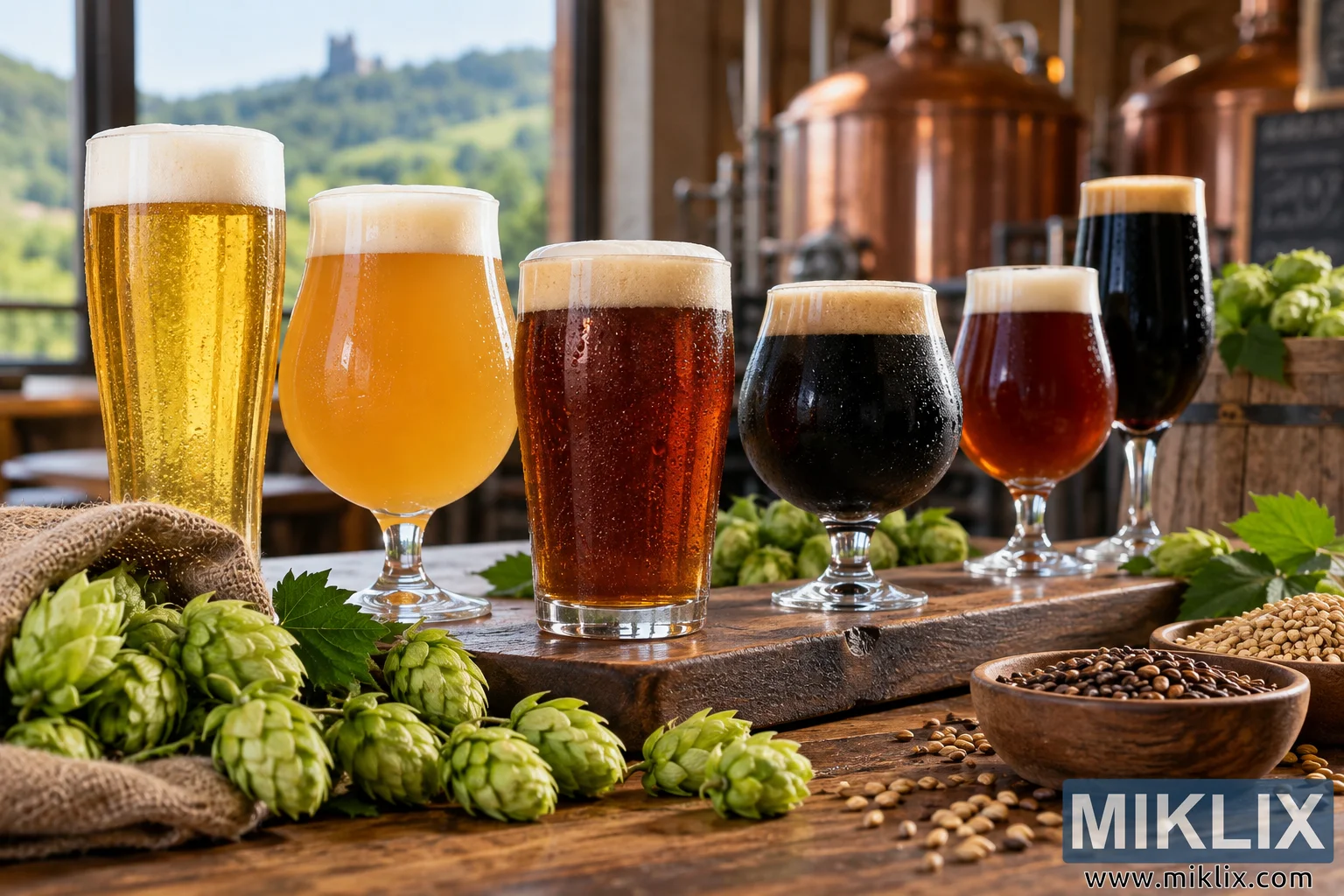
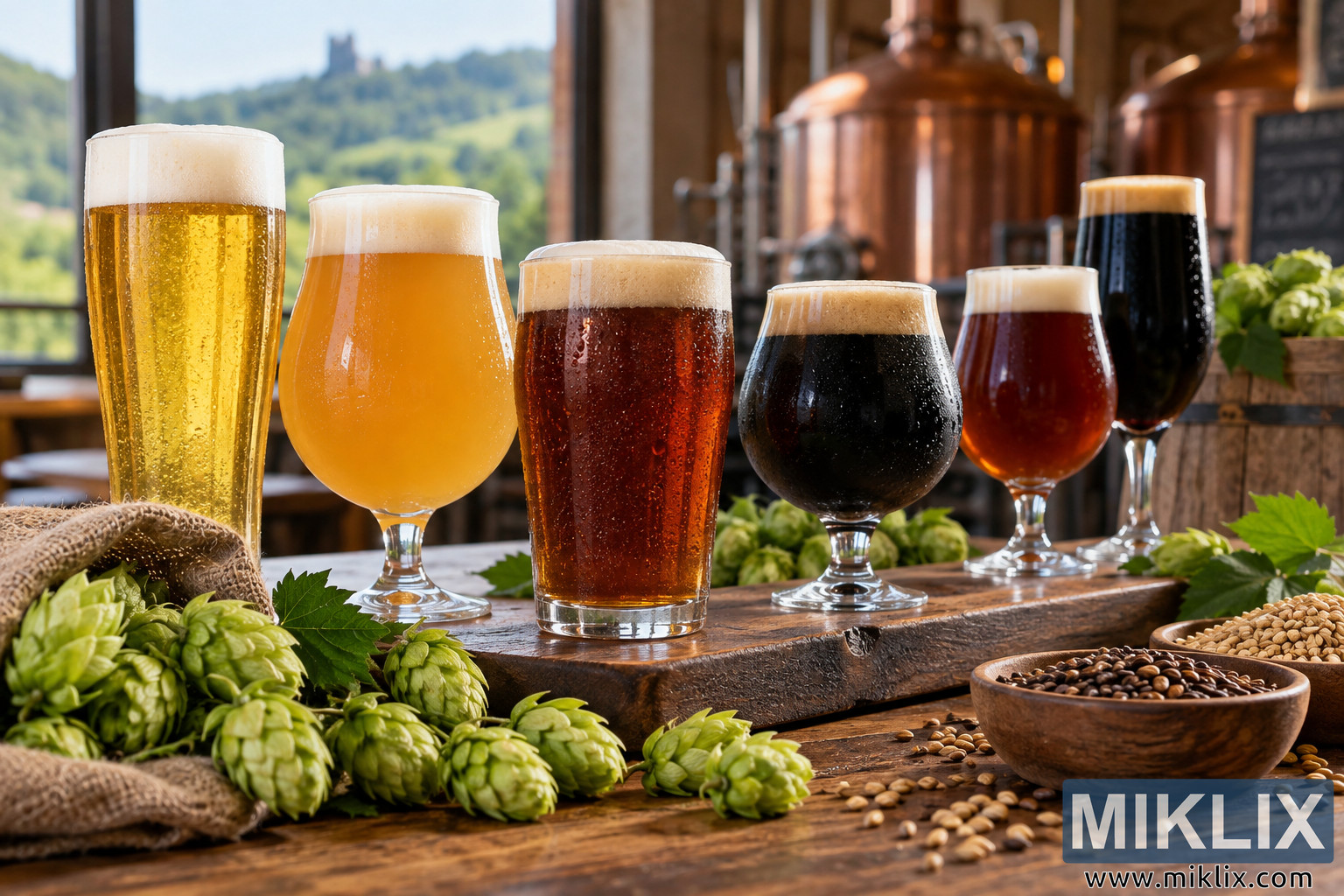
A rustic brewery display of diverse unbranded beer styles in appropriate glassware, surrounded by fresh green hops, malted grains, wood, and copper brewing vessels.
Available versions of this image
The image files available for download below are less compressed and higher resolution - and as a result of that, higher quality - than the images embedded in articles and pages on this website, which are more optimized for file size in order to reduce bandwidth consumption.
Regular size (1,536 x 1,024)
Large size (3,072 x 2,048)
Very large size (4,608 x 3,072)
Extra large size (6,144 x 4,096)
Comically large size (1,048,576 x 699,051)
- Still uploading... ;-)
Image description
A richly detailed landscape-oriented photograph presents a carefully arranged selection of craft beer styles in a warm, rustic brewery setting. Six individual glasses of beer are displayed prominently across a substantial wooden tasting board, with each beer differing noticeably in color, clarity, body, and glassware. Together, the glasses create a visual progression through a broad spectrum of brewing styles, ranging from a brilliant pale golden beer through hazy orange and deep amber varieties to dark brown and nearly black beers. The presentation emphasizes the diversity that can be achieved through brewing while connecting the finished drinks visually with fresh hops, malted grain, and the traditional brewery environment surrounding them.
On the far left stands a tall, slender glass filled with a clear, sparkling golden beer. Its bright yellow-gold color is illuminated by natural light entering through the large windows behind the arrangement. Numerous tiny bubbles are visible within the liquid, and a generous white foam head rests at the top of the glass. Condensation beads across the exterior, giving the beer a freshly poured, chilled appearance. Beside it is a rounded, stemmed glass containing a hazier golden-orange beer. This beer is more opaque and softly luminous, with a dense creamy head and a warm color suggestive of a fuller, hop-forward style. The curved glass concentrates the visual weight of the hazy beer and provides a strong contrast to the narrow glass beside it.
At the center of the composition is a straight-sided pint glass containing a deep amber to reddish-brown beer. The liquid is relatively clear and catches warm highlights from the surrounding brewery interior. A thick, slightly off-white foam head crowns the beer, while droplets of condensation cover the outside of the glass. Immediately to its right is a compact, rounded stemmed glass filled with an exceptionally dark beer. The liquid appears almost black in its deepest areas, with subtle dark brown highlights where light passes through the edges. A tan foam head sits above the dark body, and the shape of the glass gives the beer a substantial, robust appearance.
Further to the right is another stemmed tasting glass containing a clear copper-red or dark amber beer. Its warm reddish color glows against the darker brewery background, and a creamy pale head provides contrast at the top. Behind and slightly farther right stands the final glass, a tall stemmed vessel filled with an almost black beer. A compact tan head tops the drink. The elevated, elegant glass shape distinguishes this dark beer from the shorter dark beer nearer the center, reinforcing the impression that the image represents several distinct beer styles rather than repeated servings of the same beverage.
Fresh green hop cones are arranged generously across the foreground and around the tasting board. A coarse burlap sack lies open at the lower left, spilling large, textured hop cones onto the wooden surface. Their overlapping pale green bracts are clearly visible, accompanied by serrated green leaves and additional hop cones scattered toward the center and right side of the image. The hops provide a vivid botanical counterpoint to the amber, gold, brown, and black tones of the beers and wooden surfaces. They also establish an immediate visual connection between the raw brewing ingredient and the finished beverages. No branded packaging, commercial labels, logos, or identifiable trademarks are visible anywhere in the scene.
In the lower-right foreground, small wooden bowls and loose grains introduce another important brewing ingredient. One bowl contains dark roasted grains or malt, while another nearby area contains lighter golden grain. Additional kernels are scattered naturally across the tabletop, creating an informal working-brewery atmosphere rather than a highly sterile product display. The combination of pale malt, dark roasted malt, fresh green hops, and differently colored beers visually communicates how variations in ingredients and brewing methods can contribute to a wide range of beer appearances and styles.
The background is intentionally softer and more out of focus than the foreground. Large polished copper brewing vessels rise behind the glasses, their warm metallic surfaces reflecting the ambient light of the room. Pipes and other brewery equipment are subtly visible around the vessels without distracting from the beer selection. The copper equipment complements the warm amber and reddish hues of several beers and helps establish the location as a traditional or craft-oriented brewery. A dark chalkboard is visible toward the right side of the background, but any writing is indistinct and does not function as branding.
Large windows behind the tasting display allow abundant daylight into the brewery. Through the windows, a softly blurred green countryside can be seen, including rolling vegetation and a distant elevated structure resembling a castle, tower, or historic ruin. The outdoor scenery contributes fresh green and blue tones that balance the warm interior palette. Because the landscape remains out of focus, it provides atmosphere and a sense of place without competing with the foreground subjects.
The lighting combines bright natural window light with the warmer tones reflected by wood and copper. This creates crisp highlights on the beer glasses, realistic reflections in the glass surfaces, sparkling carbonation in the pale beer, and pronounced condensation droplets. The shallow depth of field keeps the beers, hops, grains, and wooden tasting board highly detailed while allowing the brewing equipment and countryside to recede softly into the background. The rough grain of the timber, woven texture of the burlap, layered surfaces of the hop cones, individual malt kernels, glass reflections, foam bubbles, and droplets all contribute to a tactile and photorealistic quality.
Overall, the image depicts an inviting craft-brewery tasting scene centered on variety, ingredients, and brewing tradition. The six beers form the primary visual subject, with their different colors and glass shapes suggesting a spectrum of beer styles. Fresh hops occupy much of the foreground and visually link the drinks to hop-driven brewing, while malted grains, rustic timber, burlap, copper brewing vessels, and a pastoral landscape reinforce the artisanal brewery setting. The composition is balanced from left to right, with the brightest golden beer anchoring one side and the darkest beers adding visual weight toward the other. The result is a warm, appetizing, detailed representation of diverse beers presented alongside fresh hops and traditional brewing ingredients, without any visible commercial branding.
The image is related to: Hops in Beer Brewing: Bor