
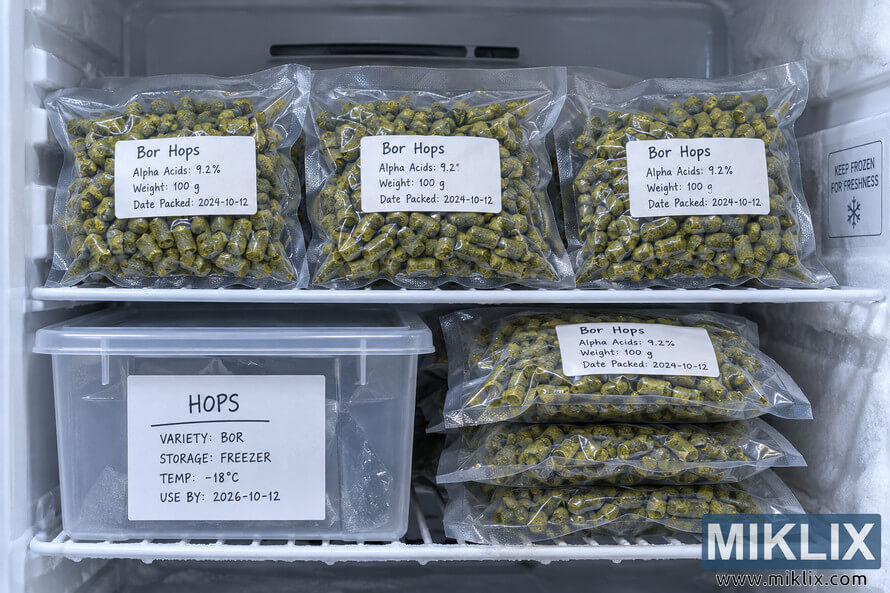
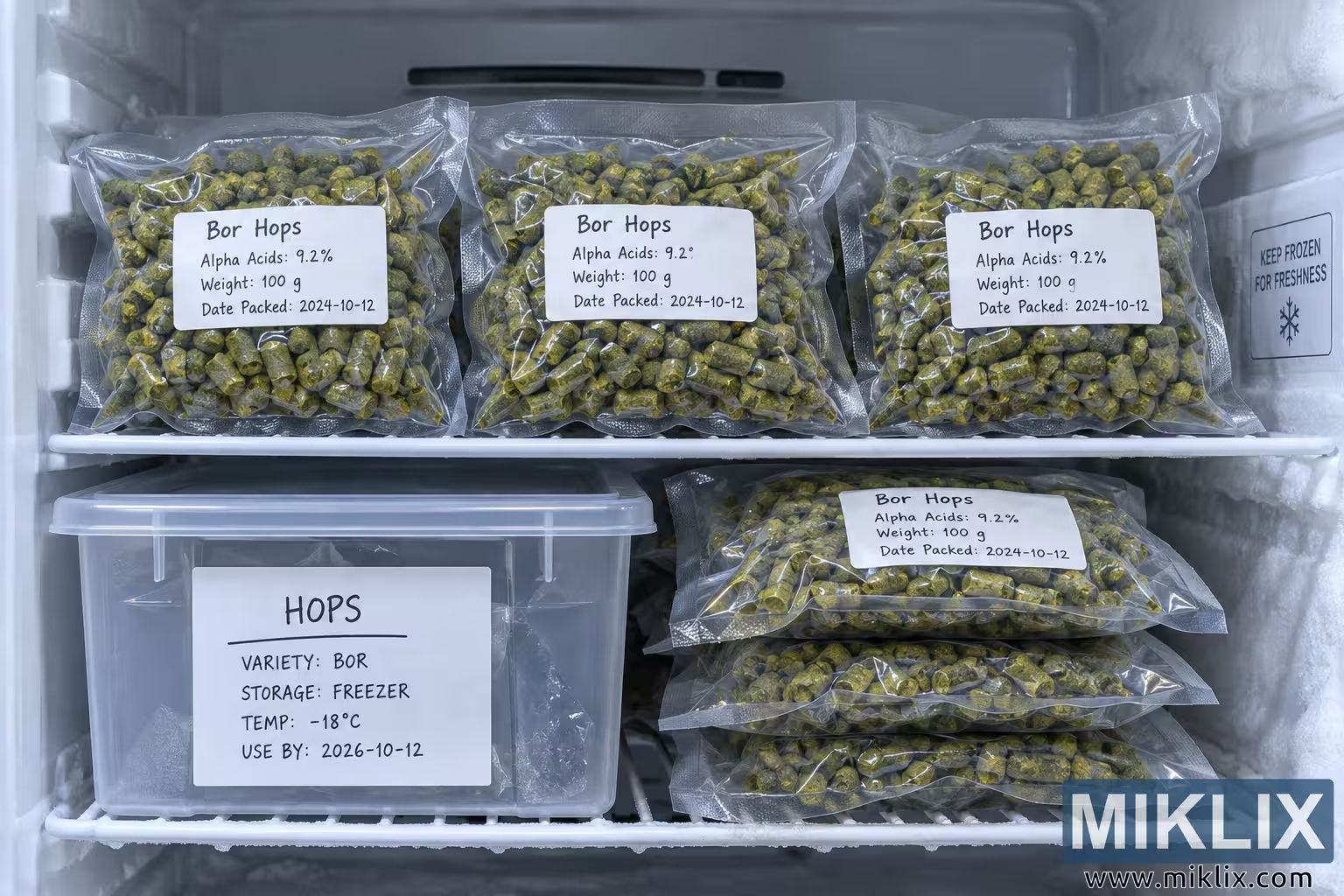
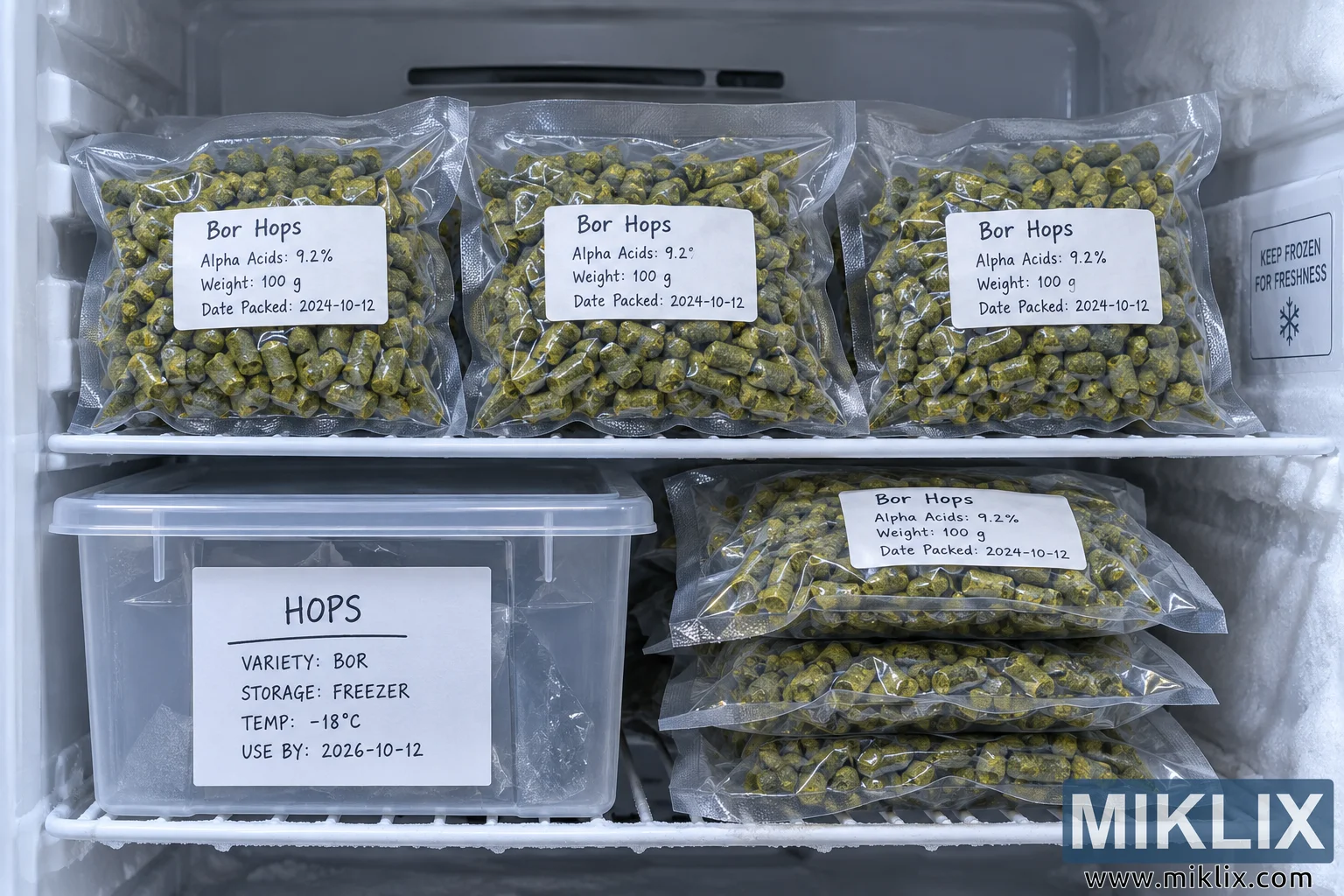
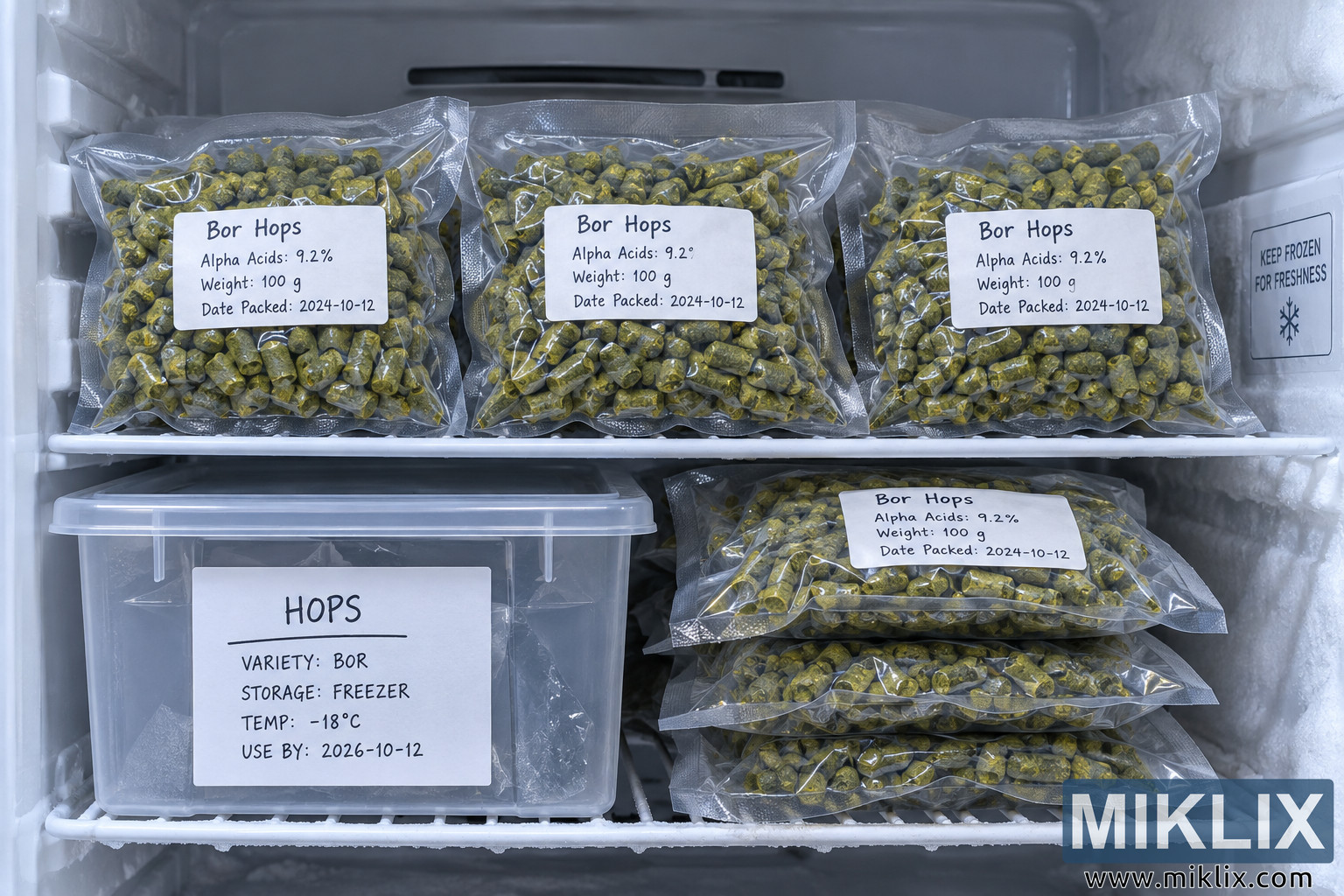
Image: Vacuum-Sealed Bor Hops Stored and Labeled in a Freezer
Published: September 17, 2026 at 4:26:10 PM UTC
Realistic image of vacuum-sealed Bor hop pellets stored in a frosty freezer, with clear unbranded labels, organized packages, and proper cold-storage information.
Available versions of this image
The image files available for download below are less compressed and higher resolution - and as a result of that, higher quality - than the images embedded in articles and pages on this website, which are more optimized for file size in order to reduce bandwidth consumption.
Regular size (1,536 x 1,024)
Large size (3,072 x 2,048)
Very large size (4,608 x 3,072)
Extra large size (6,144 x 4,096)
Comically large size (1,048,576 x 699,051)
- Still uploading... ;-)
Image description
A crisp, realistic landscape-format photograph shows the interior of a compact freezer being used for organized long-term storage of Bor hops. The camera faces directly into the open freezer, creating a clear, symmetrical view of two white wire shelves and the neatly arranged contents. The freezer interior is predominantly white and pale gray, with a cool, slightly bluish cast that reinforces the impression of a cold storage environment. Frost and small accumulations of ice are visible along the side walls, shelf edges, and interior surfaces, adding realistic texture and making the low temperature immediately apparent. The main subjects are multiple transparent vacuum-sealed plastic packages filled with green hop pellets. The pellets are compact, cylindrical pieces in varying olive-green, yellow-green, and muted dark-green shades, with natural irregularities in their shapes and surfaces. Because the bags are tightly vacuum sealed, the clear plastic conforms closely to the pellets, producing folds, wrinkles, highlights, and reflections across the packaging. On the upper shelf, three large vacuum-sealed packages are positioned upright next to one another. Each package has a simple rectangular white label with dark handwritten-style text. The prominent heading on the labels reads “Bor Hops,” identifying the hop variety without displaying any commercial brand. Additional storage information appears beneath the variety name, including alpha-acid content, package weight, and a packing date. The labels are deliberately plain and practical, resembling the kind of identification labels a brewer, hop grower, or homebrewing enthusiast might use when portioning ingredients for freezer storage. The three upper bags are similar in size and presentation, giving the freezer an orderly, carefully managed appearance. Their transparent material makes the hop pellets clearly visible while the sealed edges of the bags emphasize that the contents have been protected from excess air. To the right of these packages, a small notice attached to the freezer wall states that the contents should be kept frozen for freshness and includes a simple snowflake symbol. This visual cue reinforces the purpose of the freezer and the importance of maintaining cold storage conditions. The lower shelf contains additional hop-storage materials. On the left sits a clear, rectangular plastic storage container with a translucent lid. A large white label is attached to the front of the container. The label identifies the contents as hops, specifies Bor as the variety, indicates freezer storage, gives a temperature of approximately -18 degrees Celsius, and includes a use-by date. The container itself is generic and unbranded, consistent with the image’s practical, noncommercial presentation. Through the transparent walls of the container, additional clear packaging material can be seen inside. On the right side of the lower shelf is a neat stack of several more vacuum-sealed hop packages. The top package carries another white “Bor Hops” label with storage information, while the packages underneath remain transparent and visibly contain the same green cylindrical hop pellets. These bags lie horizontally and are stacked with their flattened vacuum-sealed edges overlapping slightly. The arrangement demonstrates an efficient way to make use of limited freezer space while keeping individual portions separated and protected. Subtle condensation, frost, and ice crystals around the shelves and freezer walls contribute to the sense that the ingredients are genuinely being stored at freezing temperature. The white wire shelves are clean and functional, and the spaces between their bars remain visible beneath the packages. There are no people, brewing vessels, logos, commercial packages, or recognizable brands in the scene. Instead, the composition concentrates entirely on ingredient storage, labeling, cleanliness, and organization. The lighting is bright enough to reveal the texture of the hop pellets and the reflective surfaces of the vacuum bags while retaining a cool freezer atmosphere. Soft shadows appear underneath the packages and storage container, giving the objects convincing depth. Highlights along the plastic seams and wrinkles make the vacuum packaging look taut and realistic. The image communicates a methodical approach to preserving hops: portions are sealed to reduce exposure to air, labeled with identifying and storage information, grouped by variety, and maintained in a cold freezer environment. The prominent handwritten-style labels make it easy to identify the Bor hops at a glance, while the repeated use of transparent packaging allows the condition and quantity of the pellets to remain visible without opening the bags. Overall, the photograph presents a clean, practical, well-organized freezer dedicated to storing vacuum-sealed Bor hop pellets, with clear labeling and visible cold-storage cues emphasizing freshness, traceability, and careful ingredient management.
The image is related to: Hops in Beer Brewing: Bor