
Hops in Beer Brewing: Calicross
Published: January 31, 2026 at 6:33:13 PM UTC
Calicross hops, a notable variety from New Zealand, have a rich history in brewing. Developed in the 1960s, they significantly contributed to New Zealand's hop industry by the 1980s. Today, they are cherished for their dual-purpose use in both bittering and aroma.
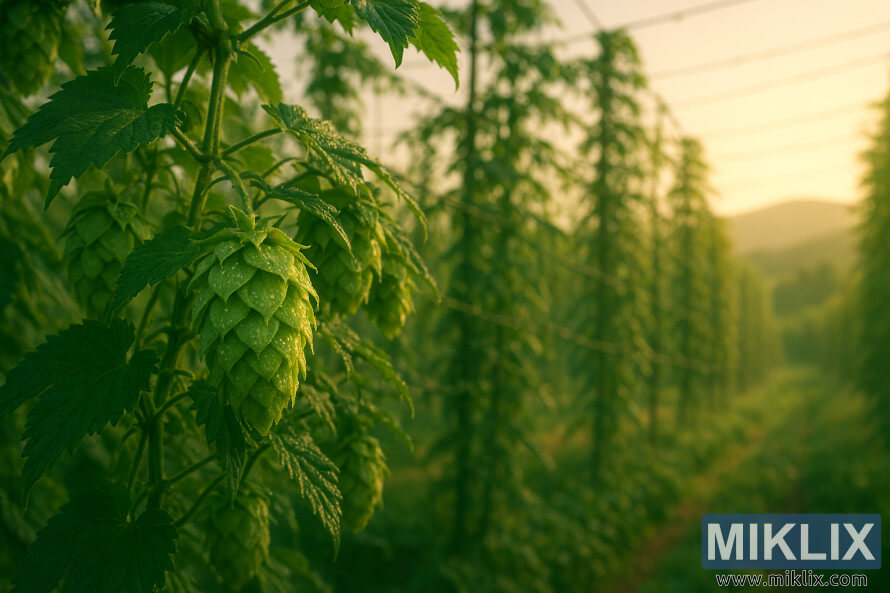
Click or tap the image for more information and higher resolutions.
The Calicross hop profile is characterized by moderate alpha acids, often cited around 7%. However, this value can vary between 2.6% and 7.9% across different datasets. This range allows for flexibility in brewing. It enables balanced bitterness and adds subtle aromatic notes, especially when used in dry hopping or later in the boil.
In brewing recipes, Calicross is frequently used, making up about 43% of hop usage. This highlights its role as a primary hop in many formulations. Brewers appreciate Calicross for its dependable bitterness and ability to enhance hop character without dominating the malt or yeast flavors.
Key Takeaways
- Calicross hops originated in New Zealand and were bred in the 1960s.
- Typical alpha acid values are moderate, often cited near 7% but ranging by source.
- Calicross hop profile supports both bittering and aroma functions.
- In recipes, Calicross commonly accounts for about 43% of hop usage when included.
- Brewers use Calicross brewing to achieve balanced beers with restrained hop character.
Introduction to Calicross hops
The journey of Calicross hops began in New Zealand in the 1960s. Developed to cater to the need for versatile and dependable hops, Calicross quickly gained favor. By the 1970s and 1980s, it became a staple among both commercial and craft brewers.
Calicross is a dual-purpose hop, known for its moderate alpha acids and distinct floral aroma. This unique combination makes it ideal for both bittering and adding aroma to beers.
Its versatility has made Calicross a favorite across various beer styles. It's been used in English Ale, Bitter, ESB, Mild Ale, Porter, Stout, Oatmeal Stout, Nut Brown Ale, Amber Ale, Golden Ale, Lambic, Cask Ale, Strong Ale, and Christmas Ale.
Recipes often highlight Calicross for its ability to balance bitterness and floral notes. Its moderate alpha acid content ensures the desired bitterness without overpowering the beer's aroma. This consistency has made Calicross a trusted choice among brewers.
- Origin: New Zealand, 1960s
- Use: Dual-purpose — bittering and aroma
- Profile: Moderate alpha acids, floral aroma
Botanical and breeding background
Calicross originated in New Zealand in the 1960s, resulting from a deliberate cross between an English Fuggle and a California-type hop, known as Late Cluster or California. The goal was to merge Fuggle's delicate, floral scent with the resinous, bitter qualities of its Californian counterpart.
Records from Calicross breeding highlight a focus on aroma and utility. This led to a versatile hop, suitable for both late-stage aroma additions and early bittering. Growers praised its floral enhancement, setting it apart from many New Zealand cultivars.
The development of Calicross coincided with a difficult period in New Zealand hop history. A Black Root Rot outbreak impacted California/Late Cluster stock, influencing selection and boosting interest in more resilient crosses. This disease episode is documented in several historical hop trial accounts from that era.
Calicross exhibited moderate field vigor but had low yields and was susceptible to disease. By the 1980s, it was largely replaced by more resilient varieties. Despite this, Calicross's early impact on New Zealand hop history and breeding programs remains significant.
The legacy of Calicross breeding continues in later lines that retain its desirable traits. Today, plant breeders and hop researchers still acknowledge Calicross's pioneering role in balancing floral character with bittering in the Southern Hemisphere.
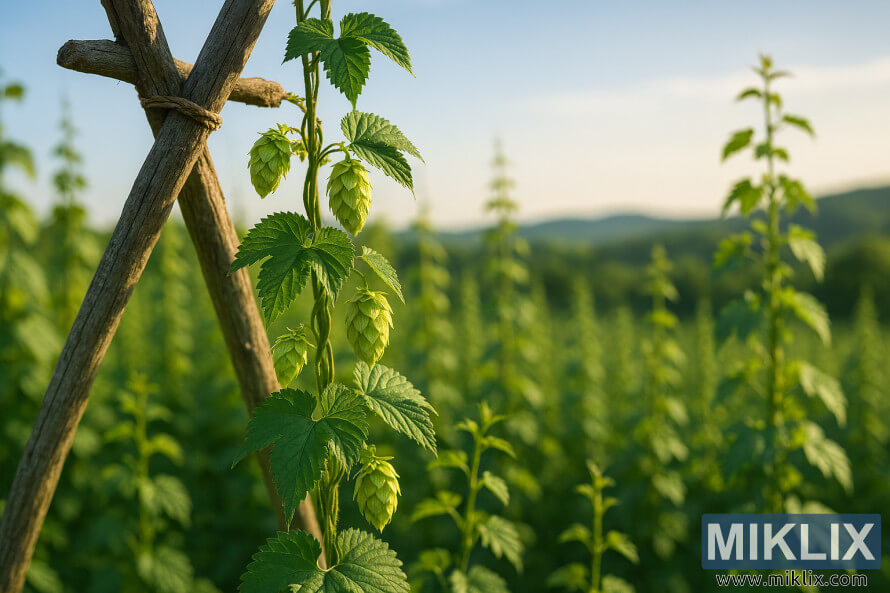
Click or tap the image for more information and higher resolutions.
Chemical profile and analytical data
The Calicross chemical profile reveals a moderate and somewhat variable bittering potential. Alpha acid levels range from 2.6% to 7.9%, with most values around 7%. Beta acids fall between 5.8% and 7.9%.
Cohumulone, a key component of the alpha fraction, makes up 36% to 44% of it. This significant presence can affect the bitterness sharpness, especially during boil additions and when comparing it to other cultivars.
The hop oil composition in Calicross is dominated by myrcene. Total essential oil ranges from 0.42 to 1.39 mL per 100 g. Myrcene accounts for 54% to 68% of the oil, contributing to the floral, resinous, and piny flavors.
Humulene is present at moderate levels, typically between 12% and 19%. This supports the woody and herbal notes. Caryophyllene and farnesene are less prevalent, with caryophyllene at 2% to 6% and farnesene near 0% to 1%.
- Alpha acid Calicross: ~2.6%–7.9%, commonly near 7%
- Beta acids: ~5.8%–7.9%
- Cohumulone: 36%–44% of alpha fraction
- Hop oil composition: total 0.42–1.39 mL/100 g
- Major oil components: myrcene 54%–68%, humulene 12%–19%, caryophyllene 2%–6%, farnesene 0%–1%
The terpene profile of Calicross is heavily skewed towards myrcene, with humulene and modest caryophyllene supporting it. Brewers should consider this oil balance when planning hop schedules for aroma-driven beers.
Aroma and flavor characteristics
Calicross aroma is bright and floral, showcasing its forward character in both wet hops and finished beer. Brewers note its floral and resinous flavor, thanks to high myrcene levels. These levels bring an immediate perfume and citrus-peel lift.
The hop's humulene fraction adds a gentle herbal and spicy backbone. This layer prevents the sweetness of floral hops from becoming cloying. It introduces subtle woody and herbal notes on the finish.
Caryophyllene appears in modest amounts, adding a touch of peppery or woody spice when used in larger doses. Low farnesene means there is little of the green, leaf-like edge some other varieties can impart.
As an aroma hop, Calicross excels in late additions, dry hopping, and whirlpool work. This maximizes its floral hops character. Brewers seeking a dual-purpose option will find Calicross adds distinct perfume without overpowering malt or yeast profiles.
Pairing Calicross with lighter malt bills or New Zealand varieties emphasizes hop aroma New Zealand-derived esters. This complements the floral spectrum. Use measured dosages to balance perfume, resin, and subtle spice for clean, expressive beers.
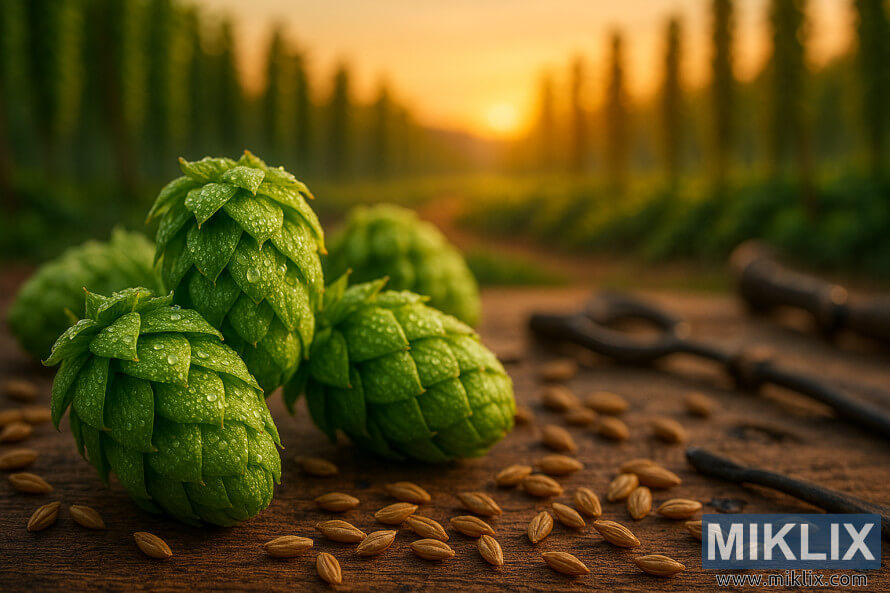
Click or tap the image for more information and higher resolutions.
Brewing uses and purpose
Calicross is highly valued in craft brewing for its dual-purpose role. It offers moderate alpha acids, allowing brewers to add it early. This ensures steady bittering without introducing harshness from the wort.
Recipe databases frequently highlight Calicross as a key ingredient. It typically makes up around 43% of the hop bill. This reflects its common use in both bittering and later-stage additions.
Formulations that rely on dual-purpose hops benefit from Calicross. It can handle multiple tasks, from base bitterness to enhancing flavor and finish. Brewers can use it at 60–90 minutes for bittering, then save some for later additions.
The alpha range of 5.8%–7.9% offers flexibility. This range supports measured bittering and preserves delicate oils. These oils are crucial for the aromatic character in the hop stand or whirlpool.
Traditional English-style ales and stouts often include Calicross. Its balanced properties are key to achieving clean backbone bitterness and subtle floral or earthy top notes.
- Common use: early boil for bittering and late additions for aroma
- Typical share: often a large portion of the hop bill in recipes
- Practical dosing: moderate rates for balanced bittering and aroma
Calicross hops in beer styles
Calicross is a perfect fit for traditional British ales. Its floral aroma and moderate alpha acids enhance flavors in English Bitter, ESB, Mild Ale, and Nut Brown Ale. This balance doesn't overpower the malt. Brewers like Fuller’s and Greene King often aim for this hop profile to maintain cask character and drinkability.
In ales that value balance and subtlety, Calicross shines. It adds a soft floral note to Amber Ale and Golden Ale, complementing caramel and biscuit malts. Its steady bitterness and gentle aroma are ideal for cask-conditioned beers, enhancing clarity and foam retention.
For dark malt beers, Calicross brings a floral lift. In Porter and Oatmeal Stout, it contrasts with roast and chocolate malts, brightening the palate. It's best used in stouts at modest late additions or dry hopping to avoid masking roasted flavors.
Strong Ale and Christmas Ale can benefit from Calicross as part of a blend to balance heavy malt sweetness. It's also used in Lambic-style or mixed-fermentation projects for its aromatic complexity. However, its use in Lambic is more regional or experimental than mainstream.
- Recommended styles: English Bitter, ESB, Nut Brown Ale, Porter, Oatmeal Stout
- Best uses: late kettle additions, whirlpool, gentle dry hop
- Stylistic tip: pair with crystal malts and London ale yeast strains for classic profiles
When crafting recipes, aim for moderate hop rates to preserve the malt backbone. Test small batches to see how Calicross influences bitterness and aroma across various malt bills and fermentations.
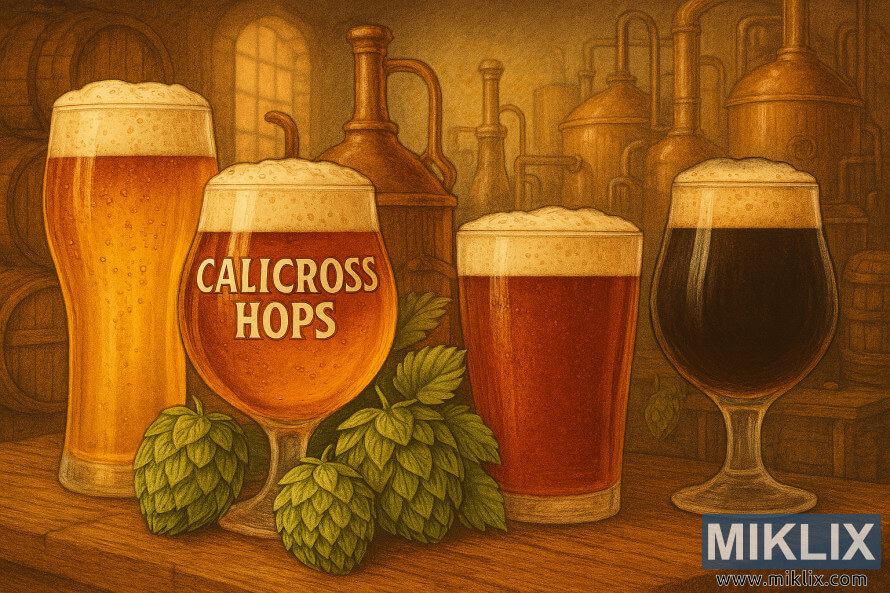
Click or tap the image for more information and higher resolutions.
Recipe examples and dosing guidance
Calicross is versatile, used for bittering and finishing hops. In pale ales and golden ales, it makes up 30%–60% of the hop bill. In recipe data, Calicross is 17.7%–100% of total hops, averaging 42.9% and mean 43%.
For precise IBU, use bitterness calculators. Calicross alpha is 6%–7%. For a 5-gallon batch aiming 35 IBU, calculate bittering additions as for other moderate-alpha varieties. Adjust Calicross hop addition rates to meet IBU targets without overdoing late-flavor additions.
For late additions and dry hopping, use small amounts for floral and fruity notes. Try 0.5–1.5 ounces per 5 gallons for aroma focus. This Calicross dosing highlights delicate top notes without harsh bitterness.
Here are quick starting points for common styles and scales:
- Session pale ale (5 gal): 0.5–1.0 oz late + 0.5 oz dry hop; bittering by other hops to reach 20–30 IBU. This keeps Calicross recipe share moderate.
- American pale ale (5 gal): 1.0–2.5 oz split between late additions and dry hop; bittering addition with Calicross or a blend to reach 30–40 IBU.
- Single-hop showcase (5 gal): 3.0–6.0 oz total across bittering, late, and dry hop to present hop character; monitor hop addition rates Calicross to balance bitterness and aroma.
When substituting, no direct replacements are documented. Use floral Fuggle-family aroma hops as alternatives, but recalculate for alpha and oil differences. Track Calicross dosing closely and taste across dry hop windows to find the preferred balance.
For reproducible results document boil time, hop weights, and timing. Revisit the Calicross recipe numbers each batch and tweak late additions or dry hop timing to tune floral intensity and bitterness harmony.
Fermentation and yeast pairings
Exploring Calicross yeast pairings, we turn to traditional methods. English-style beers, fermented with British ale strains like White Labs WLP002 or WLP007, highlight the hop's floral character. Yeasts such as these produce mild esters, allowing malt and hop balance to take center stage without obscuring the delicate floral notes.
For lighter beers, a neutral American ale strain is ideal. SafAle US-05 or White Labs WLP001 serve as a clean canvas, enhancing the hop aroma in golden ales and pale ales. Maintaining clean fermentation temperatures and moderate attenuation ensures the beer remains bright and aromatic.
In stouts and porters, restrained ester production is key. Opt for English or clean ale strains to complement Calicross's floral elements with roasted and nutty malts. Seek yeasts that limit fruity esters, allowing the roast character to prevail while the hop adds a soft floral lift.
Understanding yeast hop interaction is crucial in refining recipes. A fruit-forward English strain can overpower delicate hop florals, whereas a neutral yeast will unveil subtle citrus or floral compounds. Select yeast phenols and ester profiles that align with the desired Calicross role in your beer.
- Try WLP002/WLP007 for balanced ales that let floral notes show.
- Use WLP001 or US-05 when seeking the best yeast for Calicross in clean, bright beers.
- Choose restrained English ale strains in dark beers so hop aroma supports roast malts.
Recent recipe trends suggest traditional ale cultures as the top matches for Calicross. Adjusting pitch rate and fermentation temperature can fine-tune yeast expression and enhance favorable yeast hop interaction for each style.
Hop pairing and complementary ingredients
Calicross pairings shine when the malt bill allows for delicate floral notes. Opt for malts that introduce caramel, biscuit, or light roast flavors. These are typical in English ales, brown ales, stouts, and porters.
Choose hops that enhance herbal and floral aspects. Classic English varieties like Fuggle and East Kent Goldings complement Calicross well. This combination creates a balanced floral/herbal profile without overpowering the hop's essence.
Avoid using strong citrus or tropical American hops in single-hop blends. Excessive citrus hops can overshadow the floral notes. For brightness, use them sparingly and in late additions or dry hopping. This preserves the floral clarity.
- Malts: light crystal, biscuit, Maris Otter, and small amounts of roasted malt for depth.
- Adjuncts: oats for softness in oatmeal stouts, or subtle crystal malts to add sweetness.
- Hops: Fuggle and East Kent Goldings for complementary aroma; use cautious amounts of American citrus hops.
Yeast and conditioning play a crucial role in floral note expression. English ale strains and gentle cask or bottle conditioning enhance floral hop pairings. Strong estery yeasts can clash with hop aromas, so select strains that allow for delicate hop expression.
In recipe design, balance is paramount. Begin with a malt base that offers caramel or nutty undertones. Add hops in layered additions, and conclude with a restrained dry-hop to highlight Calicross pairings.
Storage, stability, and shelf life
Calicross storage impacts both its bittering power and aroma. At typical room temperatures (about 20°C / 68°F), Calicross retains around 78% of its alpha acids after six months. This indicates moderate hop stability for alpha retention under standard temperatures.
The oil-driven aroma, however, degrades faster than alpha acids. Total oil content ranges from 0.42 to 1.39 mL per 100 g, with a significant myrcene presence. Oxidation and aging diminish floral and green notes. Brewers aiming for fresh floral character should opt for cold storage and quick inventory turnover.
- Store cold: below 0°C (32°F) is ideal for slowing aroma loss.
- Limit oxygen: vacuum-sealed or nitrogen-flushed packaging preserves oils.
- Block light: keep hops in opaque containers to avoid photo-degradation.
Calicross shelf life hinges on handling before purchase and packaging quality. Properly sealed pellets, stored cold, can maintain useful alpha and aroma for extended periods. However, exposure to heat, air, or light significantly accelerates aroma loss, regardless of alpha retention.
Availability also influences shelf life decisions. Given Calicross' historical low field vigor and reduced market presence, fresh cones are challenging to obtain. In such cases, properly stored pellets from reputable suppliers offer the best compromise between hop stability and character retention.
For brewers managing inventory, testing a small sample for aroma and bitterness before large-scale use is advisable. This approach helps align target profiles and compensates for any decline in Calicross shelf life or hop stability over time.
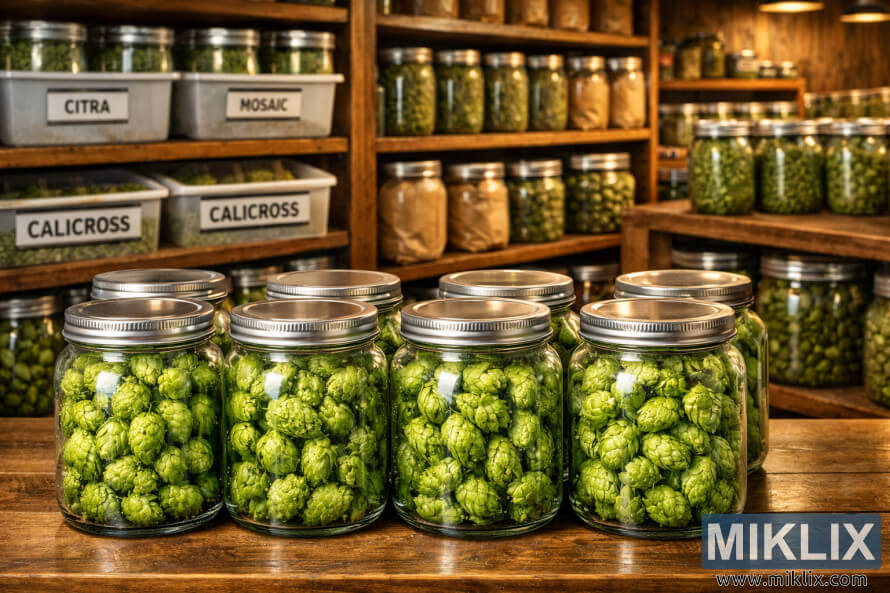
Click or tap the image for more information and higher resolutions.
Availability, substitutions, and legacy status
Today, Calicross availability is scarce. It was once grown in New Zealand but lost favor by the 1980s. This was due to low plant vigor despite its pleasant floral aroma. Though small farms or archives might hold aged lots, fresh supplies are hard to find.
Brewers looking for similar aromas often explore Calicross substitutes. Since Calicross is a unique blend of Fuggle and California-type genetics, finding an exact match is challenging. Hops like East Kent Goldings or English Fuggle can offer a hint of its old character. Meanwhile, mild American hops like Willamette or Cluster can complement other aspects after adjusting for alpha acids and oils.
When testing these substitutes, it's crucial to recalculate bittering and essential oil contributions. Start with small-batch brews to balance floral top notes against malt and yeast choices. Many brewers blend different alternatives to get close to Calicross's layered profile.
The interest in discontinued hops like Calicross highlights the importance of brewing heritage. Calicross left a significant impact on local breeding programs, influencing the floral direction of later New Zealand varieties. Its legacy continues to influence New Zealand growers' approach to aroma in the 20th century.
- Check hop libraries, universities, and old seed banks for rare Calicross availability.
- Consider Fuggle-family and mild American aroma hops as practical Calicross substitutes.
- Adjust alpha acid and oil calculations when replacing Calicross in recipes.
Calicross hops in brewing research and industry impact
Calicross research holds a significant position in hop breeding history. In the mid-20th century, New Zealand conducted trials. These tests combined English aroma traits with Pacific and North American genetics.
Breeders aimed to create a floral-forward aroma by crossing Fuggle with a California/Late Cluster type. Analytical studies revealed high myrcene, moderate humulene, and notable cohumulone levels. These findings are documented in variety catalogs and historical brewing literature.
- Practical lessons: parent vigor and disease resistance shape long-term success.
- Scientific lessons: chemical profiling links sensory notes to key terpenes.
- Industry lessons: commercial adoption depends on yield and farm suitability.
New Zealand's hop impact is evident in the development of later cultivars. These cultivars improved vigor and disease tolerance while maintaining desirable aroma traits. Calicross played a crucial role in setting the standards for aroma breeding in the region.
Researchers at institutions and commercial programs have used Calicross data to refine crossing strategies. This work has shaped hop breeding history. It shows how regional needs and analytical chemistry guide cultivar replacement and refinement.
Today, hop breeding projects still reference Calicross research. It serves as a model for early success, agricultural limits, and the iterative nature of plant breeding.
Conclusion
Calicross conclusion: This New Zealand dual-purpose hop has made a significant impact on traditional brewing. Its floral-forward aroma and high myrcene content make it perfect for English-style ales and malt-forward beers. With typical alpha acids ranging from 6%–7%, Calicross provides moderate bitterness. It also adds a unique aroma oil character to beers.
When using Calicross hops, it's crucial to focus on storage and recipe balance. Store any harvested or purchased stock in a cold, sealed environment to preserve alpha acids and volatile oils. Pair Calicross with English ale yeasts and richer malt bills to enhance its floral notes. Adjust hop rates or combine with Fuggle-family aroma hops for a similar profile but wider availability.
Calicross summary: Its limited agronomic vigor and market withdrawal in the 1980s have made it scarce. No exact modern substitute exists. However, brewers can still tap into its legacy by adapting formulations and recalculating for alpha and oil differences. For those using it, careful handling and thoughtful pairing will bring out its classic floral character. This highlights its historical role in darker, malt-driven ales.
Further Reading
If you enjoyed this post, you may also like these suggestions: