
Hops in Beer Brewing: Herkules
Published: February 5, 2026 at 5:29:32 PM UTC
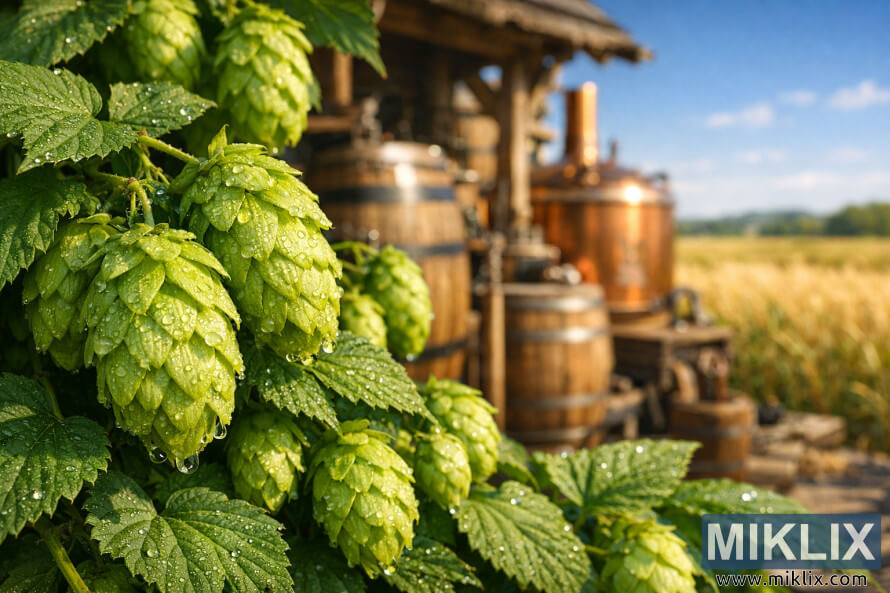
Herkules is a high-alpha German variety, bred for bittering and stable alpha delivery. It was developed at the Hop Research Center in Hüll and introduced to growers in 2006
Click or tap the image for more information and higher resolutions.
Herkules, often referred to as Hallertauer Herkules, is a modern German hop. It was developed at the Hop Research Center in Hüll. Released in 2005–2006, it has roots in Hallertau Taurus and a male Hallertau parent. It was bred to be a reliable high-alpha hop for brewers.
Known for its bold bittering power, Herkules hops quickly found a place in both commercial and homebrew recipes. Its high-alpha hops character and good disease resistance make it appealing to growers and breweries. They seek consistent yields and strong bittering hops performance.
Key Takeaways
- Herkules is a German variety released from Hüll in 2005–2006.
- Also called Hallertauer Herkules and used mainly for bittering.
- Classified among high-alpha hops for strong IBUs per ounce.
- Brewers value it for consistent bittering and robust yields.
- Its profile and genetics link back to Hallertau Taurus and regional breeding stock.
Overview of Herkules hops
Herkules is a high-alpha German variety, bred for bittering and stable alpha delivery. It was developed at the Hop Research Center in Hüll and introduced to growers in 2006. This overview aims to place Herkules within the context of modern bittering hops.
The creation of Herkules involved crossing Hallertau Taurus with a Hallertau male. This combination aimed to merge high-alpha performance with regional characteristics. This hop genealogy connects Herkules to classic Hallertau hops, enhancing bitterness for large-scale brewing. It is identified by the international code HKS and sometimes as 95/94/816 in research.
Herkules is primarily used for bittering, not for aroma. It is valued for its consistent alpha acids and predictable utilization. German harvests for Herkules occur from late August to September, aligning with other German varieties.
Availability of Herkules can vary by supplier and crop year. Distributors in the United States and Europe offer it, with prices influenced by yield and demand. Major processors like Yakima Chief, BarthHaas, and Hopsteiner do not provide commercial lupulin powder for this variety. Thus, most purchases are in whole-cone or pellet form.
- Breeding: hop breeding Hüll, released 2006 (development noted in 2005 records)
- Parentage: Hallertau Taurus × Hallertau male (clear hop genealogy)
- Primary use: bittering hop with high alpha acids
- Harvest: Germany, late August–September
- Formats: whole cone and pellet; no major lupulin powder available
Flavor and aroma profile of Herkules
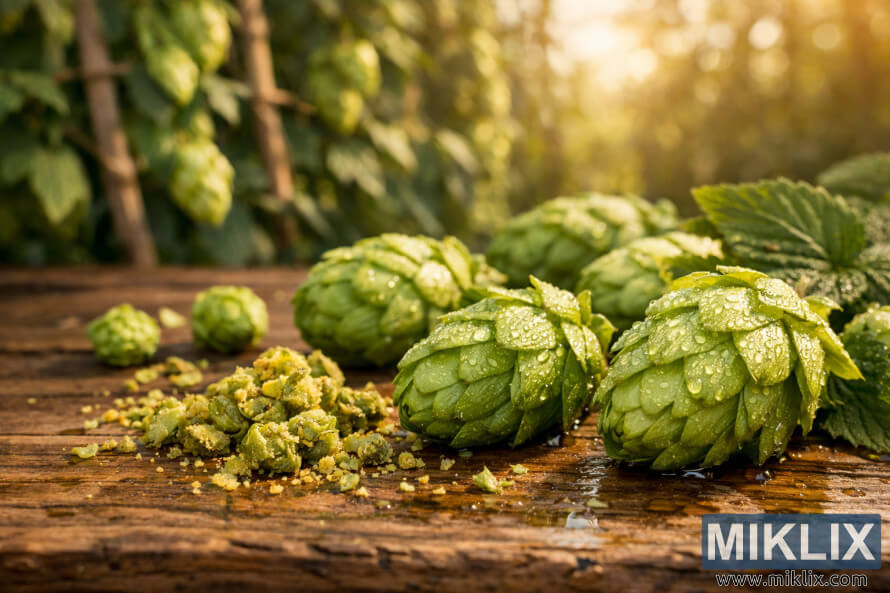
The Herkules flavor profile is marked by a strong bittering backbone with vibrant top notes. Tasters often detect citrus and melon at the start, offering a refreshing fruit contrast to the hop's high alpha acids.
When used later in the boil or in small whirlpool additions, Herkules aroma reveals pine and spicy elements. Brewers and sensory panels commonly describe its aroma as a blend of citrus, melon, pine, and spice.
Secondary aspects of Herkules include herbal and fruity notes. Some reviewers note black pepper, fresh herbs, and light tropical fruit undertones, especially in dry-hop trials or subtle late additions.
Hops aroma descriptors for Herkules highlight sharp, focused characters over soft, perfumed ones. The moderate total oil content ensures that the beer's aroma intensity remains balanced, unlike in dedicated aroma varieties.
In brewing, Herkules is primarily used for bitterness. However, small late additions can introduce complexity. When combined with softer aroma hops, the citrus and melon notes help balance the pine and spice, preventing the beer from becoming overpowering.
- Core notes: citrus, melon, pine, spice
- Secondary notes: black pepper, fresh herbs, tropical fruit
- Common use: primary bittering with selective late additions
Click or tap the image for more information and higher resolutions.
Alpha acids, oils, and chemical makeup
Herkules alpha acids typically range from 12–17%, with an average near 14.5%. This high-alpha profile makes Herkules alpha acids a go-to choice for efficient bittering in many German and international brews.
Beta acids fall between 4–5.5%, averaging about 4.8%. The alpha-beta ratio usually sits between 2:1 and 4:1, with a mean close to 3:1. Brewers can use those proportions to predict boil utilization and shelf stability.
Co-humulone Herkules accounts for roughly 32–38% of the alpha acids, with an average near 35%. That moderate-to-high co-humulone share can nudge perceived bitterness toward a firmer, sharper edge when used at high rates.
Total oils measure about 1.4–2.4 mL per 100 g, averaging 1.9 mL. The relatively low-to-moderate hop oils reflect Herkules’ breeding as a bittering-focused variety while still supplying flavor and aroma when added late.
Oil composition breaks down into a clear pattern. Myrcene makes up 30–50% (average 40%), humulene sits near 30–45% (average 37.5%), and caryophyllene runs about 7–12% (average 9.5%). Minor components include farnesene at about 0–1% and a mix of β-pinene, linalool, geraniol, and selinene filling out the rest.
Those hop oils combine to support resinous, citrus, woody, spicy, and peppery notes when Herkules is used for flavor or aroma. The balance of myrcene humulene caryophyllene gives brewers options for punchy bitterness plus complementary aromatic lift.
- Alpha acids: 12–17% (avg ~14.5%)
- Beta acids: 4–5.5% (avg ~4.8%)
- Co-humulone Herkules: 32–38% (avg ~35%)
- Total hop oils: 1.4–2.4 mL/100 g (avg ~1.9 mL)
- Oil breakdown: myrcene 30–50%, humulene 30–45%, caryophyllene 7–12%
In practice, high alpha acid content makes Herkules efficient for base bittering additions. When used late or in dry hop, the mix of myrcene humulene caryophyllene provides a clear aromatic signature that supports citrus and resin notes without overwhelming malt balance.
Growing characteristics and availability
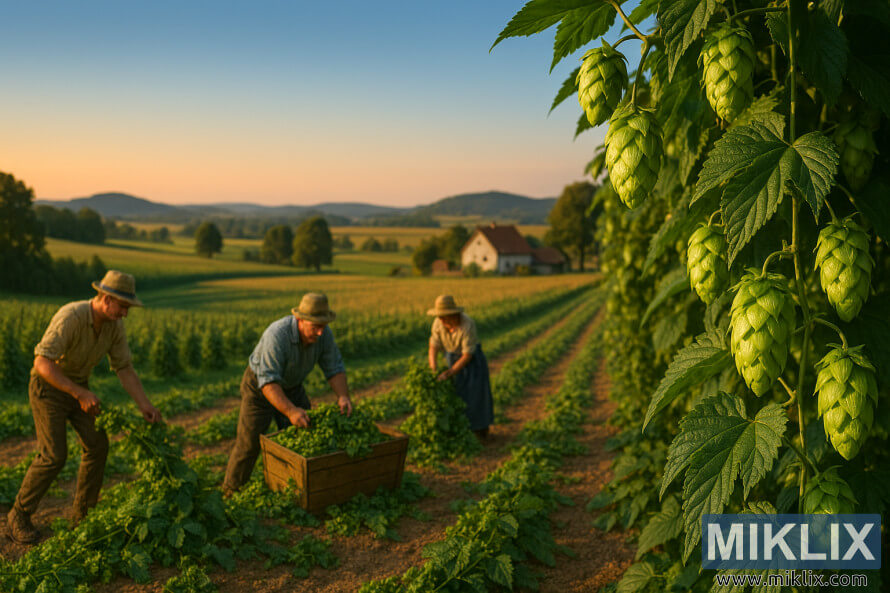
Herkules is celebrated for its robust growth in the Hallertau region. It boasts a high yield, often surpassing many German varieties. The vines grow into large cones, making them easy to harvest with standard trellis systems.
The Herkules variety is also known for its disease resistance, which reduces the need for fungicides. This trait is particularly beneficial in areas prone to mildew and other common hop diseases. However, maintaining good airflow and light around the bines is crucial for optimal growth.
The Hallertau harvest is typically well-timed, starting at the end of August and lasting into September. The exact timing can vary based on elevation and the season. Therefore, it's important to monitor cone maturity closely to achieve the desired alpha acid levels.
German hop merchants and online retailers offer a wide range of hops, including Herkules. Availability can fluctuate annually, influenced by harvest size and export demand. It's wise to check the lot number and harvest year to ensure the alpha acid content meets expectations.
Herkules is commonly sold as whole cone and pelletized hops. Currently, there is no commercial cryo or lupulin powder form available. Brewers can select the form based on their storage, handling, and alpha stability requirements.
Its popularity extends beyond Germany, thanks to its high yield and reliable bittering. Herkules is used in German brewing and exported to craft and industrial breweries worldwide. Prices and availability can change with the season and crop reports.
Click or tap the image for more information and higher resolutions.
Brewing uses and addition timing
Herkules is celebrated for its role as a bittering workhorse. Its high alpha acids enable brewers to achieve high IBUs with minimal quantities. This makes early boil additions ideal for maximizing acid isomerization.
Timing your hop additions is crucial for achieving the desired bitterness and aroma. Early boil additions are best for locking in bitterness. Conversely, shorter boil times or late additions help preserve essential oils for flavor and aroma.
- Use Herkules in the first 60 minutes for stable bitterness and efficient utilization.
- Reduce dwell time if you want cleaner, less vegetal character from the hop.
Late additions of Herkules can introduce spicy, citrus, and herbal notes. However, volatile oils are lost with extended boiling. Reserve late additions for whirlpool hops Herkules or very short post-boil rests.
Whirlpool hops Herkules at 170–180°F for 10–30 minutes can extract oils without heavy isomerization. This method preserves a brighter hop presence while controlling bitterness.
Consider co-humulone when formulating recipes. Herkules' bitterness may seem sharper due to its co-humulone content. Balance it with soft malts or rounded aroma hops to achieve harmony.
- Primary role: base bittering hop in lagers, doppelbocks, and big ales.
- Late addition Herkules: small whirlpool or late-boil doses for subtle spice and citrus lift.
- Blend role: pair with floral or fruity aroma hops to tame assertive notes.
Beer styles that suit Herkules
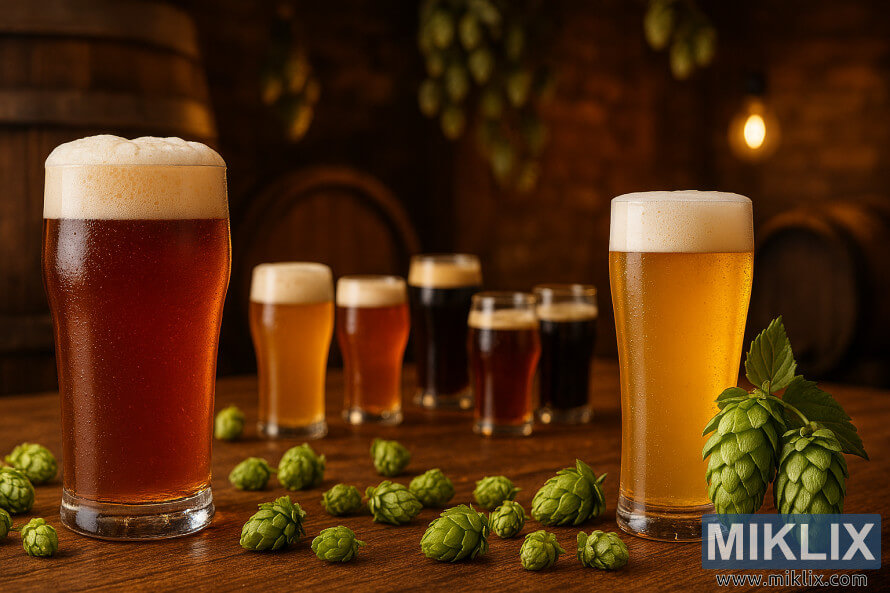
Herkules excels in beers needing a firm, clean bitterness. It's a staple in traditional German recipes, particularly in Pilsners and Bocks. In lagers, Herkules anchors the bitterness while keeping the malt profile clear.
German lager hops, like Herkules, offer power without harshness when used judiciously. They're often chosen for Dortmunder and Munich-style lagers, which require a strong backbone. A careful late-hop program ensures a crisp finish.
In hopped ales, Herkules can serve as a bittering backbone in IPAs. Pair it with aromatic US varieties like Citra or Cascade for citrus and tropical top notes. This combination creates an IPA with structure and a layered aroma.
Dark and experimental beers also benefit from Herkules. In stouts and porters, it provides a counterpoint bitterness and a subtle herbal-spice bite. This contrast enhances the roast and chocolate malts without overpowering them.
- Pilsner and Bock: primary use for clean bitterness.
- Munich and Dortmunder: classic fits among German lager hops.
- Pale Ale and IPA: bittering base when blended with expressive aromatics.
- Stout and Porter: use sparingly for balance and spice.
Stylistic fit favors beers where assertive bitterness is desired. When aroma is key, blend Herkules with hops that offer citrus, floral, or tropical notes. This mix preserves strength while delivering complexity in both lagers and ales.
Click or tap the image for more information and higher resolutions.
Recipe examples and formulation tips
When aiming for efficient IBUs, use Herkules as your primary bittering hop. Its alpha acids typically range from 12–17%. Always check the lot before brew day and adjust the weights accordingly for accurate bitterness calculation.
For a German-style Pilsner, add Herkules in the early boil and finish with Saaz for aroma. This approach keeps bitterness clean while Saaz adds a floral lift. Herkules recipes often favor balance over aggressive late hopping.
In an IPA, use Herkules for first-wort or early boil additions to secure bitterness. Then, blend it with Citra or Mosaic in late and dry hop stages. This hop blending creates citrus and tropical aromas while maintaining a firm bittering backbone.
Keep whirlpool and dry hop rates modest. Herkules has moderate total oils, so restrained additions reveal spicy, citrus, and melon notes without overpowering the beer. Adjust late additions downward if alpha acids test lower than expected.
- Measure alpha acids of the lot before brewing.
- Use early additions for predictable Herkules bitterness calculation.
- Pair with Saaz or Hallertau Mittelfrüh for traditional styles.
- Pair with Citra or Mosaic for modern IPA aromatics.
Practical Herkules recipe tips: scale bittering amounts to target IBUs, account for crop year variability, and reduce late hop weights slightly due to lower oil content. Test and tweak one variable per batch to refine results.
Substitutions and comparable hop varieties
Experienced brewers often seek high alpha bittering hops with assertive aroma. Hallertau Taurus and Warrior are common substitutes for Herkules.
Taurus vs Herkules is significant because Taurus shares lineage and flavor traits with Herkules. It's ideal when aiming for similar aroma and bitterness.
Warrior is chosen for its solid bittering power and tight bitterness profile. It offers comparable alpha acids, making it a reliable substitute.
When substituting Herkules, match alpha acid percentages and co-humulone. Adjust milligrams or grams to achieve target IBUs based on actual AA%.
- Check alpha acids: scale additions to preserve IBUs.
- Mind aroma shifts: expect subtle differences in citrus or herbal notes.
- Account for forms: no lupulin/cryogenic Herkules exists, so substitute cryo or lupulin products with equivalent high-alpha forms.
For precise swaps, run your recipe through a calculator and taste test small pilot batches. This method ensures consistency and uses reputable Herkules substitutes.
Click or tap the image for more information and higher resolutions.
Herkules in commercial brewing
Herkules is widely used in larger breweries for its effective bittering and dependable farming practices. It acts as the main bittering hop for lagers and high-bitterness ales, where consistency is key.
Brewers appreciate Herkules yield for its high crop output, which reduces raw material costs and stabilizes supply. Its stable alpha acid levels make it easier to achieve bitterness targets without frequent recipe adjustments.
Herkules is commonly used in kettle additions and long boils, where its alpha acids take center stage. Blending it with aroma-focused varieties creates complex flavor profiles while maintaining predictability at scale.
- Industry adoption: favored for cost-effective bittering and disease resistance.
- Production roles: primary bittering hop in large lager lines and hoppy ales.
- Product positioning: pairs with traditional German lager brands and modern IPA variants.
- Supply notes: AA% can shift by harvest year; brewers track lots closely.
Herkules is a notable German commercial hop, aligning with brewing standards that value tradition and export quality. Its origins support brand narratives for lagers, while also providing craft teams with a reliable bittering tool.
Large-scale operations face challenges due to form limitations. The absence of cryo or lupulin concentrate impacts whirlpool and dry-hop strategies. This requires careful procurement and inventory planning as part of quality control.
Storage, forms, and handling
Herkules hops are mainly sold as pellets and whole cones. Brewers must understand that pellets are denser, affecting weight-to-alpha conversion differently than whole cones. Currently, no major processor offers commercial lupulin powder for Herkules.
For optimal storage, vacuum seal Herkules hops and keep them cold. Refrigeration slows down alpha acid loss, while freezing preserves volatile oils crucial for late additions and dry hopping. It's essential to limit exposure to light and oxygen when storing Herkules hops.
On brew day, adjust rates when switching forms. Use about 10% less Herkules pellets by weight than whole cone hops to achieve equivalent bittering. This adjustment accounts for the compact nature of pellets and their slightly altered utilization.
Before opening a bag, check the supplier packaging and harvest year. Label lots with measured alpha acid and note any oxygen exposure history. This information helps estimate remaining potency and hop shelf life, predicting the aroma you'll retain.
Expect the bittering potential to last longer than the scent. Even with proper cold storage, volatile oils decrease over months, reducing aroma but keeping alpha acids relatively stable. Plan your hop use accordingly to preserve aroma-driven additions.
- Vacuum-seal in lightproof bags for maximum protection.
- Store refrigerated for short-term use, frozen for long-term stock.
- Rotate stock by harvest year and tested alpha acid values.
Careful handling and record keeping enhance consistency. Tracking hop shelf life, form, and storage conditions makes predicting performance easier for both bittering and aroma roles in any Herkules-forward beer.
Analytical testing and quality control
Laboratory testing is crucial for the reliable use of Herkules in brewing. It covers alpha and beta acids, co-humulone fraction, and total oil content. These standards guide brewers in their recipe calculations and scaling.
Alpha acid testing reveals Herkules to have a range of 12–17%, with an average of 14.5%. Beta acids are about 4–5.5%, averaging 4.8%. These figures are essential for calculating IBUs and adjusting hop schedules.
Hop oil analysis breaks down total oil into myrcene, humulene, caryophyllene, farnesene, and minor constituents. Total oil content is typically 1.4–2.4 mL per 100 g, averaging 1.9 mL. Myrcene makes up roughly 40%, and humulene about 37.5% of the oil profile. Caryophyllene is near 9.5%.
Co-humulone percentage is key for perceived bitterness. Herkules usually shows co-humulone in the 32–38% range. Lab figures help brewers balance bitterness and smoothness in pale ales and high-gravity beers.
- Use supplier certificates of analysis for batch verification.
- Confirm crop-year variance with independent lab reports when needed.
- Record alpha acid testing results for consistent IBU calculations.
Hop quality control goes beyond numbers. Visual checks, storage history, and form—whole cone, pellets, or cryo—affect aroma retention and extraction. Combining chemical data with sensory checks is crucial for the best brewing outcomes.
Routine hop oil analysis supports decisions on late additions and dry hopping. Knowing the oil breakdown helps predict flavor carry-through and informs choices for hop-forward styles.
Small-scale testing can save large-scale batches from unpredictable bitterness or muted aroma. Treat lab results as one part of a quality control system. This includes supplier documentation, storage monitoring, and trial brews.
Homebrewer tips and experiments
Before brewing, measure the alpha acids of each Herkules lot. The alpha acid content can vary with each harvest. Adjust the boil additions based on the tested alpha acid percentage to achieve the desired bitterness.
Use Herkules early in the boil for a solid bittering in pilsners, lagers, altbiers, and robust ales. For recipes focused on bitterness, use long boil hops and calculate IBUs from the measured alpha value.
For aroma, keep late additions light. Short whirlpool rests of 10–20 minutes at 170–180°F help preserve moderate oils without introducing harsh vegetal notes.
- Try single-hop bittering with a bright late addition from an aroma hop like Citra.
- Pair Herkules with Saaz or Hallertau for classic German character.
- Blend with Mosaic or Citra for a hybrid, modern profile.
Run small-batch Herkules trials to compare addition timings. Brew 1–3 gallon test batches to judge how early and late additions change flavor and aroma. Label each batch with AA% and timings for repeatable results.
Design simple Herkules experiments that swap only one variable per trial: hop weight, whirlpool time, or hop pairing. This approach reveals true cause and effect without confounding factors.
- Start with a baseline bittering schedule using measured alpha acids.
- Add a short whirlpool hop at two different weights for comparison.
- Dry hop only one of the samples to isolate aroma impacts.
Remember there is no cryo or lupulin Herkules product. Mimic concentrated aroma by pairing Herkules with a high-oil hop rather than seeking a processed substitute.
When scaling recipes, keep the same hop-to-grain ratio used in your small-batch Herkules trials. This preserves balance and helps avoid unexpected bitterness or aroma loss in larger volumes.
Record sensory notes and gravity readings for each test. Over time, these entries form a practical reference that improves recipe precision and aids repeatable experiments.
Sustainability and sourcing ethics
Herkules sourcing is crucial for brewers who prioritize long-term supply and environmental stewardship. Growers highlight its high yields and robust disease resistance. These traits can significantly reduce the need for water, fertilizers, and pesticides per kilogram harvested.
It's essential for buyers to demand traceability and detailed data on each harvest. Requesting certificates from German merchant partners and cooperatives ensures adherence to hop ethics and legal standards.
When exploring sustainable hops, look for transparent origin information and lab results. Reputable German growers and established U.S. importers typically offer these, aiding in responsible purchasing decisions.
Consider the energy used in transport and storage when making purchases. International cold-chain logistics maintain freshness but increase refrigeration costs. Opting for local sourcing can significantly lower the carbon footprint of hop deliveries.
Small craft breweries can collaborate with regional suppliers or join buying groups to enhance traceability and minimize waste. Engaging in open discussions with vendors about pesticide use and soil care can strengthen hop ethics throughout the supply chain.
Prospective buyers must weigh the costs, availability, and environmental impact of their choices. Clear documentation, credible certifications, and verified German hop farming practices make Herkules sourcing more transparent and accountable to consumers.
Conclusion
Herkules summary: This German-bred hop from Hüll is a high-alpha workhorse. It brings efficient bitterness and solid field performance. With 12–17% alpha acids, good yields, and disease resistance, it is reliable for brewers who need a consistent bittering backbone.
The Herkules hop verdict rests on both its chemistry and its flavor. Its oil profile, led by myrcene and humulene, delivers a biting but clean bitterness. Brewers will also find citrus, melon, pine, and peppery notes when they push late additions or dry-hop thoughtfully.
Best uses Herkules: It shines as an early addition in German lagers and robust ales. It also serves as the bittering base in hoppy beers when paired with more aromatic varieties. Since there is no commercial lupulin powder form, test each lot for AA% and oil data. Source from reputable suppliers and experiment with blends and late additions to unlock the hop’s secondary aromatics.
Further Reading
If you enjoyed this post, you may also like these suggestions: