
Hops in Beer Brewing: Hersbrucker E
Published: December 27, 2025 at 6:14:32 PM UTC
Hersbrucker E hops are celebrated for their delicate floral and spicy aromas. They are a favorite among brewers crafting traditional lagers and modern ales. These hops are chosen for their subtle, balanced character, which stands in contrast to the bold citrus and resinous flavors found in other varieties.
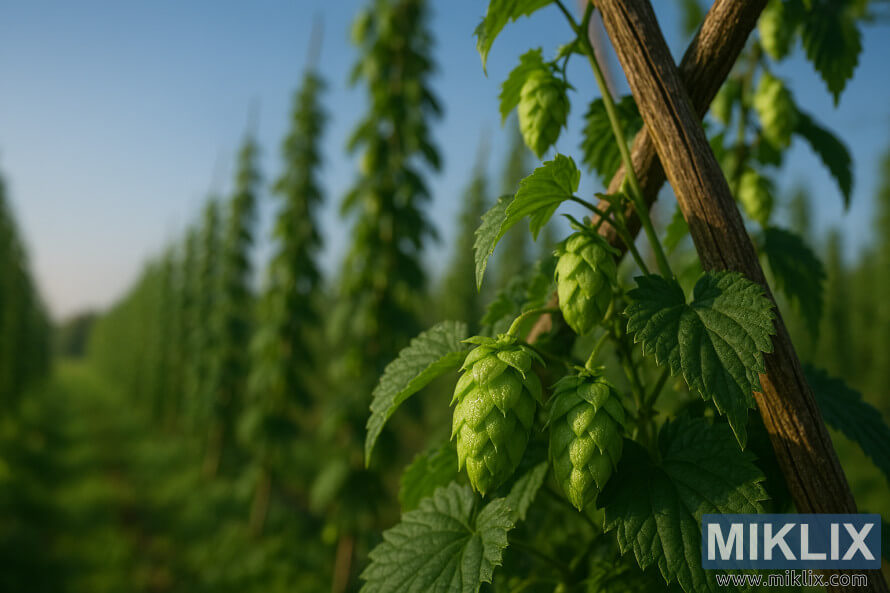
Click or tap the image for more information and higher resolutions.
Exploring the nuances of Hersbrucker E hops reveals their versatility. Small adjustments in brewing recipes and techniques can unveil different aspects of their profile. This is evident in controlled trials, such as single-malt, single-hop pale lagers or ales. Projects like Hop Chronicles use these experiments to isolate specific traits. This mirrors the approach of databases like Beer Maverick, which compile oil profiles and alpha acid ranges to aid brewers in their craft.
The importance of sourcing quality hops cannot be overstated. Reputable suppliers like Yakima Valley Hops and Northern Brewer provide detailed information on Hersbrucker E hops. They also ensure secure payment methods, protecting buyers' personal information. This reliability empowers breweries and home brewers to obtain fresh German aroma hops, enabling them to plan their batches with confidence.
Key Takeaways
- Hersbrucker E hops deliver mild floral and spicy aroma suited to delicate lagers and approachable ales.
- Controlled single-hop tests clarify the hop profile Hersbrucker offers.
- Use Hersbrucker hops for aroma-forward additions rather than aggressive bittering.
- Reliable hop vendors and secure e-commerce practices make sourcing easier for brewers.
- Reference hop databases for alpha acid ranges and essential oil data when planning recipes.
Overview of Hops in Beer Brewing
Hops, the cones of Humulus lupulus, play a crucial role in brewing. They contribute bitterness, aroma, and stability through iso-alpha-acids. These functions impact the beer's mouthfeel and shelf life, balancing the sweetness of malt.
When crafting a recipe, it's essential to differentiate between aroma and bittering hops. Bittering hops are added early to extract alpha acids. Aroma hops, on the other hand, are added later or used for dry hopping. This preserves their volatile essential oils, enhancing the beer's aroma.
Hop essential oils, such as myrcene, humulene, and caryophyllene, are responsible for the beer's flavor. These oils contribute citrus, floral, herbal, and resinous notes. Single-hop test beers, like those from The Hop Chronicles, help brewers understand a hop's unique characteristics and how it influences different beer styles.
The climate and soil of different regions impact hop character. The Pacific Northwest is renowned for its hop cultivation due to its favorable climate and soil. Germany, however, is celebrated for its classic aroma hops, including Hallertau and Hersbrucker.
For craft brewers, practical considerations when purchasing hops are vital. Reputable hop merchants offer secure payment options like Visa, Mastercard, American Express, Apple Pay, Google Pay, and PayPal. These merchants do not store card details and employ trusted checkout systems to safeguard customer information.
The context in which hops are tasted significantly influences their perceived character. Understanding the beer style being evaluated is key. Brewers often create single-malt, single-hop versions to isolate the hop's distinct traits. This approach allows for a better blend of aroma and bittering hops in complex recipes.
Origins and Terroir of German Hop Varieties
German aroma hops have a rich history rooted in long-standing farming traditions and specific growing zones. The Hallertau region is at the heart of this narrative. Here, soil types, a cool continental climate, and meticulous hop breeding converge to create the prized green cones.
The origin of Hersbrucker hops is well-documented in hop registries and trade records. Companies like Hopsteiner and BSG meticulously record the provenance of varieties sold globally. This ensures that small breweries and homebrewers in the United States can import these hops securely, with reliable billing and shipment.
Controlled tasting trials and brewing comparisons underscore the impact of terroir on aroma perception. Initiatives like The Hop Chronicles delve into lagers brewed from single-origin hops. They reveal the subtle floral, spicy, and noble notes tied to specific growing conditions. This work aids brewers in selecting German aroma hops for their clarity and balance.
Beyond the Hallertau region, Germany is home to many classic varieties, including Tettnang and Spalt. Industry suppliers maintain databases that list cultivar histories and regional data. These records highlight the connection between agricultural practices and flavor, emphasizing the importance of terroir in hop selection for specific beer styles.
For brewers seeking specialty lots, the year of harvest, drying methods, and storage conditions all impact the final aroma. Paying close attention to provenance and crop reports is crucial when working with German hops terroir and varieties with Hersbrucker origin.
What Makes Hersbrucker Hops Distinct
Hersbrucker hops are celebrated for their subtlety, not their intensity. They are favored by brewers who appreciate the delicate floral and spicy notes of German noble hops. This makes Hersbrucker a top choice for lagers and classic pilsners, where finesse is key.
Compared to more bitter hops, Hersbrucker offers a milder bitterness. Brewers use Hersbrucker alpha acids to plan their brewing process. Hopsteiner and Yakima Chief Ranches provide ranges, reflecting the natural variations in each crop.
Flavor perception is greatly influenced by context. In single-hop trials, Hersbrucker's aroma shines with its floral, hay, and soft stone-fruit notes. However, in complex ales, these traits can be overpowered. Therefore, the brewing process and fermentation choices are crucial.
For brewers, sourcing Hersbrucker is essential. Reputable suppliers ensure payment security and maintain hop freshness. This is vital for preserving the essential oils that define Hersbrucker's unique characteristics and aroma.
- Low-to-moderate alpha acids make it suited for late additions and whirlpool use where Hersbrucker alpha acids provide mild bitterness control.
- Delicate oil profile places it among German noble hops favored for traditional Central European lagers.
- Versatility in aroma-driven recipes lets brewers highlight floral and spicy facets without overpowering malt and yeast.
When comparing varieties, expect variability between harvests. Databases give ranges for Hersbrucker alpha acids and oil content so brewers can adjust doses. This variability supports creative use while keeping the classic Hersbrucker aroma and characteristics at the center of the recipe.
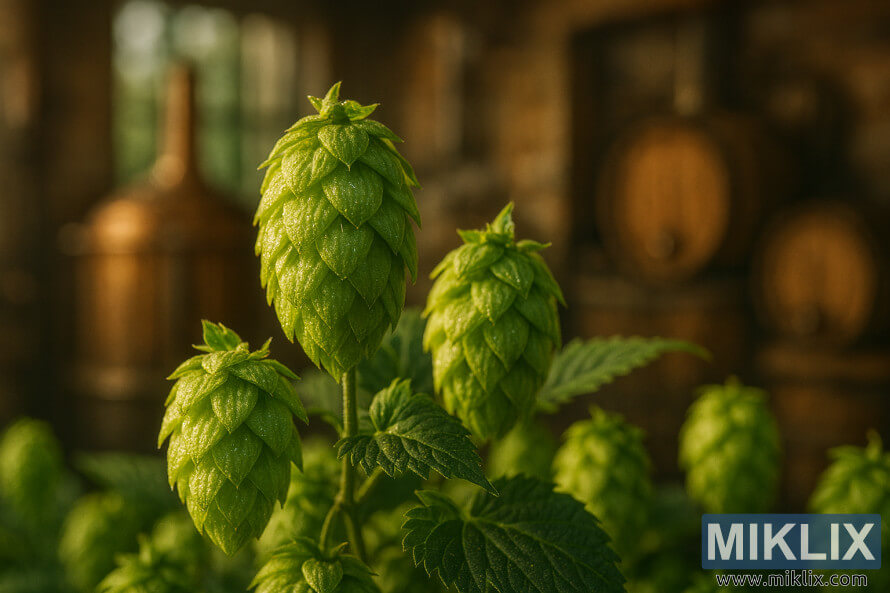
Click or tap the image for more information and higher resolutions.
Hersbrucker E hops
Hersbrucker E hops bring a classic German aroma to the table, perfect for delicate lagers and pilsners. Their profile is marked by floral, mild spicy, and herbal notes. These characteristics shine when used in late boil, whirlpool, and dry hop stages.
For brewers, Hersbrucker E's alpha acid values are modest, positioning it as an aroma-focused hop rather than a bittering workhorse. This low alpha acid range allows for precise bitterness adjustment, preserving the hop's essential oils.
When purchasing Hersbrucker E online, expect secure payment options like AmEx, Visa, Mastercard, PayPal, Apple Pay, and Google Pay. Reliable sellers ensure data security and offer transparent refund policies.
Single-hop trials on lagers can help isolate the Hersbrucker E aroma. This method showcases its performance on a clean malt and yeast background. Blind tastings or simple single-malt recipes can help evaluate its floral and spicy traits accurately.
- Profile: gentle, noble-type aroma that supports traditional German styles.
- Alpha acid: generally low to moderate, suitable for aroma-forward use.
- Application: late additions, whirlpool, and aroma-focused dry hopping.
Databases like Beer Maverick and publications from hop-growers categorize Hersbrucker as a German aroma hop. They provide normalized ranges for alpha acids and oil compounds. Brewers aiming for a subtle, classic German hop flavor will find Hersbrucker E invaluable for lager trials and blended aroma schedules.
Common Beer Styles Suited to Hersbrucker E
Hersbrucker E excels in traditional German lagers, highlighting delicate floral and spice notes. Brewers find it perfect for single-hop, single-malt pale lagers, offering a clean, balanced profile. This supports the traditional malt characters well. For those aiming at a crisp pilsner, adding Hersbrucker E late in the boil or as a gentle dry hop enhances bright, soft aromatics. It does so without overwhelming the bitterness.
For pilsner and pale lager recipes, Hersbrucker E is ideal when subtlety is key. A 70% lager-focused grain bill, combined with controlled hopping, showcases the hop's mild herbal and floral tones. This approach is perfect for both craft breweries and homebrewers seeking a true-to-style German aroma.
Light ales also benefit from Hersbrucker E, albeit with restraint. When added late or in whirlpool, it contributes a gentle spice and field-flower bouquet. This is particularly beneficial for pale ales with low-to-moderate bitterness, adding complexity without sacrificing drinkability.
- Traditional German Pilsner: late hop additions for aroma; ideal for Hersbrucker pilsner character.
- Export Pale Lager: subtle floral lift; Hersbrucker in lagers keeps the malt-forward focus.
- Light European Ale: moderate use for soft spice; an example of Hersbrucker ale usage.
- Single-hop test beers: useful for evaluating beers for Hersbrucker E in controlled recipes.
When crafting recipes, it's crucial to source hops from reputable e-commerce sites that provide alpha acid and harvest date information. Clear labeling ensures brewers can match expectations for beers for Hersbrucker E. This choice helps in timing additions to preserve aromatic clarity.
Using Hersbrucker E as an Aroma vs. Bittering Hop
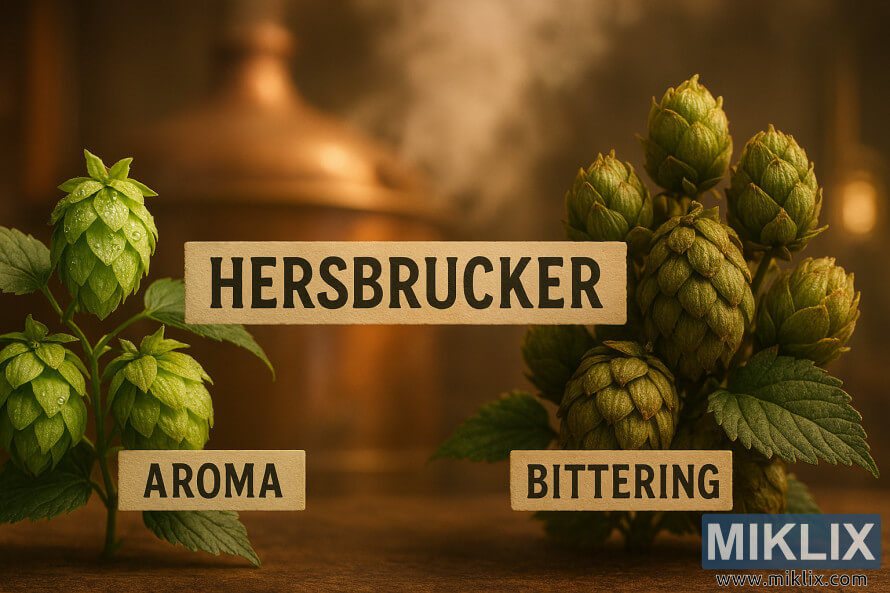
Hersbrucker E is a versatile hop, balancing between a classic German aroma hop and a mild bittering option. Its low-to-moderate alpha acids make it ideal for adding floral, spicy, or subtle citrus notes without overpowering bitterness. The choice between Hersbrucker for bittering or aroma depends on the brewer's goals and timing of hop additions.
For bittering, Hersbrucker is added early in the boil to isomerize alpha acids. This creates a gentle backbone suitable for lagers and traditional ales. However, using Hersbrucker in this role can mute delicate oils. It's crucial to determine if the beer style benefits from this restraint.
To emphasize essential oils, late addition Hersbrucker or dry hopping is recommended. Late whirlpool or flameout additions preserve myrcene, humulene, and caryophyllene. Dry hopping enhances floral and fruit character without increasing bitterness, perfect for pale ales and Kölsch-style beers.
- Early boil: gentle bitterness, stable bitterness profile.
- Late addition Hersbrucker: bright aroma, preserved volatile oils.
- Hersbrucker dry hop: pronounced floral and fruit notes, minimal astringency.
Choosing the right quantity is essential for intended use. Secure payment methods and trusted suppliers ensure brewers can buy the right amount for their recipes. Small packs are suitable for single-batch aroma trials, while larger sacks are better for consistent bittering or repeated dry-hop schedules.
In practice, many brewers use Hersbrucker as an aroma hop but also consider its dual-purpose potential. Testing with measured additions and tasting rounds helps find the right balance between bittering and aroma in your beer style.
Click or tap the image for more information and higher resolutions.
Flavor and Aroma Notes Brewers Can Expect
Fresh hops are crucial. Ensuring secure merchant transactions allows brewers to obtain fresh Hersbrucker. This ensures the aroma's integrity from the farm to the kettle. It preserves the subtle compounds that define the Hersbrucker flavor profile.
In The Hop Chronicles, context significantly influenced taste ratings. Lagers and ales can accentuate different aspects of Hersbrucker. Blind trials and simple recipes help uncover the hop's true aroma. Running small batches is essential to fully appreciate what the hop offers.
Expect a floral spicy hop character, unlike the bold citrus or tropical notes of many American hops. German hop aromas lean towards floral, spicy, and herbal, with light fruity hints. These are driven by essential oils like myrcene, humulene, and caryophyllene.
Crop variability impacts intensity and nuance. Hop data and year-to-year changes mean a single harvest can emphasize herbal or floral notes. Recipes should account for this variability. Adjust late-hop additions to refine the final scent and taste.
- Use late additions for brighter Hersbrucker aroma notes.
- Try dry hopping lightly to lift floral spicy hop nuances.
- Blend with noble or neutral aroma hops to balance herbal tones.
Substitutes and Hop Comparison for Hersbrucker E
When ordering alternative hops online, it's crucial to focus on payment and security. Opt for reputable retailers that ensure secure checkout, clear shipping windows, and maintain temperature-stable packaging. It's also important to check return policies and verify the harvest year. This ensures you match freshness when testing Hersbrucker substitutes.
For a precise comparison, single-hop brews are recommended. The Hop Chronicles suggests brewing small batches to isolate aroma and flavor. Understanding the style of beer can also set expectations. For instance, a pilsner crowd will judge substitutions differently than a saison tasting panel.
Beer Maverick’s database and Hop Substitution Chart are invaluable tools. They normalize alpha acids and oil ranges, allowing brewers to match bitterness and aromatic targets. This chart helps in selecting hops with similar humulene and myrcene profiles when swapping Hersbrucker E.
Consider these comparable German hops for many aroma-focused recipes:
- Hallertau Mittelfrüh — classic noble, soft spice and floral notes useful for close Hersbrucker substitutes.
- Tettnang — gentle, herbal profile that keeps a delicate aroma in lagers and ales.
- Spalt — mild, earthy spice that pairs well with malt-forward beers seeking subtle complexity.
- Hallertau Blanc — brighter and more aromatic; works when you want a fruitier twist while staying in the German hop family.
When comparing Hersbrucker vs Hallertau, focus on subtle differences in floral and spicy character. Hallertau Mittelfrüh leans toward the noble profile, while Hersbrucker E often shows softer floral notes. Ensure alpha acid ranges match for bitterness parity.
Use a simple trial plan for substitution:
- Pick one substitute from the hop substitution chart with similar alpha acids.
- Brew a small single-hop batch to hear how aroma and bitterness translate.
- Adjust late additions or dry-hop weight based on measured oil content and perceived intensity.
Databases that compare measurable oil content and normalized ranges make swaps more predictable. Cross-referencing tasting notes with lab data reduces guesswork when choosing between comparable German hops.
Brewing Recipes and Formulas Featuring Hersbrucker E
Begin with a small batch when experimenting with Hersbrucker E. A single-hop recipe for a 5-gallon batch is ideal for highlighting floral and spicy notes. Use a single pale malt or Imperial Global Pilsner malt. A simple water profile and clean lager yeast will allow the hop's characteristics to shine.
Consider this basic template as a starting point:
- 5 gallons of water and 9–10 lb of Pilsner or two-row pale malt
- Mash at 148–152°F for 60 minutes
- Bittering addition at 60 min: use low alpha acid hops for calculated IBU
- Late additions at 10 and 0 min to enhance aroma
- Dry hop during cold-conditioning for 3–5 days for extra topnotes
For a Hersbrucker pilsner, focus on late-boil and whirlpool additions. Keep IBUs low for balance. Ferment at lager temperatures with a diacetyl rest. This will result in a crisp, clean base that showcases the hop's delicate herbal and floral aspects.
In designing a single-hop Hersbrucker recipe for ales, use a neutral ale yeast like Wyeast 1056 or White Labs WLP001. Increase the mash temperature slightly for a fuller mouthfeel. Emphasize late additions to ensure citrus and spice notes stand out.
Retailers now accept secure payment channels for ordering specific quantities of Hersbrucker E. Purchase measured lots for consistency. Record alpha acids from the supplier to accurately calculate bittering and finishing additions.
Refer to The Hop Chronicles and Beer Maverick for model recipes. They advocate for single-malt, single-hop approaches to highlight hop character. Adjust hop timing based on their recommendations, then fine-tune with alpha acid ranges and oil profiles from databases.
Run small pilot batches and maintain detailed logs. Record boil times, hop weights, and steep schedules. Compare aroma, flavor, and bitterness across batches to refine your Hersbrucker recipes. This will enable scaling with confidence.
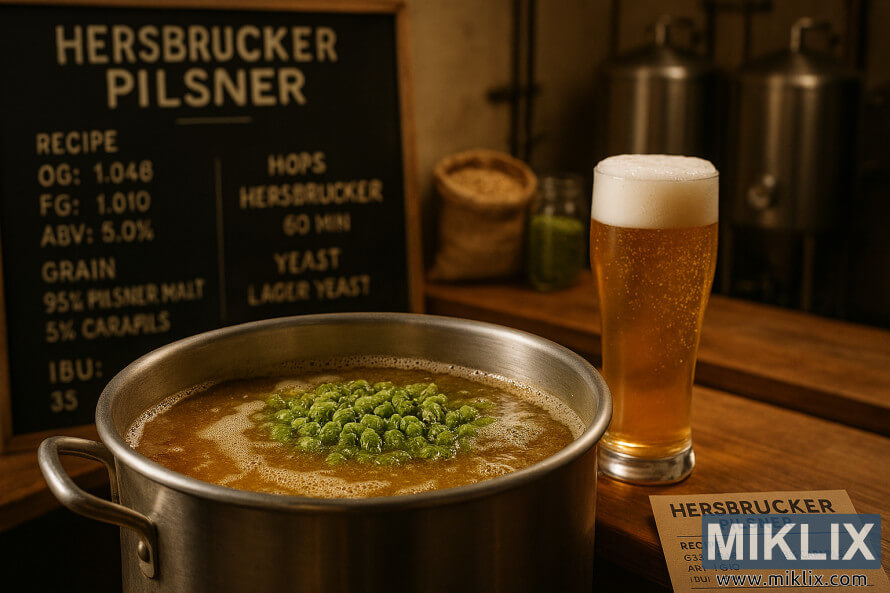
Click or tap the image for more information and higher resolutions.
Tips from Brewers: Practical Use and Tasting Context
Secure e-commerce platforms and reputable sellers like Hopsteiner, Yakima Chief, or BSG ensure hop freshness. This preservation of essential oils is crucial when applying Hersbrucker brewing tips in lagers and pilsners.
A practical brewer observation from a lager-focused cellar highlights the importance of matching style to tasting method. Blind panels and single-hop single-malt test beers help avoid bias. Use tasting Hersbrucker in controlled flights to see how it reads in clean lager bases.
- Start with late-boil additions or gentle dry hops for floral, herbal lift.
- Use low rates in delicate lagers to keep balance and avoid vegetal notes.
- Run single-hop tests before scaling a recipe to commercial batches.
Understanding hop oil composition is key before dialing in rates. Brewer advice Hersbrucker emphasizes the importance of myrcene, humulene, and geraniol ranges in aroma delivery. Always check current alpha and oil ranges from hop farms to plan bittering and aroma uses.
Expect crop-to-crop variation. Treat supplier data as the baseline. Adjust late additions and dry hopping to taste rather than relying on historical numbers alone.
For American-style heavily hopped ales, use restraint. Hersbrucker brewing tips favor subtle aromatic roles rather than aggressive bittering. In big, citrus-forward beers, it may be overshadowed or read differently on panels.
When tasting Hersbrucker, pour at recommended temperatures and use narrow tasting glasses for lagers. Note how the hop shows on aroma first, then in the short finish. Record impressions across replicates to build reliable brewer advice Hersbrucker for your brewery.
Hop Sourcing, Seasonality, and Storage for Best Results
When sourcing Hersbrucker hops, opt for reputable sellers. Suppliers like Yakima Valley Hops and Northern Brewer, along with breeders BarthHaas and BSG, ensure secure transactions. They provide batch codes and harvest dates, ensuring transparency.
Align your purchases with Hersbrucker seasonality. Fresh harvests typically arrive in late summer and early fall. Small batches, as seen in The Hop Chronicles, reveal how seasonal shifts impact oil profiles. If you desire the first-crop character, purchase early.
Yearly variations in alpha acids and essential oils are expected. Weather and region influence myrcene, humulene, and caryophyllene levels, as reported by Beer Maverick and industry reports. Use supplier lab sheets and hop databases to set realistic ranges for each lot.
Adhere to hop storage best practices to preserve aroma. Use vacuum-sealed or nitrogen-flushed bags to slow oxidation. Store hops frozen at 0°F (-18°C) or colder. Minimize exposure to oxygen, light, and heat to protect volatile oils responsible for Hersbrucker's distinctive scent.
Ensure hop freshness before use. Smell and small-scale dry-hop tests are more accurate than lab numbers. Rotate stock by harvest date and brew from the oldest but still fresh lots first to maintain consistent results.
- Buy from trusted sellers with secure payments and batch data.
- Time orders to align with Hersbrucker seasonality and first-crop arrivals.
- Verify lot analysis for alpha acids and oil composition.
- Store hops vacuum-sealed or nitrogen-flushed and freeze at 0°F (-18°C) or below.
- Perform quick freshness checks before critical brews.
Hop Data Sources and How to Interpret Them
Reliable hop data begins with trusted merchants and suppliers. Retailers like Yakima Valley Hops and Northern Brewer publish detailed product pages. These include normalized values for alpha acids, oil percentages, and cohumulone. Treat these pages as essential references for hop data interpretation when crafting recipes and managing inventory.
Breeding houses and farms enrich the data pool. Hopsteiner, HBC, and Yakima Chief offer crop-level data, which feeds into comprehensive hop databases. Beer Maverick compiles data from growers like BSG, Haas, and Crosby. It displays expanded ranges where numbers vary, reflecting real-world differences in harvests and processing.
Controlled sensory trials are crucial for understanding aroma metrics. Projects like The Hop Chronicles highlight how base beer, yeast, and mash profile influence hop character. Use consistent recipes in trials to ensure oil percentages translate into reliable aroma expectations, rather than one-off impressions.
Key metrics require focused attention. Alpha acids indicate bittering potential and guide IBUs. Cohumulone offers insight into bitterness harshness. Essential oil composition—myrcene, humulene, caryophyllene—predicts aroma and flavor contributions. A solid hop database will list these items and explain their brewing relevance.
Interpret numbers as ranges rather than absolutes. Seasonal shifts, storage, and pellet vs. whole-cone form alter alpha acids and oil percentages. Consult current technical sheets from hop suppliers for crop-year data. Cross-check entries in the hop database to gauge typical variance.
Apply data to recipes using a stepwise method:
- Gather supplier technical sheets for the crop year you will use.
- Compare those figures with entries in a trusted hop database.
- Adjust bitterness math using the reported alpha acids and cohumulone insights.
- Plan late additions and dry hops around listed oil percentages and oil profiles.
Pairing empirical numbers with tasting notes clarifies expectations. When alpha acids or oil percentages conflict, prioritize direct technical sheets from farms and hop houses. Then, use the hop database ranges to set expectations in the brewhouse.

Click or tap the image for more information and higher resolutions.
Pairing Hersbrucker E with Malts, Yeasts, and Other Hops
Begin with a neutral malt bill to showcase Hersbrucker E's floral and spicy traits. Opt for light Pilsner or a hint of Vienna malt. This combination offers a clean, slightly bready foundation. It supports the hop's delicate top notes without obscuring them.
When crafting a recipe, consider the synergy between hops and malts. A single-malt, single-hop test can reveal how grain selection impacts perception. Imperial Global or quality Pilsner malt pairs well for lager trials, accentuating aroma.
Select yeast strains that ferment cleanly and leave minimal esters for Hersbrucker beers. Wyeast 2001 or White Labs WLP830 are ideal for lagers. For bright ales, choose neutral ale strains with moderate attenuation to maintain crispness.
- Opt for a clean lager yeast for crystal clarity and floral enhancement.
- For subtle fruit notes, select a restrained ale strain and slightly lower fermentation temperatures.
- Maintain moderate mash temperatures to avoid excessive malt sweetness, which can overshadow hop nuances.
Consider complementary hops Hersbrucker in your dry-hop or late-addition plan. Classic German aroma hops like Hallertau Mittelfrüh, Tettnang, and Spalt complement Hersbrucker E. They create a noble, savory profile.
Small blends with mild dual-purpose varieties can balance bitterness or add a hint of fruit. Use low-alpha additions for bitterness and reserve aroma hops for last. This preserves volatile oils.
- Start with a light Pilsner malt base, adding 5–10% Vienna if desired.
- Choose a clean lager yeast, such as Wyeast 2001 or White Labs WLP830.
- Layer late-hop additions and a targeted dry-hop with Hallertau Mittelfrüh or Tettnang.
Ensure reliable sourcing for hops and malts in your trial. Trustworthy vendors facilitate consistent results and allow for refining your Hersbrucker pairing across batches.
Utilize substitution charts and tasting notes to refine your choices. Beer Maverick–style data and single-hop experiments confirm that a neutral malt base and clean yeast reveal Hersbrucker E's floral and coriander-like tones most effectively.
Commercial Examples and Notable Beers Using Similar German Aroma Hops
Many commercial pilsners in Germany list noble-type hops on their technical sheets. Brands like Bitburger, Warsteiner, and Jever highlight Hallertau Mittelfrüh, Tettnang, Spalt, or Hersbrucker as key aroma contributors. These beers demonstrate how classic floral and herbal notes shape a lager's profile.
Small-batch breweries often conduct single-hop trials to test hop character in pale ales and lagers. The Hop Chronicles and brewery single-hop series reveal how simple templates highlight hop traits. This work aids brewers in designing beers with Hersbrucker or finding substitutes when sourcing is limited.
Examples of Hersbrucker-like beers can be found in both draft and canned lines. Bitburger Pilsner and Spaten Premium Lager use hops from traditional German terroirs. Those searching for beers with Hersbrucker will discover related tasting samples across regional lagers and contemporary craft pilsners.
Retail catalogs and hop suppliers list crop-specific details used by brewers. Beer Maverick and hop merchants catalog German aroma hop beers, offering crop notes for Hallertau Mittelfrüh, Tettnang, Spalt, and Hersbrucker. These entries help match aroma goals to workable commercial recipes.
Commercial breweries manage payment and supply contracts to secure consistent hop quality. This infrastructure ensures stable access to aroma varieties for larger runs. Brewers crafting beers with Hersbrucker rely on steady supply to reproduce flavor across batches.
- Classic lager examples: Bitburger Pilsner, Spaten Premium Lager.
- Regional German ales and pils: Jever Pilsener, Radeberger Pilsner.
- Single-hop showcases: brewery pale ale or pale lager series highlighting one aroma hop.
For brewers and curious drinkers, studying commercial pilsners in Germany and examples of Hersbrucker-like beers clarifies how subtle herbal and floral hop notes translate from bines to glass. Tasting notes and technical sheets remain the best route to confirm hop usage in any given bottle.
Conclusion
Hersbrucker E summary: This German aroma hop adds delicate floral and mild spice notes to light lagers and pilsners. Its character can vary by crop. Therefore, it's crucial to consult the latest data from breeders like Hopsteiner or HBC and reputable sellers such as Yakima Valley Hops or Northern Brewer before finalizing recipes.
Regarding its breeding and use, controlled single-hop, single-malt trials are the most effective way to assess its impact. Use Hersbrucker E late in the boil or as a gentle dry-hop with clean lager yeasts and pale malts. This helps preserve its subtleties. Additionally, store hops frozen in low-oxygen packaging to protect their aromatics.
Final thoughts on Hersbrucker E hops: View alpha and oil figures as ranges and rely on aggregated databases like Beer Maverick for context. Confirm crop chemistry with farms and vendors. Purchasing from secure, reputable vendors that accept various payment methods increases the chance of receiving fresh, well-handled product. This ensures the best brewing results.
Further Reading
If you enjoyed this post, you may also like these suggestions:
- Hops in Beer Brewing: Millennium
- Hops in Beer Brewing: Pride of Ringwood
- Hops in Beer Brewing: Shinshuwase