
Hops in Beer Brewing: Hersbrucker Pure
Published: February 7, 2026 at 4:50:30 PM UTC
Hersbrucker Pure is a German aroma hop, bred from a mix of classic lines. Its ancestry includes Hallertauer Mittelfrüh, Saaz, and a wild German hop. This blend results in a gentle, noble-style scent, perfect for traditional lagers and lighter ales.
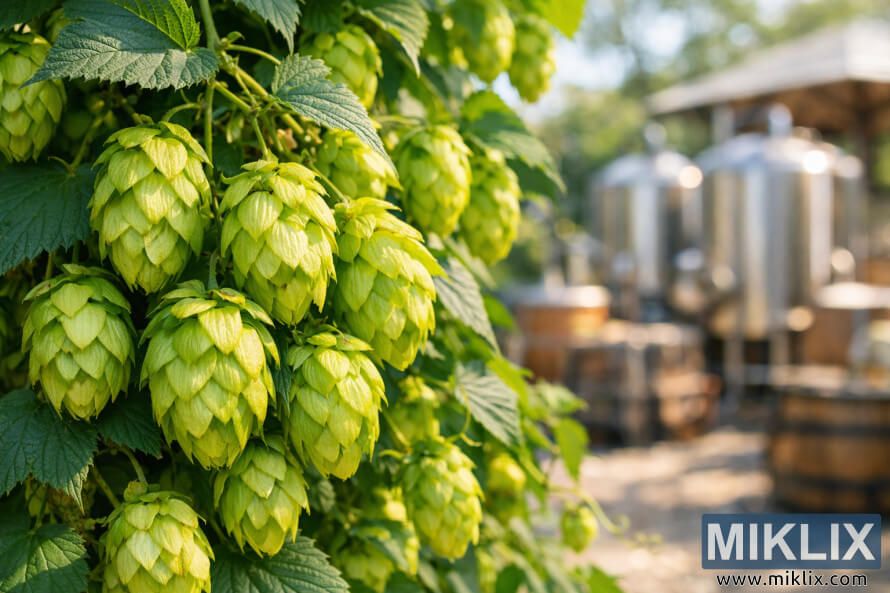
Click or tap the image for more information and higher resolutions.
Hersbrucker Pure hops are a must-try for craft brewers and homebrewers. They bring a subtle, noble German flavor to traditional lagers and wheat beers. This piece delves into Hersbrucker Pure's origins, its role in beer aroma, and its practical uses in brewing. It offers detailed advice on using Hersbrucker Pure in the kettle, whirlpool, and for dry hopping or late additions.
Developed by Anheuser-Busch, Hersbrucker Pure is a stable alternative to traditional Hersbrucker. It has a lineage that includes Hallertauer Mittelfrüh, Saaz, and a wild German hop. This heritage gives it a light, floral, and mildly spicy character, typical of noble German hops. It also ensures consistency for both commercial and craft-scale brewing.
Key Takeaways
- Hersbrucker Pure is a mild, noble aroma hop prized for lagers and wheat beers.
- Its parentage links to Hallertauer Mittelfrüh, Saaz, and a wild German hop.
- The variety was developed and tested by Anheuser-Busch for consistency.
- Expect gentle floral and spicy notes useful in late additions and dry hop.
- This article covers brewing values, agronomy, storage, and recipe guidance.
What are Hersbrucker Pure hops
Hersbrucker Pure is a German aroma hop, bred from a mix of classic lines. Its ancestry includes Hallertauer Mittelfrüh, Saaz, and a wild German hop. This blend results in a gentle, noble-style scent, perfect for traditional lagers and lighter ales.
Development started with Anheuser-Busch trials, aiming to see if this strain could replace Hersbrucker. The tests highlighted promising aroma qualities. However, it never became a major commercial cultivar for large-scale brewing.
As a German aroma hop, Hersbrucker Pure is known for its soft spice and floral notes, typical of Central European hops. Brewers value it for late-boil additions and dry hopping. This is especially true when a subtle, refined aroma is sought.
Harvest timing follows regional practice in Bavaria and nearby areas. Growers pick these hops in the fall, typically from late August into September. This aligns with the rhythm of other German hop varieties, ensuring consistent crop handling.
- Purpose: aroma hop for late additions and dry-hop use
- Lineage: Hallertauer Mittelfrüh, Saaz, wild German hop
- Character: noble-style, delicate floral and spice notes
Flavor and aroma profile of Hersbrucker Pure hops
Hersbrucker Pure flavor falls into the noble hop aroma category. It offers a soft, refined presence, unlike the bold citrus or pine found in other hops. Brewers appreciate its subtle, floral top note, which complements lager and delicate ale styles.
The aroma is characterized by hay, orange, and tobacco notes, creating a complex scent. The hay provides a dry base, while the orange adds a fruity touch. Tobacco and spicy hints complete the finish.
Essential oils define the Hersbrucker aroma profile. Myrcene contributes resinous and fruity notes. Humulene adds a woody, noble, and slightly spicy character. Caryophyllene brings peppery, herbal facets. Minor farnesene, though present in small amounts, enhances the fresh green and floral aspects.
Timing is crucial in showcasing the hop's characteristics. Late boil additions and whirlpool stands help preserve volatile oils, enhancing the Hersbrucker Pure flavor. Dry hopping, on the other hand, emphasizes the noble hop aroma, bringing out the hay, orange, and tobacco notes without overpowering malt or yeast.
- Best for subtle aromatic roles in lagers and pilsners
- Late additions emphasize citrus and floral oils
- Dry hop to boost noble hop aroma while keeping balance
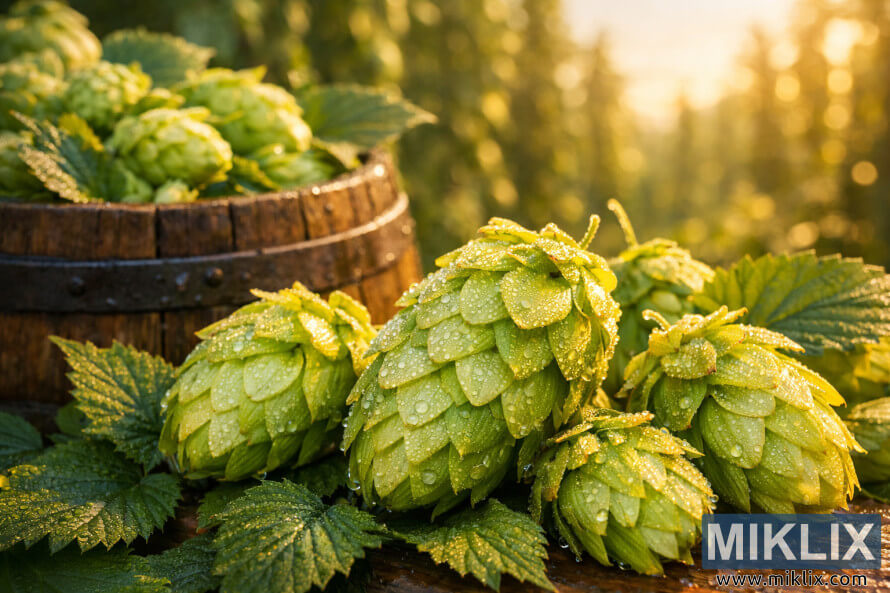
Click or tap the image for more information and higher resolutions.
Brewing values and chemical composition
Hersbrucker Pure alpha acids vary by crop year and testing method. They range from about 1.3% to 7%. Brewers often plan for a midpoint of 3%–4.5% to estimate bittering potential.
Beta acids are typically between 2%–4.3%. They impact aroma stability and aging more than immediate bitterness. It's important to note that alpha numbers can change with season and processing.
Co-humulone Hersbrucker Pure ranges from 17%–28% of total alpha acids. This percentage influences perceived bitterness. Lower co-humulone often results in a softer palate. Use the co-humulone value to gauge the hop's bitter character in recipes.
Total hop oil composition is usually 0.5–1.3 mL per 100 g. Volatile oils are responsible for the floral and spicy traits that make Hersbrucker popular in lagers and pale ales. Expect yearly variations, so fresh analysis is crucial for aroma-critical brews.
- Myrcene: reported broadly from 15% up to 50% of the oil, averages often near 22%–24%.
- Humulene: commonly 10%–30%, with many tests clustering between 10% and 27%.
- Caryophyllene: about 4%–13% and contributes spicy notes.
- Farnesene: near 0%–1%, usually negligible for aroma impact.
Hop Storage Index values for this variety are cited around 0.35–0.45. Some sources report moderate stability with 60%–70% of alpha remaining after six months at 20°C (68°F). This suggests careful cold storage improves aroma retention.
Practical brewing advice: because oils are volatile and Hersbrucker Pure alpha acids can change by crop year, prioritize late additions, whirlpool hops, or dry hopping when you want its delicate aroma. Relying on it for consistent bittering requires lab-verified alpha readings per lot.
Agronomic characteristics and growing profile
Hersbrucker Pure is bred for moderate vigor and reliable timing. It grows steadily through spring and summer. In Southern Germany's climate, it matures late summer to early fall.
The hop yield of Hersbrucker Pure averages 1,500–1,550 kg per hectare. This translates to about 1,330–1,390 lbs per acre. It falls into a moderate production class, requiring careful planning for harvest resources.
Cones are medium in size and density. Harvesting is described as difficult, impacting efficiency during peak seasons. This difficulty affects storability and commercial uptake.
This cultivar excels in resistance to verticillium wilt, powdery mildew, and pernaspora. These traits are crucial in humid, temperate conditions typical of German hop yards.
Hersbrucker Pure is ideal for small to medium operations valuing quality over quantity. Its moderate vigor and resistance profile make it suitable. However, producers must consider labor and processing needs when deciding on acreage.
It thrives in southern and central German hop districts. Brewers and growers in similar climates in the United States can expect similar performance. Adherence to local best practices for site selection, trellising, and pest management is essential.
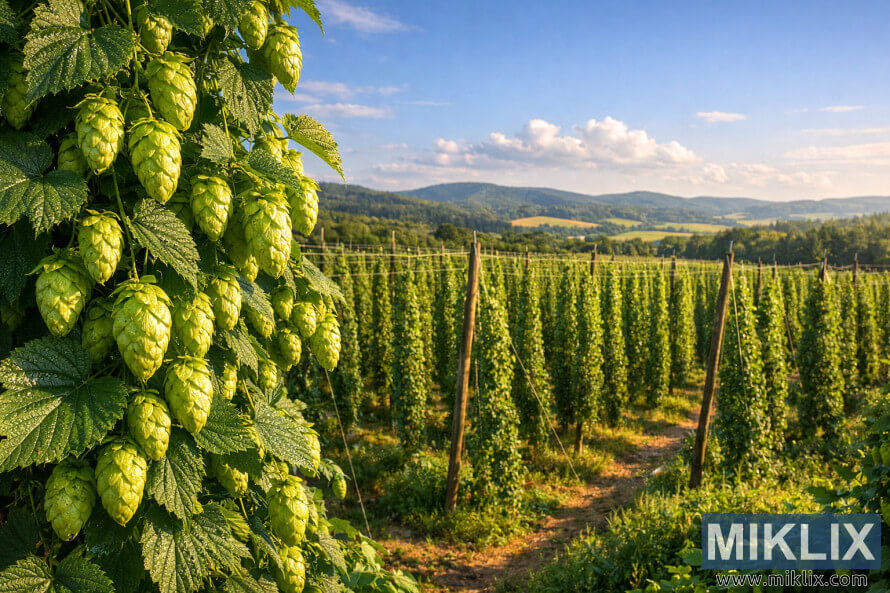
Click or tap the image for more information and higher resolutions.
Typical uses and purpose in brewing
Hersbrucker Pure is mainly used as an aroma hop. It's added late in the boil, in whirlpool, during hop stands, or as a dry hop. This is to enhance delicate noble notes without increasing bitterness. Its role is subtle and refined.
Common late boil hops like Hersbrucker Pure add hay, mild orange, gentle spice, and a hint of tobacco. These characteristics balance malt-forward lagers and wheat beers. They ensure the aroma complements, rather than competes with, the beer's flavors.
- Suggested additions: late boil, whirlpool, hop stand, dry hop.
- Typical dosage: many recipes rely on late additions; some formulations allocate close to half the hops for aroma.
- Pairing: works well with Vienna, Pilsner, Munich, and pale malts.
Beer styles Hersbrucker Pure fits include Pilsner, Hefeweizen, Lager, Dunkel, Altbier, Märzen, Weizenbock, Golden Ale, Pale Ale, and other wheat and light ales. Its noble character suits traditional German styles while supporting modern craft expressions.
When planning balance, treat Hersbrucker Pure uses as aroma-driven. Use a restrained bittering hop early, then emphasize this variety in late additions. This preserves its floral and wholesome profile. Such an approach highlights aroma hop uses without upsetting malt harmony.
Hops substitution and pairing options
Hersbrucker Pure substitutes often mentioned by brewers include Hallertauer Mittelfrüh and the traditional Hersbrucker. Mount Hood, Liberty, and Spalt are also noted in recipe notes, especially when alpha acids don't meet expectations.
Choose Hallertauer Mittelfrüh as a substitute for its soft, noble aroma. Adjust for alpha acid differences to keep the aroma dominant and avoid excessive bitterness. For American-bred options, which tend to be cleaner in finish, reduce boil time for aroma additions.
Pair Hersbrucker with Pilsner and Vienna malts to enhance floral and spicy notes. German ale yeasts, like those for Hefeweizen, bring out the hop's delicate citrus facets. Combine with Saaz or Hallertauer for a layered noble character in lagers and saisons.
- Direct swaps: Hallertauer Mittelfrüh and traditional Hersbrucker.
- Alternatives: Mount Hood, Liberty, Spalt for similar aroma profiles.
- Practical tip: Match additions to intended use—late boil and dry hop for aroma, early additions for bitterness control.
No major processors currently offer Cryo or lupulin powder for Hersbrucker or Hersbrucker Pure. This limits options for concentrated aroma use, requiring the use of whole-leaf or pellet forms in recipes.
When testing substitutes, adjust quantities and timing. Use smaller additions in early boils if alpha acids are higher. For dry hopping, mirror the original aroma weight to maintain balance in the final beer.
How to use Hersbrucker Pure hops in recipes
Start by considering Hersbrucker Pure as an aroma hop. Focus on timing to preserve volatile oils. Add it in the last 10–5 minutes of boiling, during flameout, or as a whirlpool stand. Dry hopping is also effective for floral and spicy notes without excessive bitterness.
When it comes to hop dosage, keep amounts in check. Hersbrucker Pure should be a significant portion of your aroma hops, not the main bittering hop. Aim for 10–40% of your hop bill for lagers and ales. Adjust based on the desired aroma during trial brews.
For optimal extraction, use whirlpool and hop stands at 165–180°F (74–82°C) for 10–30 minutes. This helps in extracting oils while minimizing volatilization. Add a small flameout charge immediately after boiling to preserve top notes. Dry hopping in ales enhances the fresh aroma and noble character.
- Late-boil additions: last 10–5 minutes for gentle aroma lift.
- Whirlpool/stand: 165–180°F for 10–30 minutes to maximize volatile oils.
- Dry hop: 3–7 days for ales to build fragrant intensity.
Alpha acids in Hersbrucker Pure can vary by harvest. If you plan to use it for bittering, check the assay. Otherwise, design recipes focusing on aroma contributions rather than bittering power.
Choose yeast and malt that complement the hop. Pilsner malt with German lager or wheat yeast enhances noble notes. For ales, use clean, neutral yeast strains like Wyeast 1056 or White Labs WLP001 to highlight the hop aroma.
When scaling recipes, adjust hop dosage based on aroma intensity and batch size. For small batches, aim for 0.5–1.5 g/L in dry hop weight for a clear aromatic lift. Use proportionally lower weights for whirlpool additions to avoid vegetal extraction while maintaining aroma.
Make small changes between brews and record the results. Track hop addition timing, dosage, and percentage of Hersbrucker in your recipe. This approach helps refine your recipes over time, achieving the perfect balance for pilsners, hefeweizens, and delicate ales.
Comparing Hersbrucker Pure to other German noble hops
Hersbrucker Pure is a descendant of Hallertauer Mittelfrüh and Saaz, sharing a common aromatic heritage. It offers a bouquet of floral, hay, and spice, with a hint of citrus leaning towards orange peel and a subtle tobacco note.
When comparing Hersbrucker Pure to Hallertauer Mittelfrüh, both exhibit soft floral and herbal notes. Hallertauer Mittelfrüh is often described as cleaner and more neutral. In contrast, Hersbrucker Pure presents a warmer profile with hay and tobacco undertones, adding an old-world charm to beer.
Examining Hersbrucker Pure against Saaz reveals nuanced differences. Saaz boasts lower alpha acids and a delicate, earthy spice with noble herbal notes. Hersbrucker Pure, with slightly higher alpha acids, introduces more citrus and hay, enriching the beer's character.
Here's a quick guide for selecting noble hops:
- For a true Pilsner taste, opt for Saaz or Hallertauer Mittelfrüh.
- For a traditional German aroma with hints of orange or tobacco, Hersbrucker Pure is the choice.
- Consider traditional Hersbrucker, Spalt, Liberty, or Hallertauer as substitutes for a similar noble balance.
For a precise German noble hops comparison, consider alpha acid variability. Hersbrucker Pure can overlap with Hallertauer ranges, while Saaz generally has lower alphas. This impacts bittering and hop schedules more than aroma alone.
When planning recipes, choose Hallertauer or Saaz for a faithful noble profile. Opt for Hersbrucker Pure for a noble base with unique orange, hay, or tobacco nuances. These enhance lighter lagers and rustic ales.
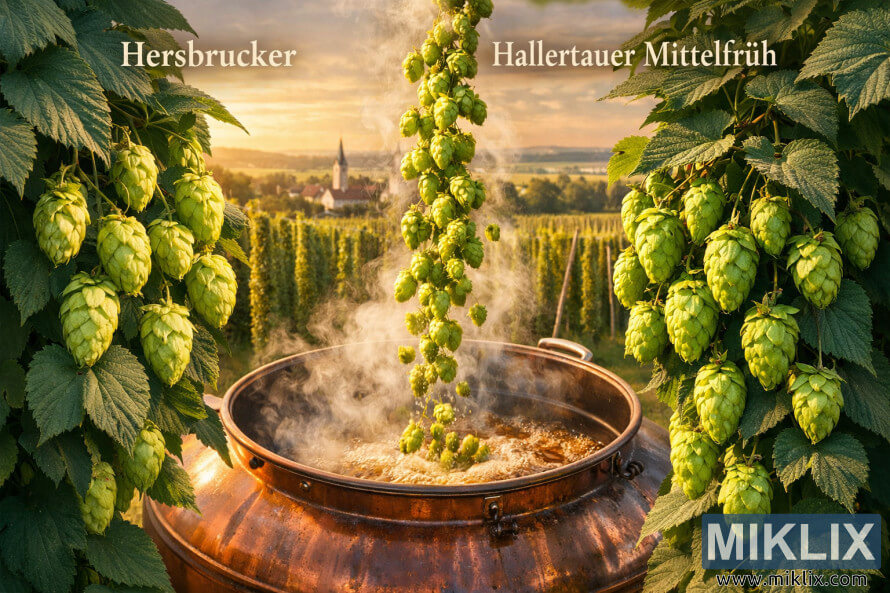
Click or tap the image for more information and higher resolutions.
Storage, handling and lupulin availability
Proper storage of Hersbrucker Pure begins with controlling oxygen and heat. Store hops in vacuum-sealed, oxygen-barrier bags. Refrigerate or freeze them to slow down the loss of oils and alpha acids. One source indicates Hersbrucker Pure retains about 60%–70% of its alpha acid after six months at 20°C (68°F). Thus, cooler conditions significantly extend its usable life.
Monitoring the hop storage index HSI is crucial for assessing freshness. Hersbrucker Pure's HSI values are around 0.35–0.45, indicating moderate to poor storability compared to other noble hops. Lower HSI and cooler temperatures enhance aroma-focused additions.
Effective hop handling is key to reducing oxidation and preserving the delicate character. Minimize bag openings and portion hops into batch-sized amounts. Limit air exposure during milling and dosing. Vacuum sealing and promptly returning to cold storage are simple yet effective steps for aroma retention.
Expect only standard forms. No commercial lupulin Hersbrucker or cryo variants like Yakima Chief Cryo, LupuLN2, or Lupomax are available from major suppliers. Brewers must rely on whole-leaf, pellet, or standard processed hop forms for recipes requiring this aroma profile.
- Use pellets for compact storage and consistent utilization, and adjust additions since pelletization changes utilization rates.
- Keep freshest hops for late additions to protect volatile oils and aromatic lupulin.
- Label packages with harvest and vacuum dates to track age against hop storage index HSI benchmarks.
Given the unavailability of concentrated lupulin forms, plan recipes and inventory accordingly. Many brewers slightly increase late-hop or dry-hop quantities to meet aroma goals when using pellets or whole leaf. Clear handling practices and cold, oxygen-free storage are essential for preserving Hersbrucker Pure's signature character throughout the brew day.
Commercial availability and where to buy
Hersbrucker Pure is available from a few specialty hop merchants and regional dealers. Small-batch growers and boutique suppliers offer leaf and pellet forms seasonally. Therefore, it's wise to plan ahead for a specific crop year.
For Hersbrucker Pure hops, check with U.S. hop houses like Yakima Chief Hops and Hops Direct. Independent retailers that sell German varieties also carry it. Online marketplaces may list related Hersbrucker types, but exact stock of Hersbrucker Pure is scarce.
Before ordering, ask suppliers for a certificate of analysis or a crop-year assay. Alpha acid and oil values can change by harvest. Accurate specs are crucial for bittering and aroma calculations.
When ordering internationally, consider shipping details. Many vendors offer national shipping within their country. U.S. buyers should confirm domestic inventory or request quotes for international freight and customs for German-grown hops.
- Stock forms: leaf and pellet only; lupulin powder is not commonly reported for this cultivar.
- Price and availability: fluctuate by harvest year and supplier demand.
- Verification: request COA and check harvest date to match recipe needs.
If you're looking for where to buy Hersbrucker Pure, contact craft brewing suppliers and regional malt-and-hop shops early. Building a relationship with reliable suppliers can improve your chances of securing the volumes you need.
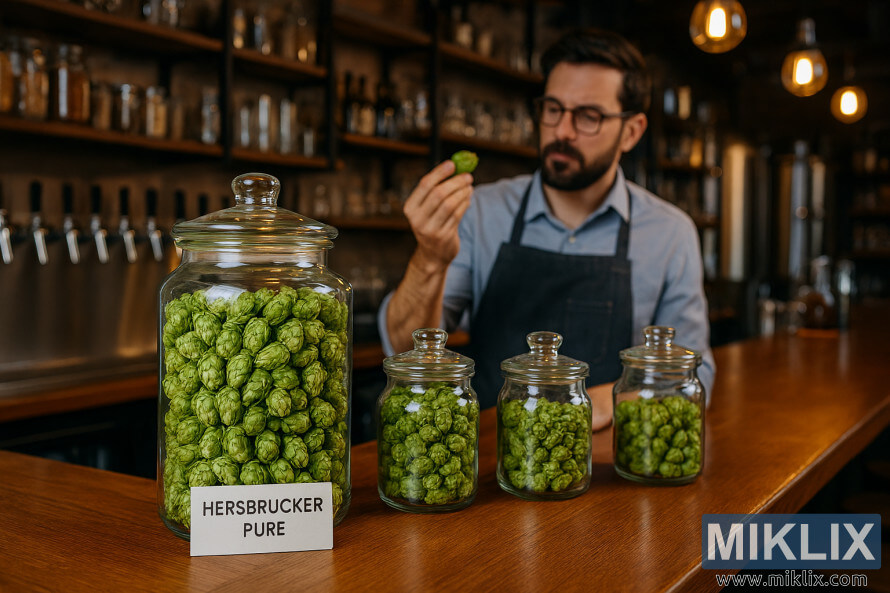
Click or tap the image for more information and higher resolutions.
Recipe examples and successful uses in brewed beers
Hersbrucker Pure recipes are a staple in German-style brewing. They are used in Pilsner, Hefeweizen, Märzen, Dunkel, Altbier, and Weizenbock. This hop enhances noble aroma, balancing it with malt and yeast notes.
Many Hersbrucker recipe examples exist. A collection lists seventeen recipes that use Hersbrucker Pure for late additions and dry hops. In some, it makes up nearly half of the hop bill, focusing on aroma.
Typically, brewers add Hersbrucker Pure late in the kettle, use whirlpool rests, and employ short dry hops. For a 5-gallon Pilsner, start with 0.5–1 oz total in the whirlpool or as a brief dry hop. Adjust based on alpha acid assay for the desired intensity.
Beers with Hersbrucker Pure exhibit a subtle, noble profile. Expect notes of hay, soft orange peel, and light spice. When paired with a neutral lager yeast, the hop character shines. Fresh hops and careful timing are key to preserving volatile aromatics.
Practical tips include balancing bitterness from early hops and saving Hersbrucker Pure for aroma. Use gentle dry hop contact (3–5 days) to avoid grassy notes. Start with small batches to find the right percentage contribution, from accent additions to roughly 40–50% of the aroma hops.
- Pilsner: late whirlpool and 3-day dry hop to highlight sweet hay and citrus.
- Hefeweizen: small late additions to complement clove and banana esters.
- Märzen/Dunkel: accentual late hops for a subtle noble lift without altering malt depth.
These Hersbrucker recipe examples highlight the importance of late-stage use and freshness. Brewers achieve consistent success by treating the hop as an aroma specialist, not just a bittering agent.
Common questions brewers ask about Hersbrucker Pure
Brewers frequently seek a concise Hersbrucker Pure FAQ to address its use and flavor aspects. It's not a bittering hop. Instead, it's celebrated for its aroma and delicate noble notes. Alpha acids vary, ranging from about 1.3% to 7% in some assays.
What does it smell and taste like? It offers mild hay, soft floral tones, gentle orange peel, a hint of tobacco, and light spice. Its profile is subtle, making it ideal for pilsners, lagers, and classic German ales.
How stable is it in storage? Its storage stability is moderate. A report indicates about 60%–70% alpha retention after six months at 20°C. Cold, oxygen-free storage is best for preserving aroma oils.
- Can I get it as lupulin powder? No lupulin or Cryo variants are available from major processors at this time.
- Good substitutes? Consider Hallertauer Mittelfrüh, traditional Hersbrucker, Spalt, Mount Hood, or Liberty depending on desired nuance.
- Availability? It remains a specialty offering. Check crop-year assays and supplier inventories before ordering.
A compact set of common questions Hersbrucker Pure offers quick answers for recipe planning and hops purchases. Keep assays handy if you plan to use it for bittering near the higher alpha edge.
For more detailed information on harvest year or oil composition, contact reputable suppliers and review lab certificates. This addresses many Hersbrucker hop questions that arise during recipe formulation and inventory planning.
Conclusion
Hersbrucker Pure, a German noble-style aroma hop, presents a complex profile of hay, orange, tobacco, and noble spice. It excels in late boil, whirlpool, or dry-hop additions. This allows it to enhance pilsners, kölsch, and traditional lagers without dominating their flavors.
When incorporating Hersbrucker Pure, prioritize freshness and proper storage. Hops should remain cold and free from oxygen. They are best used for their aromatic qualities, not as bittering agents. Always check the crop-year assay for alpha acid variations, as they can significantly impact the beer's bitterness.
The availability of Hersbrucker Pure can be inconsistent due to its limited commercial adoption. Brewers should consider alternatives like Hallertauer Mittelfrüh, Hersbrucker, or Spalt. Verify the supplier's specifications before brewing. These noble hop takeaways are crucial for recipe planning and inventory management.
For those aiming to add a classic noble character with a hint of orange and tobacco, Hersbrucker Pure is an excellent choice. Proper sourcing and use will ensure it brings a subtle, authentic German flavor to your brews.
Further Reading
If you enjoyed this post, you may also like these suggestions: