
Hops in Beer Brewing: Northern Brewer (US)
Published: February 12, 2026 at 5:21:40 PM UTC
Northern Brewer (US) is a classic hop, primarily used for bittering. It's known for its steady alpha acid levels and clean bitterness. This allows the malt character to shine through.
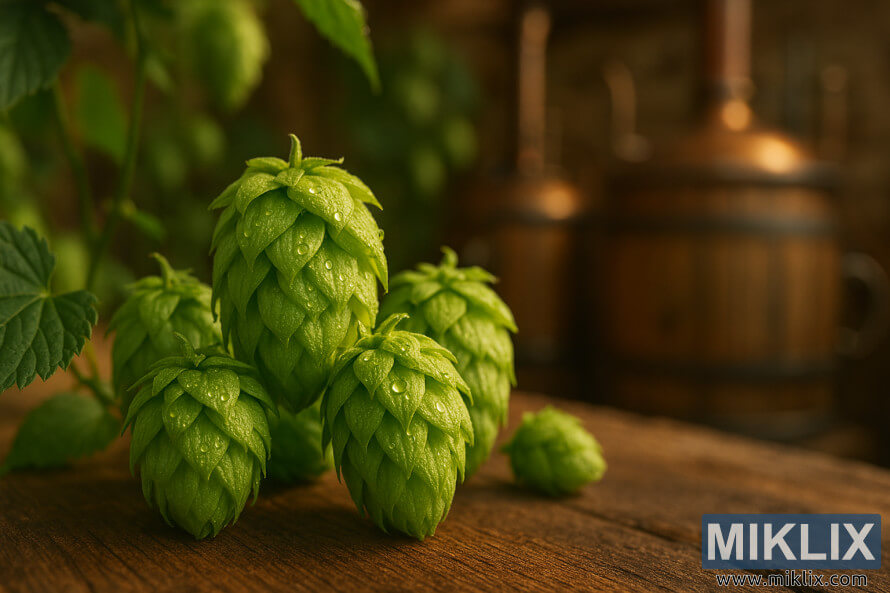
Click or tap the image for more information and higher resolutions.
Northern Brewer (US) hops are a cornerstone for many American brewers. This brief introduction sets the stage for a comprehensive guide. It's designed for practical application in recipe creation and sourcing.
The article delves into the hop variety's identity, including cultivar identifiers like WFB 135 and the international code NBR. It also covers typical alpha and beta acid ranges. This information comes from retail product listings, supplier notes, and hop databases, offering actionable, factual data.
Readers will find detailed information on chemical values, aroma descriptors, and ideal addition timings. It also highlights beer styles that are well-suited for US Northern Brewer. The focus remains on the practical use of Northern Brewer hops in beer brewing, emphasizing their reliability as a bittering choice.
Whether you're purchasing 1 oz pellets, bulk whole cones, or lupulin extracts, this guide equips you with the knowledge to confidently select and use Northern Brewer (US) hops.
Key Takeaways
- Northern Brewer (US) is a common bittering hop with the code NBR and cultivar WFB 135.
- The guide compiles supplier notes, retail pages, and hop database data for practical brewing use.
- Expect clear coverage of alpha/beta acids, essential oils, and aroma descriptors.
- Content focuses on recipe formulation, addition timing, and compatible beer styles.
- Information applies to various purchase formats: 1 oz pellets, whole cones, and lupulin.
Overview of Northern Brewer (US) hops and their role in brewing
Northern Brewer (US) is a classic hop, primarily used for bittering. It's known for its steady alpha acid levels and clean bitterness. This allows the malt character to shine through.
Retail pages often list Northern Brewer Hop Pellets in 1 oz packages and larger sizes. Availability is noted on marketplaces like Amazon and homebrew supplier sites. Customer reviews and product notes help shoppers assess quality.
The role of Northern Brewer in brewing is centered around boil additions for bitterness extraction. It can be added early in the kettle for reliable IBU contribution. Alternatively, later additions can introduce a minty or woody character.
Growers in the United States and Germany cultivate this variety. U.S. growers provide pellet forms, which are favored by homebrewers. Supplier pages frequently offer brewing support and satisfaction guarantees. These are aimed at new brewers seeking a dependable bittering hop.
- Primary use: bittering hop for consistent alpha acids.
- Formats: pellets commonly sold in small retail packs.
- Support: many suppliers offer guides and customer reviews.
Origin and genealogy of Northern Brewer (US)
Northern Brewer's roots stem from a German cross between Canterbury Golding and a male seedling named OB21. OB21 itself is a male descendant of Brewer’s Gold. This ancestry combines herbal, noble notes with resinous, bittering qualities.
The cultivar is cultivated in both the United States and Germany. The US strain exhibits distinct chemical and aromatic differences from its German counterpart. These differences influence its use in brewing, particularly for bittering and aroma balance.
In hop databases, the US strain is identified as WFB 135, while internationally, it's known as NBR. These identifiers are part of the hop cultivar history. They aid in tracking lineage and performance over time for nurseries, growers, and brewers.
Commercial records highlight Northern Brewer's reliability as a bittering hop across various brewing regions. Its ancestry from Canterbury Golding and Brewer’s Gold ensures a versatile profile. This profile is suitable for both traditional and modern ales.
Click or tap the image for more information and higher resolutions.
Chemical and brewing values of Northern Brewer (US) hops
Northern Brewer is celebrated for its consistent bittering and stable hop chemistry. The alpha acids in Northern Brewer range from 7% to 10%, with an average of 8.5%. These acids are crucial for bitterness during boiling and help in adjusting IBUs later.
Beta acids, on the other hand, vary from 3% to 5.5%, averaging 4.3%. Unlike alpha acids, beta acids do not isomerize into bitterness. Instead, they contribute to the beer's aroma stability and flavor development over time.
- The alpha-beta ratio is reported to range from 1:1 to 3:1, with an average of roughly 2:1. This ratio impacts the evolution of bitterness and aroma.
- Co-humulone, which makes up 27%–34% of alpha acids, averages about 30.5%. Moderate levels of co-humulone contribute to balanced bitterness in various ale styles.
- Total oils are typically between 1 and 2 mL/100 g, averaging 1.5 mL/100 g. These oils are responsible for the hop's aroma when added to the whirlpool or used for dry hopping.
The oil composition of Northern Brewer is predominantly myrcene, at about 40%, contributing to the hop's resinous, citrus, and fruity notes. Humulene, averaging 29%, adds woody, noble, and spicy flavors. Caryophyllene, at 13%, brings a peppery, herbal, and woody character. Smaller amounts of farnesene, β-pinene, linalool, geraniol, and selinene complete the profile.
Year-to-year crop variability can affect these values. Brewers should consult supplier analyses for specific harvest details. This ensures accurate alpha acids, beta acids, total oils, or co-humulone values in their recipes.
Aroma and flavor profile of Northern Brewer (US) hops
Northern Brewer aroma is characterized by evergreen and wood notes, providing a robust foundation for beers. On warm sniffing, brewers often pick up a pine woody mint character. This is especially true in late additions, where it enhances malt and yeast without overpowering them.
The US strain boasts higher myrcene and alpha acids than its German counterpart. This results in a hop aroma profile that includes herbal notes and a faint black pepper bite. The peppery edge is subtle, adding texture without dominating the glass.
With moderate total oil content, Northern Brewer serves two purposes. It excels as a clean bittering hop in the early boil. Additionally, it adds restrained herbal and woody aromatics when used in whirlpool or dry hop additions.
- Pine and resinous notes that support hop-forward ales.
- Woody and mint highlights that pair with toasted and caramel malts.
- Herbal hop flavor with a mild spice that adds structure to pale ales and brown styles.
When planning your brew, consider Northern Brewer as a versatile hop. It offers solid bitterness and the chance to add pine woody mint or herbal hop flavor later. This approach allows for subtle complexity in your beer.
Click or tap the image for more information and higher resolutions.
Typical brewing applications and addition timings
Northern Brewer is commonly used as a bittering addition early in the boil. Its alpha acids, typically in the 7–10% range, ensure predictable IBUs. This is especially true when you factor in the specific crop year from your supplier.
Homebrewers often choose Northern Brewer in pellet 1 oz packs for precise bittering. Commercial brewers, however, prefer bulk hop bales or large pellets. This is due to the need for consistent alpha values in scaled recipes.
For those seeking more aromatic flavors, add Northern Brewer later in the brewing process. A late hop addition at 5–10 minutes or a whirlpool rest at 170–180°F enhances herbal, woody, and evergreen notes.
Expect the aroma from late additions to be more subtle than that of classic aroma varieties. Despite moderate-to-high total oils and myrcene, a late hop addition can add minty or peppery facets. These flavors complement malt without overpowering it.
- 0–10 minutes: primary bittering addition for clean, measured IBUs.
- 5–15 minutes: late hop addition to add subtle herbal and woodsy tones.
- Whirlpool (170–180°F): extract aroma without excessive isomerization.
- Dry hop/fermentation: light background character, not a dominant aroma.
Adjust the timing of Northern Brewer based on your desired outcome. Use earlier additions for a focus on bitterness. For layered flavors, employ whirlpool and late hop additions. This approach helps maintain controlled bitterness.
Beer styles that pair well with Northern Brewer (US) hops
Northern Brewer (US) is a versatile bittering hop suitable for a variety of classic styles. It's commonly used in recipes for Porter, English Pale Ale, ESB, and German Lager. Its woody, slightly minty character adds structure without overpowering the beer.
In darker beers, Northern Brewer provides a backbone that supports rich malt flavors. Use moderate late additions or dry hop sparingly to avoid overwhelming the chocolate and roast flavors with its evergreen note.
For traditional ales, Northern Brewer is a reliable choice as a bittering hop. It offers clean bitterness with restrained herbal tones, making it ideal for English Pale Ale and ESB recipes that seek balance over bright fruitiness.
In lighter German styles, Northern Brewer can be used with care. It adds a subtle minty edge to Munich Helles and German Lager while preserving the grain-forward profile. Use it early in the boil and keep late additions low.
Kölsch, a delicate hybrid of ale and lager traits, benefits from Northern Brewer when used conservatively. Small amounts at high kettle utilization provide tidy bitterness without accentuating woody notes.
- Porter: use Northern Brewer for firm, supportive bitterness that complements dark malts.
- English Pale Ale / ESB: rely on it as a traditional bittering hop to balance malt sweetness.
- German Lager / Munich Helles: add early for subtle herbal lift while maintaining malt clarity.
- Kölsch: use light additions to preserve delicate esters and a clean finish.
Match hop quantity and timing to the target style. Adjust for alpha acid differences and test small batches when moving Northern Brewer into cleaner, lighter beers. This practice ensures the hop's strengths are showcased without herbal dominance.
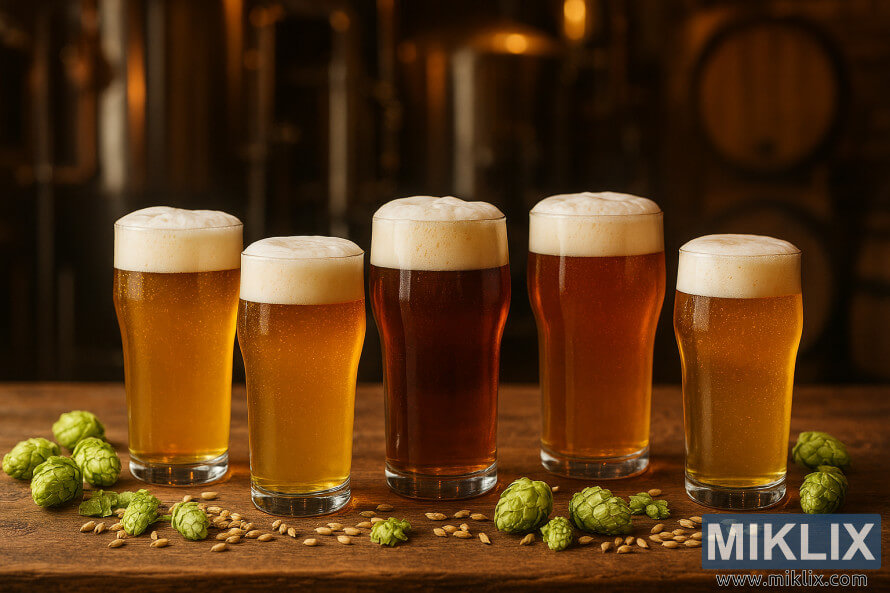
Click or tap the image for more information and higher resolutions.
Comparing Northern Brewer (US) to other bittering hops
Northern Brewer (US) occupies a middle ground between neutral and aggressive bittering hops. Its alpha acids range from 7–10%, offering moderate bitterness with a hint of character. This makes it stand out when compared to hops with higher alpha acids.
When comparing Magnum vs Northern Brewer, the contrast in character is clear. Magnum provides clean, high-alpha bitterness with minimal aroma. In contrast, Northern Brewer adds woody, mint, and evergreen notes, even when used primarily for bittering.
The comparison between Galena and Northern Brewer reveals another distinction. Galena tends to have higher alpha acids, offering firm, compact bitterness with hints of resin and stone fruits. Northern Brewer, on the other hand, leans towards herbal and woody flavors, adding complexity where Galena might be more straightforward.
The US Northern Brewer strain has a higher myrcene content than its German counterpart. This gives it a sharper herbal or pepper edge. This makes the US version ideal for those seeking bittering with a subtle aroma influence, rather than a purely bitter taste.
When deciding between these hops, brewers must consider their alpha acid needs and desired flavor impact. For clean, pure bitterness in an IPA or lager, Magnum or Galena might be the better choice. However, if you're looking for bittering with a unique flavor profile, Northern Brewer offers a distinct, aromatic twist.
Substitutions and equivalents for Northern Brewer (US)
Choosing Northern Brewer substitutes hinges on whether you seek bittering parity or aroma match. For bittering, Galena or Magnum are often preferred. These hops offer similar alpha-acid strength and predictable bitterness, crucial for recipes that need Northern Brewer's bite.
For aroma and flavor, Perle (US) and Chinook are closer matches. Perle introduces a spicy, herbal note that resonates with Northern Brewer's wood and pepper essence. Chinook, with its resinous pine and slight grapefruit, can replicate the robust profile in late additions.
German Northern Brewer is a viable option when genetic similarity is key. The GR strain offers a taste that's slightly different, with less sharp myrcene presence and a more balanced floral-to-woody aroma. It's ideal when you desire lineage resemblance without replicating the exact US punch.
- Galena — best for matching high alpha acids and bittering intensity.
- Magnum (US or GR) — clean bittering, low aroma impact; solid hop replacements.
- Perle (US) — closer aromatic match with spicy and herbal notes.
- Chinook — resinous and piney, useful for late additions to copy wood/pepper tones.
- German Northern Brewer — genetic relative with a milder aromatic balance.
When swapping, recalculate hop weights to match target alpha acids. A small late addition of Perle or Chinook can restore US Northern Brewer's wood and pepper nuance if your chosen substitute skews toward bittering only.
Availability, purchase options, and formats
Northern Brewer (US) hops are consistently available from various hop suppliers and online retailers across the United States. Homebrewers can purchase Northern Brewer in small quantities, such as 1 oz hop pellet packages. Alternatively, they can opt for larger commercial quantities for breweries.
Retail pages for Northern Brewer pellets provide essential information. This includes harvest year, alpha acid values, customer reviews, and product Q&A. These details are crucial for brewers to match hop availability with their recipe needs, ensuring consistency across batches.
Prices and stock levels can differ among suppliers. Some vendors specify the harvest year and lab-tested alpha acids on their product pages. Others offer promotions, such as fast & free shipping on orders over $99 and satisfaction guarantees, to make the ordering process simpler.
- Small packs: 1 oz to 4 oz pellet bags for homebrewers.
- Bulk options: 1 lb vacuum-sealed pellets or whole-cone lots for commercial use.
- Formats: pellets dominate the market, while leaf hops remain available from select suppliers.
When purchasing Northern Brewer, it's important to check the product page for hop availability and harvest information. Verify the alpha acid numbers and the year listed to ensure accurate bittering calculations.
Marketplaces like Amazon and specialty retailers are often mentioned in hop databases to aid buyers in finding current stock. Local homebrew shops can also provide insight into limited releases or last-season inventory not listed online.
To ensure a steady supply, establishing relationships with preferred hop suppliers is beneficial. Note their restock patterns to avoid running out of Northern Brewer pellets during a planned brew day.
Processing forms and lupulin availability
Northern Brewer pellets and whole cone hops are the standard formats found in U.S. homebrew supplies. Retailers offer Northern Brewer pellets in 1 oz and 1 lb packages. Whole cone hops are available in smaller bags for homebrewers and larger sacks for commercial use.
Pellets are favored for their consistent dosing and ease of storage. Whole cone hops, on the other hand, are preferred for their traditional handling and less broken leaf. Both formats are suitable for kettle bittering, whirlpool aroma, and dry hopping.
Currently, no major lupulin processor offers a lupulin powder version of Northern Brewer. Companies like Yakima Chief Hops Cryo, LupuLN2, Haas Lupomax, and Hopsteiner publish catalogs without a lupulin powder for this variety.
The absence of a lupulin powder means brewers cannot use a concentrated product for intense late-addition flavor. They must rely on Northern Brewer pellets or whole cone hops for late additions. This is necessary to achieve the desired aroma lift and resinous character.
- Check supplier pages for processing form and pellet type before you buy.
- Look for vacuum-sealed or nitrogen-flushed packaging to maximize shelf life.
- Compare alpha and cohumulone values on product listings to match bittering expectations.
If Northern Brewer lupulin powder is not available, consider blending Northern Brewer pellets with a cryo hop. This blend preserves the Northern Brewer profile while adding concentrated lupulin intensity from an available cryo product.
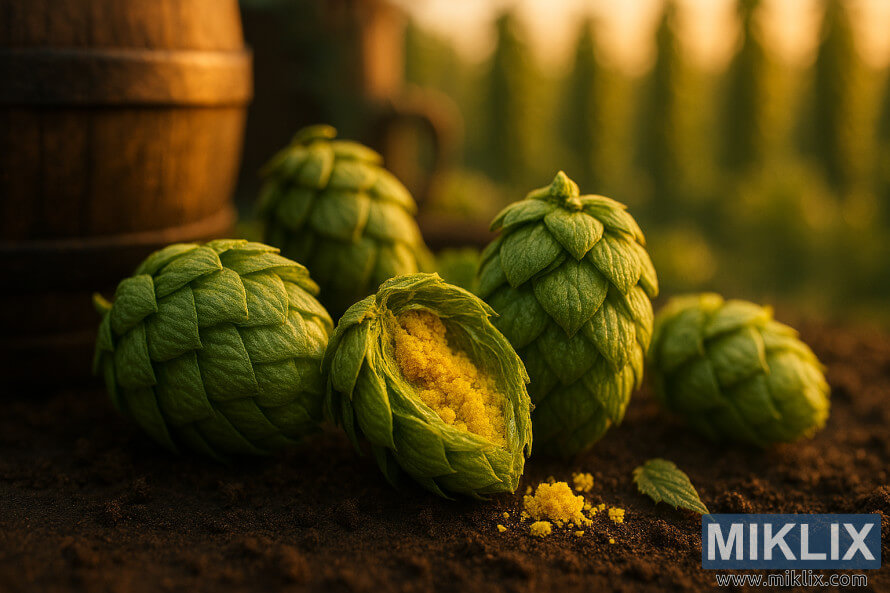
Click or tap the image for more information and higher resolutions.
Practical brewing tips and recipe ideas using Northern Brewer (US)
When aiming for clean, steady bitterness, use Northern Brewer as your primary kettle bittering hop. Calculate IBUs using the supplier-specific alpha acid percentage from that crop year. For a five-gallon homebrew batch, record alpha values and adjust hop weight by harvest year to maintain consistency across batches.
For subtle herbal and woody aroma, add a small late-boil addition or a brief whirlpool at sub-boil temperatures. Try 5–15 minutes left in the boil or a 10–30 minute whirlpool to capture evergreen and mint notes without overpowering malt character. These hop addition tips help preserve aroma while keeping bitterness balanced.
Keep dry hopping conservative in ales that benefit from restraint, such as ESB or English Pale Ale. A light dry hop dose gives a hint of peppery and woody character. Heavier dry hopping can push herbal notes and may clash with delicate lager styles like Kölsch or Munich Helles.
Recipe ideas to experiment with Northern Brewer recipes:
- Traditional English Pale Ale or ESB: Northern Brewer for kettle bittering with a noble or English aroma hop late in the boil.
- American Porter: Northern Brewer for clean bitterness combined with Cascade or Centennial late additions for citrus and resin balance.
- Kölsch or Munich Helles: Small Northern Brewer bittering charge for smooth bitterness and a subtle woodsy backbone.
When scaling recipes, adjust hop weight relative to alpha acid and target IBUs. Use brewing logs to note harvest year, alpha acids, and perceived flavor outcomes. These brewing tips Northern Brewer will improve reproducibility and let you fine-tune bitterness and aroma in successive batches.
For mash and fermentation pairing, match Northern Brewer's firm bittering with malts that have gentle sweetness, such as Maris Otter, Pilsner, or Vienna. If you want more herbal complexity, pair with English yeasts like Wyeast 1968 or White Labs WLP002 in ales. For lagers, choose cleaner fermenting strains and keep late hop additions minimal.
Apply hop addition tips by testing small changes: tweak a late-boil timing by five minutes, change whirlpool time by ten minutes, or reduce dry hop weight by 25%. Track sensory notes and IBU calculations after each trial to refine Northern Brewer recipes for the flavor profile you seek.
Storage, freshness, and quality considerations
Proper hop storage is crucial to preserve alpha acids and aroma oils. For both commercial and home use, vacuum-sealing hops is the best method to protect against oxygen and moisture. Store these vacuum-sealed hops in the refrigerator for short-term use. For longer storage, move them to the freezer.
The shelf life of pellets depends on their packaging and storage temperature. Unopened vacuum-sealed packages of pellets can maintain bitterness and aroma for months when frozen. However, small, single-ounce packs should be used within a season if stored at fridge temperatures. Freezing with minimal headspace helps slow down the loss of hop freshness.
Inspect hops upon arrival for any signs of spoilage. Look for consistent pellet color and a piney or woody smell. If hops smell musty, cardboard-like, or flat, oxidation may have occurred. Always check the vacuum seals and packaging integrity to avoid stale material.
- Check supplier listings for harvest year and alpha acid numbers before purchase.
- If values vary year to year, adjust bittering calculations to match the crop.
- Retailer policies on shipping and returns can affect choices tied to hop storage and freshness.
For homebrewers buying small amounts, freeze vacuum-sealed hops immediately. Label packages with purchase or harvest dates. Rotate stock so older vacuum-sealed hops are used first to preserve consistent brew profiles.
Regulatory and labeling notes for US-grown hops
In the U.S., hop suppliers and databases provide detailed hop origin labeling. They list the country of growth, harvest year, alpha acid percentage, and processing form. This information helps brewers meet recipe needs and regulatory standards.
Product records often include both the hop cultivar ID WFB 135 and hop codes NBR for Northern Brewer (US). These identifiers are crucial for craft brewers and commercial operations. They ensure the correct plant lineage when sourcing raw materials.
Retailers and aggregators like BeerMaverick and hop supplier product pages compile data from various sources. They state they do not represent hop breeders or growers. They also cite the original data source to maintain attribution.
When preparing labels for commercial beer, verify the declared alpha acid values and harvest year on the supplier’s label. Keep purchase documents and batch records for traceability. This is essential for meeting federal and state regulations on ingredient disclosure.
Any discrepancies in product data should be addressed with the supplier directly. Clear communication is key to preventing formulation errors. It ensures accurate hop labeling in the U.S. and supports audit-ready records for quality control and compliance.
For larger operations, consider a standard intake checklist. It should record hop cultivar ID WFB 135, hop codes NBR, origin, lot number, and measured alpha acids at receipt. This practice simplifies inventory management and supports consistent brewing outcomes.
Conclusion
This summary Northern Brewer highlights the hop's key attributes: it offers steady bittering with 7–10% alpha acids, a woody-piney backbone, and a minty-peppery edge when used late. Its ancestry, a cross between Canterbury Golding and OB21/Brewer's Gold, explains its versatility. It excels in both traditional bittering roles and herbal aroma duties in American and German ales.
When selecting Northern Brewer, align its use with your brewing objectives. Employ it early for a clean bitterness or later for a subtle woody character. Consider alternatives like Galena, Perle, Magnum, Chinook, or German Northern Brewer if needed due to availability or alpha acid levels.
Its availability in both pellet and whole-cone formats simplifies sourcing from major suppliers. However, lupulin powder is less common among leading processors. Proper storage is crucial: keep hops vacuum-sealed and refrigerated or frozen. Always verify the harvest year and alpha acid figures to maintain recipe consistency.
Refer to this hop selection guide to determine the right moment to incorporate Northern Brewer into your brew. Its balanced bitterness and herbal backbone are ideal for a broad spectrum of beers. From robust bitters to dark ales, it provides a steady, evergreen anchor.
Further Reading
If you enjoyed this post, you may also like these suggestions: