
Hops in Beer Brewing: Smooth Cone
Published: February 22, 2026 at 5:25:00 PM UTC
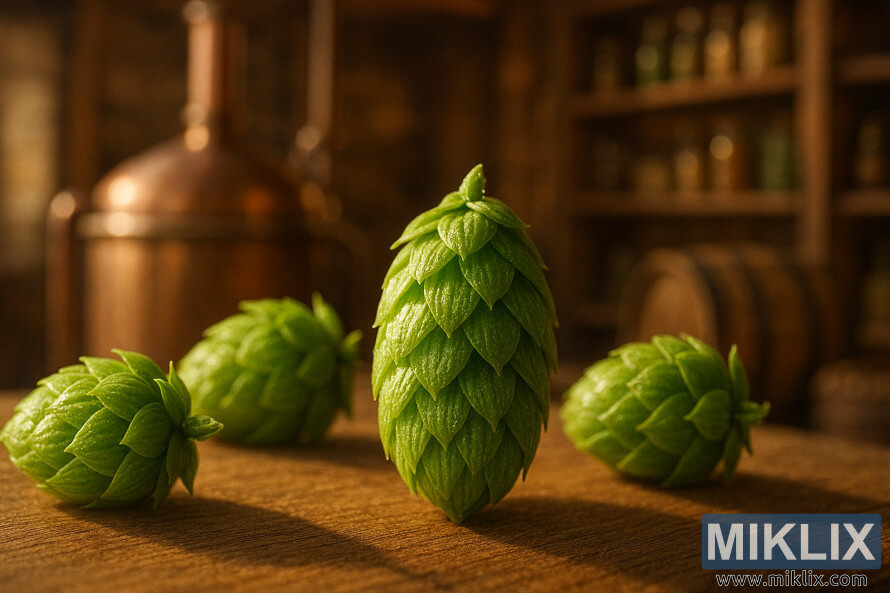
Smooth Cone is a New Zealand hop introduction, celebrated for its dual-purpose use. It is valued by growers and brewers alike. This is due to its ability to contribute both bitterness and enhance aroma without dominating the beer's balance.
Click or tap the image for more information and higher resolutions.
Smooth Cone hops, a New Zealand variety, hold a significant spot in brewing history. Originating from an open pollination of a California Cluster in the 1960s, Smooth Cone was born alongside First Choice. It quickly became known as versatile, dual-purpose hops, suitable for both bittering and aroma.
This piece delves into the art of Smooth Cone brewing, shedding light on its importance for craft brewers worldwide. You'll discover the botanical background, chemical values, and essential oil notes. Additionally, we'll provide practical advice on dosages, substitutions, storage, and availability.
Despite being discontinued for commercial use, Smooth Cone's legacy lives on. It remains in historical data, legacy recipes, and occasional old-stock supplies globally. Our aim is to offer brewers a concise, practical guide to the Smooth Cone hop variety.
Key Takeaways
- Smooth Cone hops are a New Zealand hop variety developed in the 1960s from California Cluster parentage.
- The variety served as dual-purpose hops for both bittering and aroma in many traditional recipes.
- Smooth Cone brewing information is relevant despite commercial discontinuation, thanks to historical records and legacy stocks.
- This article will cover botanical background, chemical values, aroma profile, applications, dosages, substitutions, and storage.
- Brewers in the United States and internationally can use this guide to interpret old recipes or adapt substitutions.
Introduction to Smooth Cone hops and their place in brewing
Smooth Cone is a New Zealand hop introduction, celebrated for its dual-purpose use. It is valued by growers and brewers alike. This is due to its ability to contribute both bitterness and enhance aroma without dominating the beer's balance.
Smooth Cone boasts moderate alpha acids, ranging from 7–9.5 percent, with an average of 8.3 percent. This range makes it ideal for recipes seeking moderate bitterness. It also allows for the preservation of volatile oils, which add flavor when added late in the brewing process.
Understanding hop roles is key to appreciating Smooth Cone's role in brewing. Early additions are used for bitterness, while late additions preserve delicate oils. These oils contribute floral, spicy, or fruity notes. Smooth Cone excels in both roles, offering brewers flexibility in shaping their beer's character.
Brewers often use Smooth Cone in lagers and hybrid styles. It complements a clean malt profile with moderate bitterness and a subtle aromatic lift. Its balanced nature is particularly suited for session ales and pilsners, where subtlety is crucial.
The harvest timing in New Zealand, from late February to early April, impacts crop characteristics. Seasonal variations can affect alpha levels and oil composition. Brewers adjust their recipes accordingly, keeping the hop overview and New Zealand hop introduction context in mind.
Botanical background and genealogy of Smooth Cone
Smooth Cone is a member of the Humulus lupulus species, the same as all cultivated brewing hops. It exhibits the typical characteristics of cultivated hops. These include a twining bine, lupulin glands in the cone, and a specific cone bract arrangement.
In the 1960s, breeders developed Smooth Cone through open pollination. Its lineage traces back to seedings that used California Cluster as a parent. This created a direct California Cluster lineage within its pedigree. The cross produced several related selections, with Smooth Cone appearing as a sibling to First Choice in breeding records.
New Zealand hop history is integral to Smooth Cone’s identity. Selection and testing occurred within New Zealand programs. These programs combined local evaluation with American breeding material. The outcome was a hop that links U.S. genetics to New Zealand selection pressures.
Mid-20th century hop work focused on combining disease resistance with brewing utility. Smooth Cone reflects this trend. It shows traits valued by growers and malt houses. These include reliable yields, resistance to common pathogens, and balance between bittering and aromatic potential.
Harvest timing shaped the variety’s characteristics. In New Zealand, cultivation and harvest in late February to early April historically influenced cone maturity, oils, and alpha content. This gave Smooth Cone its regional expressions in crop records and brewing notes.
Commercial availability and discontinuation status
Smooth Cone is no longer available for purchase from commercial suppliers. It's listed as a discontinued hop by most U.S. and international hop merchants. This means fresh whole-cone or pellet batches are not available through standard order channels.
Although it's not commercially grown anymore, you might find limited stock in old brewery stores or private collections. Historical recipe databases and brewpub records sometimes mention residual lots. These can help brewers recreate older formulations.
No major processor offers a lupulin powder or concentrated format for Smooth Cone. Companies like Yakima Chief Hops, HOPSTEINER, and BarthHaas do not market Cryo, Lupomax, or LupuLN2 versions for this variety. This absence complicates modern brewers' efforts to buy Smooth Cone hops for dry hop or late-addition work.
Experienced brewers who used Smooth Cone relied on tasting notes and lab data. With the variety out of production, substitution and data-driven matching are necessary. Brewers now compare alpha acids, oil profiles, and sensory descriptors from hop databases and vendor archives to recreate similar character.
- Check hop vendor archives for catalog notes and past analysis.
- Consult hop databases that record variety status and historical ranges.
- Search brewery recipe repositories for formulations that included Smooth Cone.
The market category of out-of-production hops includes Smooth Cone. It highlights the importance of preserving analytical records. These records guide modern substitution and help maintain continuity in legacy beers that once depended on this hop.
Chemical brewing values and typical alpha/beta ranges
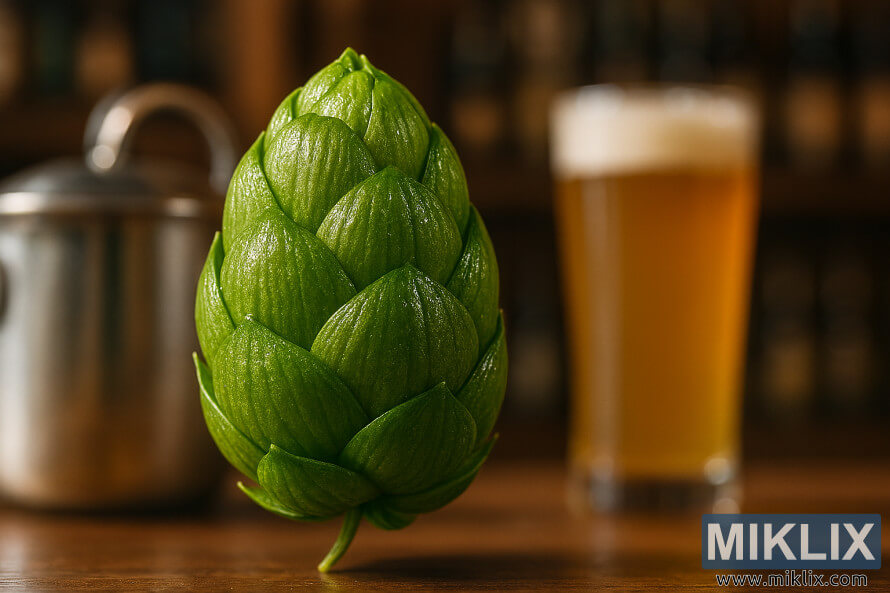
Smooth Cone alpha acids range from 7.0% to 9.5%, averaging 8.3%. This range makes Smooth Cone versatile for various beer styles, suitable for both bittering and later additions.
Smooth Cone beta acids vary from 3.4% to 5.2%, averaging 4.3%. The balance between alpha and beta acids results in an alpha:beta ratio of 1:1 to 3:1, averaging 2:1.
Co-humulone averages about 31% of total alpha acids. This lower co-humulone percentage may contribute to a smoother bitterness in the beer.
- Alpha acid range: 7.0–9.5% (avg ~8.3%)
- Beta acid range: 3.4–5.2% (avg ~4.3%)
- Alpha:beta ratio: 1:1 to 3:1 (avg ~2:1)
- Co-humulone: ~31% of alpha acids
The Hop Storage Index (HSI) for Smooth Cone is around 0.30–0.40. Over six months at room temperature, degradation is about 35% (Fair). It's crucial to use fresh hops for consistent aroma and bitterness.
The practical aspects of Smooth Cone's hop chemistry are clear. Its moderate alpha levels are suitable for both bittering and late additions. Beta acids and oils impact the beer's aroma longevity and hop character.
Click or tap the image for more information and higher resolutions.
Essential oil profile and aroma compounds
Smooth Cone essential oils average about 0.8 mL per 100 g, with a reported range from 0.4 to 1.14 mL/100 g. This places Smooth Cone in a moderate aromatic class, ideal for late kettle and dry-hop work.
Major components break down as follows:
- Myrcene: 54–56% (avg ~55%) — delivers resinous, citrus, and fruity notes. Myrcene is highly volatile and drives much of the fresh hop character in dry hopping and late additions.
- Humulene: 20–22% (avg ~21%) — brings woody, noble, and spicy tones. Humulene is more heat-stable and shapes aroma through whirlpool and short boils.
- Caryophyllene: 5–7% (avg ~6%) — contributes peppery, woody, and herbal accents that add depth to malt-forward beers.
- Farnesene: 0–1% (avg ~0.5%) — offers green, fresh, and subtle floral hints.
- Other oils (β-pinene, linalool, geraniol, selinene, etc.): 14–21% — these minor compounds supply floral and fruity complexity and support terpenic nuance.
The balance of myrcene, humulene, and caryophyllene determines how hop aroma compounds Smooth Cone behave during brewing. Myrcene evaporates quickly during long boils, so late kettle additions preserve citrus and resin notes.
Humulene and caryophyllene resist heat better. These oils remain after whirlpooling and contribute herbal, woody, and spicy layers to beer aroma.
For best results, pair short kettle steeping with targeted dry hopping. This captures myrcene-driven brightness while relying on humulene and caryophyllene for backbone and aging stability.
Flavor and aroma characteristics in finished beer
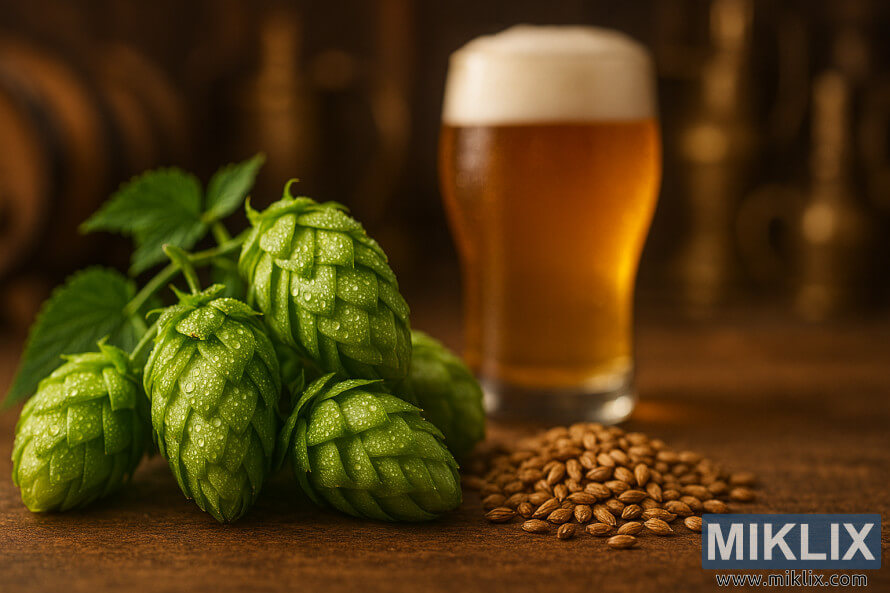
The sensory evaluation of Smooth Cone reveals a resinous backbone with bright citrus and ripe-fruit topnotes. The flavor profile often starts with lemon and grapefruit notes from high myrcene. Fruity esters then lift the nose in late additions.
Mid-palate, woody, herbal, and spicy undertones emerge, driven by humulene and caryophyllene. These oils add structure without overpowering the beer. Subtle floral and green hints from farnesene and minor oils balance the profile, making it nuanced.
Bitterness from Smooth Cone is moderate and clean. Co-humulone, around 31% of alpha, provides a smoother bite. This results in low perceived harshness, even at steady IBUs.
Timing of additions significantly impacts the beer's character. Early-boil additions emphasize bitterness and mellow most aromatics. Late-boil, whirlpool, and dry-hop treatments preserve citrus, fruity, and resinous oils. This ensures a fuller Smooth Cone aroma in beer.
Brewers use Smooth Cone to craft balanced lagers and clean-fermented ales. They aim for moderate bitterness and a faint citrus-resinous scent. Tasting notes and Smooth Cone taste descriptors guide dosage and timing to meet style goals.
Click or tap the image for more information and higher resolutions.
Brewing applications: dual-purpose use across additions
Smooth Cone is a dual-purpose hop, ideal for various stages in brewing. It excels in early boil bittering, late-boil flavor, whirlpool aroma, and dry hopping. With an alpha range of 7–9.5% AA, it provides consistent IBUs early on. Its oil profile remains vibrant when added later.
For early boil, Smooth Cone is perfect for establishing the base bitterness. It offers steady extraction and clean bitterness, enhancing the malt backbone without harshness. Adding it at 60 minutes ensures solid IBUs, leaving room for late-hop nuances.
Late-boil and whirlpool additions preserve volatile oils. Add Smooth Cone in the last 10–20 minutes of the boil or during a 10–30 minute whirlpool. This approach emphasizes citrus, resinous, and herbal notes, enhancing aroma and mid-palate flavor.
Dry hopping with Smooth Cone highlights fresh, myrcene-driven citrus and resin character. A measured dose adds bright top notes and humulene-based complexity without overpowering the base beer. Historical recipes often relied on Smooth Cone for the majority of the hop bill, reflecting brewer confidence in its versatility.
- Early boil: stable bitterness; aim for base IBUs using the 7–9.5% AA range.
- Late-boil/whirlpool: capture citrus and herbal oils by shortening boil time.
- Dry hop: extract fresh aroma and resinous citrus through cold-side additions.
Pair Smooth Cone with clean yeast strains to highlight its hop character. Neutral ale yeasts or lager strains reveal citrus and resin notes without masking them. Minimal adjuncts are best when aiming to showcase Smooth Cone additions.
Typical beer styles that suit Smooth Cone
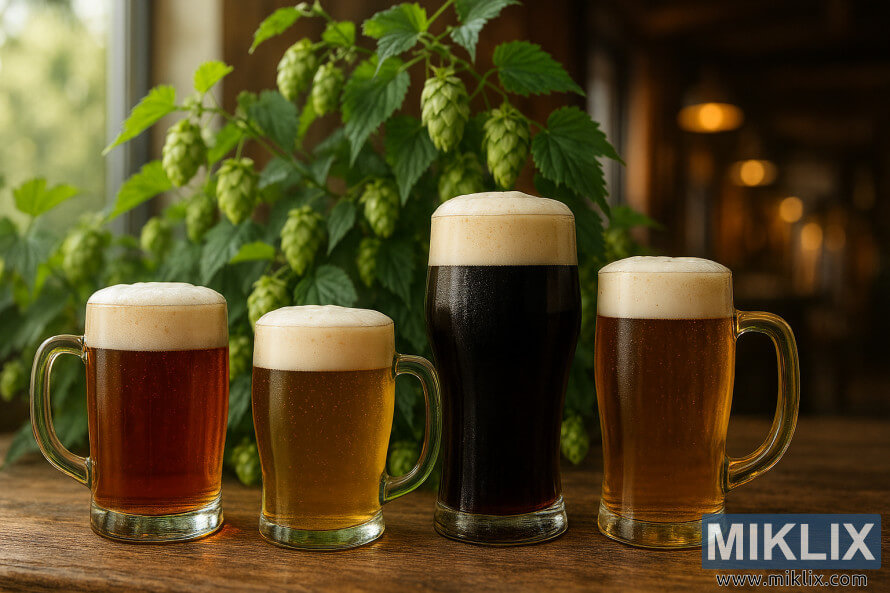
Smooth Cone is a perfect fit for lagers and lighter ales. It's chosen for its clean hop profile. This variety offers smooth bitterness and a subtle aromatic lift, enhancing crisp, bottom-fermented beers.
Pale lagers, Vienna lagers, and Dortmunder-style bocks are common places you'll find Smooth Cone. These beers benefit from a low-to-moderate hop aroma, allowing malt and yeast to shine. Smooth Cone adds a delicate citrus and resinous touch without overwhelming the base beer.
Pale ales and session IPAs also benefit from Smooth Cone when aiming for balance. It contributes moderate bitterness and a soft woody-citrus character. Its balanced aromatic presence ensures session beers remain enjoyable over multiple pours.
- Lagers: pale lagers, Vienna lager, Dortmunder
- Pale ales: English-style pale ale, clean American pale ale
- Session IPAs and balanced ales where restraint is key
Historical recipe databases reveal moderate use of Smooth Cone. Recipes across various styles frequently include it, showing a steady interest. Brewers often pair it with lighter malts and clean yeast strains to highlight its citrus/resinous and woody notes.
When planning batches, focus on malt bills that avoid heavy caramel or roasted characters. Clean fermentation and precise hopping schedules are key. This approach showcases Smooth Cone's subtleties in beers it complements well.
Click or tap the image for more information and higher resolutions.
Recipe guidance and common dosages
When calculating Smooth Cone dosage, start with a historical alpha of 8% to estimate IBUs. For bittering, treat it like a 7–9.5% alpha acid hop. Plug the value into your preferred IBU formula. Adjust the hop weight to achieve the desired bitterness for your batch size and boil time.
Smooth Cone was a staple in many recipes, making up about 96% of the hop bill in some. This makes it ideal for defining bitterness, flavor, and aroma in a beer. It's not just a minor accent.
For bittering additions, a typical approach is shown below. These are starting points; calculate precisely with brewing software.
- Light beers (20–35 IBU): ~0.5–1.0 oz per 5 gal at 60–75 minutes with alpha ~8%.
- Standard ales (35–55 IBU): ~1.0–2.0 oz per 5 gal at similar boil times.
- Strong or highly bitter beers (60+ IBU): scale proportionally, mindful of alpha variability.
For flavor and whirlpool additions, use modest weights. This adds citrus and resinous notes without overpowering the malt. Typical whirlpool rates are between 0.25–1.0 oz per 5 gal, depending on desired intensity and contact time.
Dry hop dosing focuses on aroma. Treat Smooth Cone like other aroma hops, given its oil content near 0.8 mL/100g. Common dry hop rates are 0.5–2.0 oz per 5 gal. Higher rates emphasize bright citrus and resin, while lower rates preserve subtlety.
Smooth Cone is not widely available today, and crop alpha can vary. Brewing software and hop substitution tools are recommended for precise dose conversions. These tools translate Smooth Cone recipe guidance into exact amounts for your brew. They help answer how much Smooth Cone hops to use for specific bitterness, flavor, and aroma targets.
Substitution options when Smooth Cone hops are unavailable
When Smooth Cone hops are out of reach, plan swaps that match alpha acids, oil emphasis, and bittering feel. Brewers commonly use Cluster as a direct Cluster hop substitute because of genetic links and similar roles in the kettle and aroma work.
Match alpha acid range near 7–9.5% to preserve IBU and bitterness. If Cluster runs higher or lower, adjust boil grams per liter to hit the same IBU. Pay attention to myrcene-driven, resinous oils and a touch of humulene for aroma parity.
- Cluster hop substitute: Use Cluster for general-purpose bittering and aroma when Smooth Cone is missing. Expect a moderate, smooth bite with workable alpha acids.
- Replacement hops for Smooth Cone: Try older American aroma hops such as Northern Brewer or Willamette for resinous, woody notes, then tweak rates for AA differences.
- Smooth Cone substitutions: Look at New Zealand options like Motueka or Rakau if you want citrus-resin balance; reduce or raise dosages according to oil intensity and alpha acids.
Adjust late additions and dry-hop weights to compensate for different essential oil concentrations. If a substitute has lower myrcene but higher citrus esters, increase late-add mass to reach the same aroma impact.
Run small trials before scaling a full batch. Use hop calculators to convert alpha acid shifts into grams or ounces and to estimate aroma equivalency. Tasting side-by-side samples keeps decisions data-driven and repeatable.
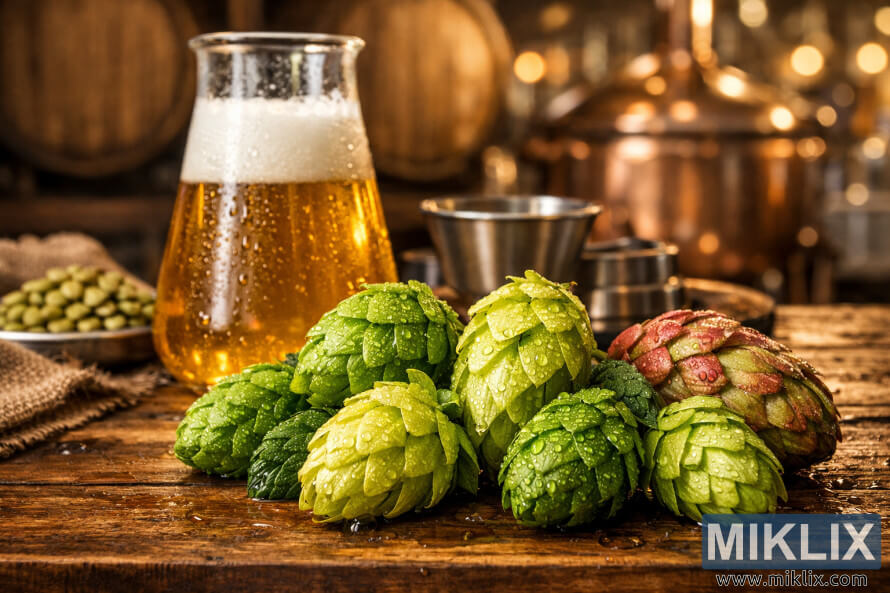
Click or tap the image for more information and higher resolutions.
Storage considerations and hop freshness
Smooth Cone storage requires low temperature and low oxygen. Historical hop stability tests reveal a typical hop freshness HSI for Smooth Cone of about 0.30–0.40. This rating signifies a 35% fair score, indicating moderate loss of alpha acids and volatile oils at room temperature (68°F/20°C) over six months.
To maintain bitterness potential and aroma, store hops in vacuum or sealed barrier bags. Place these bags in a refrigerator or freezer to slow down chemical degradation. It's crucial to minimize light and air exposure during handling to prevent oxidation and oil loss.
Degraded hops significantly impact beer quality. Lower alpha acids reduce the calculated IBU yield and alter perceived bitterness. The loss of volatile oils also diminishes floral, citrus, or resinous notes, which are key to Smooth Cone's distinctiveness.
When dealing with older or legacy hop stock, obtaining a lab report or checking hop freshness HSI is essential. If the HSI shows significant degradation, adjust your recipe accordingly. Increase late additions or dry hop rates to recover aroma and flavor. Recalculate bittering amounts to compensate for lost alpha acids.
- Best practice: vacuum-seal and freeze for long-term storage.
- Short-term: refrigerated, dark, and oxygen-limited packaging.
- Working stock: keep small batches chilled and use quickly.
For brewers storing hops Smooth Cone in bulk, divide lots into smaller sealed portions. This approach limits repeated exposure and preserves lupulin quality for more consistent results in the finished beer.
Formats and lupulin availability
Smooth Cone formats were once available in whole-cone and pellet forms. The choice of format depended on the grower and the mill used. Since the variety was discontinued, finding modern commercial batches is rare. The packaged forms are even scarcer.
Currently, no major suppliers offer lupulin Smooth Cone or branded Smooth Cone cryo products. Companies like Yakima Chief Hops, Hopsteiner, and BarthHaas do not provide Cryo, LupuLN2, Lupomax, or lupulin powder made from Smooth Cone.
Lupulin powder concentrates hop resins and oils into a fine matrix. It's used for intense late additions and dry hops, offering a concentrated flavor without excess vegetal matter. The absence of lupulin Smooth Cone limits the options for achieving this intense flavor.
Brewers must now rely on whole-cone or pellet additions for aroma and bitterness. These formats include more leaf and vegetative compounds. While they can still convey the variety's character, they require larger dry-hop rates to match the lupulin intensity.
For those seeking a lupulin-style punch, consider Cryo hops from other varieties with similar oil profiles. This approach allows you to mimic the concentrated late-hop effect. It also enables the use of Smooth Cone formats for base blending when small amounts are available.
Comparisons with other New Zealand and global hops
Smooth Cone falls between older, versatile hops and the newer, high-alpha varieties. It has a more restrained citrus and resin profile compared to the latest New Zealand releases. These newer hops are known for their intense tropical flavors. Smooth Cone, however, offers a subtler and cleaner taste.
Comparing Smooth Cone to Cluster is enlightening, given their shared ancestry. Cluster can be used as a direct substitute in many recipes. Both are used for bittering and adding late aroma, but Cluster brings a firmer earthiness. Smooth Cone, on the other hand, provides smoother bitterness and a brighter citrus note.
When comparing Smooth Cone to classic European aroma hops like Hallertau and Saaz, the difference is striking. European noble hops are known for their floral, spicy, and perfumey tones. Smooth Cone, however, leans towards resinous and citrus-driven flavors, differing from the delicate noble spices found in European hops. Brewers looking for traditional noble hop nuances will find Smooth Cone distinctly different.
Against American aroma and bittering hops, Smooth Cone has moderate alpha acids and a softer bitterness. American hops like Cascade or Centennial are known for their pronounced grapefruit and resin flavors, along with higher alpha ranges. Smooth Cone's co-humulone content around 31% contributes to a rounder, less harsh finish compared to some U.S. bittering hops.
Considering Smooth Cone's place in the global hop landscape, its breeding history is key. Modern hop breeding has led to many high-alpha and concentrated lupulin types. Smooth Cone represents an earlier generation with balanced dual-purpose traits, rather than extreme oil concentrations. This evolutionary context explains why Smooth Cone remains useful for session beers and traditional styles.
- Smooth Cone vs other hops: balanced, moderate alpha, citrus-resin focus.
- Compare Smooth Cone to Cluster: shared lineage, Cluster is a practical substitute.
- New Zealand hop comparisons: Smooth Cone is less intense than newer NZ cultivars.
Conclusion
Smooth Cone summary: This New Zealand hop is dual-purpose, offering moderate bitterness. It has a myrcene-forward oil profile, making it versatile for lagers and balanced ales. Lab values show 7–9.5% alpha acids, co-humulone near 31%, and about 55% myrcene. This results in soft, herbal bitterness and subtle floral and spicy notes in the beer.
Smooth Cone conclusion also highlights availability limits. It is no longer commercially grown, and lupulin powder is not available. Brewers often substitute it with older, high-mycene varieties like Cluster. They adjust rates to match bitterness and aroma goals.
When brewing, view Smooth Cone hops overview as a guide rather than a strict ingredient. Use it for early additions for balanced bitterness or later for a mild aromatic lift. Monitor hop storage and HSI carefully. Scale substitutions with tools or by matching alpha and oil profiles.
Experiment with substitutes, guided by the chemical and oil data above. This will help recreate the character Smooth Cone once brought to contemporary brews.
Further Reading
If you enjoyed this post, you may also like these suggestions: