
Slika: Comparison Display of Belgian Endive, Curly Endive, Escarole, and Radicchio Varieties
Objavljeno:
Posljednje ažurirano: 24. maj 2026. u 15:46:52 UTC
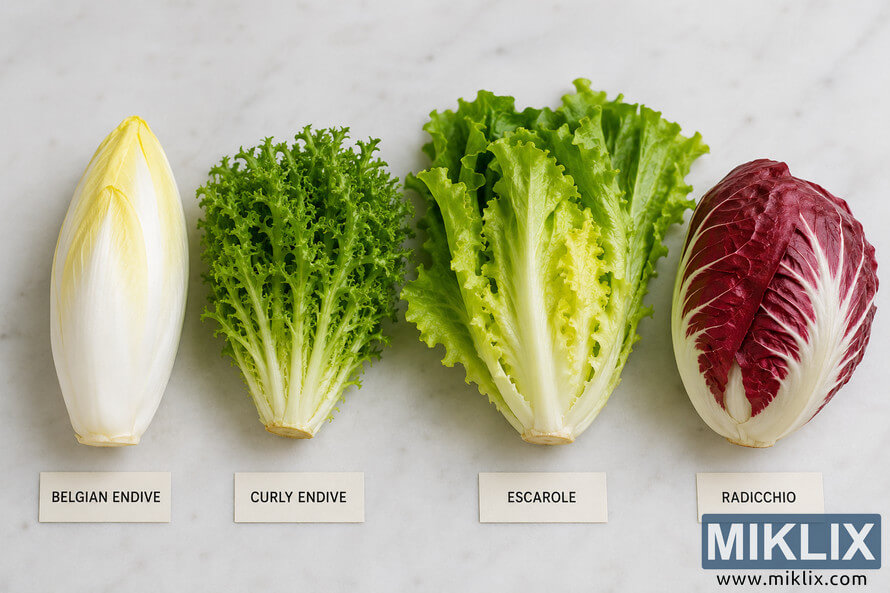
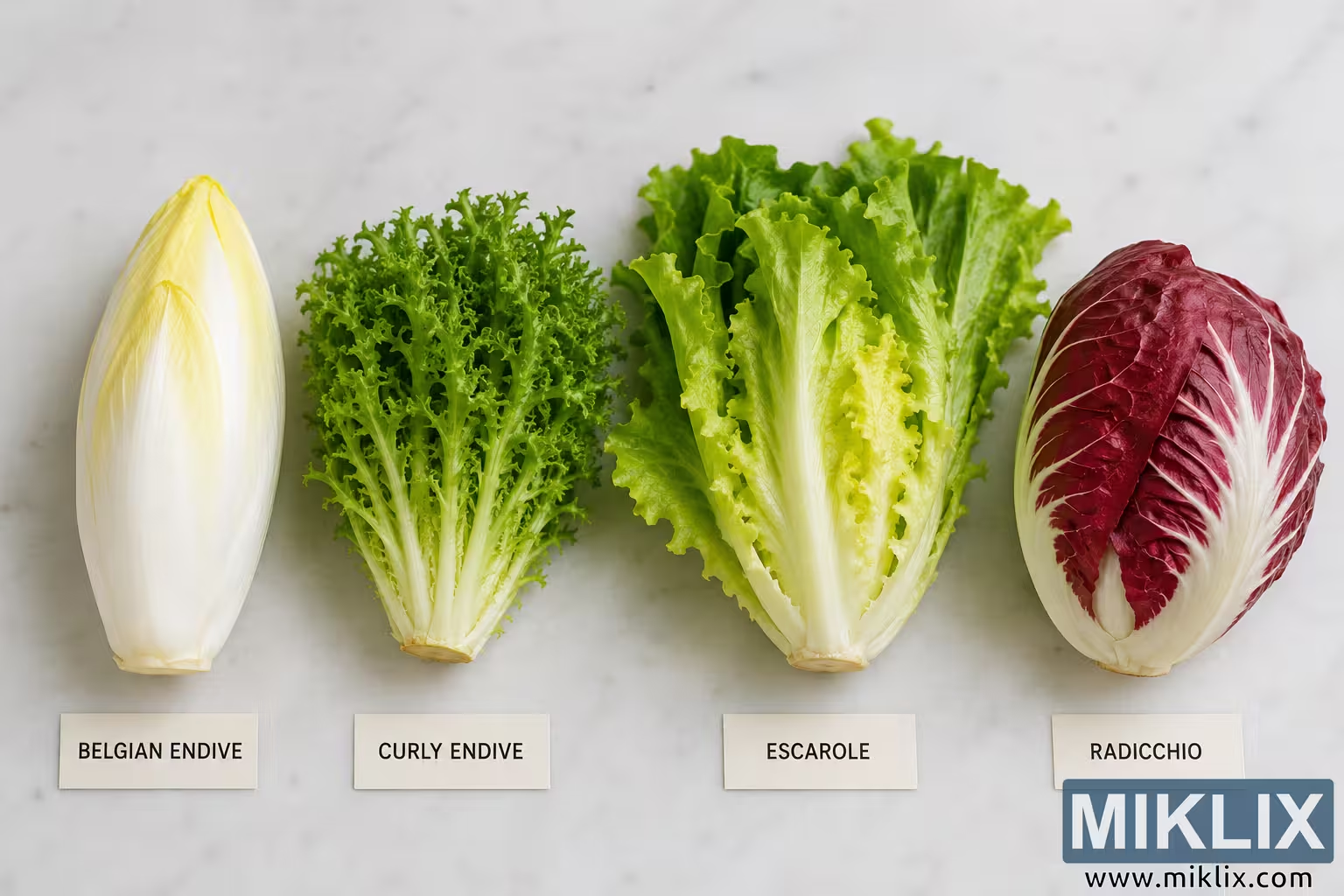
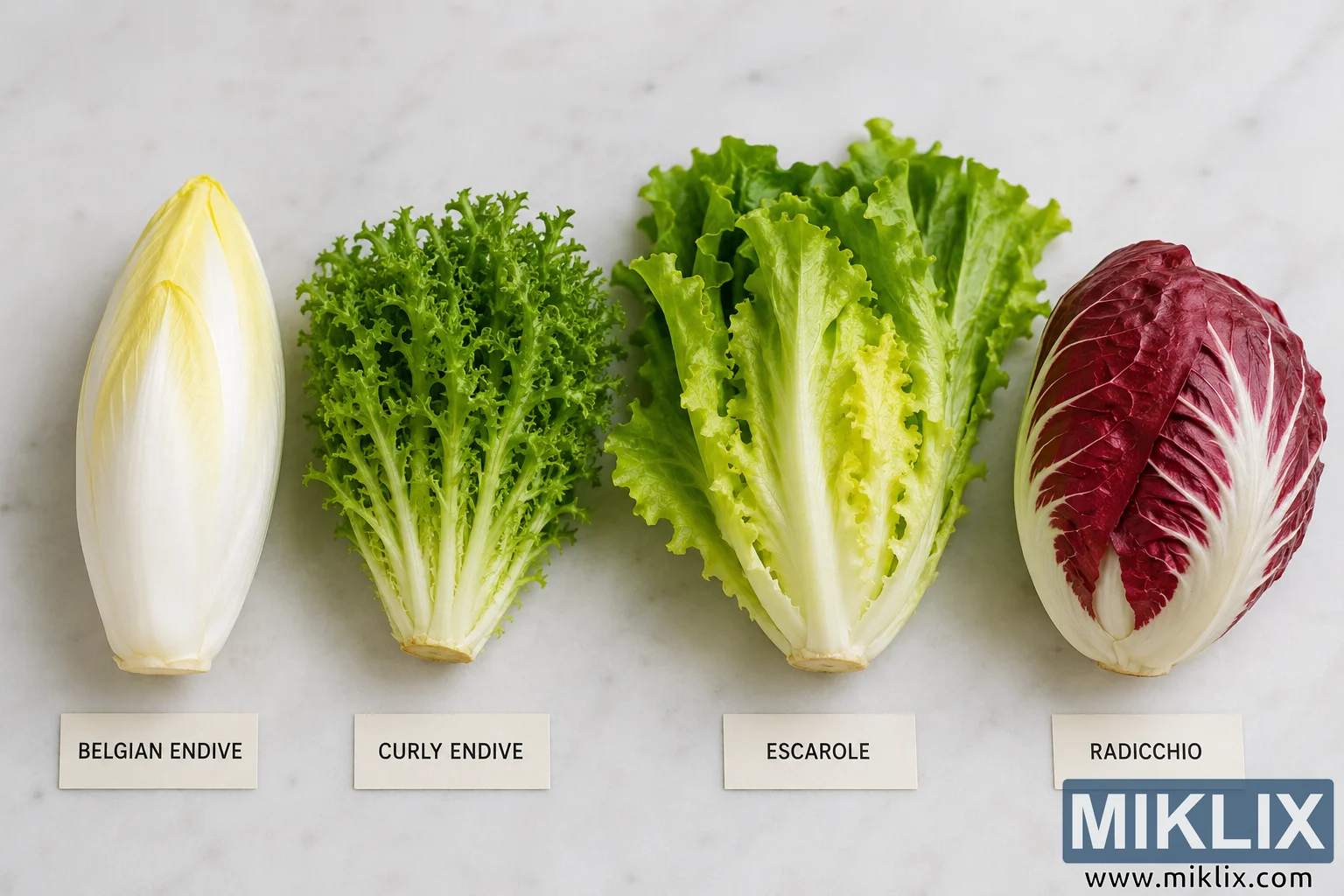
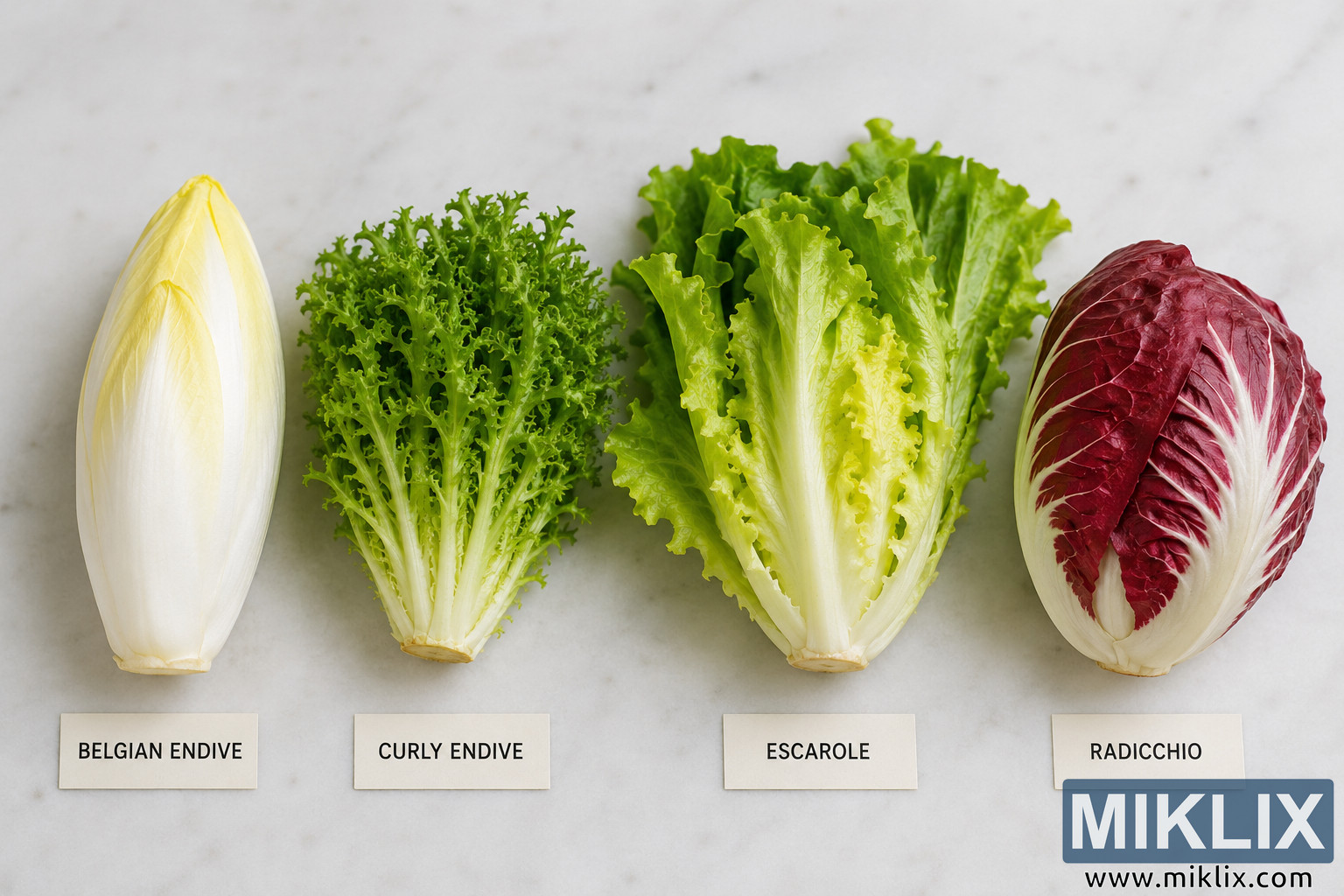
Educational comparison image featuring Belgian endive, curly endive, escarole, and radicchio displayed side by side on a marble surface. The high-resolution landscape photo highlights the distinct textures, leaf structures, and colors of these chicory and leafy green varieties in a clean studio presentation.
Comparison Display of Belgian Endive, Curly Endive, Escarole, and Radicchio Varieties
Dostupne verzije ove slike
Slikovne datoteke dostupne za preuzimanje u nastavku su manje komprimirane i veće rezolucije - i kao rezultat toga, višeg kvaliteta - od slika ugrađenih u članke i stranice na ovoj web stranici, koje su optimiziranije za veličinu datoteke kako bi se smanjila potrošnja propusnog opsega.
Standardna veličina (1,536 x 1,024)
Velika veličina (3,072 x 2,048)
Vrlo velika veličina (4,608 x 3,072)
Ekstra velika veličina (6,144 x 4,096)
Komično velika veličina (1,048,576 x 699,051)
- Još uvijek se uploaduje... ;-)
Opis slike
This high-resolution landscape-format studio photograph presents a carefully organized comparison display of four distinct leafy vegetable varieties commonly associated with chicories and salad greens: Belgian endive, curly endive, escarole, and radicchio. The image is composed as a clean overhead flat-lay arrangement on a pale white marble surface with subtle gray veining, creating a minimalist culinary and educational aesthetic. The vegetables are aligned horizontally from left to right, each separated with balanced spacing and accompanied by a clearly printed identification card positioned beneath it. The visual composition is symmetrical, bright, and professionally lit, emphasizing the individual structure, texture, and coloration of each variety while maintaining a cohesive visual style throughout the image.
On the far left is the Belgian endive, displayed vertically with the tapered tip pointing upward. The vegetable has a compact torpedo-like shape with tightly layered leaves wrapped closely together. Its coloration transitions from creamy pale yellow near the center to soft white along the outer leaves and base. The smooth leaf surfaces appear delicate and slightly translucent under the diffused studio lighting. The vegetable’s clean lines and compact structure contrast strongly with the looser and more textured greens placed beside it. Beneath the Belgian endive is a rectangular white label card printed in bold black uppercase lettering identifying it as “BELGIAN ENDIVE.”
Second from the left is the curly endive, also known for its frilly and highly textured appearance. Unlike the tightly packed Belgian endive, this variety spreads outward with many thin, curly leaves extending upward and outward in irregular directions. The leaves are vibrant medium green with pale white stems concentrated near the bottom center where the vegetable has been cut. The frilled leaf edges create a dense, decorative texture that catches the light and produces intricate shadows across the marble surface. Its lively, tangled appearance introduces visual complexity and movement to the composition. A matching identification card beneath it reads “CURLY ENDIVE” in black uppercase text.
Positioned third is the escarole, a broader and more open leafy green variety. Escarole features large, gently ruffled leaves that spread outward in a fan-like arrangement. The leaves transition from pale yellow-green near the center to a richer bright green toward the outer edges. Compared to curly endive, the escarole leaves are smoother, wider, and less frilled, with thick white ribs running vertically through the center of each leaf. The broad leaves create a fuller, softer silhouette while maintaining a crisp fresh appearance. The studio lighting highlights subtle surface moisture and natural texture without introducing harsh reflections. A corresponding label beneath the vegetable identifies it as “ESCAROLE.”
On the far right is the radicchio, notable for its dramatic deep burgundy coloration contrasted with bold white veins. Unlike the green varieties beside it, the radicchio forms a compact oval head with tightly layered leaves curving inward. The outer leaves display rich wine-red to purple tones, while the thick white ribs branch outward in striking natural patterns reminiscent of marble veining. The glossy leaf surfaces reflect a small amount of soft studio light, emphasizing freshness and crispness. The vivid coloration provides strong visual contrast against both the marble background and the neighboring green vegetables, making the radicchio the most visually dominant subject in the arrangement. Its matching white identification card beneath the vegetable reads “RADICCHIO” in bold black uppercase lettering.
The overall image style is clean, modern, and educational, suitable for culinary reference materials, food blogs, nutrition articles, produce identification guides, restaurant menu education, grocery marketing, or editorial publishing. The neutral marble background avoids distraction and allows the vegetables’ natural colors and textures to remain the central focus. The lighting is soft and evenly distributed, eliminating harsh shadows while preserving detail and dimensionality. The labels are aligned consistently and contribute to the organized comparison format, reinforcing the informative nature of the composition. The landscape orientation provides generous spacing between the vegetables, making it easy for viewers to compare differences in shape, density, leaf texture, and coloration across the four varieties.
Slika je povezana sa: The Complete Guide to the Health Benefits of Endive