
Image: SHA-1 Hash Algorithm – Simplified Visual Overview
Published: January 10, 2026 at 7:48:36 PM UTC
Last updated: January 10, 2026 at 7:48:59 PM UTC
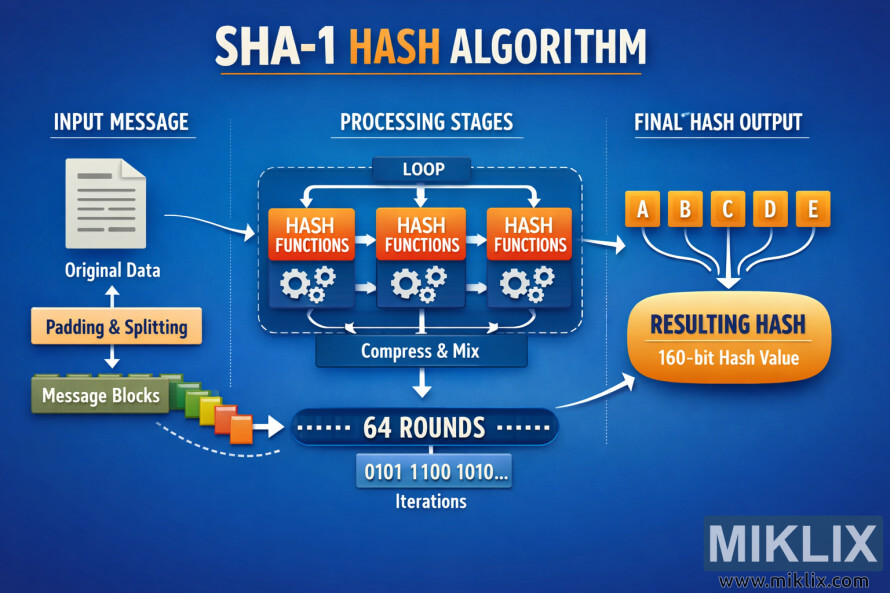
Easy-to-understand landscape infographic explaining the overall flow of the SHA-1 hash algorithm from input message to final 160-bit hash value, without overly technical detail.
Available versions of this image
The image files available for download below are less compressed and higher resolution - and as a result of that, higher quality - than the images embedded in articles and pages on this website, which are more optimized for file size in order to reduce bandwidth consumption.
Regular size (1,536 x 1,024)
Large size (3,072 x 2,048)
Very large size (4,608 x 3,072)
Extra large size (6,144 x 4,096)
Comically large size (1,048,576 x 699,051)
- Still uploading... ;-)
Image description
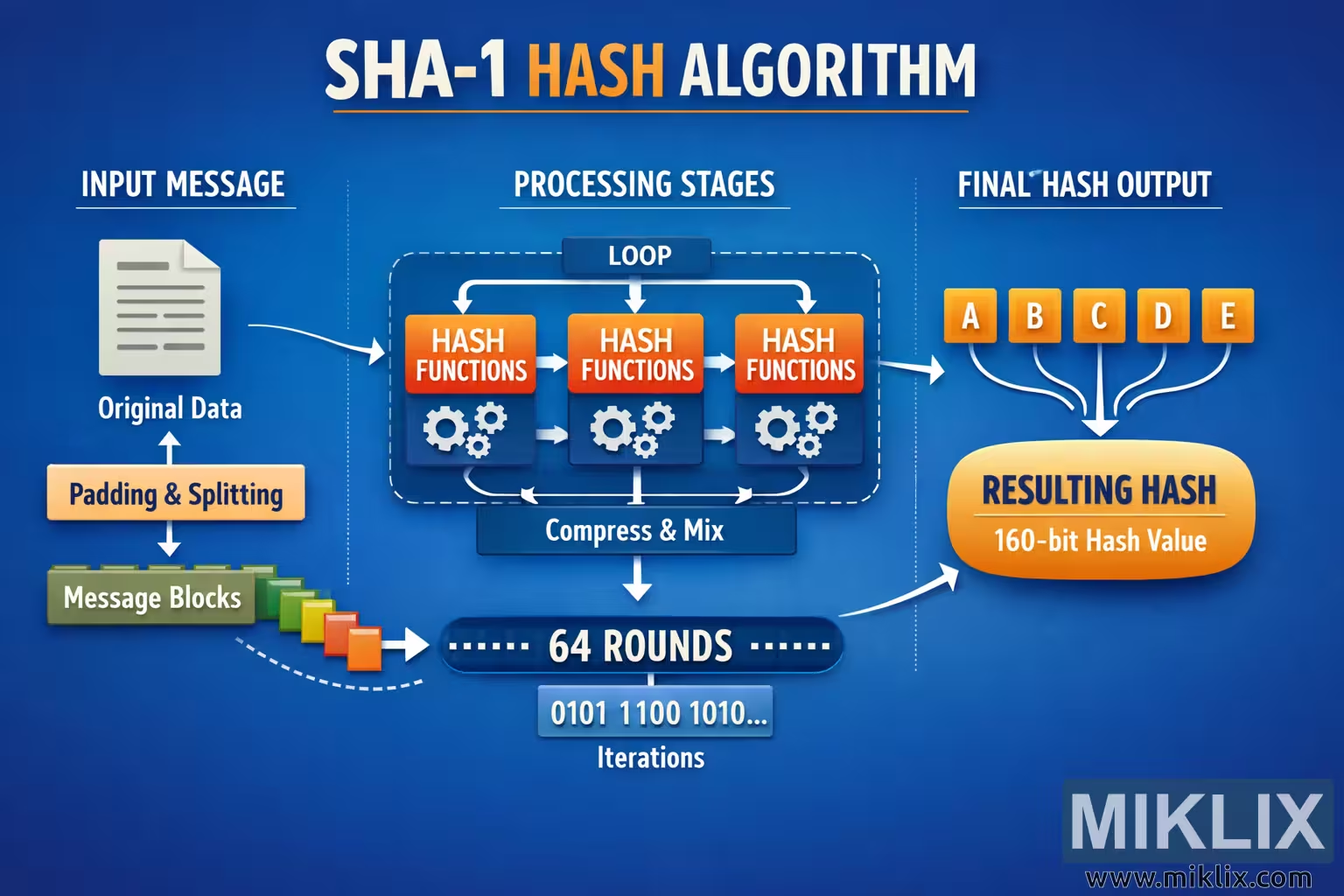
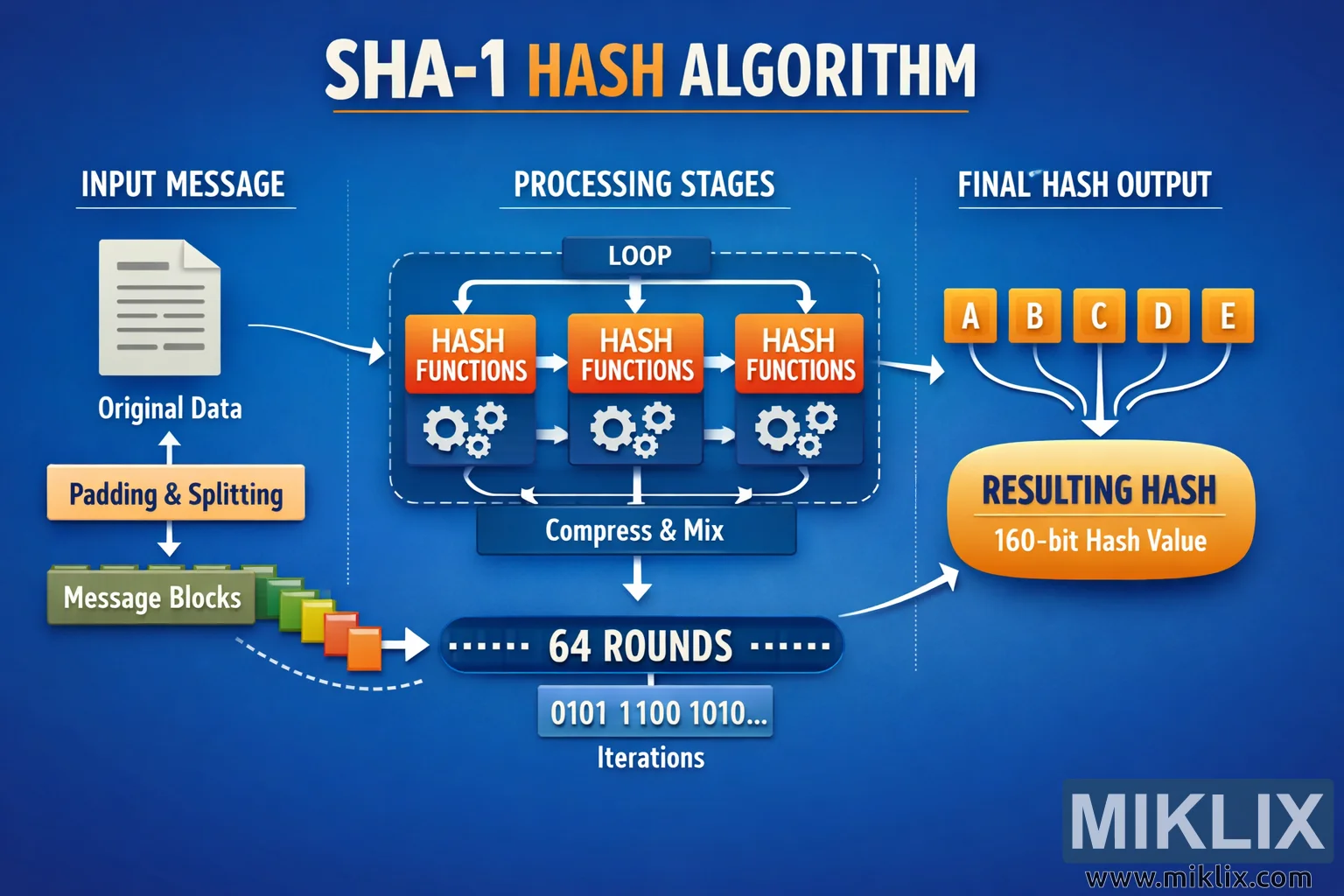
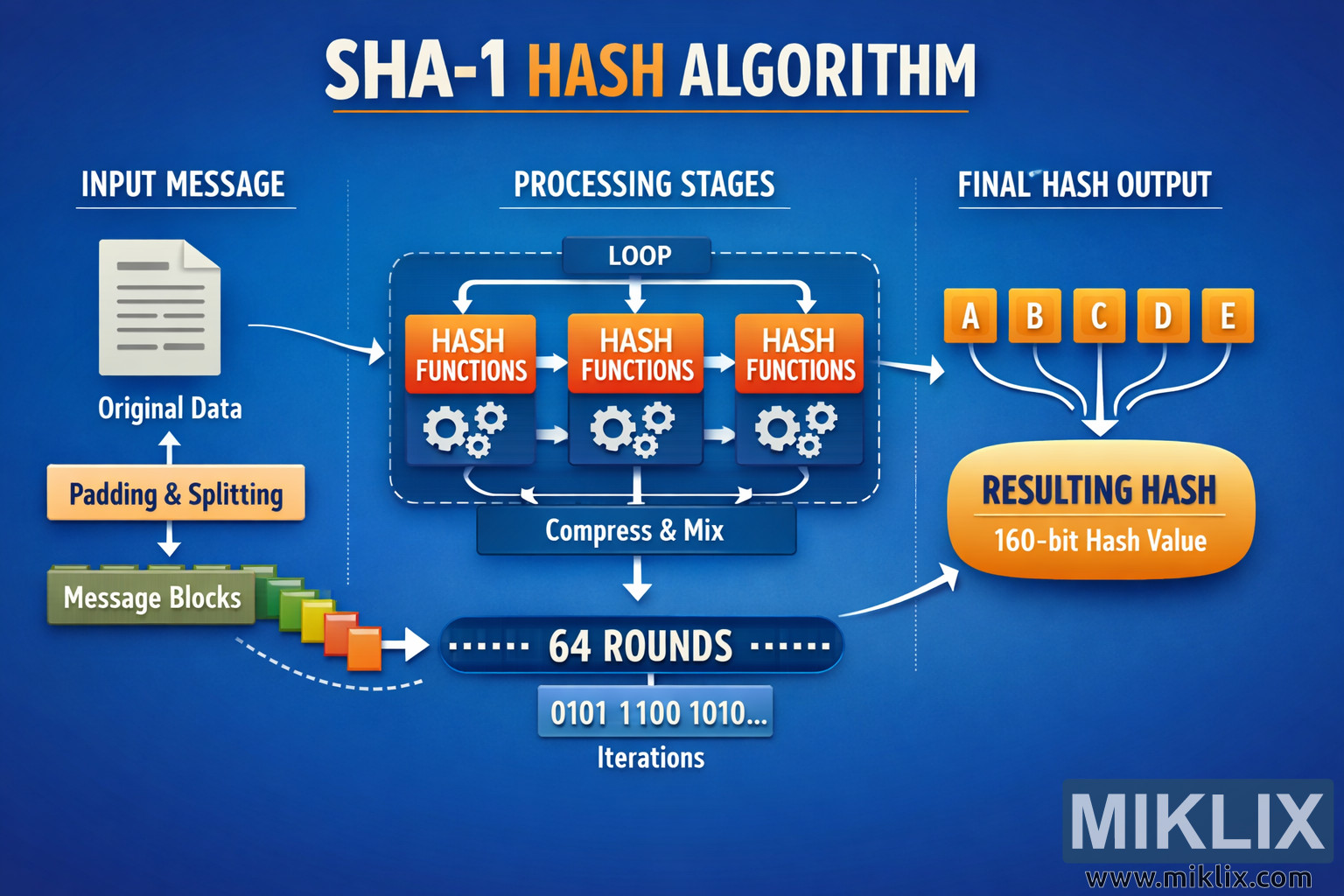
The image is a wide, landscape-oriented infographic with a clean blue gradient background and bold, high-contrast elements designed for easy comprehension. At the very top, a large headline reads "SHA-1 HASH ALGORITHM", clearly identifying the topic of the visualization. The layout flows from left to right, guiding the viewer through the conceptual stages of the hashing process.
On the left side is a section labeled "INPUT MESSAGE". Beneath this label is a simple document icon representing the original data. A small caption such as "Original Data" explains that this is the information provided to the algorithm. Below it, an orange rounded rectangle labeled "Padding & Splitting" points downward to a stack of small, colorful rectangles labeled "Message Blocks". These blocks visually indicate that the original message is prepared and divided into multiple parts before further processing.
Arrows from the message blocks curve toward the central area of the infographic titled "PROCESSING STAGES". This central region is surrounded by a dashed outline to indicate that it is a repeated internal process. Inside this area are several large boxes labeled "HASH FUNCTIONS", each decorated with small gear icons to suggest computation. These boxes are connected by arrows, forming a left-to-right chain. Above them is a bar labeled "LOOP" with arrows looping back, reinforcing the idea that the same set of operations is applied repeatedly to each block of data. Beneath the boxes, a label such as "Compress & Mix" summarizes the purpose of these stages without delving into technical specifics.
Below the processing section is a prominent horizontal badge reading "64 ROUNDS", accompanied by a short string of binary digits like "0101 1100 1010…" and the word "Iterations". This element visually communicates that the algorithm runs through many internal cycles, but the design avoids exposing fragile implementation details.
On the right side of the image is the section labeled "FINAL HASH OUTPUT". Five small orange squares labeled A, B, C, D, and E fan downward with curved arrows into a large golden rounded rectangle. This final container is titled "RESULTING HASH" and includes the text "160-bit Hash Value" to indicate the size of the output. The converging arrows emphasize that all internal state values combine into a single, fixed-length digest.
Overall, the infographic uses consistent colors, large typography, and clear directional arrows to present the SHA-1 process as a simple flow: from input message, through preparation and repeated processing, to a single resulting hash value. The design deliberately remains high level, making it suitable for educational contexts without relying on potentially inaccurate low-level details.
The image is related to: SHA-1 Hash Code Calculator