
Bild: Organic Mint Tea Collection with Herbal Varieties on Rustic Wooden Table
Veröffentlicht:
Zuletzt aktualisiert: 27. Mai 2026 um 16:20:50 UTC
Discover a beautifully styled organic mint tea collection featuring multiple herbal tea varieties, fresh mint leaves, tea bags, and a warm rustic presentation. This high-resolution landscape image showcases natural wellness, calming tea rituals, and botanical-inspired packaging in a fresh, inviting setting.
Organic Mint Tea Collection with Herbal Varieties on Rustic Wooden Table
Verfügbare Versionen dieses Bildes
Die Bilddateien, die unten zum Download zur Verfügung stehen, sind weniger komprimiert und haben eine höhere Auflösung - und damit eine höhere Qualität - als die Bilder, die in Artikeln und Seiten auf dieser Website eingebettet sind, die mehr auf Dateigröße optimiert sind, um den Bandbreitenverbrauch zu reduzieren.
Normale Größe (1,536 x 1,024)
Großes Format (3,072 x 2,048)
Sehr großes Format (4,608 x 3,072)
Extra großes Format (6,144 x 4,096)
Komisch große Größe (1,048,576 x 699,051)
- Ich lade immer noch hoch... ;-)
Bildbeschreibung
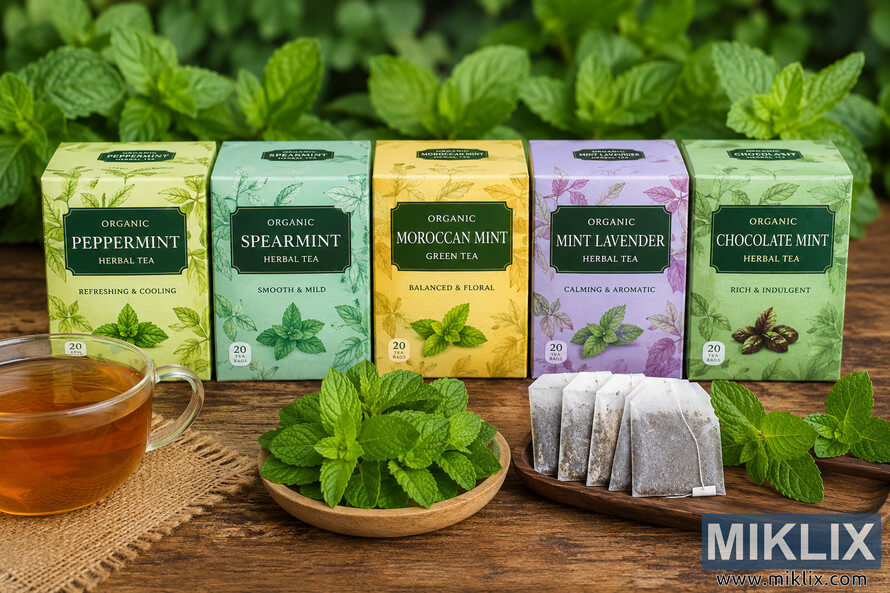
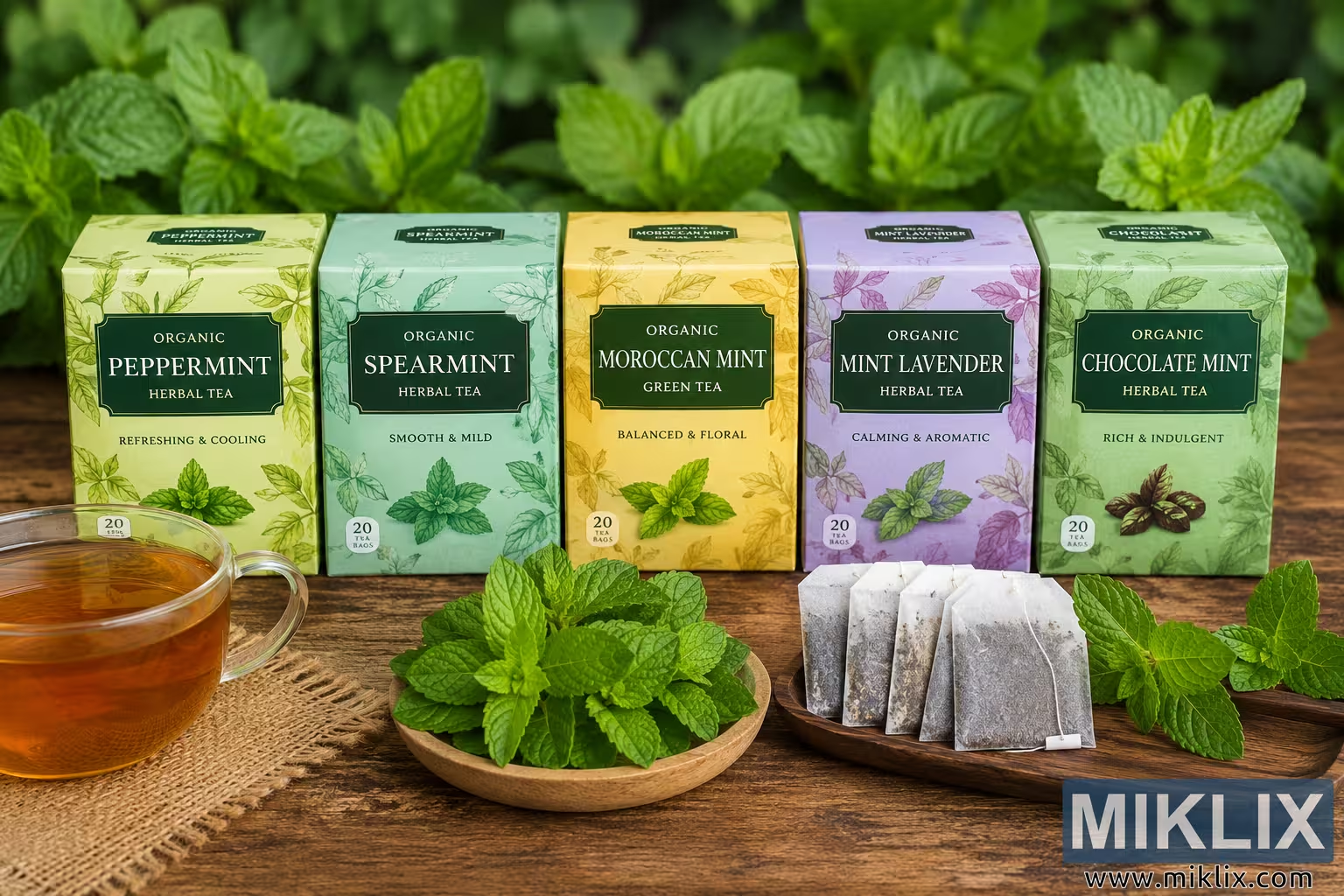
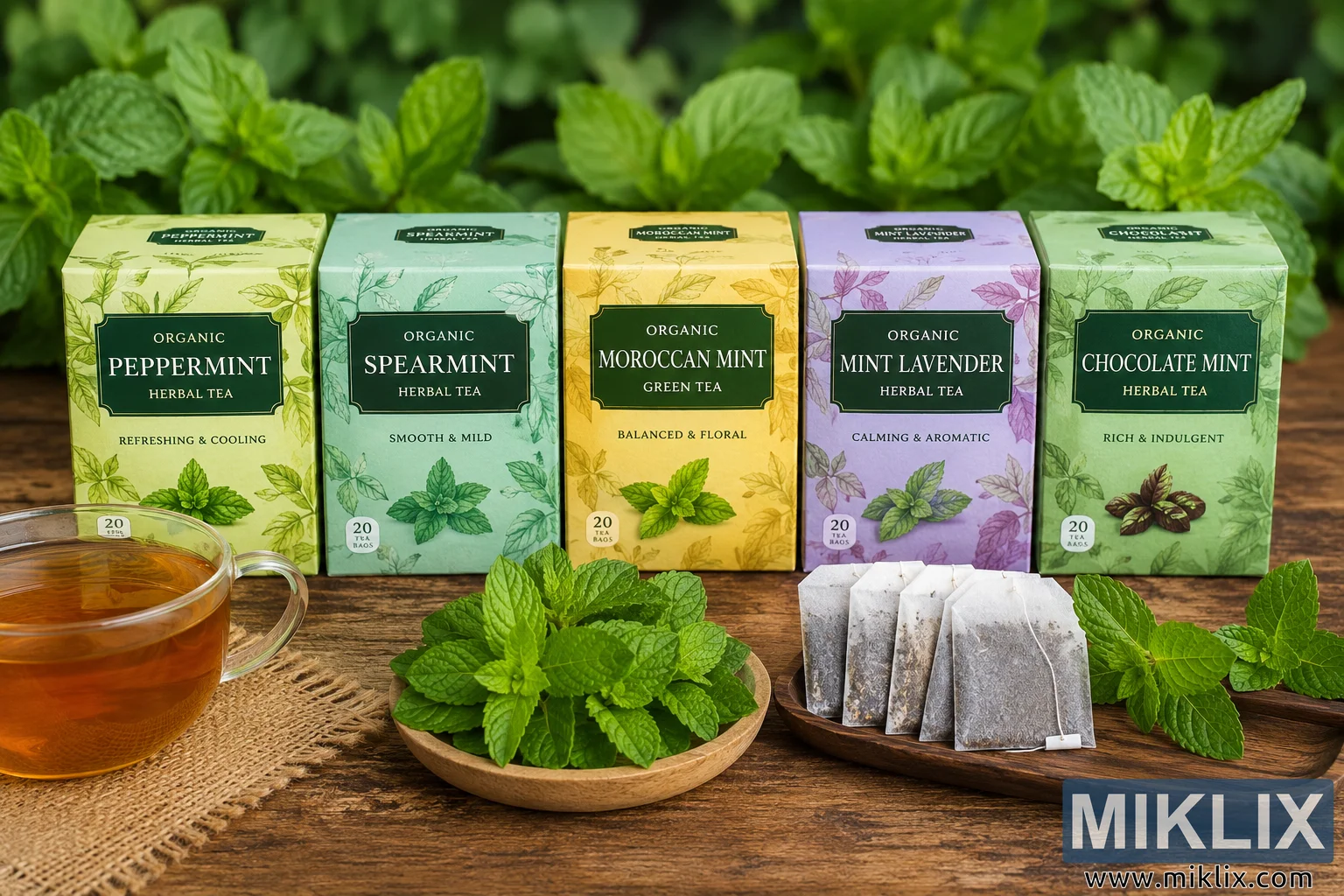
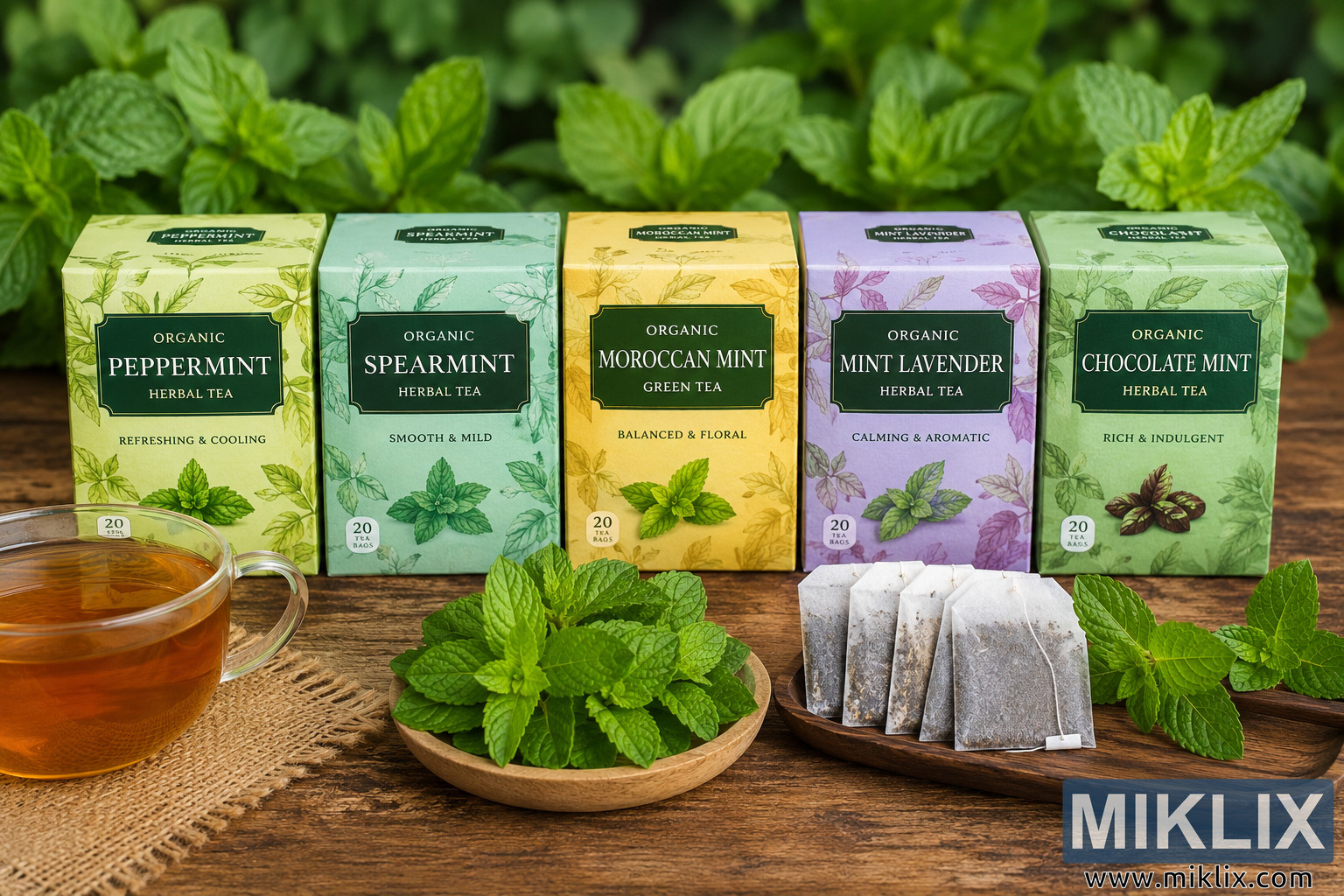
This high-resolution landscape photograph presents a carefully curated organic mint tea collection arranged in a rustic and naturally inspired still-life composition. The scene is set on a richly textured wooden tabletop with visible grain patterns and warm earthy tones that immediately create a sense of comfort, craftsmanship, and authenticity. The overall atmosphere is clean, bright, and calming, combining botanical freshness with a premium artisanal presentation.
At the center of the composition stands a row of five uniquely designed herbal tea boxes, each representing a different mint-inspired tea variety. The boxes are evenly aligned from left to right, creating visual balance while allowing each package design to maintain its own identity. Every tea box features soft pastel-inspired colors combined with delicate botanical illustrations of mint leaves and herbal stems. The packaging avoids any recognizable commercial branding and instead uses elegant generic typography and ornamental framing details that evoke a handcrafted organic aesthetic.
The first tea package on the left is presented in light green tones associated with traditional peppermint tea. Adjacent to it is a pale turquoise package suggesting spearmint herbal tea, followed by a warm golden-yellow package representing Moroccan mint green tea. Next in the lineup is a lavender-colored tea box associated with a calming mint and lavender blend, while the final package on the far right uses a muted green palette to represent a richer chocolate mint herbal infusion. Each package includes subtle decorative foliage patterns that reinforce the natural and organic theme throughout the image.
Behind the tea boxes, the softly blurred background is filled with vibrant green mint leaves and natural foliage. The shallow depth of field creates a smooth bokeh effect that keeps the tea products sharply in focus while adding visual softness and depth to the overall composition. The lush greenery in the background contributes to the feeling of freshness, wellness, and botanical purity.
In the foreground on the left side of the image sits a transparent glass cup filled with warm amber-colored tea. The tea catches the soft natural light, producing golden reflections and subtle highlights along the rim and handle of the cup. The glass mug rests partially on a textured burlap cloth that introduces an earthy tactile element to the scene. The woven fabric contrasts beautifully with the smooth surfaces of the glass and packaging, emphasizing the handcrafted and organic presentation style.
Positioned centrally in the foreground is a small wooden bowl overflowing with fresh mint sprigs. The mint leaves appear vivid and crisp, with visible textures, serrated edges, and natural variations in green color. Additional loose mint stems are placed casually across the wooden surface, creating a relaxed and authentic arrangement that feels freshly harvested.
On the right side of the foreground rests a wooden serving tray holding several pyramid-style tea bags neatly arranged in a fan-like formation. The tea bags are semi-transparent, allowing the loose herbal tea contents inside to remain partially visible. Their delicate paper texture and simple string tags add to the artisanal and premium tea presentation.
The lighting throughout the image is soft, bright, and natural, resembling diffused daylight entering from the side of the scene. Gentle highlights illuminate the tea packaging, fresh mint leaves, and glass surfaces without creating harsh shadows. This balanced lighting style enhances the clean organic atmosphere while preserving realistic textures and natural color tones.
Overall, the image communicates themes of wellness, relaxation, freshness, and premium organic living. The combination of herbal tea varieties, fresh botanical ingredients, rustic wooden textures, and elegant product styling creates a visually appealing composition suitable for use in natural health marketing, tea product advertising, wellness blogs, organic lifestyle branding, social media campaigns, e-commerce product displays, or editorial content focused on herbal beverages and mindful living.
Das Bild ist verwandt mit: A Comprehensive Guide to the Health Benefits of Mint