
Bild: Purple and Green Basil Varieties: Antioxidant Diversity and Wellness
Veröffentlicht:
Zuletzt aktualisiert: 21. Mai 2026 um 16:07:27 UTC
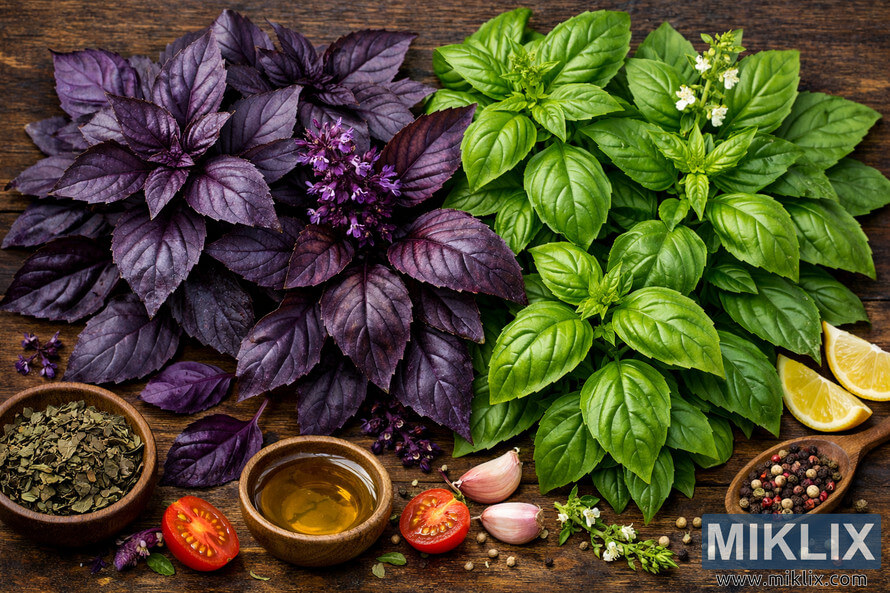
A high-resolution landscape photograph featuring purple and green basil varieties on a rustic wooden surface, symbolizing the diverse antioxidant sources and health benefits of basil through vivid color contrast and natural composition.
Purple and Green Basil Varieties: Antioxidant Diversity and Wellness
Verfügbare Versionen dieses Bildes
Die Bilddateien, die unten zum Download zur Verfügung stehen, sind weniger komprimiert und haben eine höhere Auflösung - und damit eine höhere Qualität - als die Bilder, die in Artikeln und Seiten auf dieser Website eingebettet sind, die mehr auf Dateigröße optimiert sind, um den Bandbreitenverbrauch zu reduzieren.
Normale Größe (1,536 x 1,024)
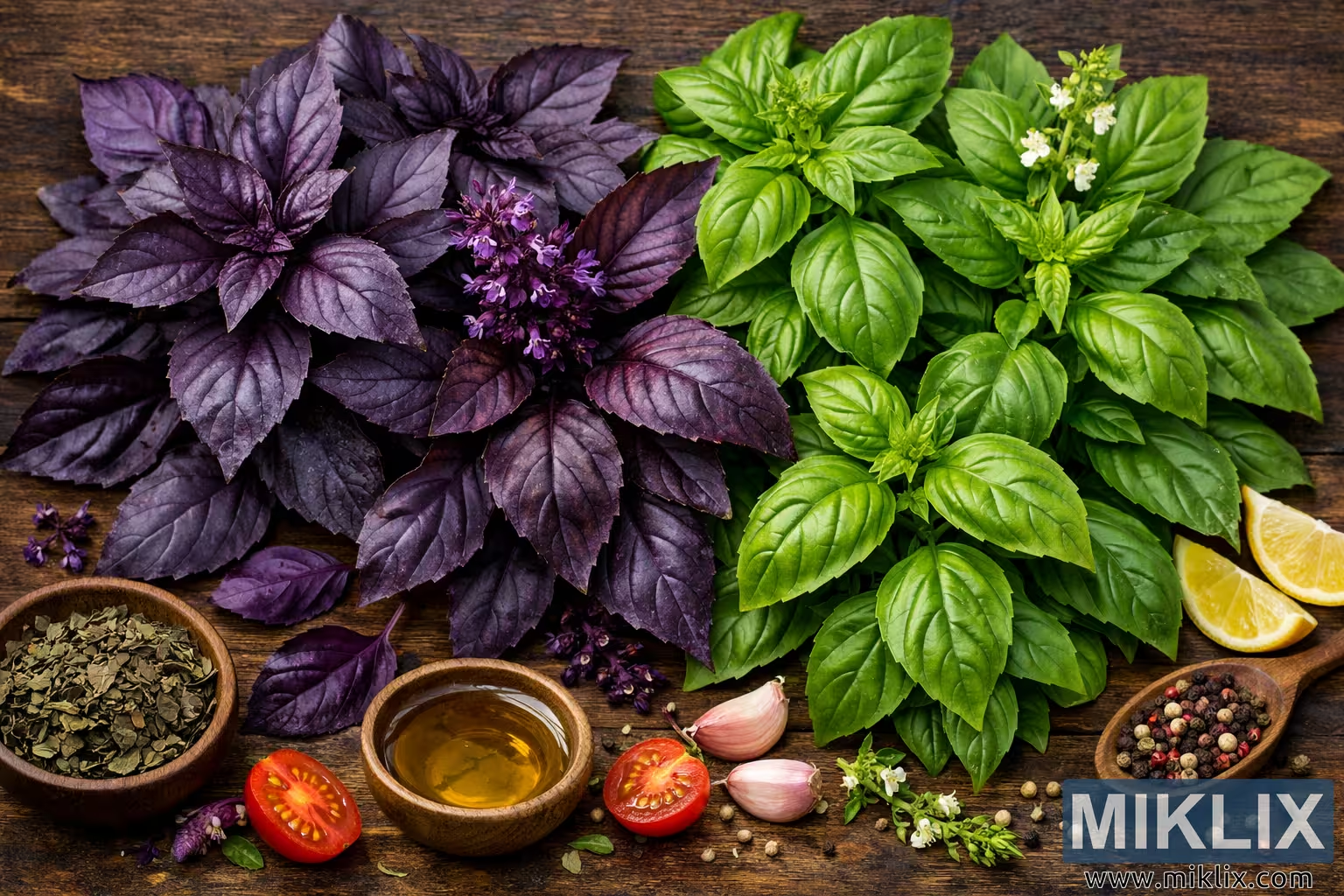
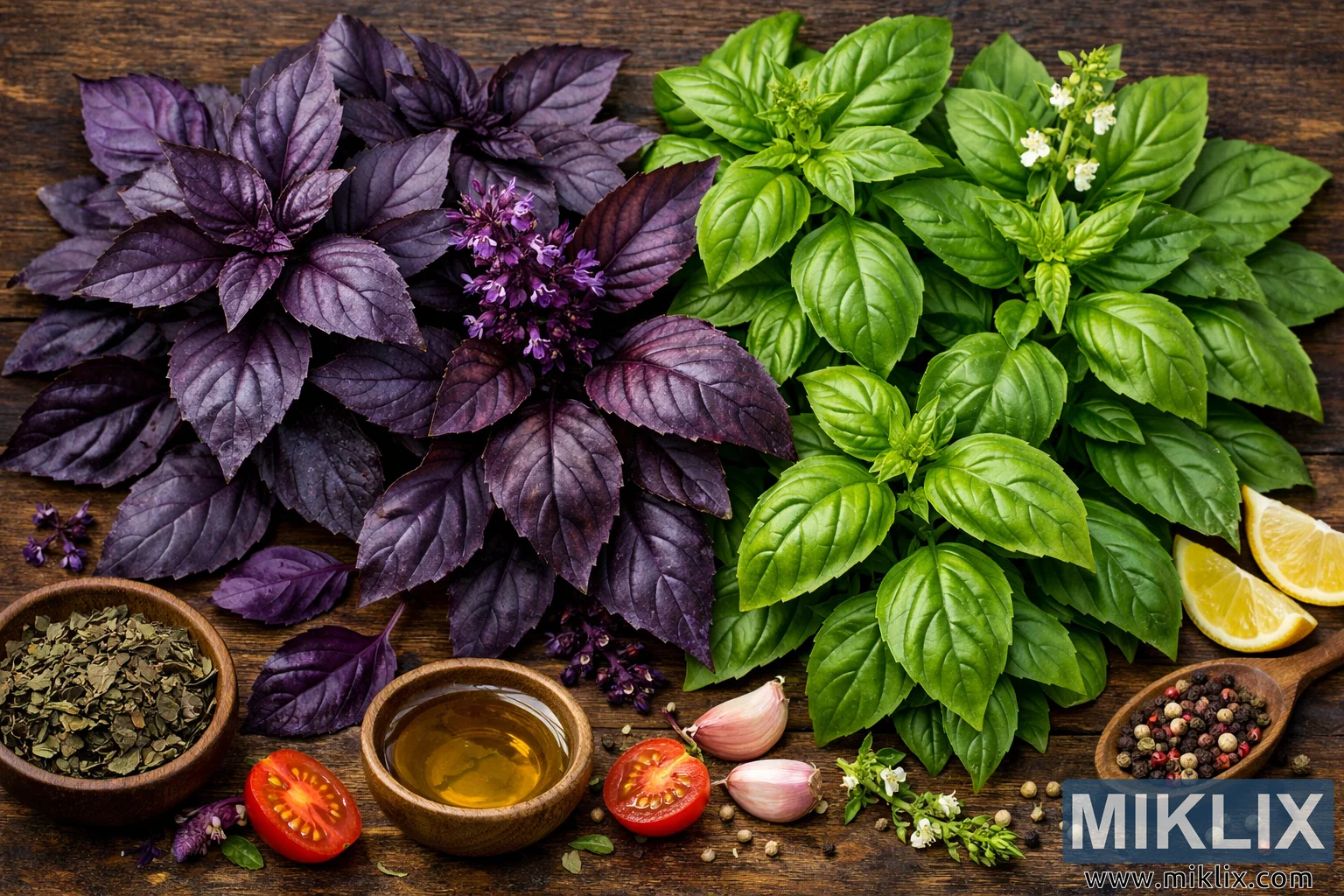
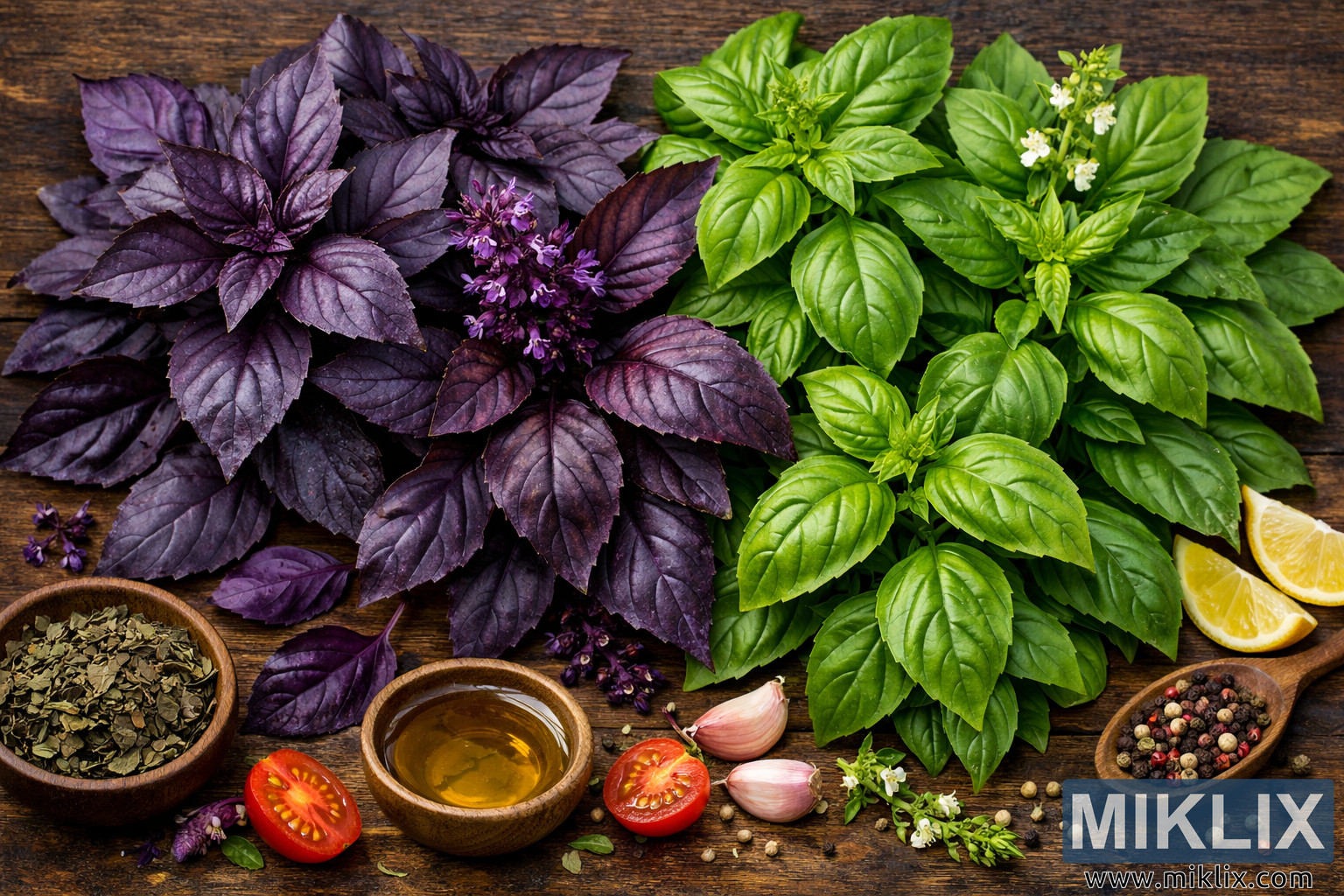
Großes Format (3,072 x 2,048)
Sehr großes Format (4,608 x 3,072)
Extra großes Format (6,144 x 4,096)
Komisch große Größe (1,048,576 x 699,051)
- Ich lade immer noch hoch... ;-)
Bildbeschreibung
This high-resolution landscape photograph captures the vibrant interplay between purple and green basil varieties, showcasing their natural beauty and health-promoting properties. On the left side of the composition, deep purple basil leaves display rich hues of violet and burgundy, their glossy surfaces reflecting soft natural light. The leaves are slightly serrated, with pronounced veining that adds texture and depth. Among them, delicate purple basil flowers emerge—small, tubular blossoms arranged in vertical spikes, contributing to the plant’s ornamental charm and hinting at its antioxidant potency.
On the right side, the green basil leaves form a lush contrast, their bright emerald tones radiating freshness and vitality. The leaves are smooth and slightly crinkled, with a waxy sheen that emphasizes their moisture and vigor. Tiny white basil flowers cluster along green stems, adding a subtle accent of purity and balance. The meeting point between the purple and green basil creates a harmonious transition, symbolizing the diversity of phytochemicals and antioxidants found within different basil cultivars.
Surrounding the basil clusters are complementary culinary elements that reinforce the theme of wellness and natural nutrition. A small wooden bowl filled with dried basil leaves rests in the lower left corner, representing the herb’s versatility in both fresh and preserved forms. Nearby, a second bowl contains golden olive oil, its surface gleaming under the light—a nod to Mediterranean health traditions. Scattered cherry tomatoes, halved to reveal their juicy interiors, add a burst of red color and lycopene-rich vibrancy. Garlic cloves and lemon wedges contribute aromatic and vitamin-rich accents, while a wooden spoon filled with mixed peppercorns—black, white, and pink—introduces a tactile sense of spice and complexity.
The rustic wooden surface beneath these elements provides a warm, organic backdrop, its dark brown grain and subtle imperfections enhancing the authenticity of the scene. The lighting is even and natural, emphasizing the basil’s textures and colors while maintaining a soft depth of field that keeps the focus on the leaves and surrounding ingredients. The overall composition evokes a sense of harmony between culinary artistry and botanical science, celebrating basil not only as a flavorful herb but also as a source of antioxidants that support holistic health and well-being.
Das Bild ist verwandt mit: A Guide to the Health Benefits of Basil