
Bild: Scientific Research on the Health Benefits of Basil in a Modern Laboratory
Veröffentlicht:
Zuletzt aktualisiert: 21. Mai 2026 um 16:07:28 UTC
High-resolution image of scientists in a modern lab researching the health benefits of basil using microscopes, extracts, and data analysis.
Scientific Research on the Health Benefits of Basil in a Modern Laboratory
Verfügbare Versionen dieses Bildes
Die Bilddateien, die unten zum Download zur Verfügung stehen, sind weniger komprimiert und haben eine höhere Auflösung - und damit eine höhere Qualität - als die Bilder, die in Artikeln und Seiten auf dieser Website eingebettet sind, die mehr auf Dateigröße optimiert sind, um den Bandbreitenverbrauch zu reduzieren.
Normale Größe (1,536 x 1,024)
Großes Format (3,072 x 2,048)
Sehr großes Format (4,608 x 3,072)
Extra großes Format (6,144 x 4,096)
Komisch große Größe (1,048,576 x 699,051)
- Ich lade immer noch hoch... ;-)
Bildbeschreibung
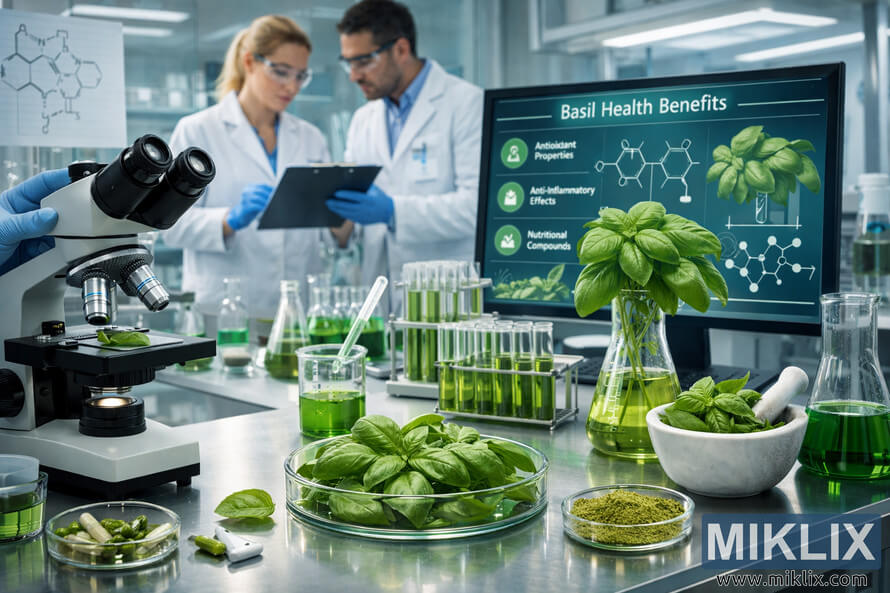
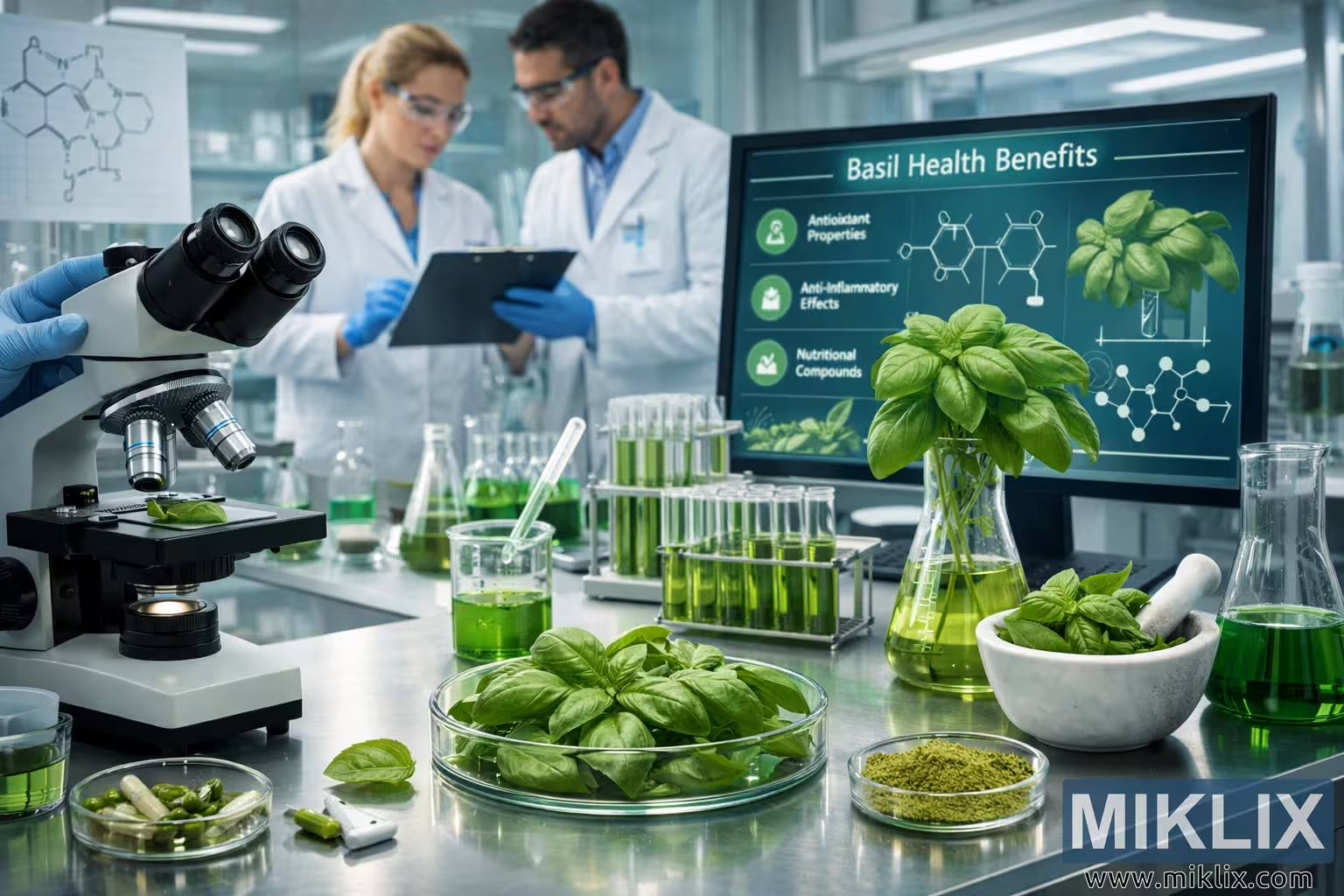
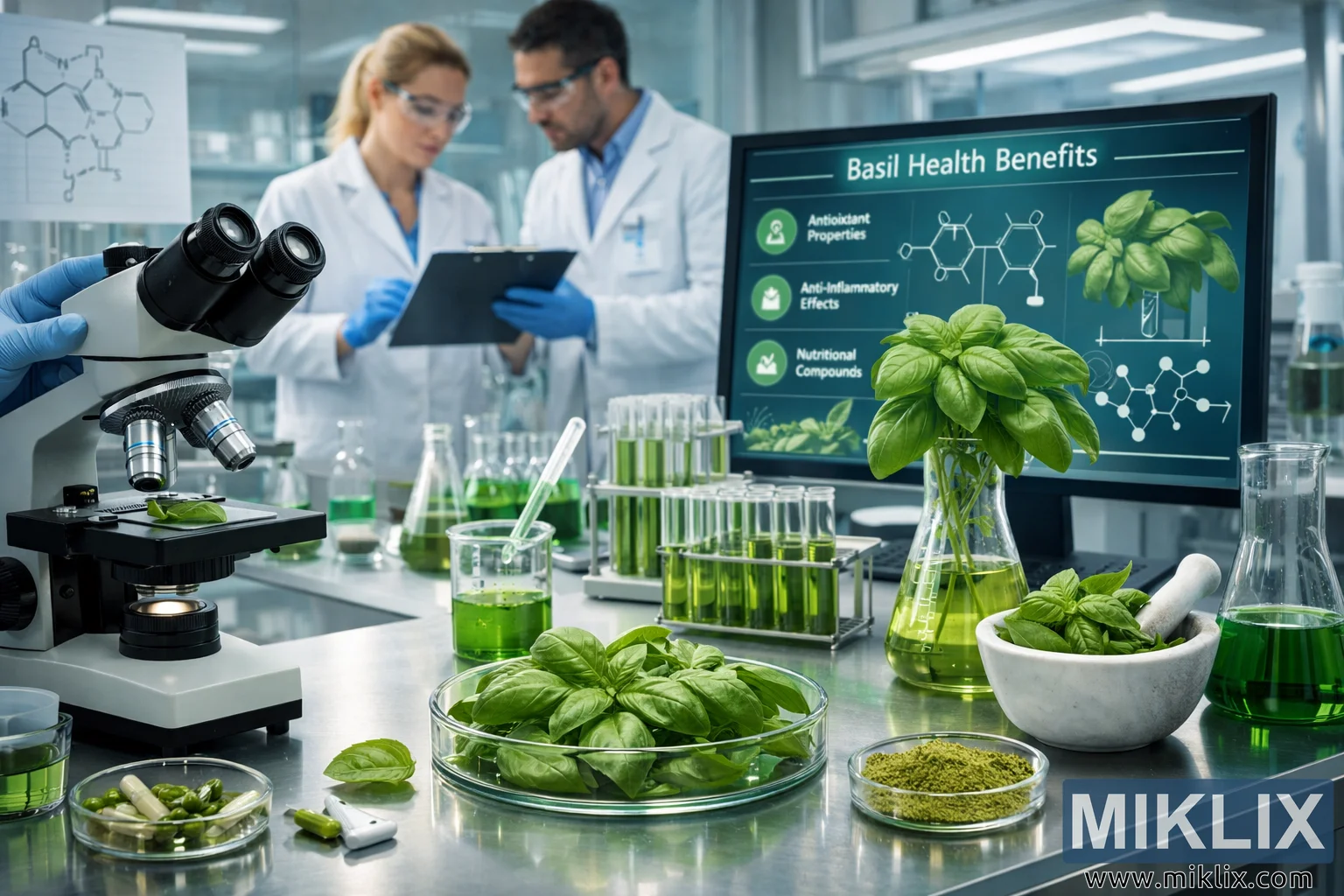
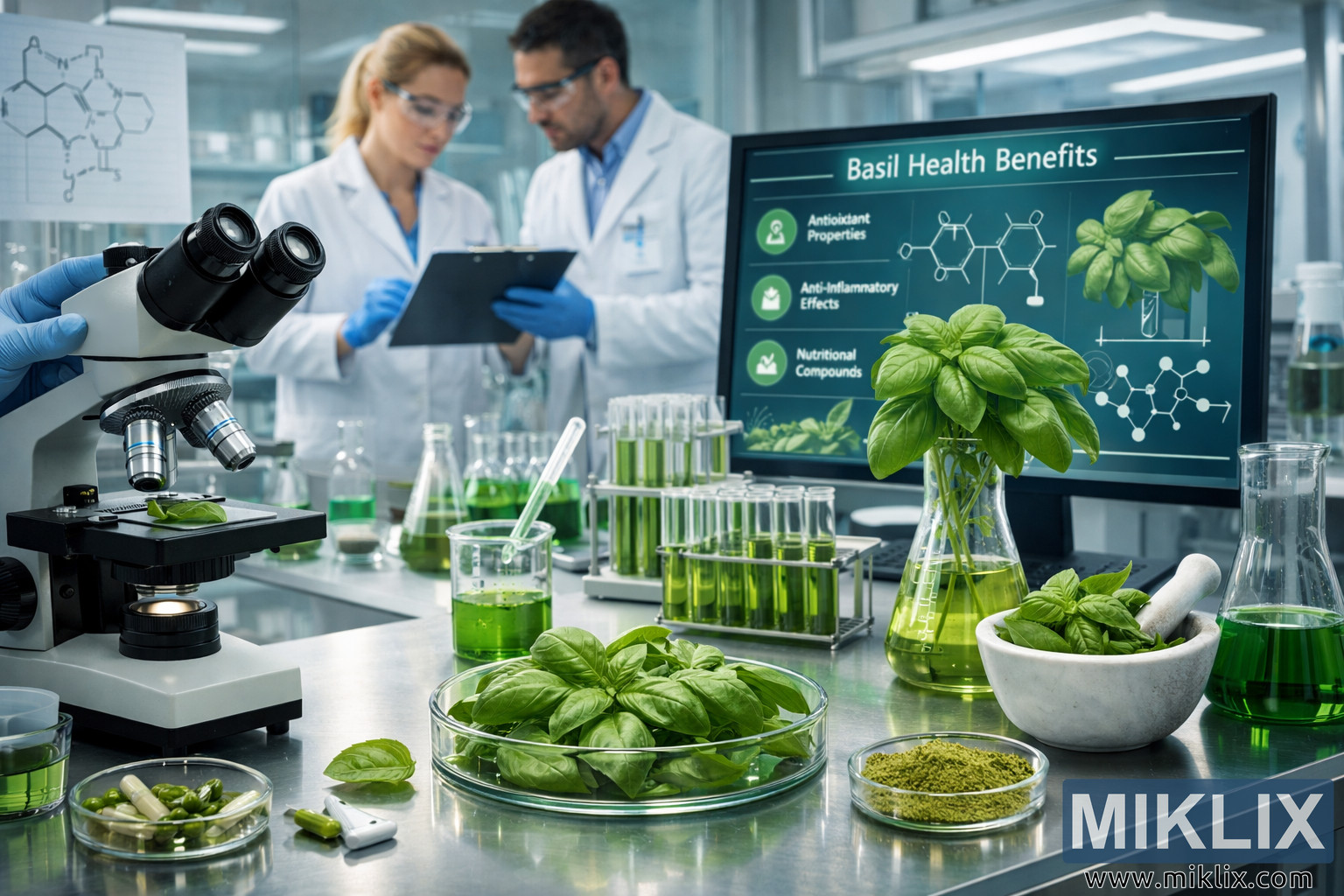
A high-resolution, landscape-oriented photograph captures a modern scientific laboratory dedicated to researching the health benefits of basil. In the foreground on the left, a black and white compound microscope dominates the scene, its objective lenses clearly marked 10x and 40x. A gloved hand, clad in a blue nitrile glove, gently adjusts the eyepiece while a fresh basil leaf rests carefully on the glass stage, symbolizing the fusion of botany and analytical science. The microscope’s metal body and precise mechanical components convey a sense of technical rigor and clinical accuracy.
At the center of the lab bench, a shallow petri dish is filled with vibrant green basil leaves, their textures and veins sharply in focus. Surrounding the dish, a neatly arranged rack of test tubes holds basil extracts in various shades of green, ranging from pale translucent tones to deep, saturated hues, suggesting different concentrations or experimental conditions. To the right of the petri dish, a small glass beaker contains a bright green liquid, while a glass dropper hovers above it, releasing a single droplet into the solution, capturing a moment of active experimentation. Nearby, an Erlenmeyer flask holds a sprig of basil partially submerged in liquid, hinting at infusion, extraction, or compound isolation. A white mortar and pestle, filled with freshly crushed basil leaves, reinforces the connection between traditional herbal preparation and modern laboratory methods.
In the lower left corner of the bench, several capsules and tablets are scattered alongside small glass dishes containing finely milled green and light brown powders. These elements suggest the translation of basil’s bioactive compounds into potential supplements or nutraceutical formulations. The powders and pills visually bridge the gap between raw plant material and finished health products.
In the background, two scientists in white lab coats, safety goggles, and blue gloves collaborate on data analysis. The female scientist on the left, with blonde hair tied back in a ponytail, holds a clipboard and appears to be discussing findings. The male scientist on the right, with short dark hair, focuses on a computer monitor displaying a detailed interface titled "Basil Health Benefits." The screen features infographics and diagrams highlighting key themes such as "Antioxidant Properties," "Anti-Inflammatory Effects," and "Nutritional Compounds," along with stylized molecular structures representing basil’s active components. To the side, another sheet on a stand shows a chemical formulation, reinforcing the analytical nature of the research.
Behind the scientists, shelves lined with glassware—beakers, flasks, and other laboratory vessels—add depth and context, emphasizing that this is a fully equipped research environment. The overall lighting is bright and evenly distributed, reflecting off stainless steel surfaces and glass, creating a clean, clinical atmosphere. The vivid green of the basil leaves and extracts stands out against the neutral whites, silvers, and soft blues of the lab, visually underscoring basil as the central subject of investigation. The composition as a whole communicates a rigorous, evidence-based exploration of basil’s potential health benefits, from raw plant material to molecular analysis and possible therapeutic applications.
Das Bild ist verwandt mit: A Guide to the Health Benefits of Basil