
Bild: Bone Health Nutrients: Calcium and Vitamin K from Collard Greens
Veröffentlicht:
Zuletzt aktualisiert: 21. Juli 2026 um 20:39:56 UTC
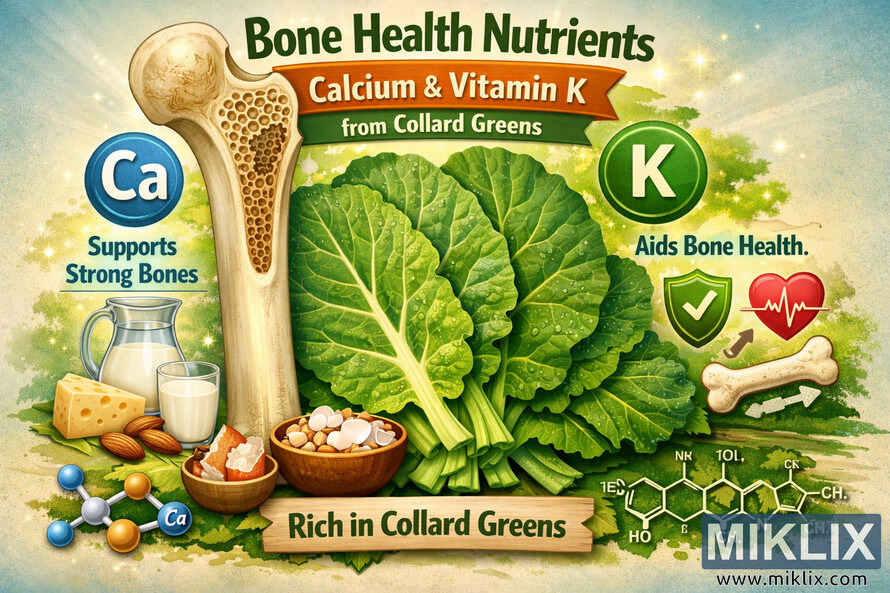
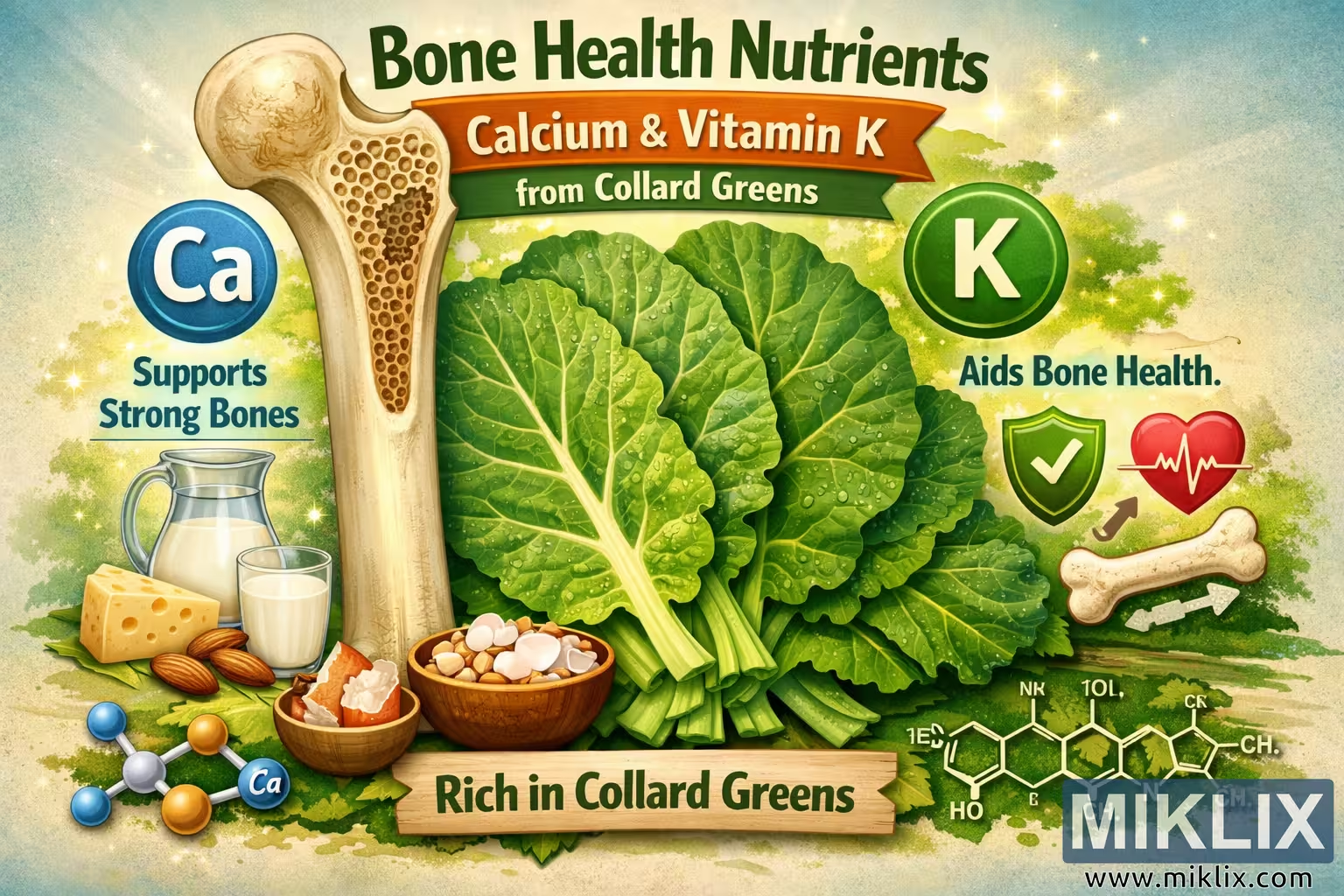
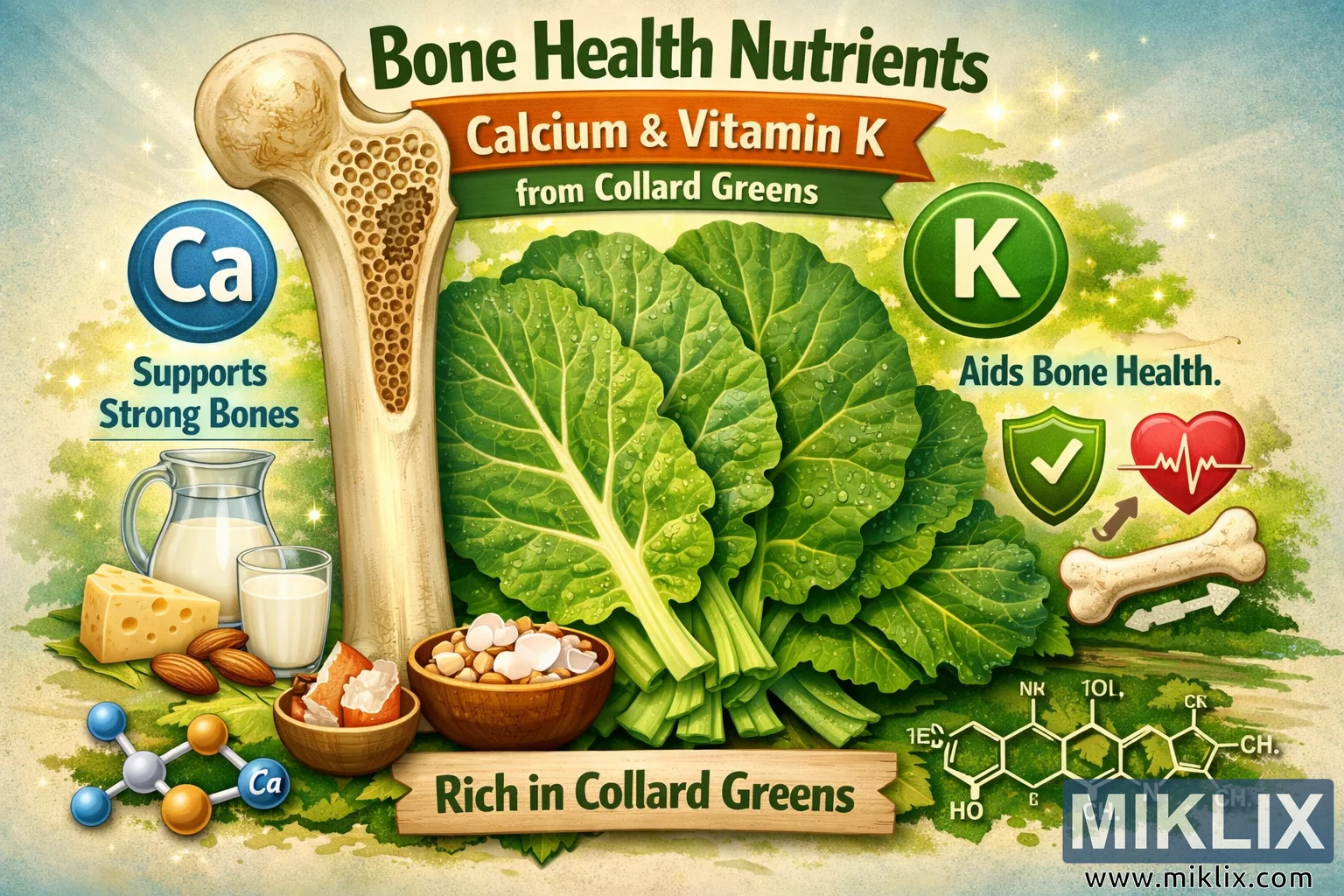
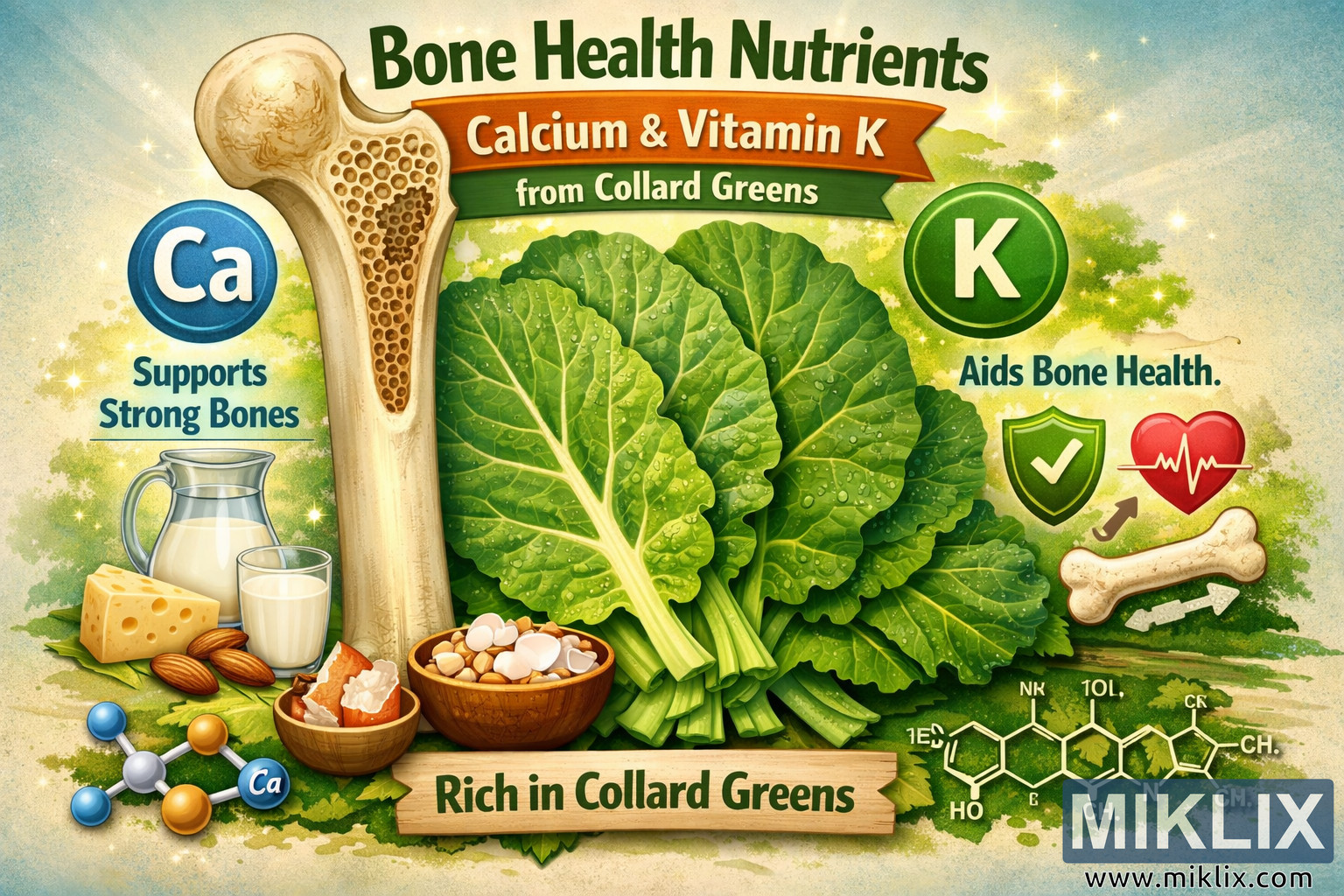
Landscape bone health illustration featuring a cutaway femur, calcium and vitamin K icons, and fresh collard greens. The image highlights "Bone Health Nutrients" with a central bone cross-section, a blue calcium symbol labeled "Supports Strong Bones," a green vitamin K symbol labeled "Aids Bone Health," and detailed depictions of collard greens, eggshells, and fermented soybeans. A wooden sign reading "Rich in Collard Greens" and stylized nutrient molecule diagrams complete the bright, educational scene, set against a sunny, natural background with no real-world brands.
Bone Health Nutrients: Calcium and Vitamin K from Collard Greens
Verfügbare Versionen dieses Bildes
Die Bilddateien, die unten zum Download zur Verfügung stehen, sind weniger komprimiert und haben eine höhere Auflösung - und damit eine höhere Qualität - als die Bilder, die in Artikeln und Seiten auf dieser Website eingebettet sind, die mehr auf Dateigröße optimiert sind, um den Bandbreitenverbrauch zu reduzieren.
Normale Größe (1,536 x 1,024)
Großes Format (3,072 x 2,048)
Sehr großes Format (4,608 x 3,072)
Extra großes Format (6,144 x 4,096)
Komisch große Größe (1,048,576 x 699,051)
- Ich lade immer noch hoch... ;-)
Bildbeschreibung
The image is a vibrant, educational digital illustration designed in a wide, landscape orientation, focusing on the theme of bone health and the nutritional benefits of calcium and vitamin K derived from collard greens. At the center-left of the composition, a large, detailed cutaway illustration of a human femur bone dominates the scene. The bone is shown vertically, with its outer surface rendered in a smooth, slightly glossy off-white color that suggests strength and integrity. The interior of the bone is exposed in cross-section, revealing a porous, honeycomb-like spongy structure that visually communicates the idea of bone density and the microscopic architecture that supports skeletal strength.
Above this central bone illustration, a bold, eye-catching title reads "Bone Health Nutrients" in large, stylized letters. The word "Bone" appears in a rich green hue, while "Health" and "Nutrients" incorporate warm orange and yellow tones, creating a harmonious color palette that feels both natural and energetic. Just below the main title, a green banner stretches horizontally, carrying the subtitle "Calcium & Vitamin K from Collard Greens" in smaller white and yellow text. This banner visually anchors the message that the nutrients highlighted in the illustration are specifically associated with collard greens, a leafy vegetable known for its dense nutritional profile.
To the left of the bone, a circular blue icon floats prominently, containing the chemical symbol "Ca" in white, representing calcium. This icon is slightly glossy and has a subtle glow, making it stand out against the softer background. Beneath the icon, the phrase "Supports Strong Bones" is written in a clear, readable font. Below this text, a small cluster of food illustrations reinforces the idea of calcium-rich sources: a glass pitcher filled with milk, a transparent glass of milk beside it, a wedge of pale yellow cheese, and a small handful of almonds. These items are arranged neatly, with gentle shading and highlights that give them a semi-realistic yet stylized appearance. They serve as familiar visual cues for calcium, even though the main focus of the image is collard greens.
On the right side of the bone, a complementary circular green icon displays the letter "K" in white, symbolizing vitamin K. This icon mirrors the style of the calcium icon, with a soft glow and a clean, modern look. Beneath it, the text "Aids Bone Health" appears, emphasizing the supportive role of vitamin K in maintaining healthy bones. Under this text, a series of small, illustrative symbols further explain the concept: a shield with a checkmark inside it, representing protection and resilience; a heart with a heartbeat line running through it, suggesting overall health and vitality; and a stylized bone with arrows pointing toward it, indicating targeted support for skeletal structure. These icons are simple yet expressive, helping viewers quickly grasp the health benefits associated with vitamin K.
The lower portion of the illustration is dedicated to a lush, detailed depiction of collard greens. Large, overlapping leaves fill the bottom of the frame, rendered in deep, vibrant shades of green with lighter veins running through them. The leaves are textured with subtle shading and highlights, and tiny water droplets glisten on their surfaces, giving them a fresh, just-harvested appearance. The collard greens form a dense, leafy bed that visually anchors the entire composition and reinforces the idea that these vegetables are the primary source of the highlighted nutrients.
In front of the collard greens, a small arrangement of food items adds further detail and context. On the left, a small wooden bowl holds crushed eggshells, their jagged white fragments suggesting a natural source of calcium. Next to it, another wooden bowl contains yellow nattō—fermented soybeans cut into small cubes—representing a food associated with vitamin K. The bowls are rendered with warm brown tones and subtle wood grain texture, contributing to the organic, wholesome feel of the scene.
At the very bottom of the illustration, a wooden sign stretches horizontally, bearing the text "Rich in Collard Greens" in a clear, slightly rustic font. The sign looks like a plank of wood with visible grain and soft shadows, reinforcing the natural, farm-to-table aesthetic of the image. To the left of the sign, a stylized calcium molecule is depicted as a cluster of spheres connected by rods, with the label "Ca" integrated into the structure. To the right of the sign, a simplified chemical structure representing vitamin K is drawn using hexagonal shapes and connecting lines, hinting at the molecular complexity of the nutrient without overwhelming the viewer with scientific detail.
The background of the illustration features a soft, sunny sky with a gentle gradient transitioning from pale yellow near the horizon to light blue higher up. Subtle sparkles and a faint glow surround the central bone and nutrient icons, giving the entire scene a slightly radiant, uplifting atmosphere. Behind the collard greens and bone, a blurred green landscape suggests fields or a garden, reinforcing the connection to fresh, plant-based nutrition. The overall lighting is bright and even, with carefully placed highlights and shadows that make the elements appear cohesive and visually appealing.
The composition balances scientific information with approachable, friendly visuals. The central bone and nutrient icons provide a clear focal point, while the collard greens and supporting food items create a rich, contextual backdrop. The color palette—dominated by greens, blues, and warm earth tones—evokes health, nature, and vitality. The illustration is designed to be both informative and engaging, suitable for educational materials, health articles, or presentations about the importance of calcium and vitamin K for bone health, particularly as found in collard greens. No real-world brands or logos are present anywhere in the image, ensuring that the focus remains entirely on the nutrients, the bone, and the natural food sources depicted.
Das Bild ist verwandt mit: Collard Greens: The Leafy Green Your Diet Is Missing