
Bild: Makrut Limes in a Rustic Ceramic Bowl on a Wooden Table
Veröffentlicht:
Zuletzt aktualisiert: 29. Juli 2026 um 22:16:53 UTC
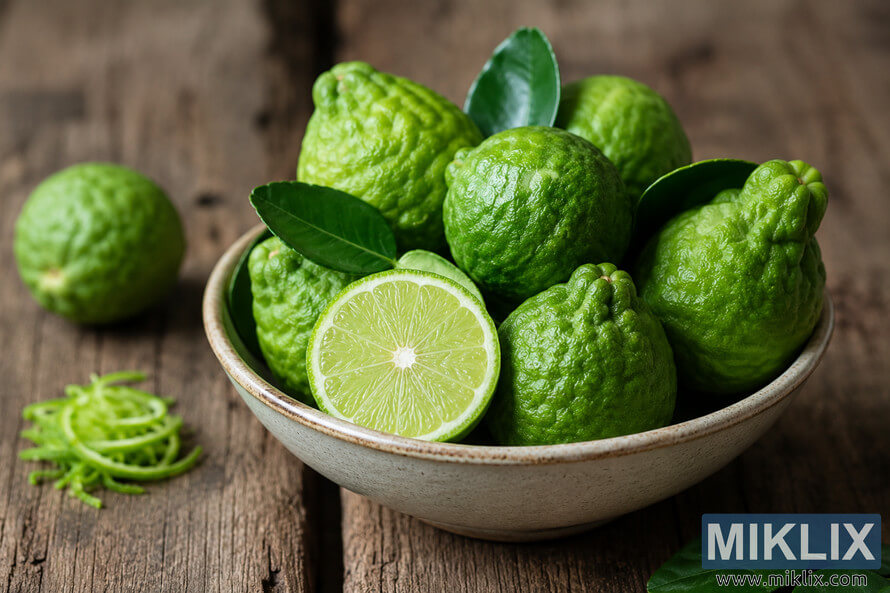
High-resolution still-life photograph of fresh makrut limes arranged in a rustic ceramic bowl on a weathered wooden table, featuring a halved lime, glossy leaves, and natural warm lighting.
Makrut Limes in a Rustic Ceramic Bowl on a Wooden Table
Verfügbare Versionen dieses Bildes
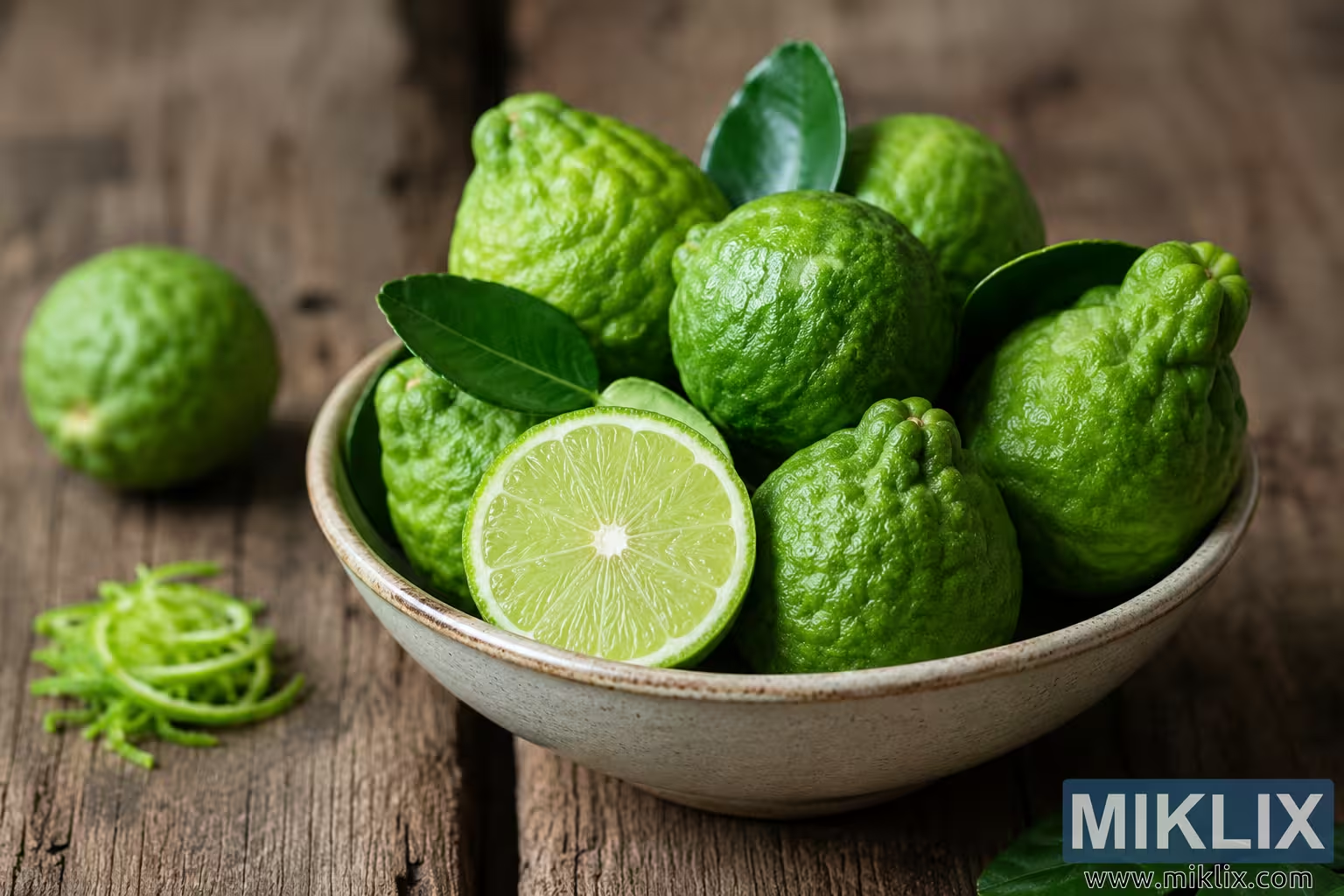
Die Bilddateien, die unten zum Download zur Verfügung stehen, sind weniger komprimiert und haben eine höhere Auflösung - und damit eine höhere Qualität - als die Bilder, die in Artikeln und Seiten auf dieser Website eingebettet sind, die mehr auf Dateigröße optimiert sind, um den Bandbreitenverbrauch zu reduzieren.
Normale Größe (1,536 x 1,024)
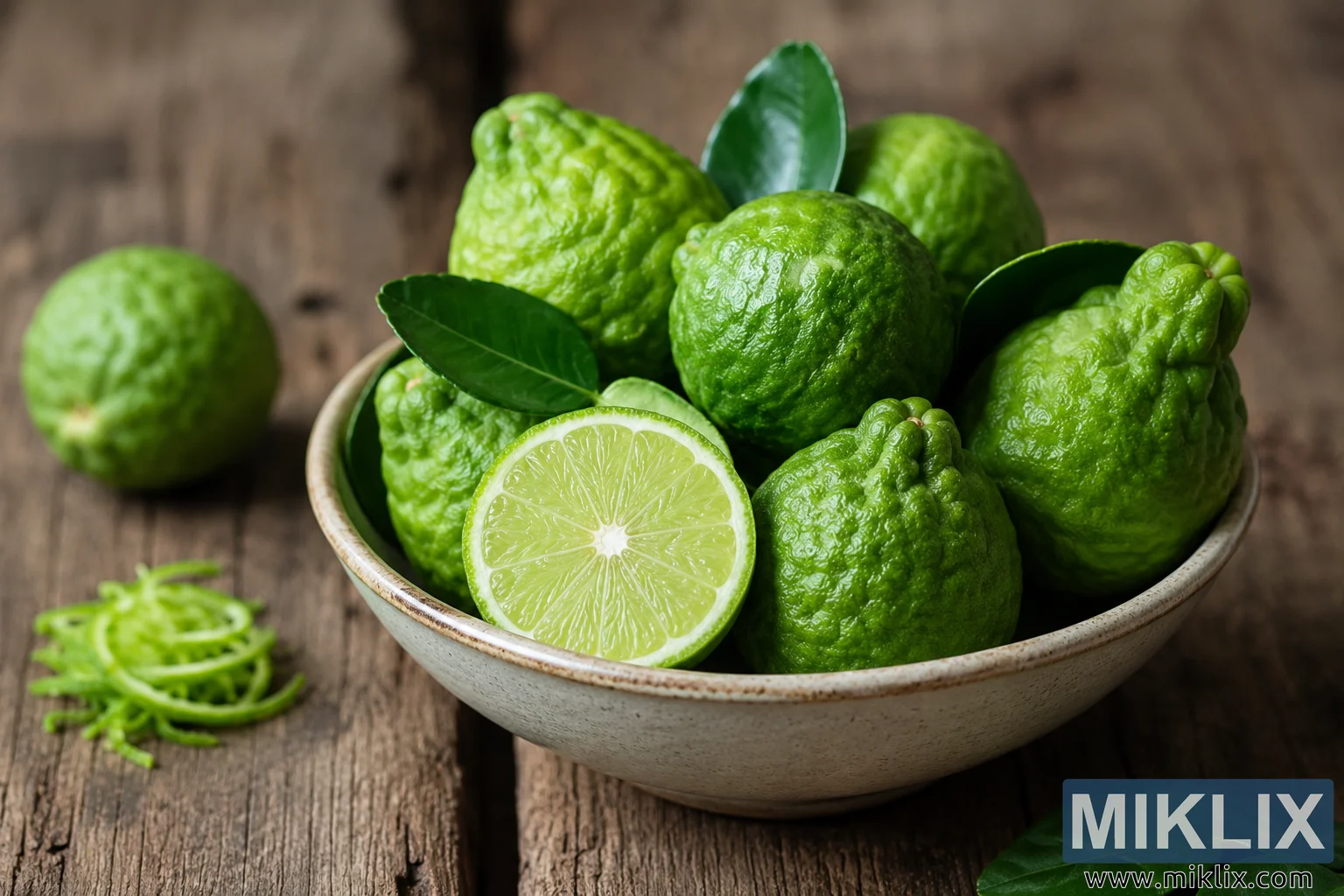
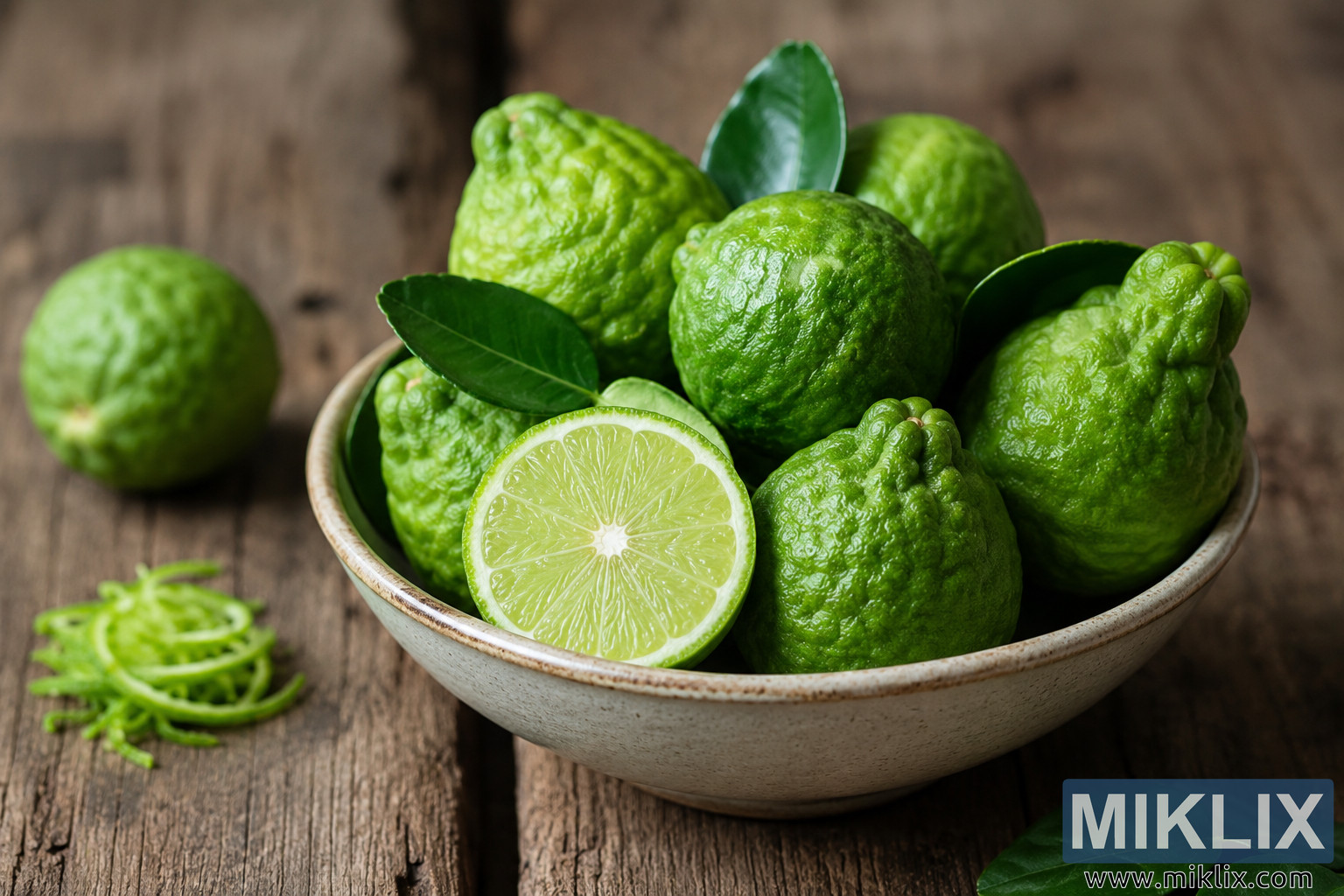
Großes Format (3,072 x 2,048)
Sehr großes Format (4,608 x 3,072)
Extra großes Format (6,144 x 4,096)
Komisch große Größe (1,048,576 x 699,051)
- Ich lade immer noch hoch... ;-)
Bildbeschreibung
This high-resolution still-life image presents a carefully arranged collection of fresh makrut limes displayed in a shallow ceramic bowl positioned on a weathered rustic wooden table. The composition emphasizes the natural beauty of the fruit through soft, directional lighting that highlights the richly textured rind characteristic of makrut limes. Their distinctive bumpy and uneven surfaces create visual interest while reflecting subtle highlights that enhance the impression of freshness. The bowl occupies the foreground and serves as the focal point of the image, drawing the viewer's attention toward the vibrant green fruit clustered together in an organic arrangement.
At the front of the bowl, one makrut lime has been sliced cleanly in half and positioned so that its interior faces the viewer. The exposed flesh reveals delicate radial segments in pale green and yellowish tones that contrast gently with the darker outer rind. Tiny juice vesicles and the central white pith are visible, adding realism and emphasizing the fruit's freshness. The cut surface catches the light evenly, creating a natural focal point that balances the composition while providing visual variety among the whole fruits.
The remaining whole makrut limes vary slightly in size, shape, and surface texture, making the arrangement appear authentic rather than overly uniform. Some fruits display pronounced ridges and irregular contours, while others appear somewhat smoother, yet all retain the unmistakable textured skin associated with the variety. Their vivid green coloration ranges from bright lime green to deeper emerald shades, producing a pleasing variation that contributes depth and realism.
Several glossy green citrus leaves are tucked naturally among the fruit. Their smooth surfaces and deep green color contrast beautifully with the rough texture of the limes, introducing additional visual balance. The leaves catch gentle highlights that reinforce the soft lighting throughout the scene. Near the lower left corner of the composition rests a small pile of finely curled strips of lime zest. The thin spirals provide another textural element while subtly suggesting culinary preparation without distracting from the primary subject.
The ceramic bowl itself features a simple handcrafted appearance with a neutral beige glaze and a slightly darker rim. Its understated design complements the rustic aesthetic without competing for attention. The matte finish contrasts with the glossy fruit and leaves, adding another layer of tactile richness to the scene. The bowl is filled generously, allowing several fruits to rise above the rim while maintaining a balanced and harmonious arrangement.
The supporting surface consists of aged wooden planks marked by visible grain patterns, cracks, knots, and weathered imperfections. These natural characteristics provide warmth and authenticity while reinforcing the rustic atmosphere. The wood's muted brown tones create an ideal backdrop for the vibrant green citrus, allowing the fruit to stand out prominently. The shallow depth of field gradually softens the background, ensuring that attention remains focused on the bowl and its contents while preserving enough detail to communicate the texture of the table.
Lighting appears soft and diffused, likely entering from one side, producing delicate shadows that define the shapes of the fruit without creating harsh contrast. The illumination enhances the three-dimensional quality of the arrangement, revealing subtle variations in color, curvature, and texture. Reflections remain controlled and natural, avoiding excessive glare while preserving a realistic photographic appearance.
Overall, the image conveys freshness, simplicity, and an appreciation for natural ingredients. Its earthy palette of greens and warm wood tones creates a calm and inviting atmosphere suitable for editorial food photography, recipe illustrations, culinary blogs, agricultural publications, kitchen décor, or promotional material celebrating fresh citrus ingredients. The composition combines careful styling with an organic presentation, resulting in a timeless still-life photograph that emphasizes texture, color harmony, and the understated elegance of freshly harvested makrut limes.
Das Bild ist verwandt mit: Health Benefits of Limes: Your Complete Nutrition Guide