
Bild: Rustic Still Life of Fresh Limes and Homemade Pickled Vegetables
Veröffentlicht:
Zuletzt aktualisiert: 29. Juli 2026 um 22:16:53 UTC
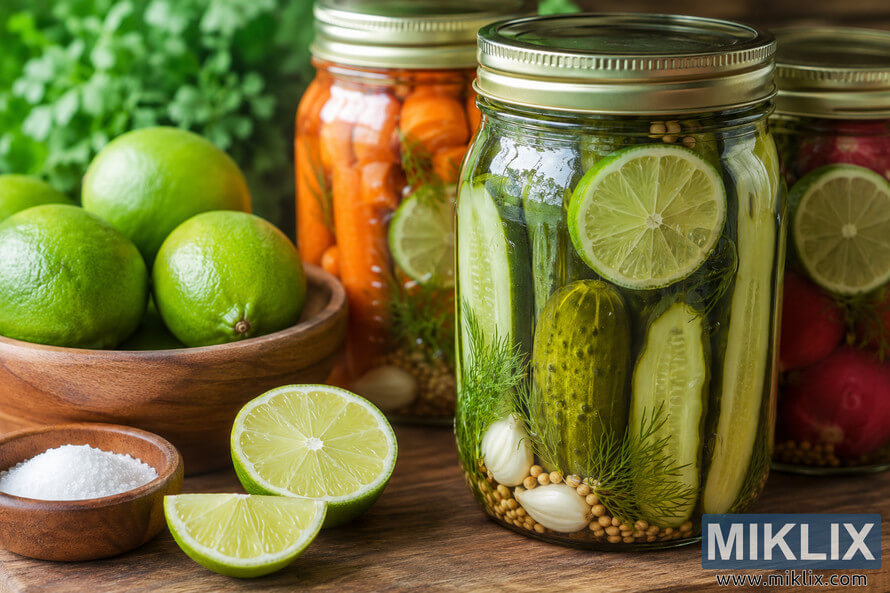
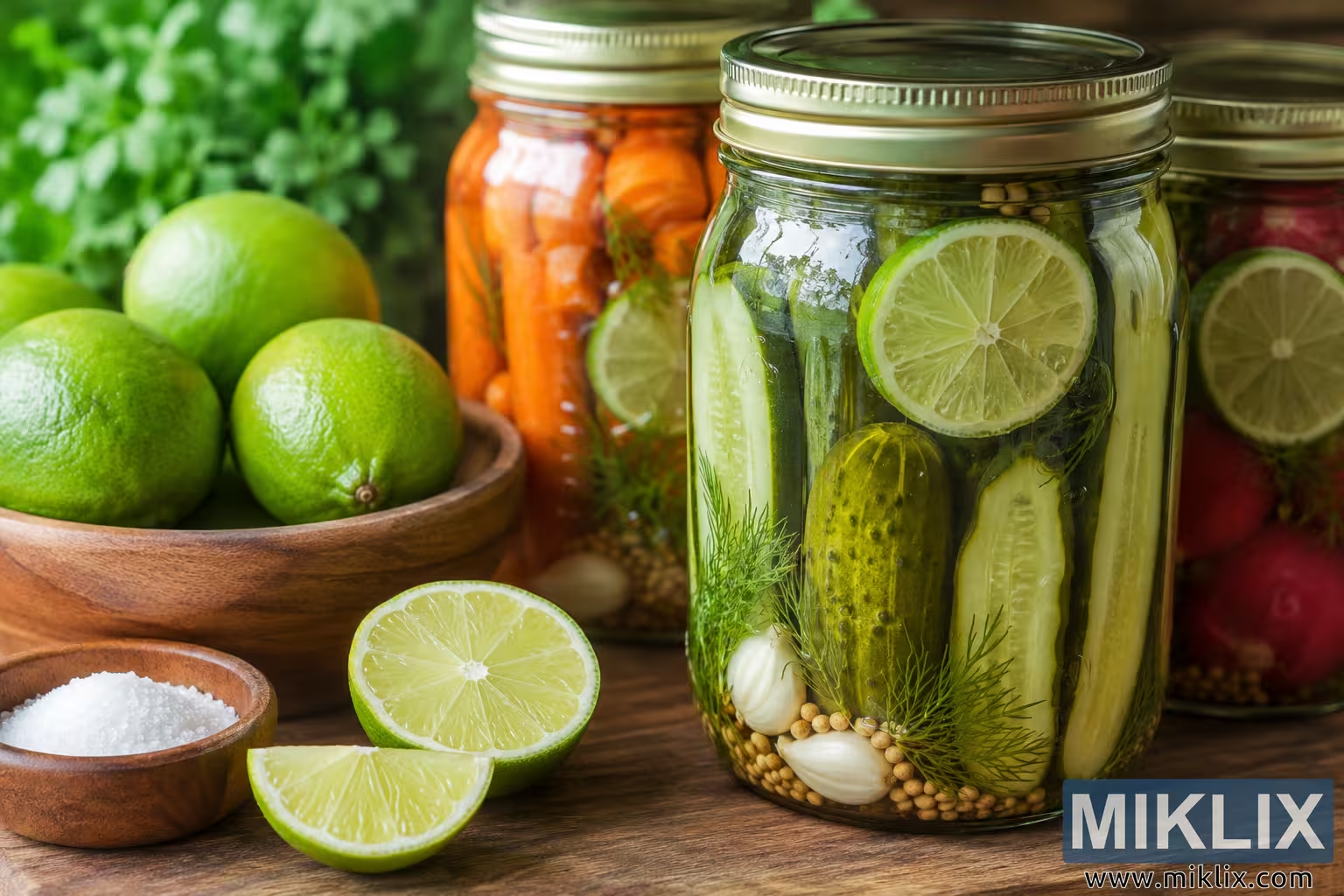
Landscape still life featuring fresh limes, homemade pickled vegetables, glass preserving jars, herbs, garlic, mustard seeds, and rustic wooden surfaces, illustrating traditional vegetable preservation in a warm farmhouse-style kitchen setting.
Rustic Still Life of Fresh Limes and Homemade Pickled Vegetables
Verfügbare Versionen dieses Bildes
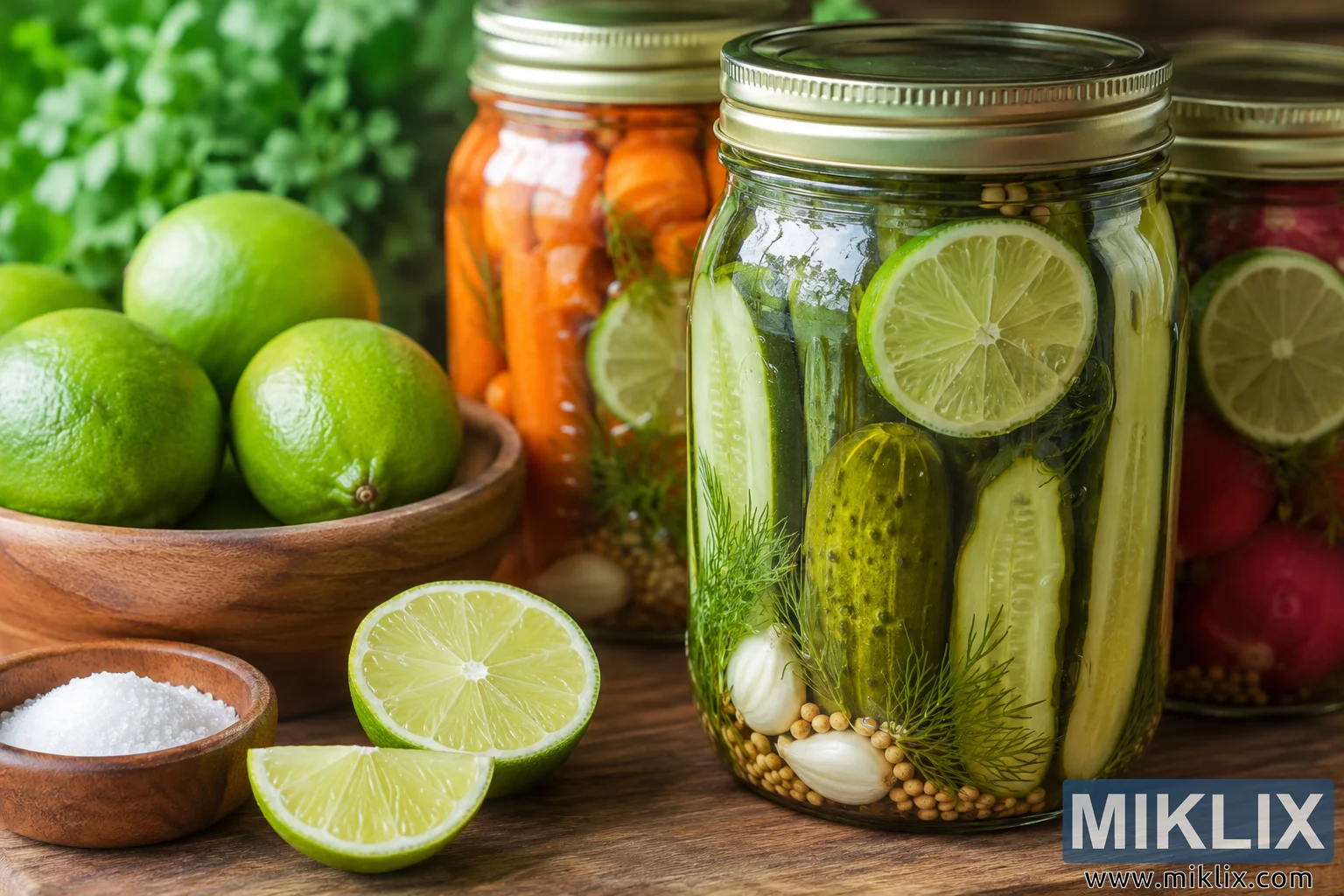
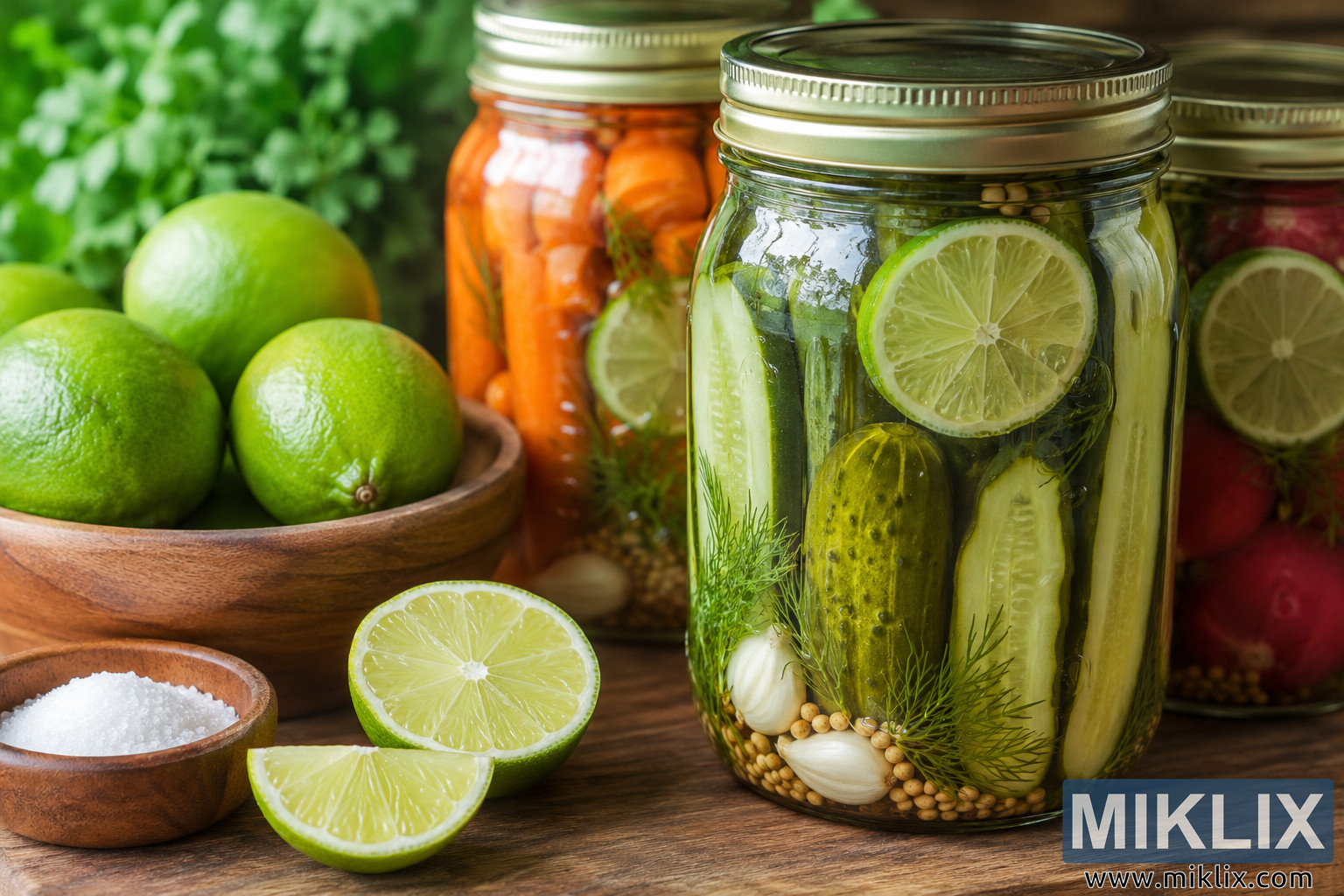
Die Bilddateien, die unten zum Download zur Verfügung stehen, sind weniger komprimiert und haben eine höhere Auflösung - und damit eine höhere Qualität - als die Bilder, die in Artikeln und Seiten auf dieser Website eingebettet sind, die mehr auf Dateigröße optimiert sind, um den Bandbreitenverbrauch zu reduzieren.
Normale Größe (1,536 x 1,024)
Großes Format (3,072 x 2,048)
Sehr großes Format (4,608 x 3,072)
Extra großes Format (6,144 x 4,096)
Komisch große Größe (1,048,576 x 699,051)
- Ich lade immer noch hoch... ;-)
Bildbeschreibung
This landscape-oriented still life presents a warm, inviting scene inspired by the traditional practice of preserving vegetables. The composition is arranged on a richly textured wooden tabletop that enhances the rustic atmosphere and evokes the feeling of a farmhouse kitchen or pantry where seasonal harvests are carefully prepared for long-term storage. Soft natural light enters from the left side of the frame, gently illuminating the ingredients and glass jars while creating subtle highlights and realistic reflections on the smooth surfaces. The overall color palette is dominated by fresh greens, warm browns, golden highlights, and the vibrant colors of preserved vegetables, resulting in an image that feels fresh, wholesome, and handcrafted.
In the foreground on the left, a medium-sized wooden bowl contains several whole green limes. Their pebbled skins display natural texture with small pores and slight variations in color, ranging from bright lime green to deeper green tones. Adjacent to the bowl rests a shallow wooden dish filled with coarse white crystals, suggesting salt as one of the key ingredients commonly associated with food preservation. In front of the bowl, a lime has been sliced in half, exposing its translucent pale-green interior. Individual juice vesicles radiate outward from the center, while another wedge lies nearby with its moist flesh catching the incoming light. The freshly cut citrus provides a vivid focal point and introduces a sense of freshness to the arrangement.
Dominating the right side of the composition is a large clear glass preserving jar fitted with a plain metallic screw-top lid that carries no visible branding or labels. Inside the jar are whole and sliced cucumbers immersed in clear brine together with sprigs of fresh dill, several peeled garlic cloves, and scattered mustard seeds resting near the bottom. Thin circular slices of lime are positioned against the inside of the glass, adding visual interest and reinforcing the citrus theme. Tiny air bubbles suspended in the liquid contribute to the realistic appearance and suggest a freshly prepared batch of preserved vegetables. The transparent glass produces subtle reflections and refractions, emphasizing the clarity of the brine while allowing each ingredient to remain easily visible.
Behind the main jar, additional preserving jars recede softly into the background. One contains bright orange carrot pieces, while another displays red vegetables that resemble radishes or similarly colored produce. These background jars are intentionally rendered with a shallow depth of field so they remain recognizable without competing for attention with the primary subject. Their softly blurred appearance creates depth and draws the viewer's eye naturally toward the sharply focused foreground elements.
Fresh herbs and leafy greenery occupy the upper left background, creating a soft natural backdrop that complements the preserved vegetables. The herbs appear lush and healthy, reinforcing the idea of recently harvested produce ready for preservation. The wooden cutting surface beneath the jars exhibits visible grain patterns, knots, and subtle imperfections that contribute authenticity and warmth to the composition. Gentle shadows fall naturally beneath the bowl, jars, and citrus fruit, helping each object feel grounded within the scene.
Although the original prompt references lime used in preservation, the resulting image visually emphasizes fresh citrus fruit alongside traditional pickling ingredients rather than depicting food-grade hydrated lime or pickling lime as a separate substance. Instead, the scene communicates the broader theme of home preservation through recognizable elements such as glass jars, cucumbers, carrots, herbs, garlic, mustard seeds, salt, and citrus. The absence of commercial packaging, labels, logos, or identifiable brands gives the image a timeless, homemade character suitable for educational materials, recipe articles, gardening publications, food blogs, kitchen décor, or informational content about preserving seasonal produce. The lighting remains soft and balanced throughout the composition, preserving fine detail while maintaining a welcoming atmosphere. Overall, the image conveys craftsmanship, freshness, and the enduring tradition of preserving vegetables using simple ingredients in a clean, rustic setting that celebrates home cooking and pantry preparation.
Das Bild ist verwandt mit: Health Benefits of Limes: Your Complete Nutrition Guide