
Bild: Healthy Heart with Fresh Okra and Cardiovascular System Medical Illustration
Veröffentlicht:
Zuletzt aktualisiert: 30. Juli 2026 um 18:37:14 UTC
High-resolution landscape illustration depicting fresh okra alongside a detailed human cardiovascular system with an anatomically accurate heart and healthy blood vessel cross-section, symbolizing nutrition, heart health, circulation, and cardiovascular wellness.
Healthy Heart with Fresh Okra and Cardiovascular System Medical Illustration
Verfügbare Versionen dieses Bildes
Die Bilddateien, die unten zum Download zur Verfügung stehen, sind weniger komprimiert und haben eine höhere Auflösung - und damit eine höhere Qualität - als die Bilder, die in Artikeln und Seiten auf dieser Website eingebettet sind, die mehr auf Dateigröße optimiert sind, um den Bandbreitenverbrauch zu reduzieren.
Normale Größe (1,536 x 1,024)
Großes Format (3,072 x 2,048)
Sehr großes Format (4,608 x 3,072)
Extra großes Format (6,144 x 4,096)
Komisch große Größe (1,048,576 x 699,051)
- Ich lade immer noch hoch... ;-)
Bildbeschreibung
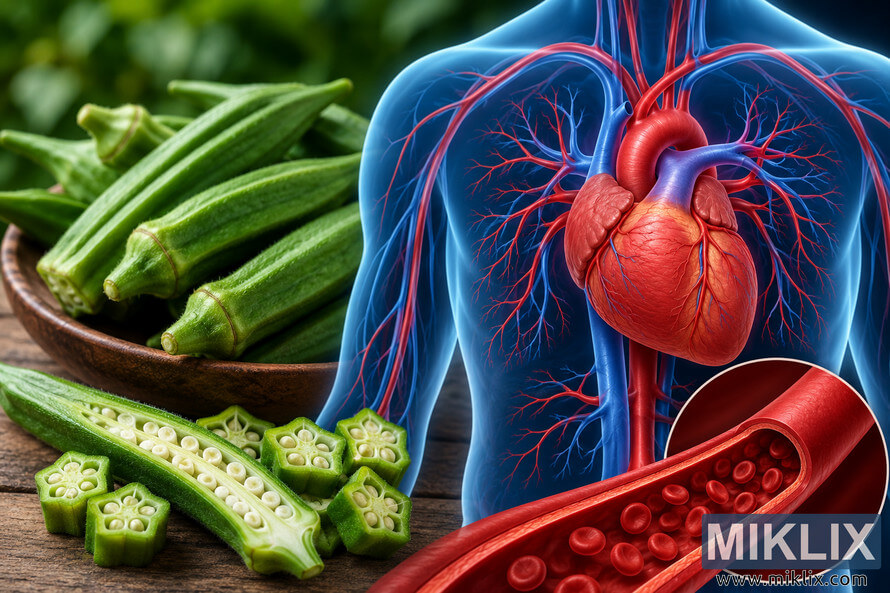
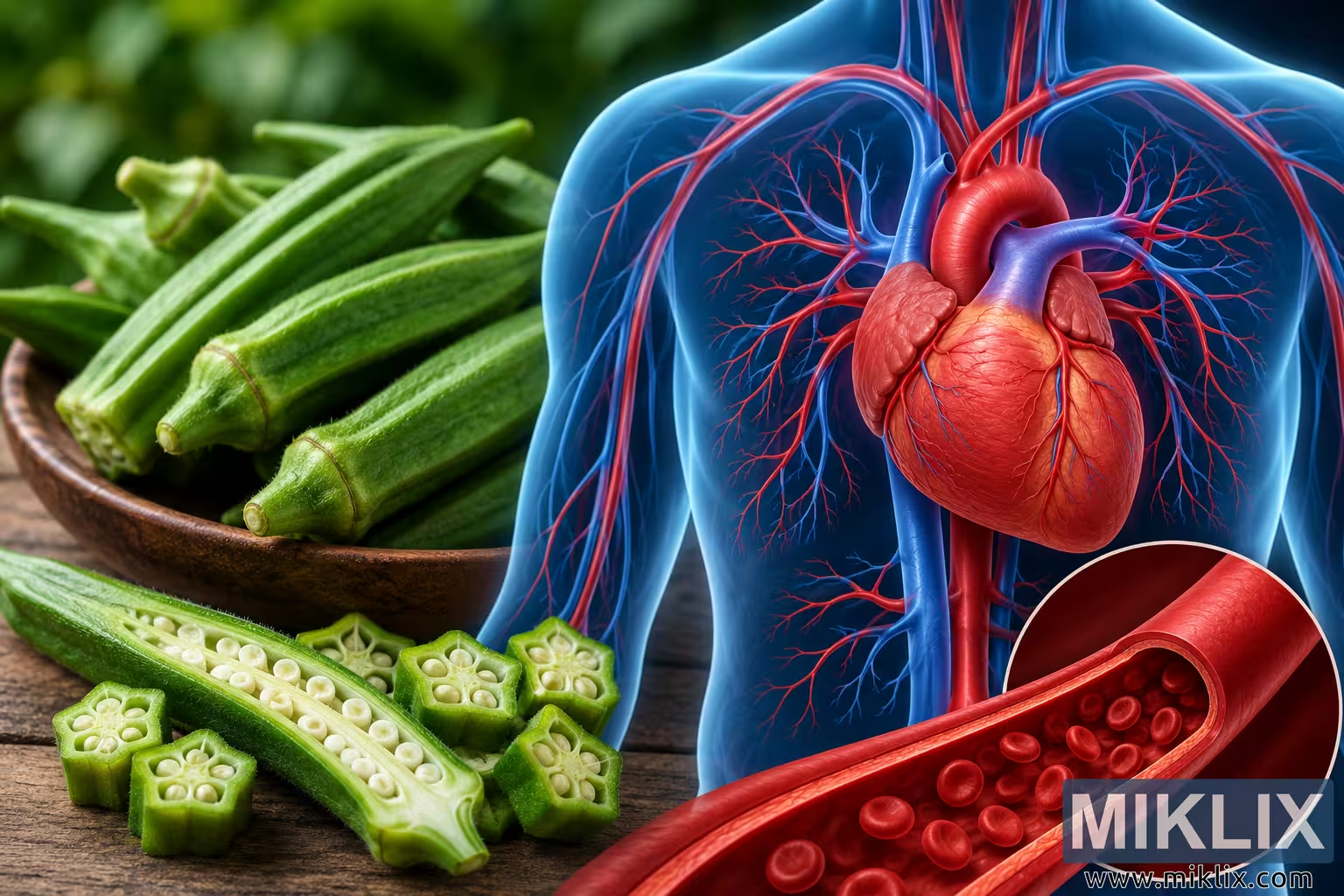
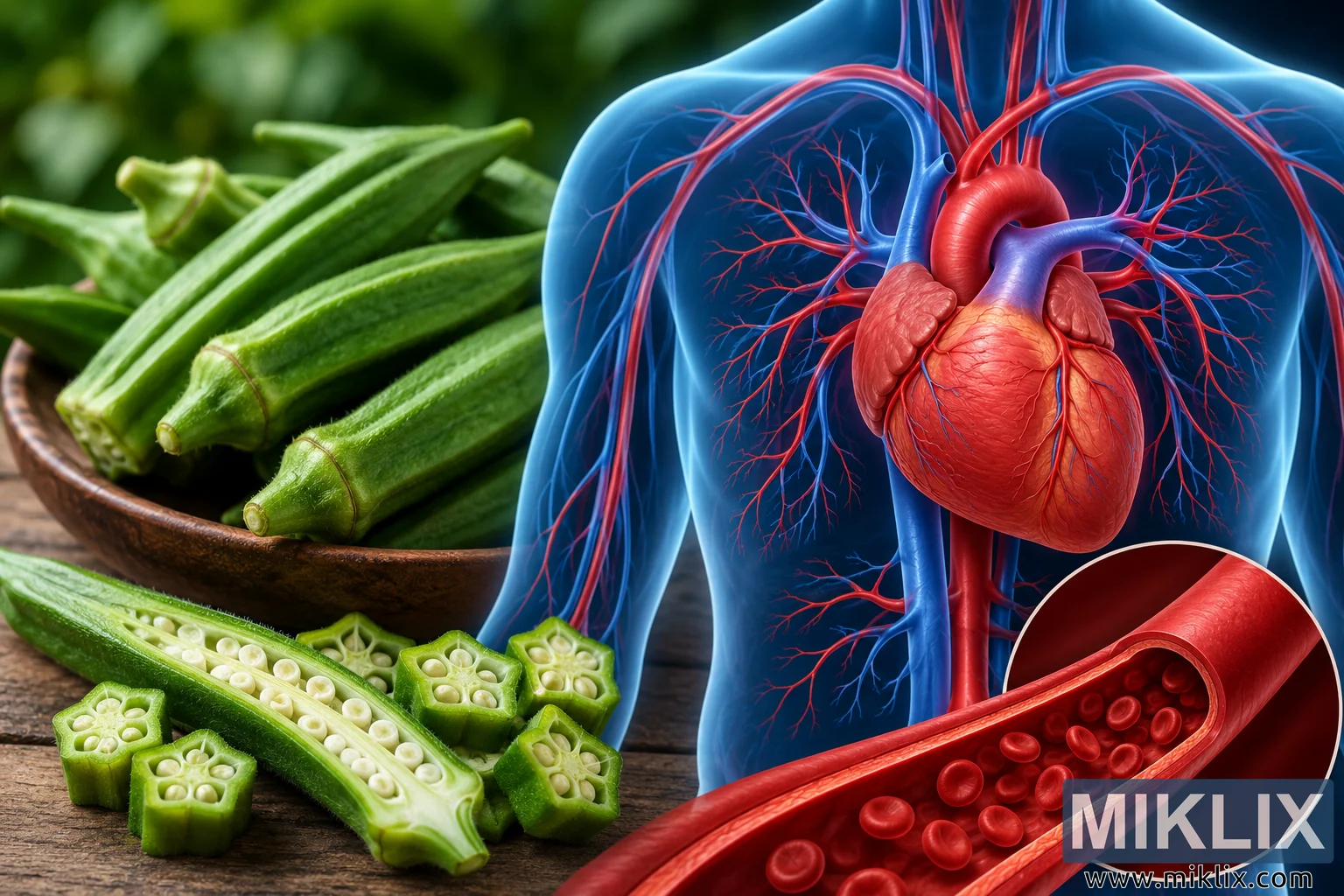
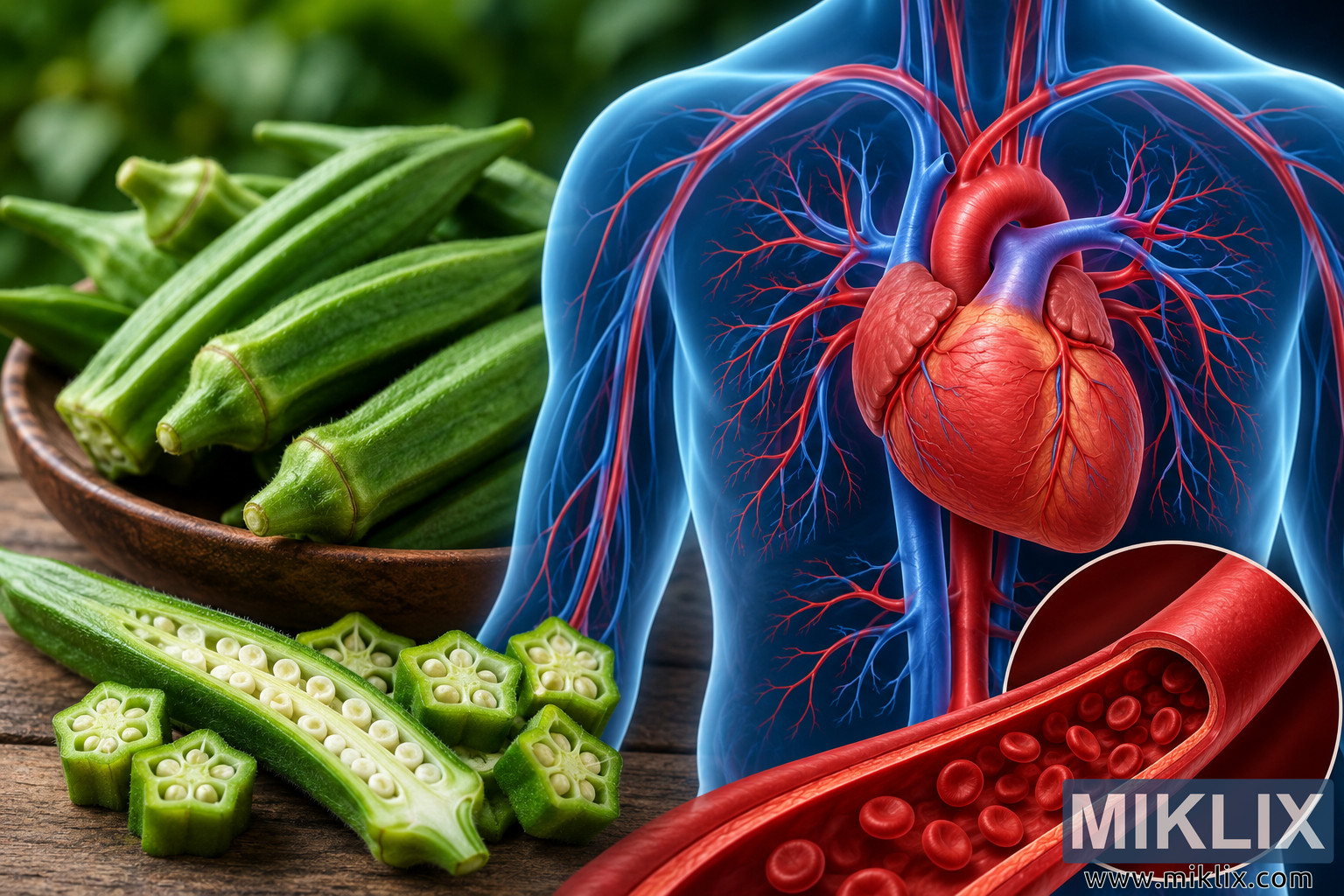
This landscape-oriented illustration presents a visually balanced composition that combines fresh vegetables with a detailed medical representation of the human cardiovascular system. The image is divided naturally into two complementary visual themes. On the left side, fresh green okra pods are arranged on a rustic wooden tabletop inside and around a wooden bowl. Several whole pods display their characteristic elongated shape, gently tapered tips, and textured ridges running lengthwise along each vegetable. In the foreground, one okra pod has been sliced lengthwise to reveal its pale interior and rows of small round seeds. Additional cross-sectional slices are scattered nearby, each displaying the recognizable star-shaped pattern formed by the vegetable's internal chambers. The vibrant green coloration of the okra contrasts with the warm brown tones of the wooden surface, while a softly blurred green background evokes the feeling of a fresh garden or natural outdoor environment. The shallow depth of field keeps the vegetables in crisp focus while allowing the background to remain unobtrusive.
Occupying the right side of the composition is a stylized, semi-transparent illustration of the upper human torso rendered in cool blue tones. Within the transparent chest cavity sits a large, anatomically detailed heart illustrated in vivid shades of red and pink. The heart is positioned centrally in the thoracic region and is connected to an extensive network of arteries and veins that branch naturally throughout the chest, shoulders, and upper torso. Bright red arterial vessels and cool blue venous vessels create an easily distinguishable circulatory network that emphasizes the complexity of the cardiovascular system. The major vessels emerge prominently from the heart before dividing into progressively smaller branches, producing an educational yet visually engaging anatomical display.
In the lower right corner, a circular magnified inset provides a close-up cross-sectional view of a healthy blood vessel. The vessel wall appears smooth and unobstructed, with numerous red blood cells flowing freely through the open lumen. The clean interior of the artery symbolizes healthy circulation and unrestricted blood flow. The inset reinforces the cardiovascular theme by highlighting the microscopic perspective of the circulatory system while complementing the larger anatomical illustration above.
The overall lighting is bright, even, and high in contrast, giving the scene a polished, professional appearance suitable for educational, editorial, healthcare, or wellness-related content. Rich natural greens dominate the food portion of the image, while vibrant reds and cool blues distinguish the anatomical elements, creating a harmonious color palette that immediately communicates themes of nutrition and cardiovascular health. The transition between the food imagery and the medical illustration is seamless, allowing both subjects to coexist without appearing disconnected.
No people are physically present in the scene. Instead, the transparent torso serves as an anatomical visualization rather than a portrait of an individual. The image contains no visible text, logos, trademarks, product packaging, watermarks, or commercial branding of any kind. The composition leaves moderate areas of uncluttered space that could accommodate additional editorial text or graphic overlays if used in publications, presentations, websites, healthcare brochures, nutrition articles, educational materials, or scientific communications.
The juxtaposition of fresh okra with the healthy cardiovascular illustration symbolically suggests a connection between nutritious dietary choices and heart wellness. Although the illustration does not make explicit medical claims, it visually communicates concepts associated with healthy eating, balanced nutrition, circulation, cardiovascular anatomy, preventive healthcare, wellness education, and lifestyle awareness. The combination of realistic food photography aesthetics with detailed medical visualization creates an image that is both informative and visually compelling, making it suitable for a wide range of educational, medical, nutritional, and health communication purposes while maintaining a clean, modern, and professional visual style.
Das Bild ist verwandt mit: Okra Benefits: How This Nutritious Vegetable Supports Your Health