
Bild: Fresh Onions and Their Nutritional Characteristics
Veröffentlicht:
Zuletzt aktualisiert: 5. August 2026 um 22:49:10 UTC
Explore a vivid landscape image of fresh onions highlighting their nutritional characteristics, including calories, fiber, vitamins, and antioxidants, presented in a visually engaging infographic format.
Fresh Onions and Their Nutritional Characteristics
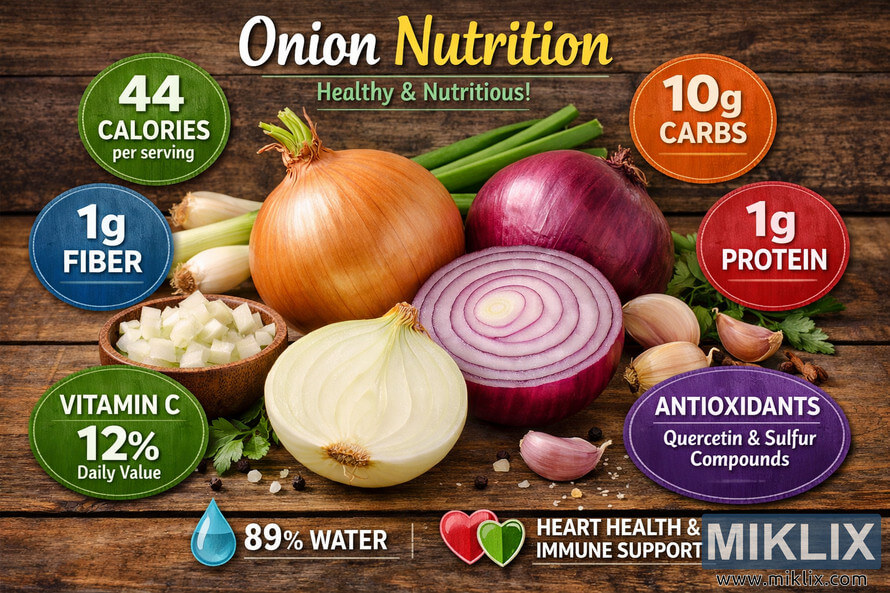
Verfügbare Versionen dieses Bildes
Die Bilddateien, die unten zum Download zur Verfügung stehen, sind weniger komprimiert und haben eine höhere Auflösung - und damit eine höhere Qualität - als die Bilder, die in Artikeln und Seiten auf dieser Website eingebettet sind, die mehr auf Dateigröße optimiert sind, um den Bandbreitenverbrauch zu reduzieren.
Normale Größe (1,536 x 1,024)
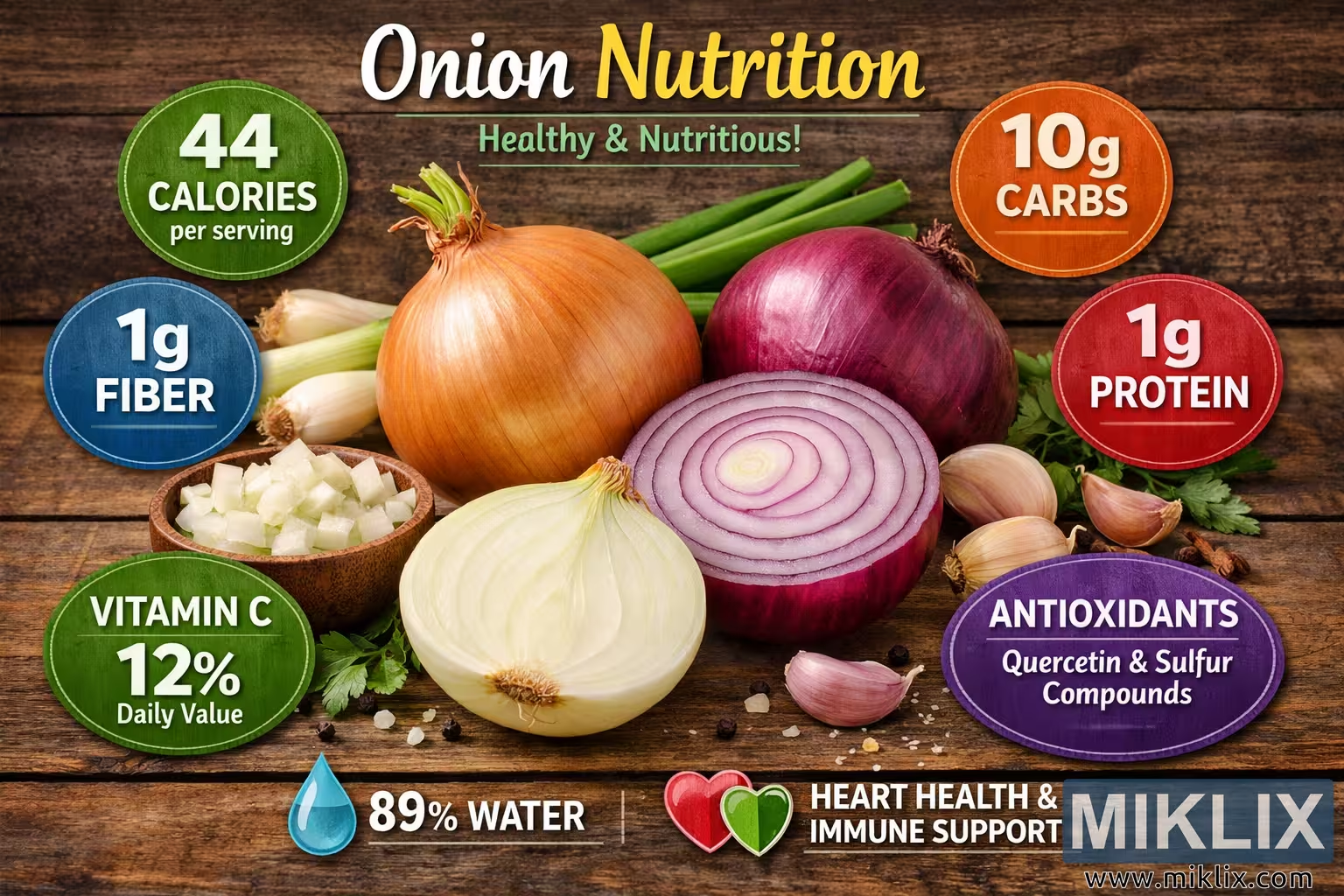
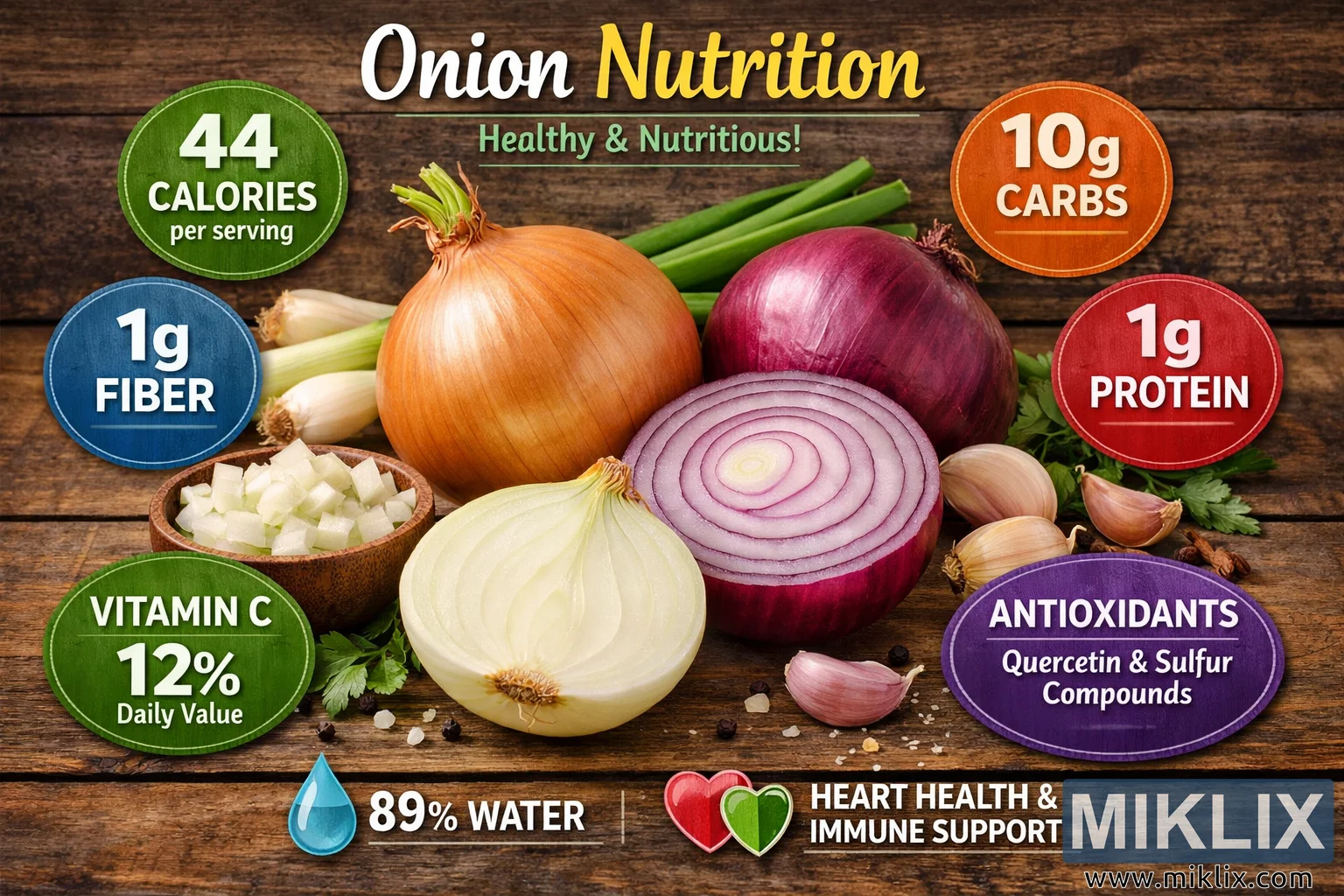
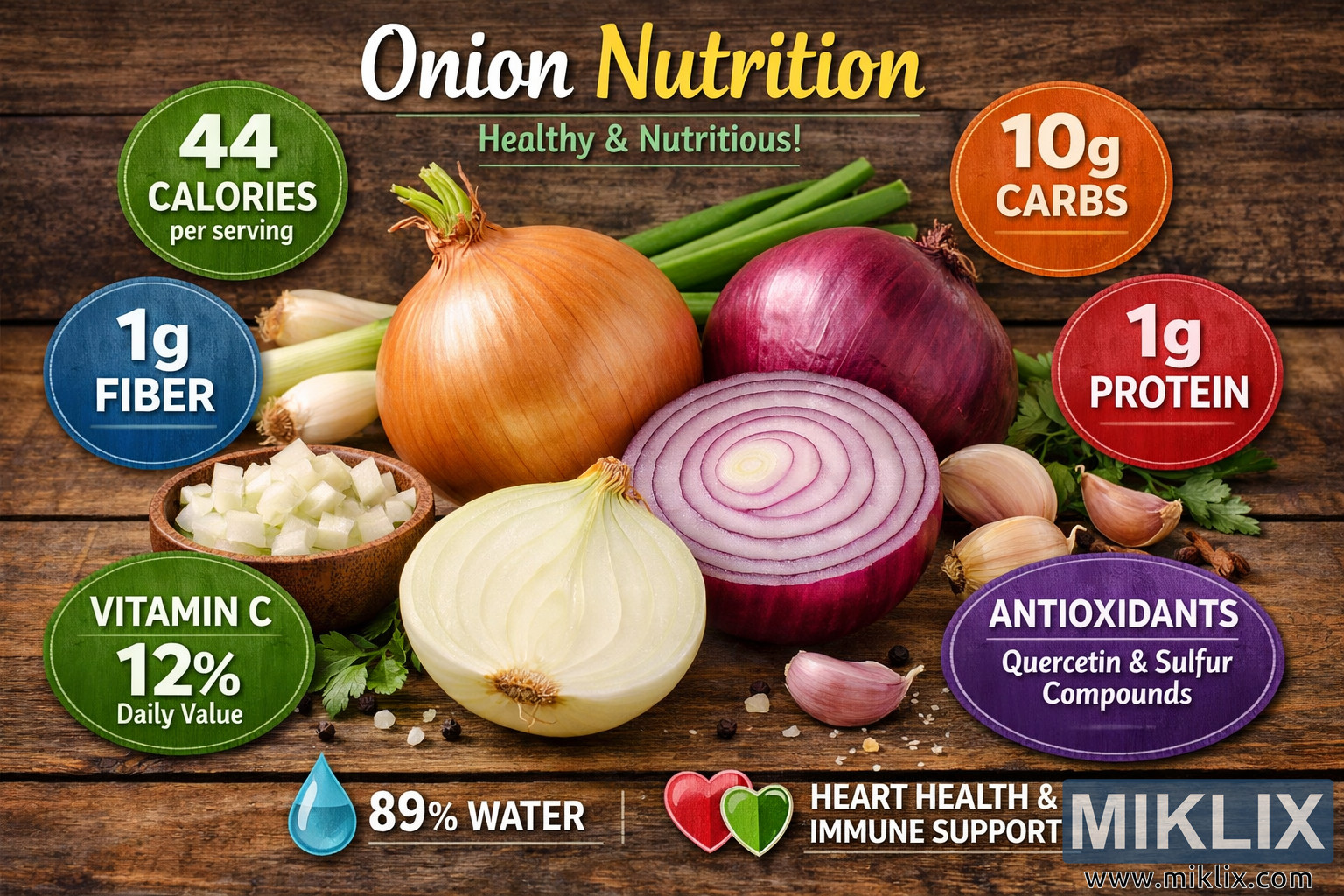
Großes Format (3,072 x 2,048)
Sehr großes Format (4,608 x 3,072)
Extra großes Format (6,144 x 4,096)
Komisch große Größe (1,048,576 x 699,051)
- Ich lade immer noch hoch... ;-)
Bildbeschreibung
The image presents a beautifully composed landscape-oriented photograph that captures the essence of fresh onions and their nutritional attributes in a visually informative and aesthetically pleasing manner. At the center of the composition lies a trio of onions—golden, red, and white—arranged on a rustic wooden surface that evokes a natural, farm-to-table atmosphere. The golden onion, with its papery skin and subtle sheen, sits slightly to the left, its green sprout reaching upward as a symbol of freshness and vitality. To the right, a sliced red onion reveals its intricate concentric rings, each layer glowing with a gradient of purples and whites that emphasize the vegetable’s natural geometry. In the foreground, a halved white onion displays its smooth, creamy interior, contrasting beautifully with the darker tones of the wooden background.
Surrounding these central elements are complementary ingredients and textures that enhance the organic feel of the scene. A small wooden bowl filled with diced white onions rests to the left, while a few green onion stalks extend behind the main subjects, adding depth and a touch of verdant color. Scattered garlic cloves, black peppercorns, and sprigs of parsley punctuate the composition, creating a sense of culinary abundance and freshness. The lighting is soft yet balanced, illuminating the onions and their surroundings with a warm glow that highlights the natural colors and textures without overpowering the scene.
Overlaying the photograph is an infographic-style presentation of nutritional facts, each displayed in circular icons that harmonize with the earthy palette of the image. At the top, the title “Onion Nutrition” appears in bold white and yellow lettering, immediately drawing the viewer’s attention. Beneath it, the tagline “Healthy & Nutritious!” is written in smaller green text, reinforcing the wholesome theme. Six colorful circles are strategically placed around the onions, each representing a key nutritional component. In the top left corner, a green circle announces “44 CALORIES per serving,” emphasizing the onion’s low-calorie nature. To the top right, an orange circle displays “10g CARBS,” while below the calorie icon, a blue circle reads “1g FIBER,” highlighting the vegetable’s digestive benefits. Adjacent to the fiber icon, a red circle states “1g PROTEIN,” underscoring the modest protein content. In the bottom left, a green circle notes “VITAMIN C 12% Daily Value,” and in the bottom right, a purple circle proclaims “ANTIOXIDANTS Quercetin & Sulfur Compounds,” showcasing the onion’s health-promoting properties.
Additional icons at the bottom of the image provide further insights: a water droplet symbol accompanied by “89% WATER” on the left, and a heart and shield icon with the text “HEART HEALTH & IMMUNE SUPPORT” on the right. These elements tie together the nutritional narrative, suggesting that onions contribute not only to flavor but also to overall wellness. The infographic layout is clean and balanced, ensuring that each piece of information is easily readable while maintaining harmony with the photographic background.
The overall color scheme blends natural tones—browns, greens, yellows, and purples—with the vivid hues of the infographic circles, creating a dynamic yet cohesive visual experience. The rustic wooden surface and the organic arrangement of ingredients evoke authenticity, while the modern infographic overlay adds an educational dimension. The image successfully merges art and information, appealing both to culinary enthusiasts and health-conscious viewers.
The depth of field is carefully managed: the onions and nutritional icons are in sharp focus, while the background fades gently into a soft blur, ensuring that the viewer’s attention remains on the central subjects. The lighting direction enhances the textures of the onion skins and the wooden surface, producing subtle shadows that add realism and depth. The composition adheres to the principles of balance and symmetry, with the sliced red onion serving as the visual anchor around which the other elements revolve.
In essence, this image is not merely a photograph but a visual celebration of the onion’s role in nutrition and cuisine. It communicates freshness, health, and natural beauty through its thoughtful arrangement, harmonious color palette, and informative design. The viewer is invited to appreciate both the aesthetic qualities of the onions and their nutritional significance, making this image a perfect blend of artistry and education.
Das Bild ist verwandt mit: Shallots: The Small Vegetable with Big Nutritional Benefits