
Bild: Sautéed Swiss Chard with Garlic and Olive Oil
Veröffentlicht:
Zuletzt aktualisiert: 12. September 2026 um 14:49:58 UTC
A detailed description of a rustic dish featuring sautéed Swiss chard with garlic and olive oil, highlighting the vibrant colors, textures, and warm tones of the composition.
Sautéed Swiss Chard with Garlic and Olive Oil
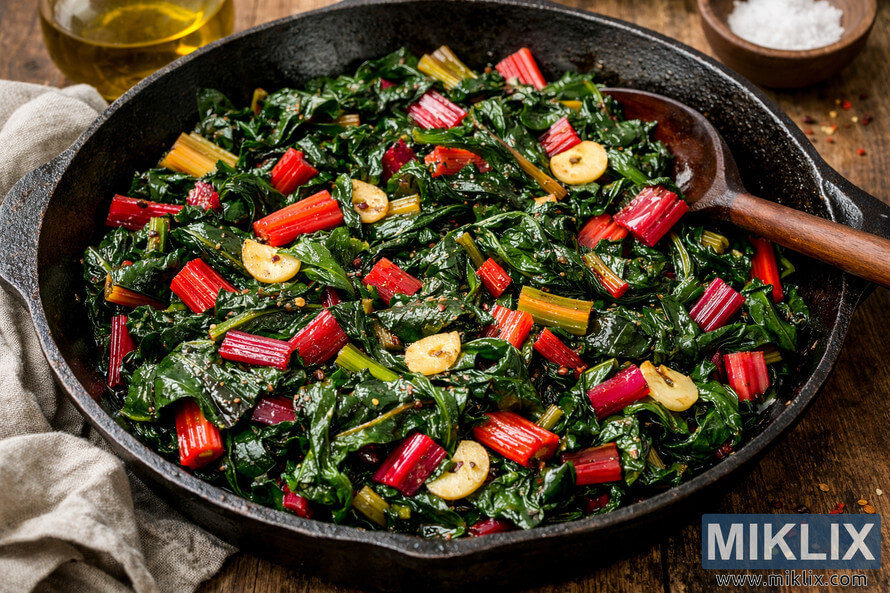
Verfügbare Versionen dieses Bildes
Die Bilddateien, die unten zum Download zur Verfügung stehen, sind weniger komprimiert und haben eine höhere Auflösung - und damit eine höhere Qualität - als die Bilder, die in Artikeln und Seiten auf dieser Website eingebettet sind, die mehr auf Dateigröße optimiert sind, um den Bandbreitenverbrauch zu reduzieren.
Normale Größe (1,536 x 1,024)
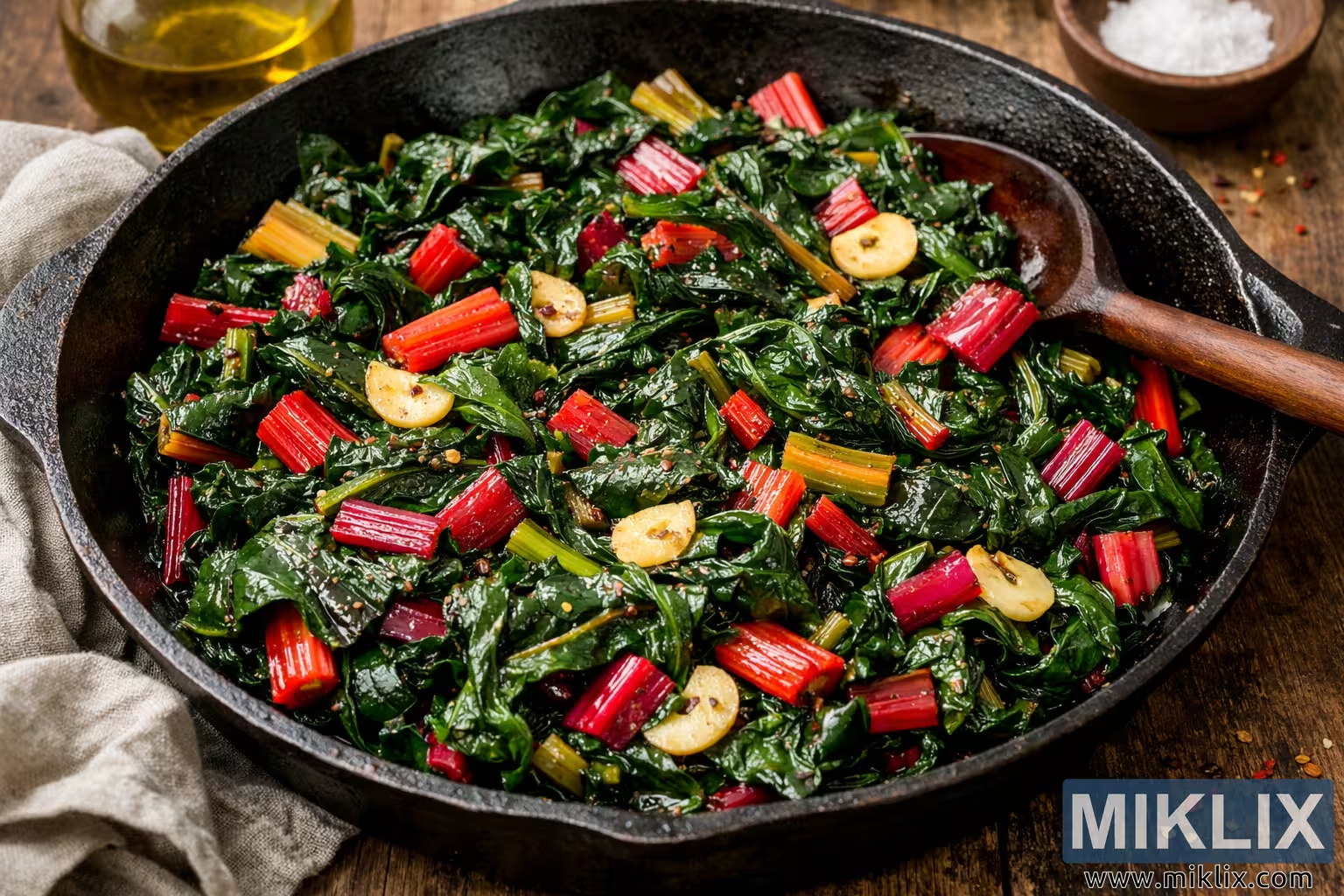
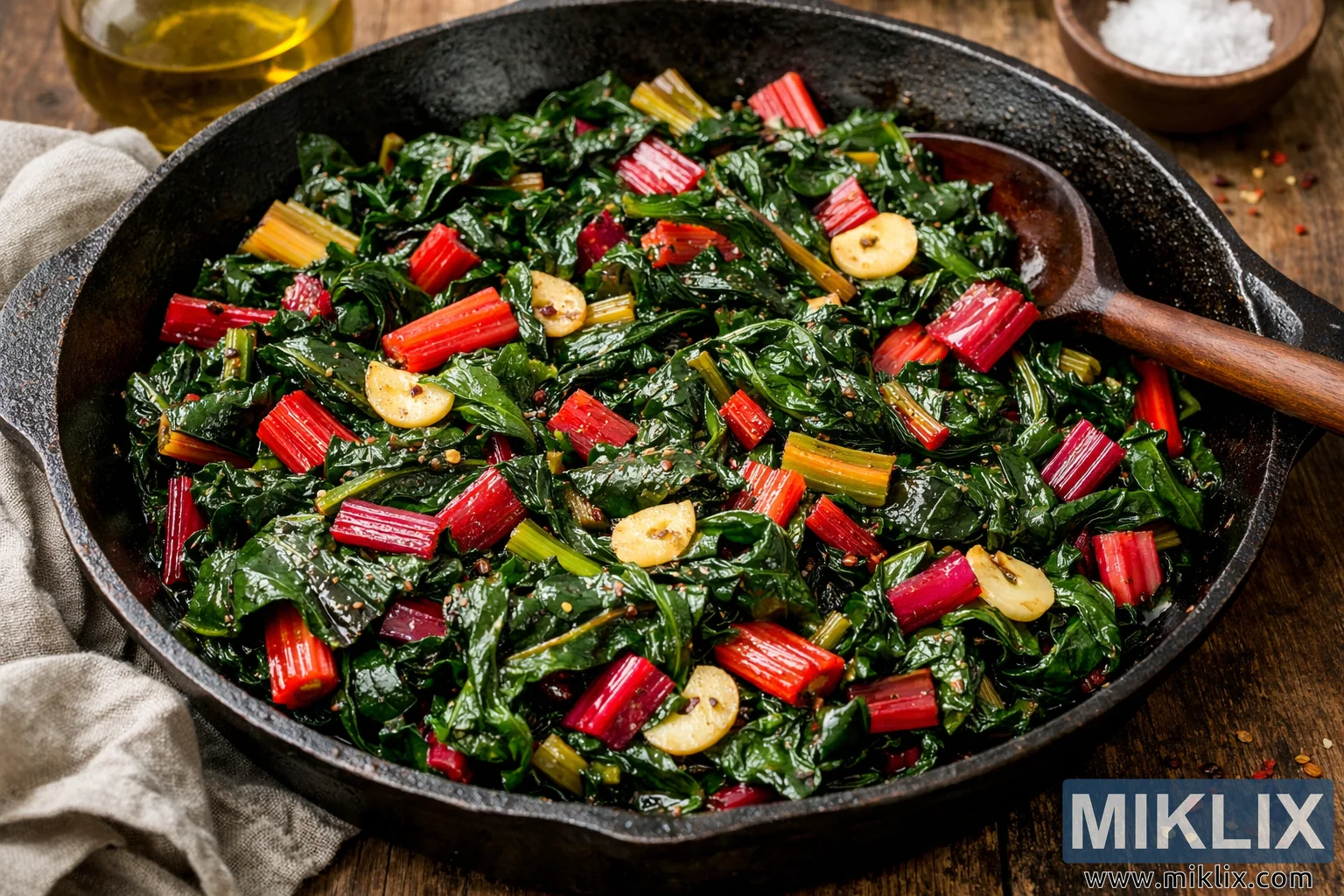
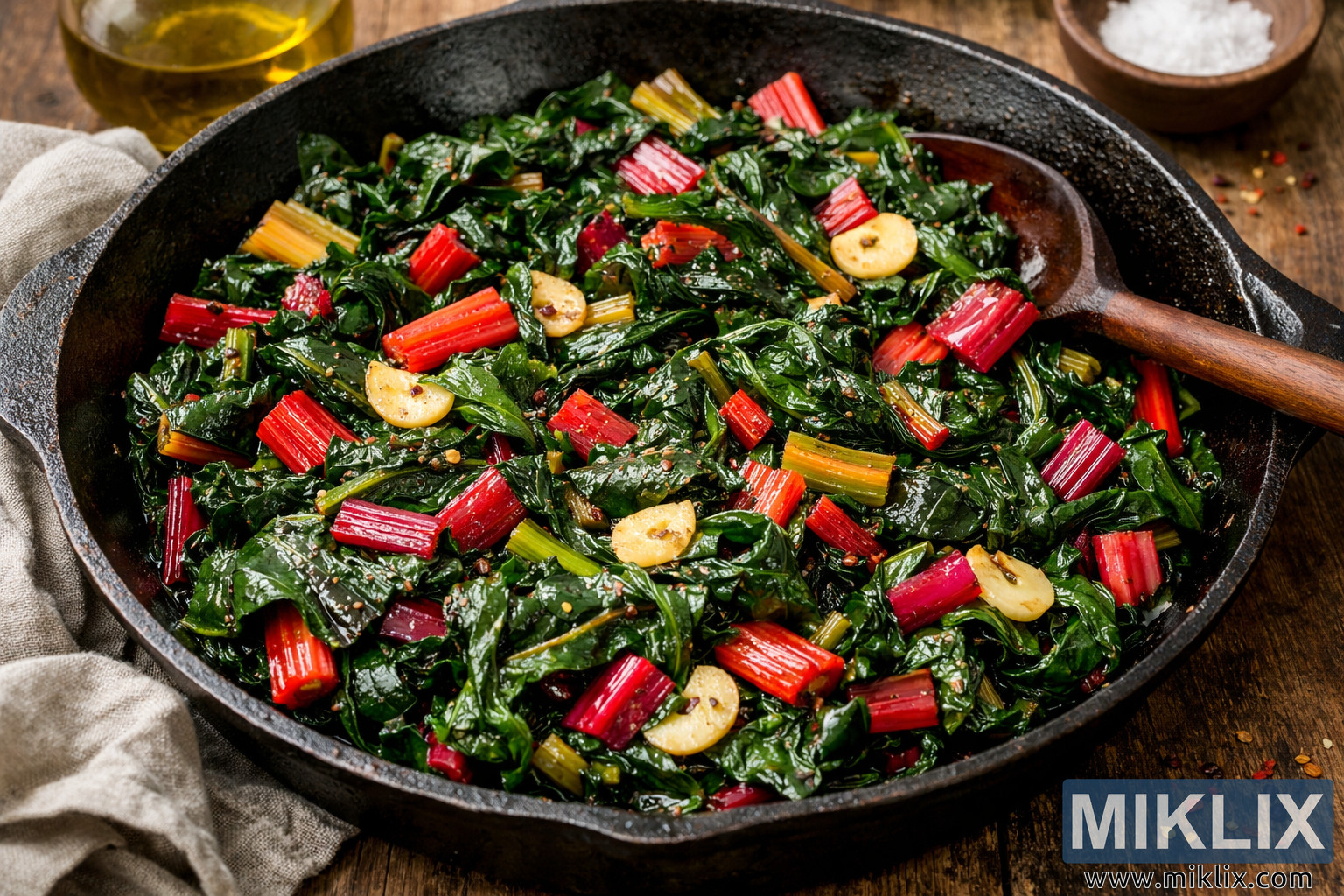
Großes Format (3,072 x 2,048)
Sehr großes Format (4,608 x 3,072)
Extra großes Format (6,144 x 4,096)
Komisch große Größe (1,048,576 x 699,051)
- Ich lade immer noch hoch... ;-)
Bildbeschreibung
The image depicts a beautifully composed culinary scene centered around a rustic cast iron skillet filled with sautéed Swiss chard. The skillet, dark and slightly worn, rests on a textured wooden surface that evokes a sense of warmth and homeliness. The Swiss chard is the star of the composition, its deep green leaves glistening under soft, natural light. The leaves appear tender and slightly wilted, coated in a thin sheen of olive oil that reflects the light in subtle highlights. Interspersed among the greens are the chard’s colorful stems—vivid reds, pinks, and yellows—that have been chopped into small, uniform pieces. These stems provide a striking contrast to the dark greens, creating a vibrant mosaic of color that immediately draws the viewer’s eye.
Golden-brown slices of garlic are scattered throughout the dish, their edges crisped and caramelized from the heat of the pan. The garlic slices are thin and delicate, adding both visual texture and a sense of aroma to the image. Tiny flecks of red pepper flakes and coarse black pepper are visible across the surface of the chard, suggesting a touch of spice and seasoning. The olive oil, rich and golden, pools lightly at the bottom of the skillet, catching the light and adding depth to the composition.
To the left of the skillet, a beige linen cloth lies casually folded, its soft texture contrasting with the hard, rugged surface of the pan and the wooden table beneath. The cloth introduces a sense of domesticity and comfort, as if the dish has just been prepared and set down moments before serving. In the background, slightly out of focus, a glass bottle of olive oil glows with a warm amber hue. Its presence reinforces the Mediterranean simplicity of the dish, hinting at the ingredients that brought the meal to life. On the opposite side, a small wooden bowl filled with coarse salt sits partially visible, accompanied by scattered red pepper flakes that add a touch of spontaneity to the scene.
A wooden spoon with a dark brown handle rests inside the skillet, partially submerged in the chard. Its placement feels natural, as though someone has just stirred the greens and paused to admire the result. The spoon’s smooth, polished surface catches the light, complementing the earthy tones of the composition. The overall lighting is warm and balanced, with gentle highlights emphasizing the glossy textures of the chard and the subtle shadows adding depth and realism.
The photograph’s perspective is slightly angled from above, allowing the viewer to appreciate both the contents of the skillet and the surrounding elements. The focus is sharp on the chard and garlic, while the background fades softly, creating a pleasing sense of depth. The color palette is harmonious—dominated by greens, reds, and warm browns—with the occasional golden accent from the garlic and olive oil. The interplay of colors and textures evokes a feeling of rustic elegance, celebrating the beauty of simple, wholesome ingredients.
Every detail in the image contributes to a narrative of comfort and authenticity. The worn skillet suggests years of use, perhaps passed down through generations, while the wooden table and natural light evoke a countryside kitchen. The dish itself embodies the essence of Mediterranean cooking: fresh produce, minimal seasoning, and a reliance on quality ingredients. The Swiss chard appears both hearty and delicate, its glossy leaves and colorful stems symbolizing nourishment and vitality.
The composition is carefully balanced, with the skillet occupying the central space and the supporting elements arranged organically around it. The textures—the crisp garlic, the tender greens, the smooth olive oil, and the rough wood—create a tactile richness that makes the viewer almost feel the warmth of the pan and the aroma of the sautéed vegetables. The image captures not just a meal but a moment: the quiet satisfaction of cooking, the anticipation of tasting, and the timeless beauty of food prepared with care.
Overall, the photograph is a celebration of simplicity and color. It invites the viewer to appreciate the artistry of everyday cooking, where humble ingredients like Swiss chard, garlic, and olive oil come together to create something visually stunning and deeply appetizing. The scene feels alive with texture and warmth, a testament to the enduring appeal of rustic, home-cooked food.
Das Bild ist verwandt mit: Swiss Chard: Why It Is One of the Healthiest Leafy Greens