
Bild: Skeleton Model with Endive Leaves Illustrating Calcium and Vitamin K for Bone Health
Veröffentlicht:
Zuletzt aktualisiert: 24. Mai 2026 um 15:46:08 UTC
High-resolution educational image of a skeleton model holding endive leaves with chalkboard illustrations explaining the relationship between calcium, vitamin K, and bone health. Ideal for nutrition, wellness, and anatomy content.
Skeleton Model with Endive Leaves Illustrating Calcium and Vitamin K for Bone Health
Verfügbare Versionen dieses Bildes
Die Bilddateien, die unten zum Download zur Verfügung stehen, sind weniger komprimiert und haben eine höhere Auflösung - und damit eine höhere Qualität - als die Bilder, die in Artikeln und Seiten auf dieser Website eingebettet sind, die mehr auf Dateigröße optimiert sind, um den Bandbreitenverbrauch zu reduzieren.
Normale Größe (1,536 x 1,024)
Großes Format (3,072 x 2,048)
Sehr großes Format (4,608 x 3,072)
Extra großes Format (6,144 x 4,096)
Komisch große Größe (1,048,576 x 699,051)
- Ich lade immer noch hoch... ;-)
Bildbeschreibung
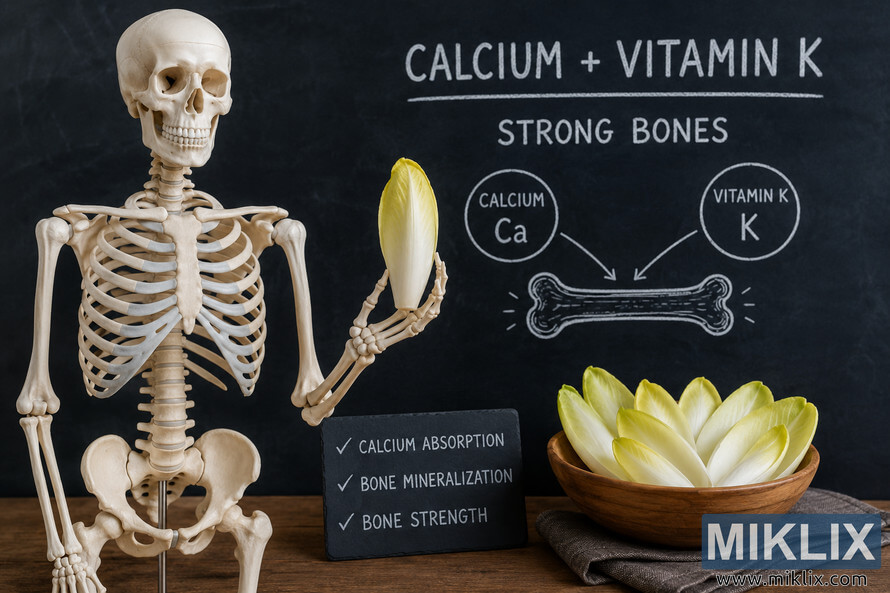
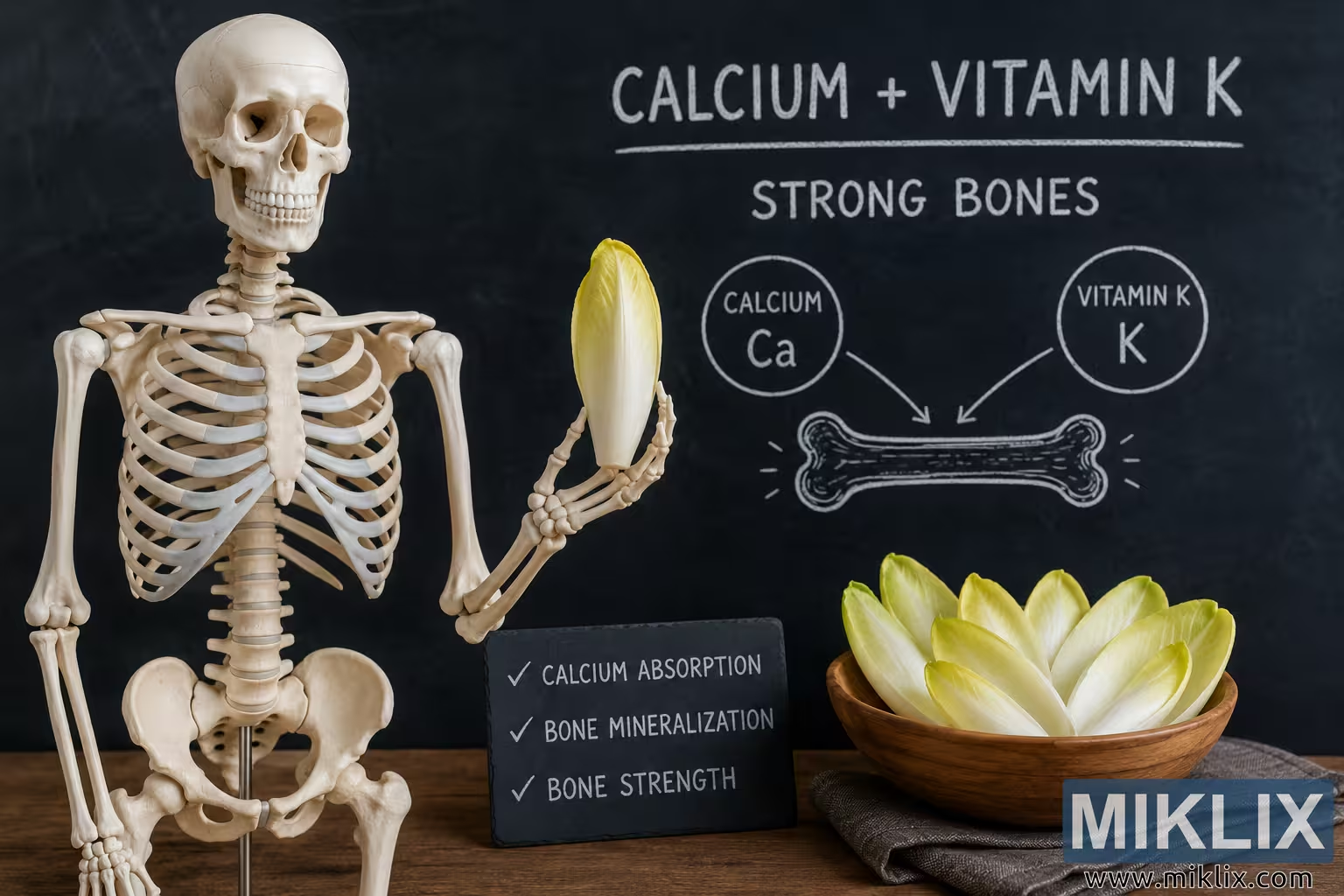
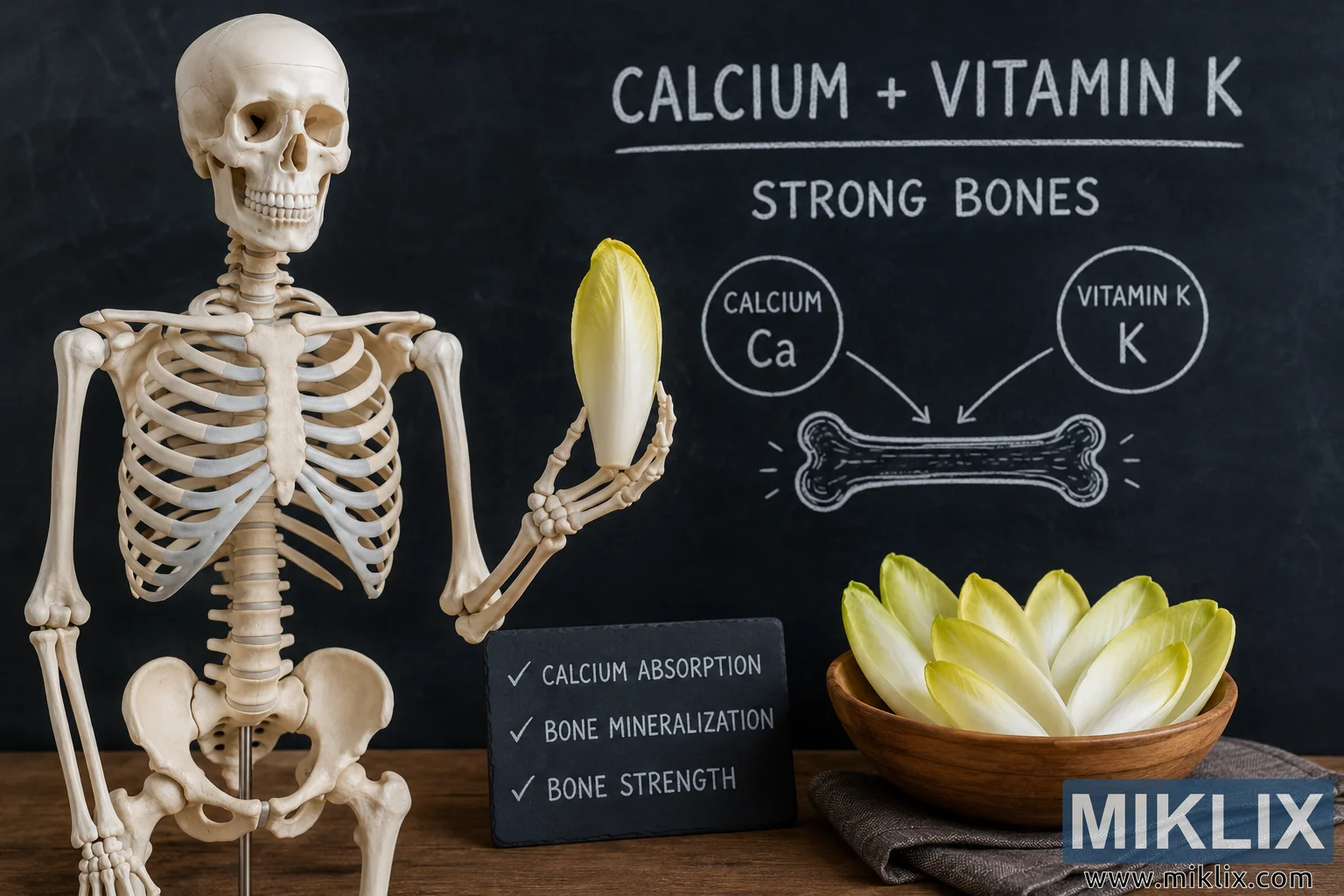
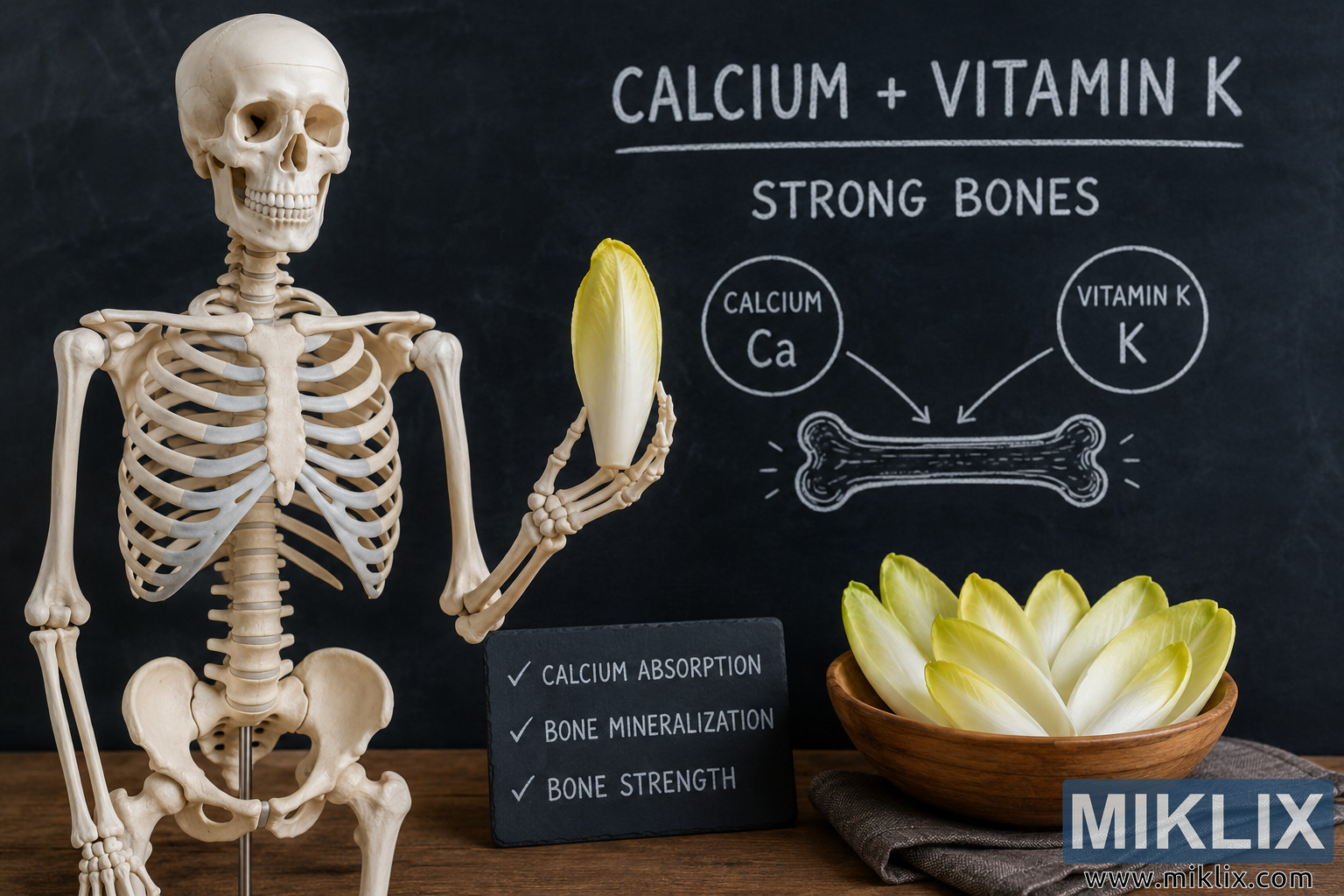
This high-resolution educational still life image presents a carefully arranged composition focused on the relationship between nutrition and skeletal health. The scene is photographed in landscape orientation with a studio-quality setup that combines anatomical imagery, fresh produce, and informative visual elements into a cohesive educational concept. The primary subject is a realistic human skeleton model positioned prominently on the left side of the frame. The skeleton appears life-sized from the torso upward and is rendered with accurate anatomical proportions and detailed bone texture, including visible vertebrae, ribs, clavicles, pelvis structure, and arm bones. The skull is angled slightly forward with a neutral expression created by the natural shape of the jaw and eye sockets, giving the display a scientific yet approachable appearance.
The skeleton model is posed upright on a support stand and holds a single fresh endive leaf in one raised hand. The endive leaf is pale yellow-green with crisp white veins and slightly curled edges, appearing fresh and vibrant under soft studio lighting. The positioning of the leaf visually symbolizes the nutritional connection between leafy vegetables and bone strength. The hand placement draws attention toward the center of the composition, guiding the viewer toward the educational information displayed in the background.
Behind the skeleton is a dark chalkboard-style backdrop with hand-drawn white typography and illustrations. At the top of the chalkboard, large handwritten text reads “Calcium + Vitamin K” followed by the phrase “Strong Bones,” establishing the core educational theme of the image. Beneath the text are circular diagram elements labeled “Calcium” and “Vitamin K,” connected by arrows leading toward a stylized bone illustration in the center. These chalk-style graphics resemble classroom or nutrition seminar visuals, reinforcing the educational tone of the composition while maintaining an aesthetically clean and modern presentation.
In the lower center foreground sits a small dark slate sign with handwritten checklist-style text. The sign references key bone-health concepts including calcium absorption, bone mineralization, and bone strength. The handwritten style matches the chalkboard backdrop and contributes to the cohesive visual language of the scene. The slate texture and slightly matte finish contrast with the smoother surfaces of the skeleton model and the glossy freshness of the vegetables.
On the right side of the image is a wooden bowl filled with multiple endive leaves arranged in a radial pattern. The leaves vary slightly in hue from pale cream to light green, creating visual depth and texture. The natural wood grain of the bowl adds warmth to the otherwise scientific composition and balances the neutral ivory tones of the skeleton model. A folded fabric napkin beneath the bowl introduces additional texture and softens the composition with subtle fabric folds and shadows.
The lighting throughout the image is soft and directional, likely from a diffused studio source positioned slightly above and to the left. This lighting setup creates gentle highlights on the skull, ribs, and endive leaves while preserving fine detail in the darker areas of the chalkboard background. Shadows are smooth and controlled, contributing to a polished editorial appearance suitable for health, nutrition, anatomy, or educational publications.
The overall color palette combines warm ivory bone tones, pale yellow-green vegetable hues, dark charcoal blues from the chalkboard backdrop, and earthy brown wood accents. This restrained palette enhances readability and keeps the viewer focused on the educational message rather than distracting decorative elements. The composition balances scientific realism with clean commercial styling, making it appropriate for use in articles about bone health, nutrition education, calcium-rich foods, vitamin K benefits, osteoporosis prevention, healthy eating campaigns, classroom materials, or wellness presentations.
No visible commercial branding, logos, or trademarks appear anywhere in the image. The scene maintains a neutral and universally usable educational style. The image communicates the idea that nutrient-rich leafy vegetables such as endive contribute important vitamins and minerals associated with maintaining strong, healthy bones, visually connecting anatomy and nutrition in a memorable and visually engaging way.
Das Bild ist verwandt mit: The Complete Guide to the Health Benefits of Endive