
Bild: Persimmon Nutrition Facts Infographic with Fresh Whole and Sliced Fruit
Veröffentlicht:
Zuletzt aktualisiert: 4. Juni 2026 um 18:32:32 UTC
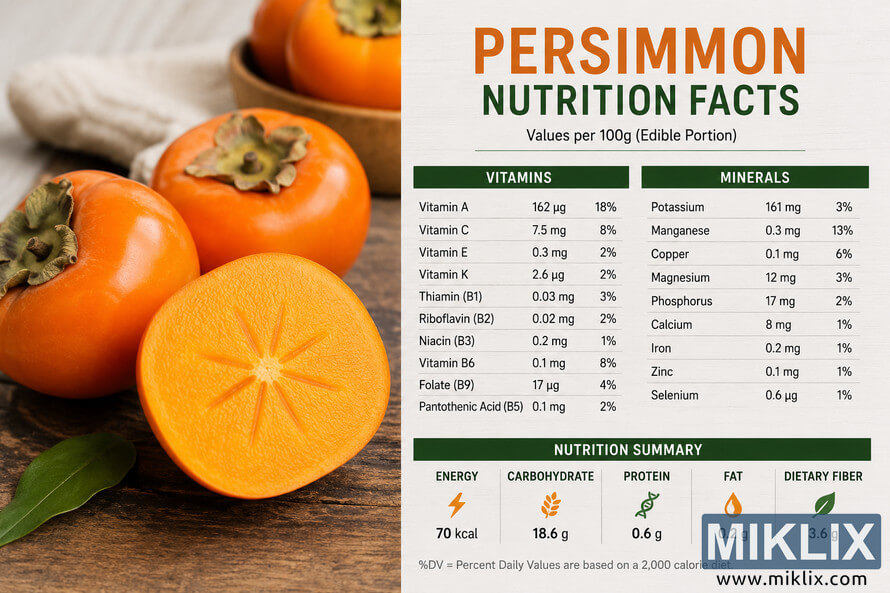
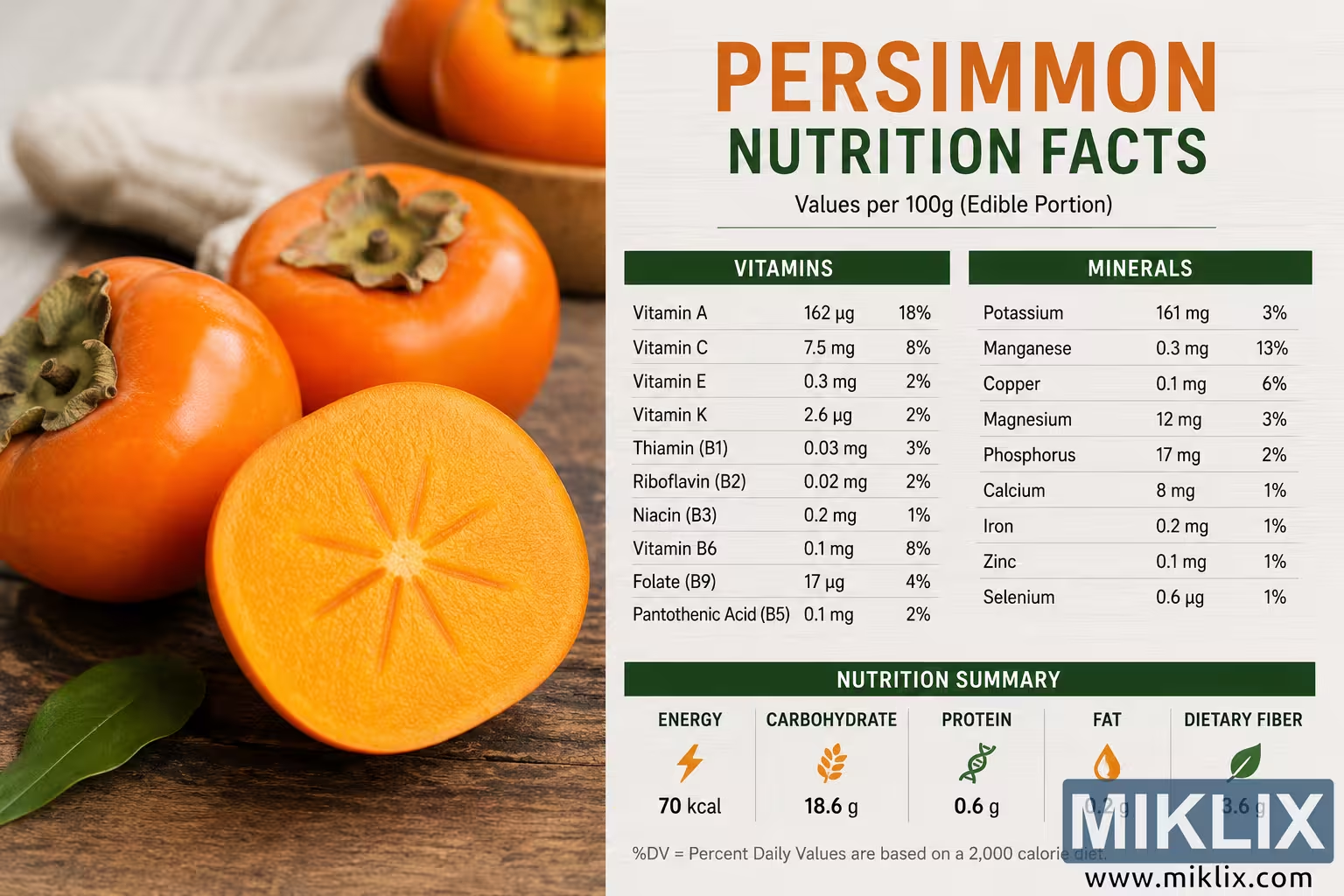
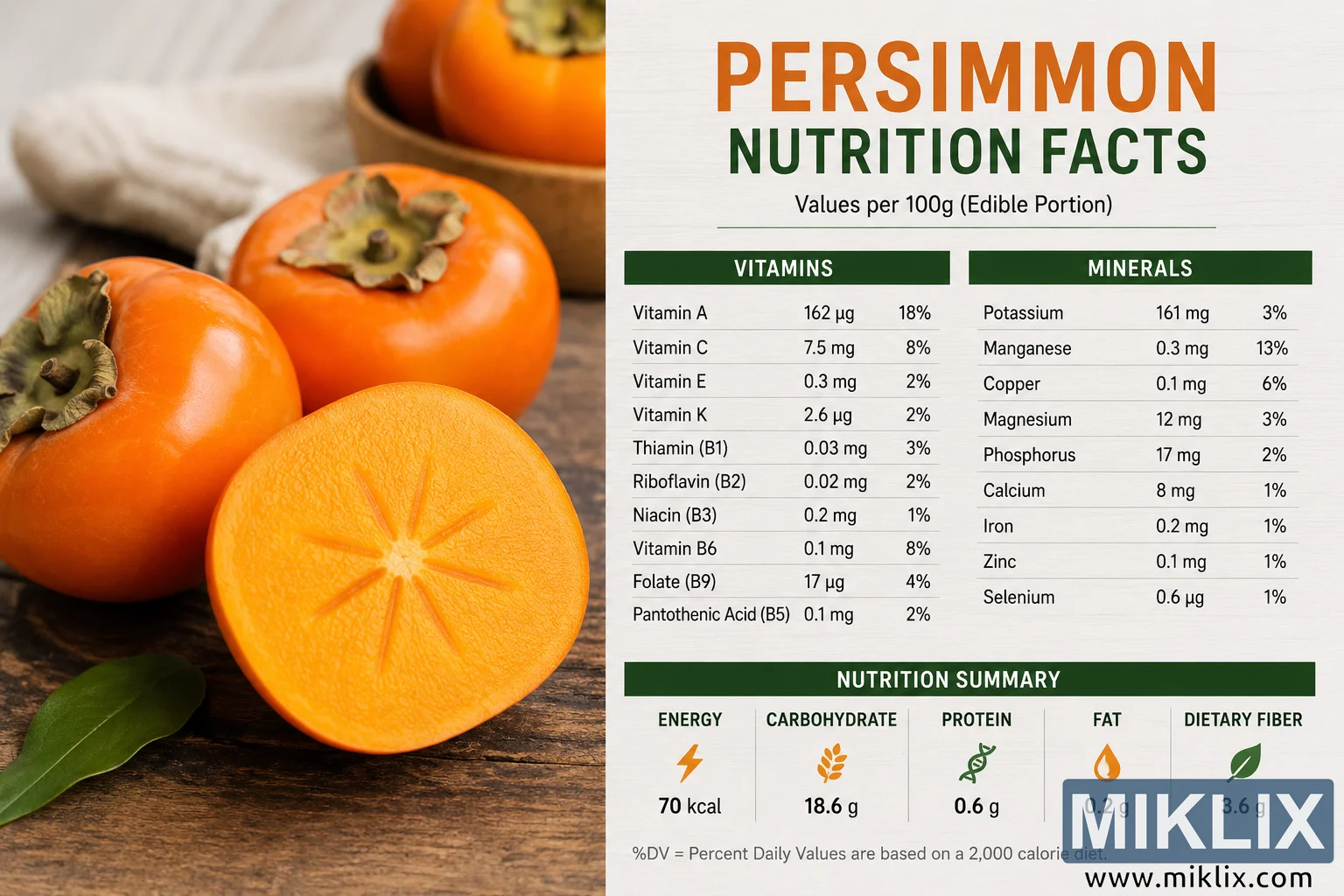
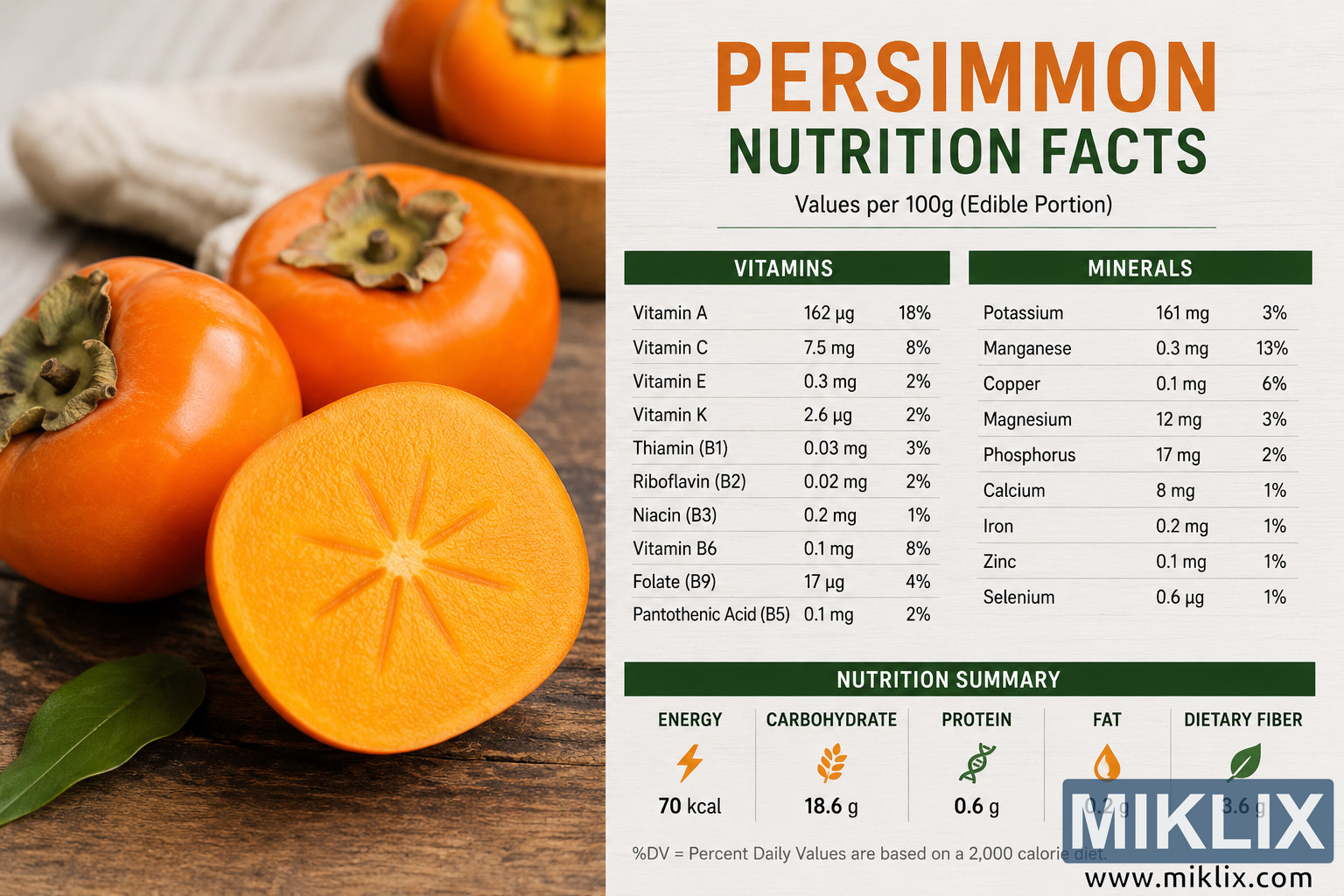
Detailed persimmon nutrition facts infographic displaying vitamins, minerals, calorie information, carbohydrates, protein, fat, and fiber alongside vibrant fresh persimmons in a rustic food photography composition.
Persimmon Nutrition Facts Infographic with Fresh Whole and Sliced Fruit
Verfügbare Versionen dieses Bildes
Die Bilddateien, die unten zum Download zur Verfügung stehen, sind weniger komprimiert und haben eine höhere Auflösung - und damit eine höhere Qualität - als die Bilder, die in Artikeln und Seiten auf dieser Website eingebettet sind, die mehr auf Dateigröße optimiert sind, um den Bandbreitenverbrauch zu reduzieren.
Normale Größe (1,536 x 1,024)
Großes Format (3,072 x 2,048)
Sehr großes Format (4,608 x 3,072)
Extra großes Format (6,144 x 4,096)
Komisch große Größe (1,048,576 x 699,051)
- Ich lade immer noch hoch... ;-)
Bildbeschreibung
This high-resolution landscape image presents a clean and visually appealing nutrition infographic focused on persimmons, combining professional food photography with educational nutritional information design. The composition is split into two main sections that balance natural organic textures with structured infographic elements. On the left side of the image, several vibrant orange persimmons are arranged on a rustic dark wooden surface with soft natural lighting. The fruits appear fresh, glossy, and ripe, showcasing their smooth skin and rich autumnal color palette. One persimmon is sliced in half and positioned prominently in the foreground, revealing its bright orange interior and delicate star-shaped center pattern. Additional whole persimmons are placed behind it, some resting inside a small wooden bowl that enhances the warm and earthy visual tone of the composition. A soft neutral-colored fabric drapes gently in the background, contributing depth and a cozy kitchen-inspired atmosphere. A small green leaf near the lower edge of the frame adds subtle color contrast and reinforces the fresh produce theme.
The right side of the image contains a professionally styled nutrition facts infographic presented on a clean light background. At the top, a bold heading reads “Persimmon Nutrition Facts” in large uppercase typography using orange and green colors that visually complement the fruit itself. Beneath the title, a subtitle indicates that the nutritional values are based on a 100 gram edible portion serving size. The infographic is organized into clearly separated sections with green header bars and easy-to-read typography.
The first major section lists vitamin content found in persimmons. The vitamins are arranged in a table format with nutrient names, quantities, and percentage daily values. Included vitamins are Vitamin A, Vitamin C, Vitamin E, Vitamin K, Thiamin (B1), Riboflavin (B2), Niacin (B3), Vitamin B6, Folate (B9), and Pantothenic Acid (B5). The layout emphasizes readability with evenly spaced rows, aligned columns, and consistent font styling. Adjacent to the vitamins section is a minerals section displaying important mineral nutrients such as Potassium, Manganese, Copper, Magnesium, Phosphorus, Calcium, Iron, Zinc, and Selenium. Each mineral entry includes a corresponding measurement and percentage value, presented in a minimal and highly legible design.
Near the bottom of the infographic, an additional nutrition summary section highlights major macronutrient information. Distinct icons accompany each category to create a modern infographic aesthetic. The summary includes energy content measured in calories, total carbohydrates, protein, fat, and dietary fiber values. Simple icons such as a lightning bolt, grain symbol, DNA-inspired protein graphic, droplet icon, and leaf icon visually reinforce each nutritional category. A small disclaimer line at the bottom explains that daily value percentages are based on a 2,000 calorie diet.
The overall visual style of the image combines clean editorial food photography with modern nutritional infographic design. Lighting is soft and evenly diffused, creating realistic highlights on the fruit surfaces while maintaining sharp readability across the text sections. The color palette relies heavily on warm oranges, greens, natural wood browns, and soft neutral tones to create a healthy, fresh, and approachable aesthetic. The image is designed to feel both informative and appetizing, making it suitable for health blogs, nutrition articles, educational materials, recipe websites, wellness marketing, grocery publications, and social media posts related to healthy eating and fruit nutrition.
The landscape orientation provides ample space for both the detailed food imagery and the extensive informational content without overcrowding the composition. The image avoids commercial branding and maintains a universal editorial style suitable for a wide range of uses. The combination of realistic fruit textures, organized typography, iconography, and balanced spacing creates a polished infographic that communicates nutritional information clearly while remaining visually engaging and aesthetically refined.
Das Bild ist verwandt mit: The Complete Guide to the Health Benefits of Persimmons