
Bild: Radish Seeds Being Planted in Fresh Garden Soil
Veröffentlicht:
Zuletzt aktualisiert: 10. Juli 2026 um 16:29:50 UTC
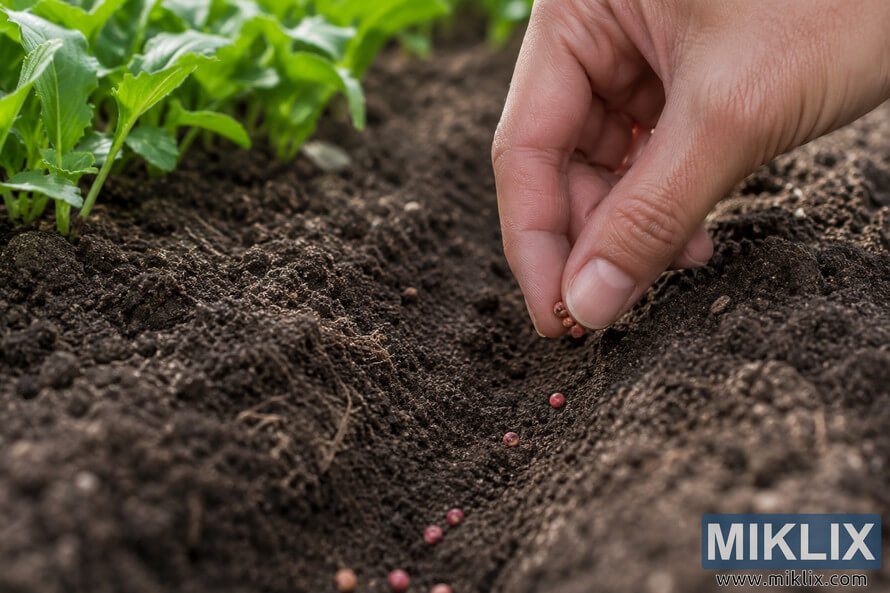
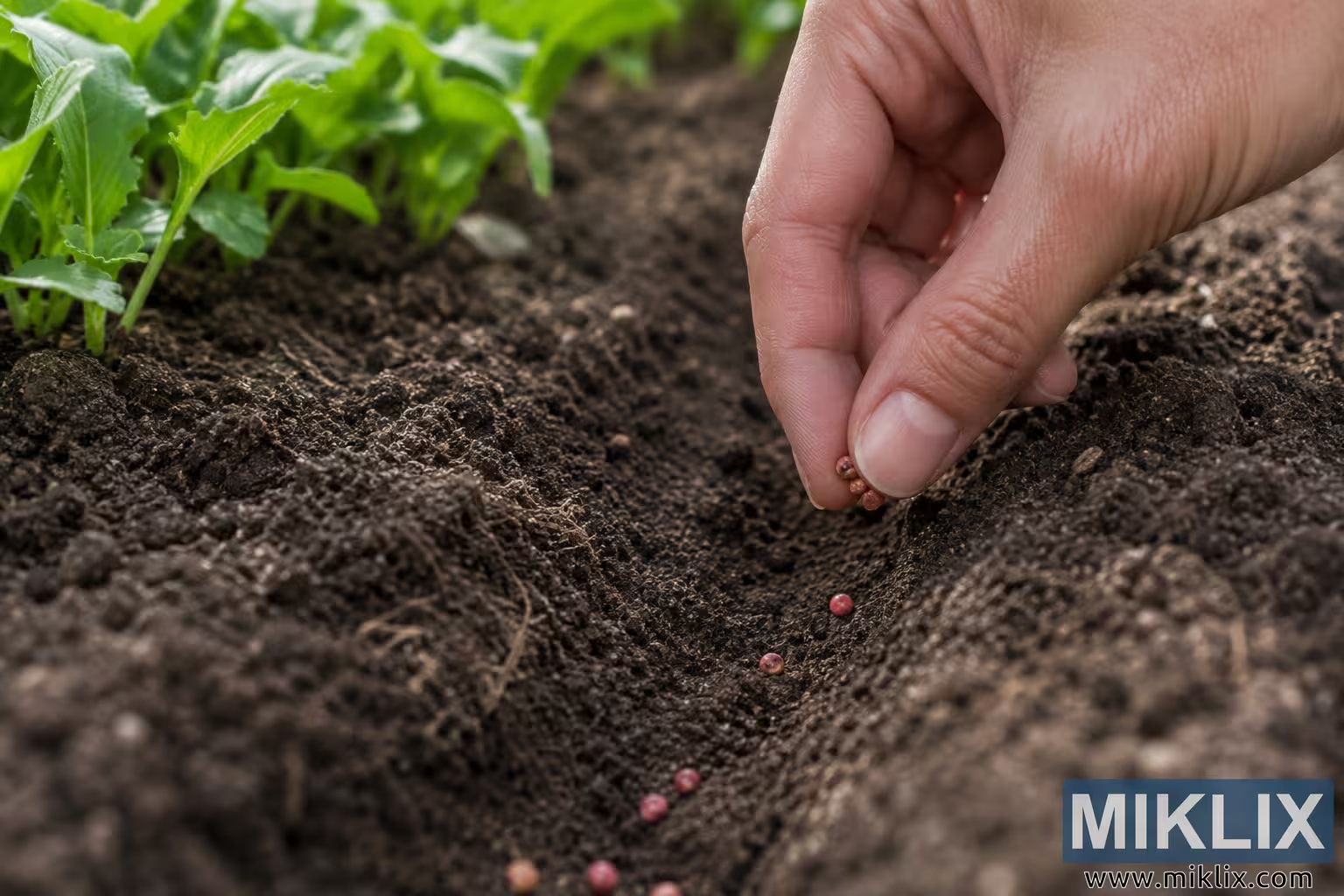
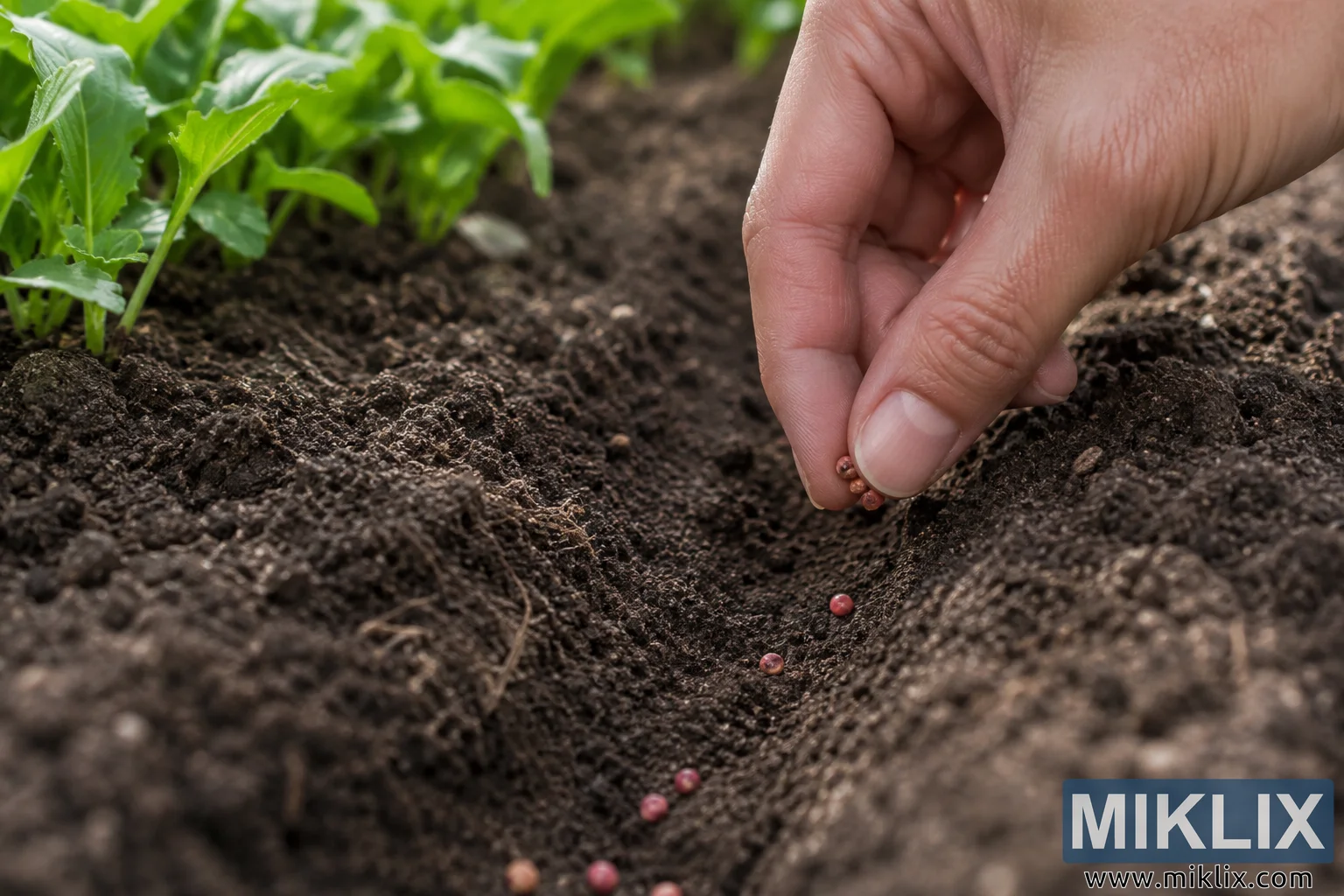
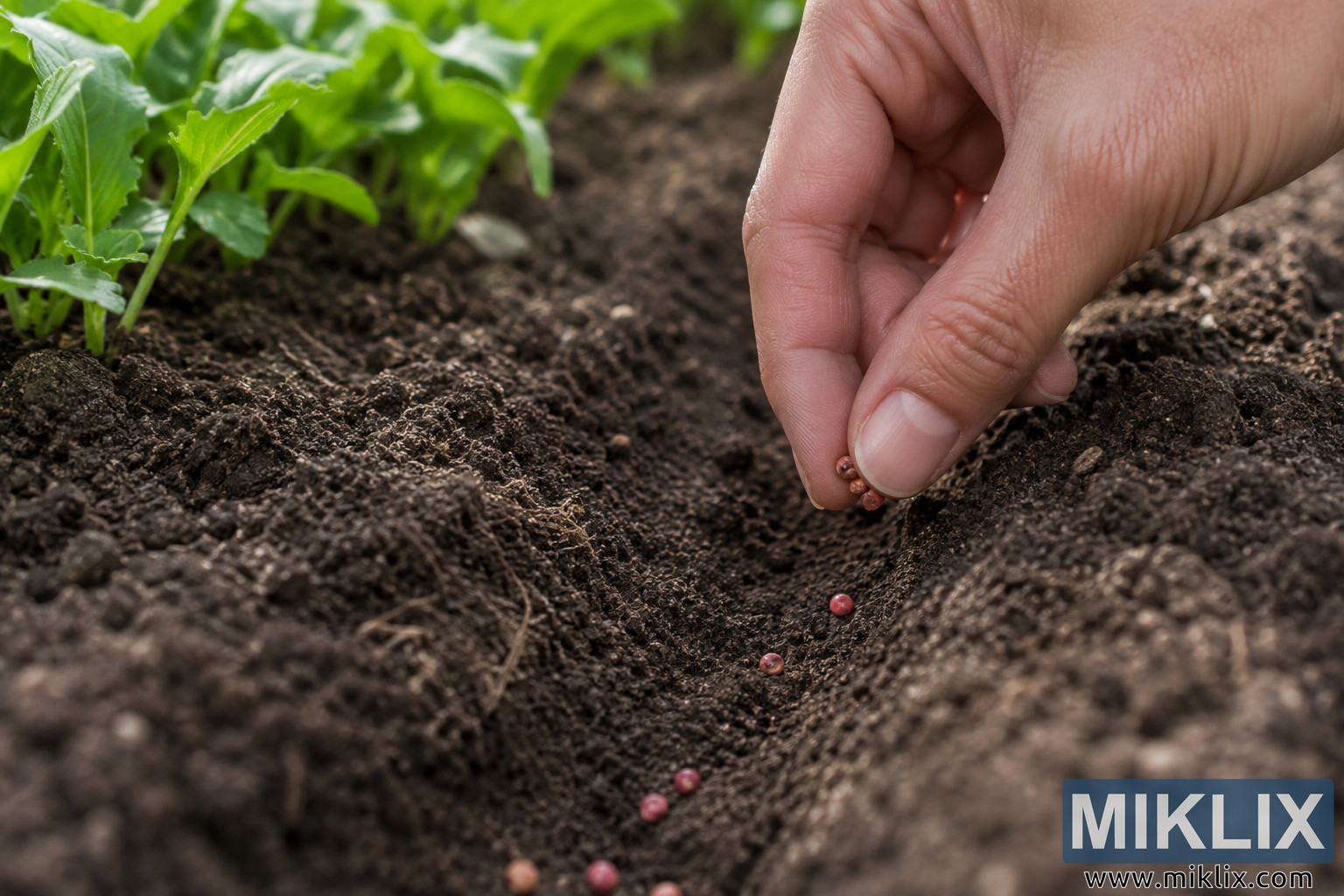
Landscape close-up of radish seeds being planted by hand in rich garden soil with soft natural light and blurred green foliage, illustrating sustainable home gardening and vegetable cultivation.
Radish Seeds Being Planted in Fresh Garden Soil
Verfügbare Versionen dieses Bildes
Die Bilddateien, die unten zum Download zur Verfügung stehen, sind weniger komprimiert und haben eine höhere Auflösung - und damit eine höhere Qualität - als die Bilder, die in Artikeln und Seiten auf dieser Website eingebettet sind, die mehr auf Dateigröße optimiert sind, um den Bandbreitenverbrauch zu reduzieren.
Normale Größe (1,536 x 1,024)
Großes Format (3,072 x 2,048)
Sehr großes Format (4,608 x 3,072)
Extra großes Format (6,144 x 4,096)
Komisch große Größe (1,048,576 x 699,051)
- Ich lade immer noch hoch... ;-)
Bildbeschreibung
This landscape-oriented photograph presents a close-up view of the early stages of planting radish seeds in a well-prepared garden bed. The composition focuses on the intimate gardening process, capturing a human hand carefully lowering several small, round radish seeds into a shallow furrow of dark, fertile soil. The image emphasizes the anticipation and potential that accompany sowing seeds, illustrating a quiet moment of cultivation before the plants begin to emerge.
The foreground is dominated by richly textured garden soil that appears freshly turned and slightly moist. Individual granules, small clumps of earth, tiny fragments of organic matter, and subtle variations in color contribute to a realistic and tactile appearance. The shallow planting trench extends diagonally through the composition, naturally guiding the viewer's eye from the lower portion of the frame toward the hand placing the seeds. Several seeds are already resting within the furrow, evenly spaced in preparation for being lightly covered with soil. Their small reddish-brown appearance contrasts gently against the dark earth, making them visible without overwhelming the natural scene.
A human hand enters the frame from the upper right, positioned with delicate precision as the thumb and forefinger hold additional radish seeds immediately above the planting row. The fingers are relaxed and clean, with realistic skin texture, subtle creases, and natural lighting that emphasizes the careful, deliberate nature of the gardening task. The gesture conveys patience, attention to detail, and a connection between the gardener and the soil. Rather than depicting hurried work, the image captures a calm and methodical moment that reflects traditional gardening practices.
The shallow depth of field isolates the primary subject while softly blurring the background. Behind the planting area, healthy green foliage and young leafy plants create an appealing backdrop without distracting from the act of sowing. Their vibrant green tones suggest a thriving vegetable garden and hint at successful previous plantings or nearby crops. The background blur produces a pleasing bokeh effect that enhances the professional photographic quality while maintaining a strong sense of place within an outdoor garden.
Natural daylight illuminates the entire scene evenly, producing soft shadows and gentle highlights across both the soil and the gardener's hand. The lighting appears consistent with an overcast day or the warm, diffused light of early morning or late afternoon, avoiding harsh contrast while preserving excellent detail throughout the image. This illumination enhances the rich brown hues of the soil, the warm skin tones of the hand, and the fresh green colors of the surrounding vegetation, creating a harmonious and inviting color palette inspired by nature.
The composition effectively communicates themes of growth, sustainability, patience, self-sufficiency, and seasonal gardening. By focusing on the planting process rather than the mature harvest, the photograph highlights the beginning of a cultivation cycle and symbolizes optimism, planning, and future abundance. The viewer is encouraged to appreciate the often-overlooked first step involved in producing fresh vegetables.
No gardening tools are visible within the frame, allowing the interaction between the hand, the seeds, and the soil to remain the primary visual narrative. Likewise, there are no logos, trademarks, labels, packaging, text overlays, watermarks, or recognizable commercial products anywhere in the image. The setting appears entirely natural and authentic, making the photograph suitable for educational materials, gardening guides, horticultural blogs, seed planting tutorials, environmental publications, agricultural presentations, and editorial content focused on home food production or sustainable living.
The landscape orientation provides ample negative space around the central action while maintaining a balanced composition. Fine photographic detail is visible throughout the focused portions of the frame, including individual soil particles, subtle seed texture, and realistic skin detail. The shallow furrow creates leading lines that naturally reinforce the subject, while the softly blurred greenery provides context without competing for attention. Overall, the image conveys a peaceful, hands-on gardening experience centered on planting radish seeds into nutrient-rich garden soil, celebrating the simple yet meaningful act of beginning a new growing season.
Das Bild ist verwandt mit: The Powerful Health Benefits of Radishes: Your Complete Nutrition Guide