
Bild: Blood Glucose Meter with Healthy Potato Dishes Demonstrating Diabetes Management
Veröffentlicht:
Zuletzt aktualisiert: 4. August 2026 um 13:57:05 UTC
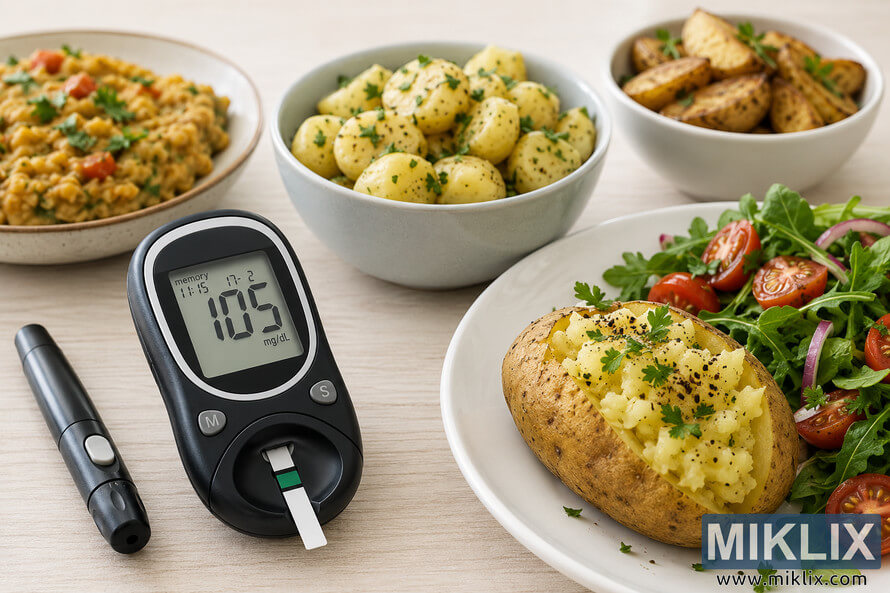
Landscape photo of a blood glucose meter next to healthy potato-based meals and fresh salad, illustrating balanced nutrition, blood sugar monitoring, and practical diabetes management without visible branding.
Blood Glucose Meter with Healthy Potato Dishes Demonstrating Diabetes Management
Verfügbare Versionen dieses Bildes
Die Bilddateien, die unten zum Download zur Verfügung stehen, sind weniger komprimiert und haben eine höhere Auflösung - und damit eine höhere Qualität - als die Bilder, die in Artikeln und Seiten auf dieser Website eingebettet sind, die mehr auf Dateigröße optimiert sind, um den Bandbreitenverbrauch zu reduzieren.
Normale Größe (1,536 x 1,024)
Großes Format (3,072 x 2,048)
Sehr großes Format (4,608 x 3,072)
Extra großes Format (6,144 x 4,096)
Komisch große Größe (1,048,576 x 699,051)
- Ich lade immer noch hoch... ;-)
Bildbeschreibung
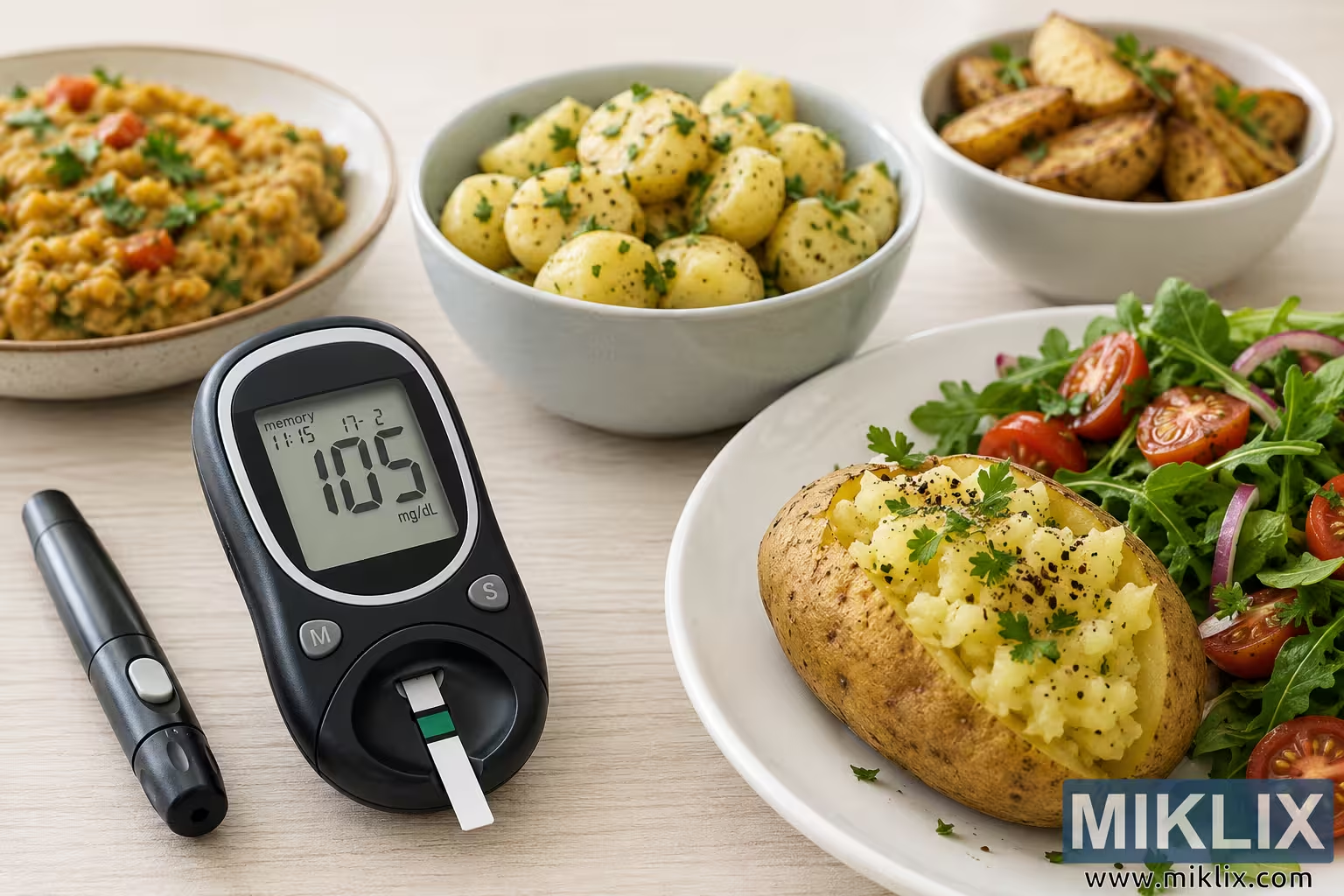
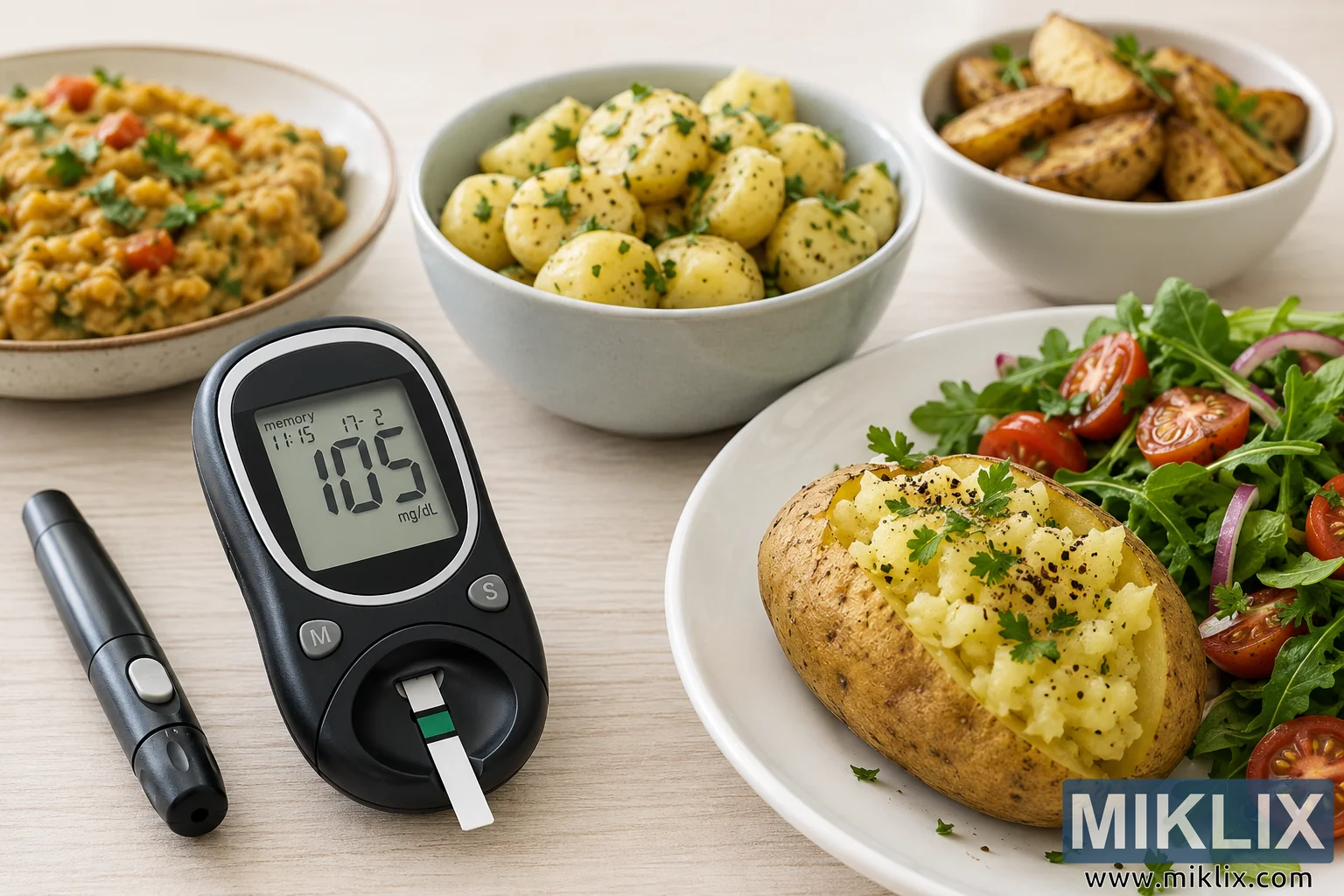
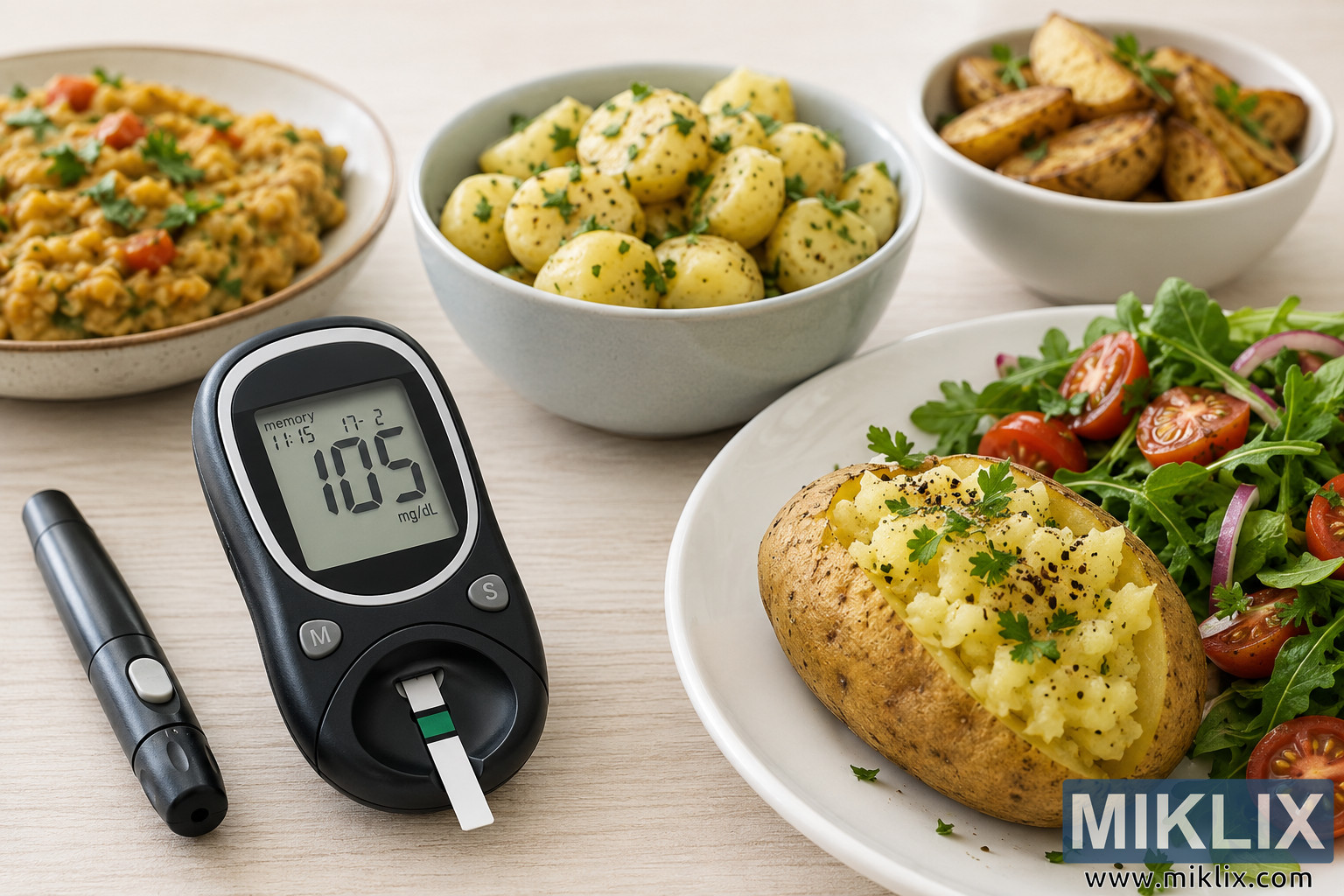
This landscape-oriented photograph presents a bright, clean, and inviting tabletop scene focused on the relationship between blood glucose monitoring and healthy meal planning. The composition is carefully arranged to communicate diabetes management through everyday nutrition rather than medical treatment alone. Soft natural lighting illuminates the entire scene, creating gentle highlights on the table surface, the ceramic serving bowls, and the fresh ingredients while maintaining a calm, welcoming atmosphere. The image contains no visible commercial branding, allowing attention to remain on the overall concept of healthy living and blood sugar awareness.
In the foreground, positioned slightly left of center, sits a modern blood glucose meter with a digital display that shows a reading of 105 mg/dL. The display is large and easy to read, emphasizing a value commonly associated with healthy blood glucose control in an appropriate context. A test strip is inserted into the bottom of the meter, indicating that a measurement has recently been completed or is ready to be interpreted. Adjacent to the meter rests a black lancing device used for obtaining a small blood sample. Both medical items are neatly placed on the light wooden tabletop and appear clean, organized, and well maintained, reinforcing a message of routine self-care and responsible diabetes monitoring.
Surrounding the glucose meter is an attractive assortment of potato-based dishes prepared in ways that suggest balanced nutrition rather than indulgence. In the lower right portion of the image, a baked potato has been opened and filled with fluffy mashed potato, lightly seasoned with cracked black pepper and garnished with fresh parsley. The potato sits beside a colorful salad containing leafy greens, halved cherry tomatoes, and thin slices of red onion, adding vibrant colors and nutritional variety to the meal.
Toward the center of the background is a bowl filled with small boiled potatoes that have been lightly coated with herbs and seasoning. Their glossy appearance suggests careful preparation without excessive oil or heavy sauces. On the upper right side of the image, another bowl contains roasted potato wedges with browned edges and scattered herbs, representing another wholesome preparation method. On the upper left sits a bowl containing a creamy mashed potato mixture enhanced with vegetables and fresh herbs, contributing additional texture and visual balance to the composition. Each potato dish appears homemade and thoughtfully prepared, emphasizing portion control, freshness, and healthy cooking techniques instead of processed foods.
The neutral ceramic bowls, white serving plate, and pale wooden table work together to create a clean and modern aesthetic. The shallow depth of field keeps the blood glucose meter sharply in focus while allowing the dishes in the background to soften slightly, naturally drawing the viewer's attention toward the central theme of blood sugar monitoring. The carefully balanced composition communicates that medical self-monitoring and enjoyable eating can coexist as part of a healthy lifestyle.
The color palette consists of warm natural wood tones, earthy potato skins, bright green herbs, vivid leafy vegetables, deep red tomatoes, and the matte black finish of the medical devices. Together these colors create a feeling of freshness, cleanliness, and nutritional balance. The image avoids dramatic shadows or overly saturated colors, instead presenting a realistic and approachable visual style suitable for educational, healthcare, nutrition, wellness, or diabetes-awareness materials.
Overall, the photograph conveys a positive message about diabetes management through a combination of regular blood glucose testing and mindful meal choices. Rather than portraying restriction, it illustrates that potatoes can be included within a balanced eating pattern when combined with vegetables, herbs, appropriate preparation methods, and portion awareness. The absence of recognizable brands, logos, or promotional elements makes the image broadly suitable for editorial publications, healthcare websites, educational resources, presentations, brochures, blogs, and other informational content focused on nutrition, healthy eating, chronic disease management, and preventive healthcare.
Das Bild ist verwandt mit: The Surprising Health Benefits of Potatoes: A Complete Nutrition Guide