
Bild: Water Droplets on Fresh Watermelon Highlighting Natural Hydration
Veröffentlicht:
Zuletzt aktualisiert: 16. August 2026 um 19:07:57 UTC
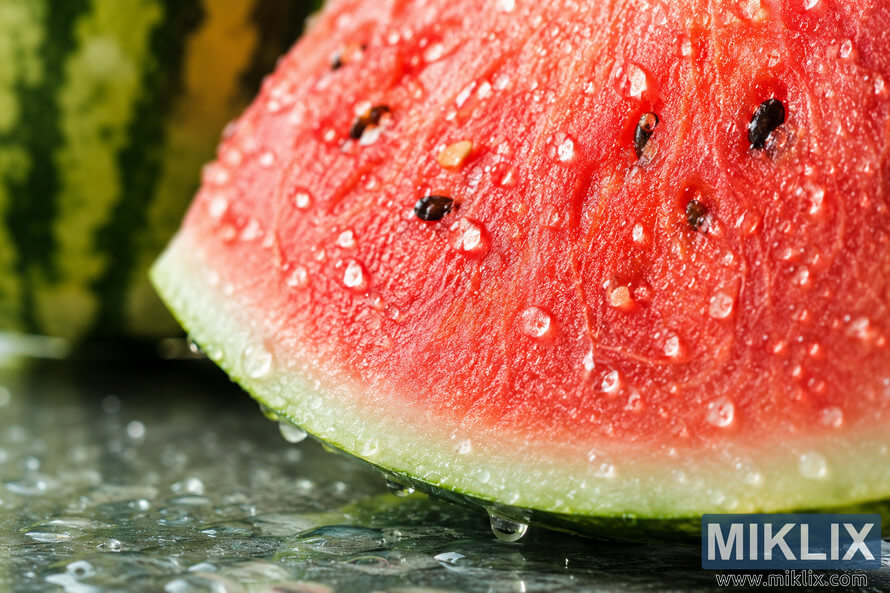
High-resolution macro image of a fresh watermelon slice covered in water droplets, highlighting its natural water content, refreshing appearance, vibrant colors, and hydrating qualities in a clean, summery composition.
Water Droplets on Fresh Watermelon Highlighting Natural Hydration
Verfügbare Versionen dieses Bildes
Die Bilddateien, die unten zum Download zur Verfügung stehen, sind weniger komprimiert und haben eine höhere Auflösung - und damit eine höhere Qualität - als die Bilder, die in Artikeln und Seiten auf dieser Website eingebettet sind, die mehr auf Dateigröße optimiert sind, um den Bandbreitenverbrauch zu reduzieren.
Normale Größe (1,536 x 1,024)
Großes Format (3,072 x 2,048)
Sehr großes Format (4,608 x 3,072)
Extra großes Format (6,144 x 4,096)
Komisch große Größe (1,048,576 x 699,051)
- Ich lade immer noch hoch... ;-)
Bildbeschreibung
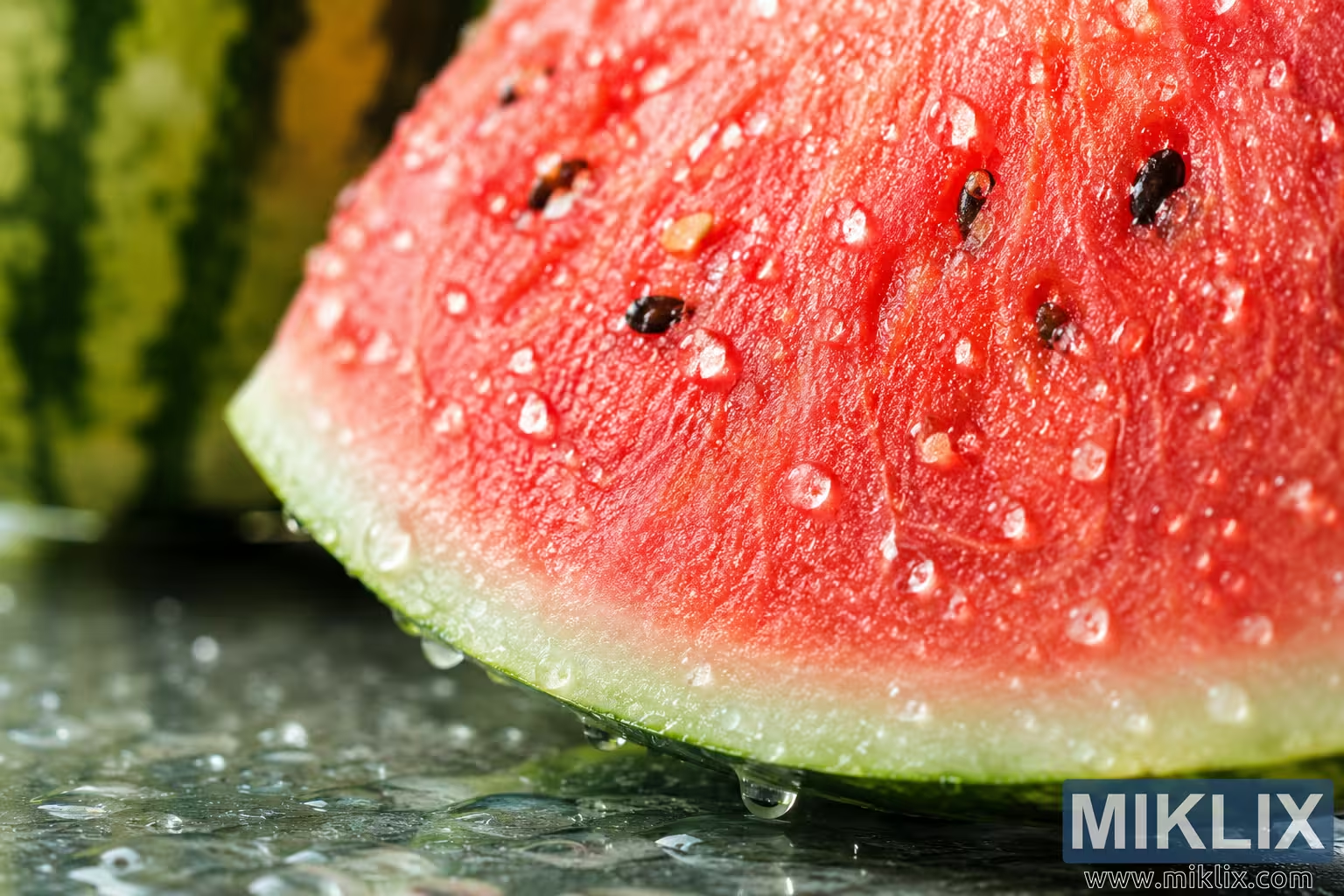
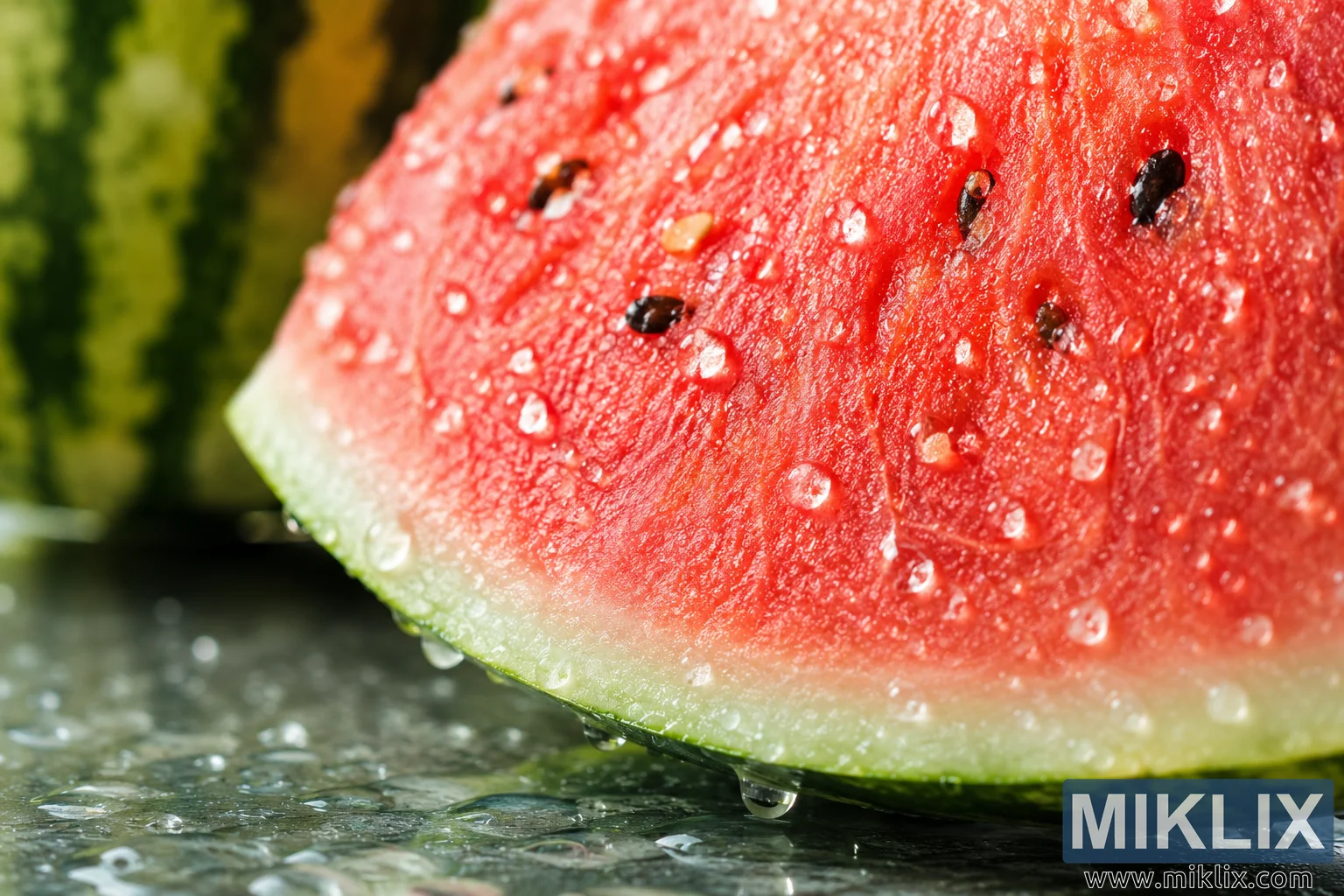
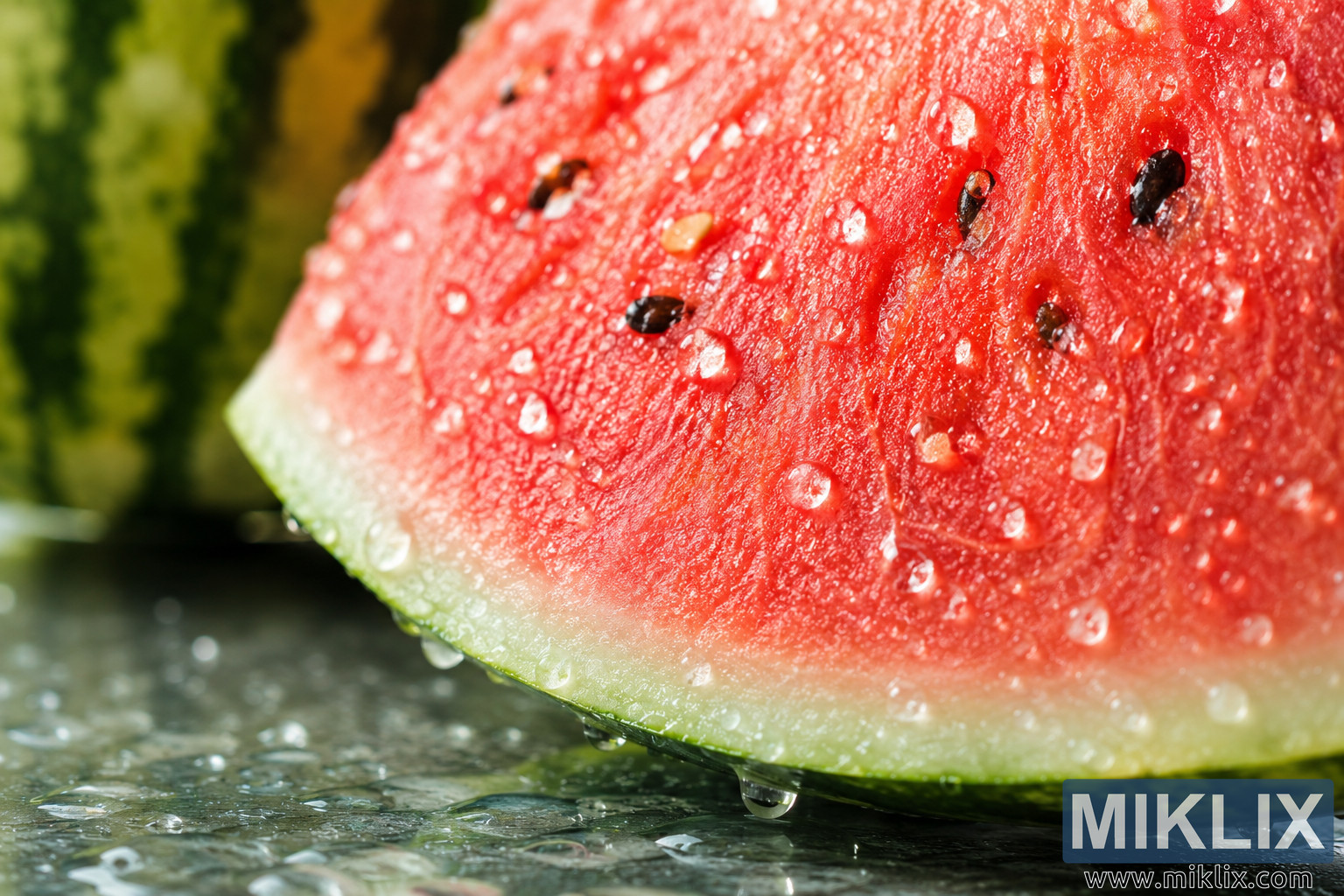
This high-resolution landscape-oriented macro photograph presents an exceptionally detailed close-up view of a freshly cut watermelon slice resting on a smooth, reflective surface. The composition is intentionally focused on communicating freshness, hydration, and the naturally high water content of the fruit through a combination of vibrant color, crisp detail, and the visual presence of numerous glistening water droplets. The watermelon dominates the frame, extending diagonally across the image and immediately drawing the viewer's attention to its vivid red flesh. The rich crimson interior exhibits subtle natural variations in tone, ranging from lighter pink highlights to deeper ruby-red areas that reveal the fruit's fibrous structure and juicy texture. Tiny strands and delicate organic patterns within the flesh are clearly visible, reinforcing the impression of a freshly sliced piece of fruit.
Scattered across the watermelon surface are dozens of crystal-clear water droplets of varying sizes. Some droplets are tiny beads that cling tightly to the fruit, while others are larger, nearly spherical formations that reflect and refract the surrounding light. These droplets catch bright highlights that create sparkling points across the surface, enhancing the perception of freshness and moisture. Several droplets collect along the lower edge of the rind where gravity has caused them to accumulate before dripping downward. Additional droplets are visible on the reflective surface beneath the watermelon, creating small pools and reflections that strengthen the overall hydration theme.
Embedded naturally throughout the red flesh are several glossy black seeds accompanied by an occasional lighter-colored immature seed. Their smooth surfaces contrast with the fibrous texture of the surrounding fruit and add visual rhythm across the composition. The seeds appear slightly reflective, catching subtle highlights that further contribute to the realism of the image.
The lower portion of the watermelon transitions smoothly from the vibrant red flesh into a pale white rind before reaching the deep green outer peel. This color gradient is rendered with excellent clarity, emphasizing the natural structure of the fruit. The green peel features a clean, healthy appearance with a slightly glossy finish that complements the surrounding droplets. Tiny beads of water cling to both the rind and peel, reinforcing the freshly rinsed appearance.
The background remains intentionally soft and out of focus due to the shallow depth of field characteristic of macro photography. Blurred green forms suggest additional watermelon rind or whole watermelons positioned behind the main subject without distracting from the primary focal point. The smooth background separation helps isolate the watermelon slice while producing an inviting, professional food-photography aesthetic.
Lighting plays a critical role throughout the composition. Bright, diffused illumination produces soft shadows while creating numerous specular highlights on the water droplets. These reflections provide dimensionality and realism without appearing harsh or overexposed. The balanced lighting preserves the saturation of the watermelon while revealing fine surface details, subtle moisture, and delicate texture throughout the fruit.
The reflective surface beneath the watermelon introduces additional visual interest by mirroring portions of the rind and droplets. Small reflections shimmer beneath the fruit, subtly extending the composition while maintaining a clean, uncluttered presentation. The surface itself remains understated so that attention stays focused on the watermelon and its hydration-focused message.
Overall, the image communicates freshness, natural hydration, summertime refreshment, and wholesome nutrition. The combination of vibrant colors, highly detailed textures, sparkling droplets, and professional macro photography creates an inviting visual that is well suited for editorial content, health and wellness articles, nutrition education, recipe features, food blogs, grocery promotions, hydration campaigns, agricultural publications, restaurant menus, or general marketing materials related to fresh produce. The absence of visible branding, packaging, utensils, or additional objects keeps the composition clean, timeless, and universally applicable while allowing the watermelon itself to serve as the unmistakable focal point.
Das Bild ist verwandt mit: Watermelon: The Hydrating Superfruit You Should Eat More Often