
Bild: Watermelon Antioxidants and Inflammation Reduction
Veröffentlicht:
Zuletzt aktualisiert: 16. August 2026 um 19:08:02 UTC
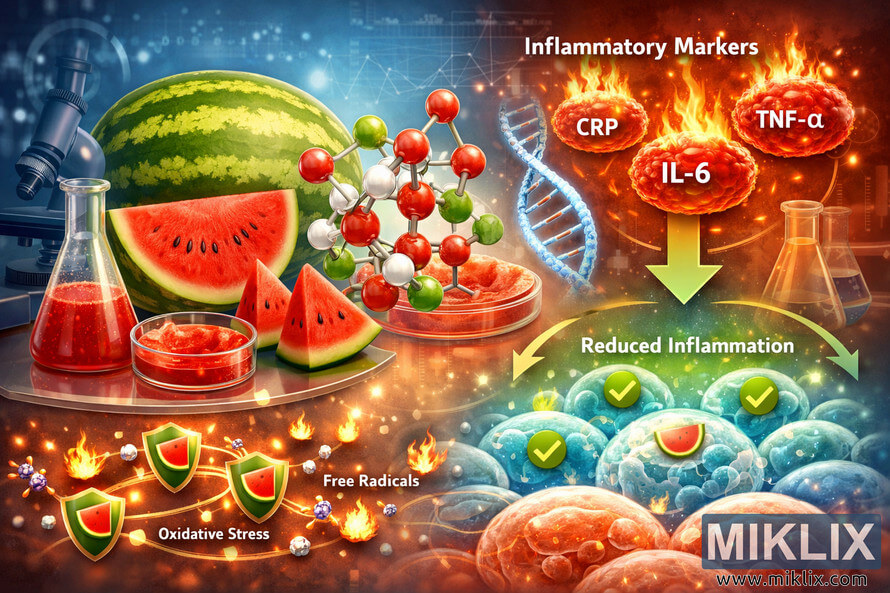
A vivid scientific illustration depicting how watermelon antioxidants help reduce inflammatory markers such as CRP, IL-6, and TNF-α, showing molecular structures, DNA helix, and cellular balance between oxidative stress and reduced inflammation.
Watermelon Antioxidants and Inflammation Reduction
Verfügbare Versionen dieses Bildes
Die Bilddateien, die unten zum Download zur Verfügung stehen, sind weniger komprimiert und haben eine höhere Auflösung - und damit eine höhere Qualität - als die Bilder, die in Artikeln und Seiten auf dieser Website eingebettet sind, die mehr auf Dateigröße optimiert sind, um den Bandbreitenverbrauch zu reduzieren.
Normale Größe (1,536 x 1,024)
Großes Format (3,072 x 2,048)
Sehr großes Format (4,608 x 3,072)
Extra großes Format (6,144 x 4,096)
Komisch große Größe (1,048,576 x 699,051)
- Ich lade immer noch hoch... ;-)
Bildbeschreibung
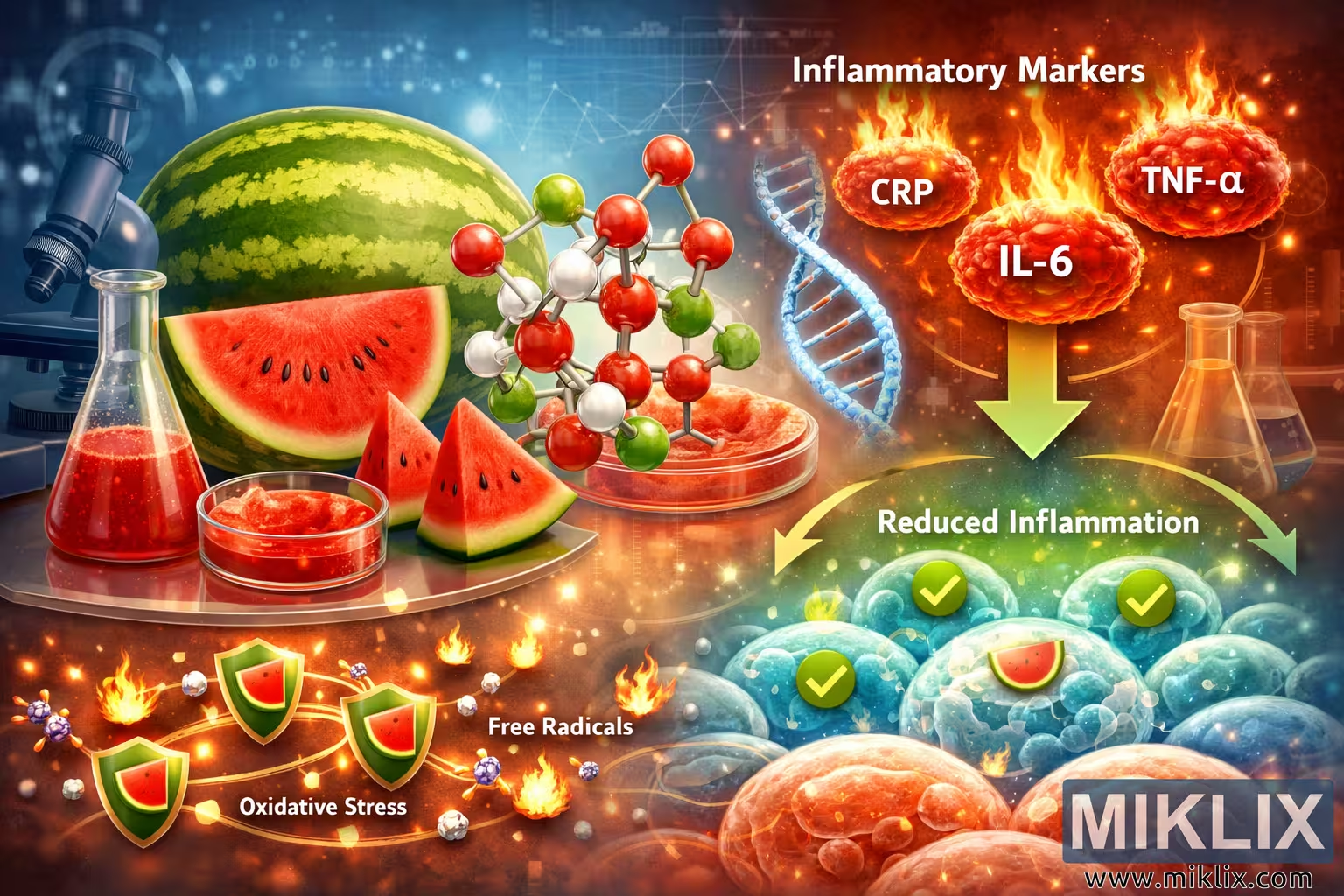
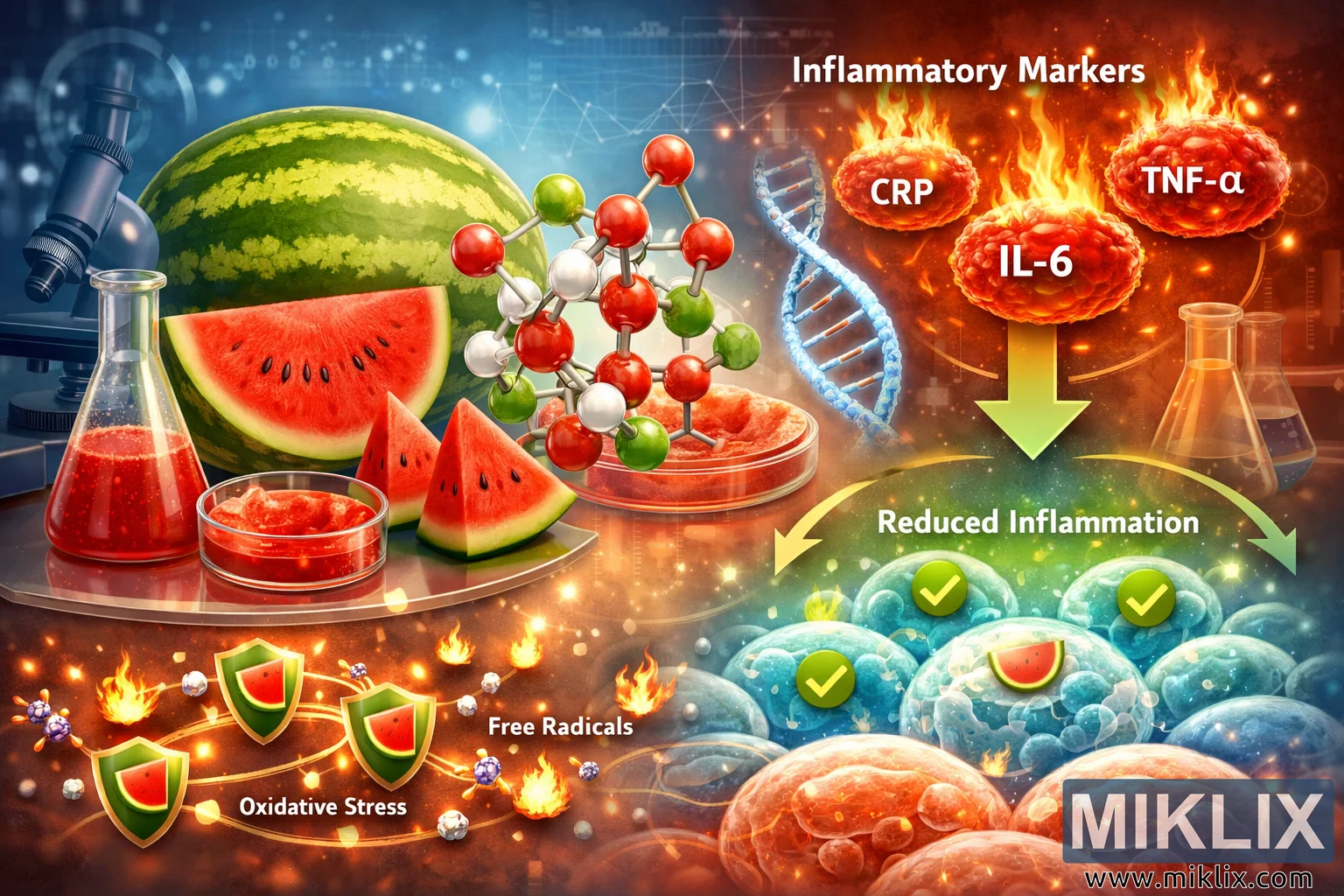
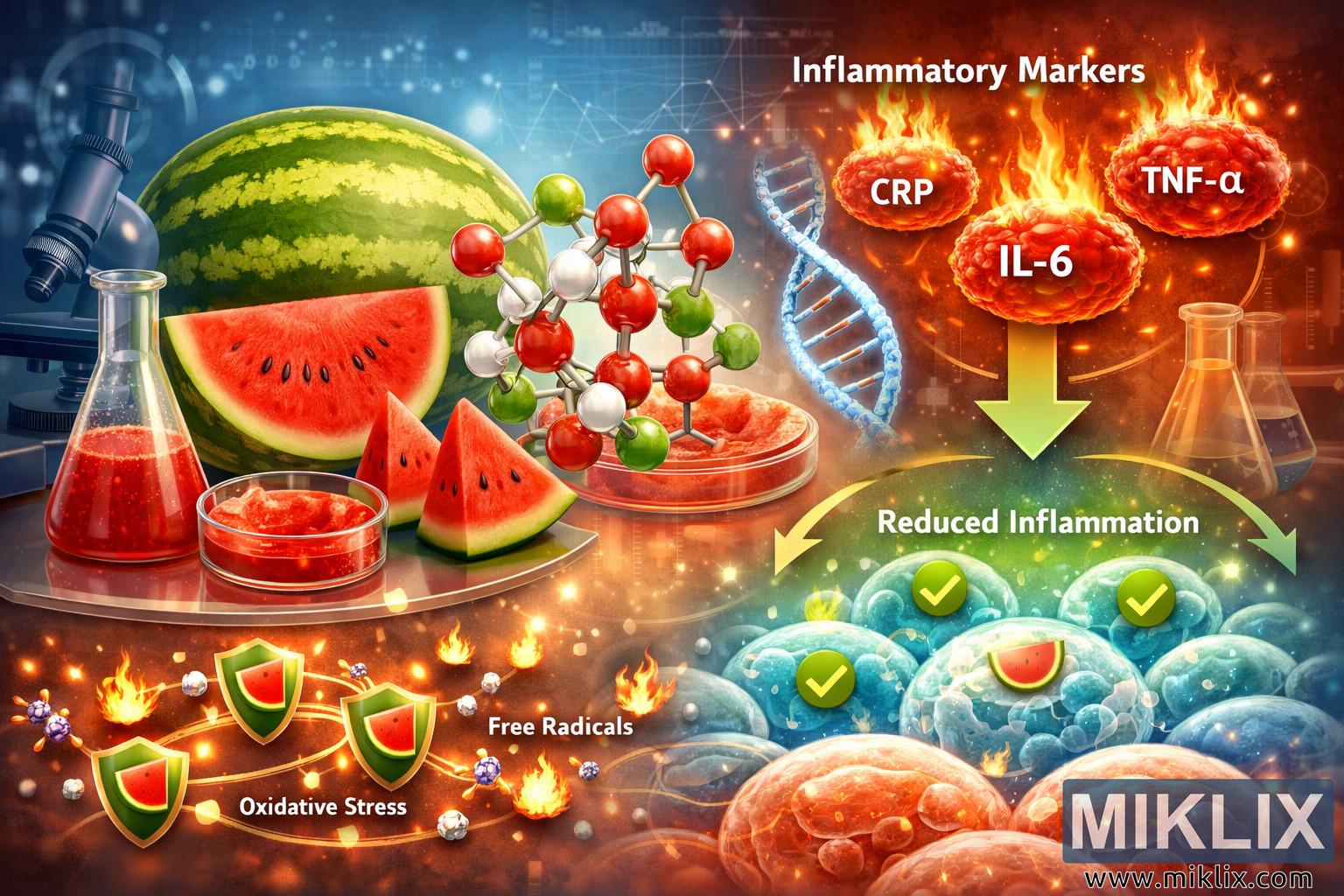
This digital scientific illustration presents a visually rich and conceptually detailed representation of how watermelon antioxidants contribute to the reduction of inflammatory markers in the human body. The composition is arranged in a landscape orientation, balancing scientific precision with artistic vibrancy. On the left side of the image, a large, sliced watermelon dominates the foreground, its deep red flesh and black seeds glistening under bright laboratory lighting. The rind’s green gradient transitions smoothly into the red interior, symbolizing the natural source of antioxidants. Around the watermelon, laboratory glassware—an Erlenmeyer flask filled with red watermelon juice and a petri dish containing a concentrated extract—anchors the scene in a research setting. These vessels rest on a reflective surface that captures subtle highlights, reinforcing the sense of realism and scientific authenticity.
At the center of the composition, a three-dimensional molecular structure composed of red, green, and white spheres connected by thin rods represents the antioxidant compounds found in watermelon, such as lycopene and citrulline. Behind this molecular model, slices of watermelon add a natural contrast, bridging the organic and biochemical worlds. To the right of the molecular structure, a glowing blue DNA double helix rises vertically, symbolizing the cellular and genetic impact of antioxidants on inflammation pathways. The helix emits soft light flares, creating a sense of vitality and molecular harmony.
In the upper right quadrant, inflammatory markers are depicted as large, red, glowing cells surrounded by flames and labeled with key biomarkers: CRP, IL-6, and TNF-α. These fiery cells represent the heightened inflammatory state within the body. A luminous green arrow points downward from these markers toward the lower right section, where the inflammation is shown to be reduced. The arrow’s gradient shifts from red to green, visually narrating the transition from inflammation to healing. Below the arrow, calm blue cells with green checkmarks are labeled “Reduced Inflammation,” signifying the beneficial effects of watermelon antioxidants in mitigating inflammatory responses.
The lower section of the image expands on the biochemical narrative. Here, stylized human cells are overlaid with glowing shield-like icons representing antioxidants. These shields, adorned with miniature watermelon slices, emit radiant beams that neutralize small flame-like radicals labeled “Oxidative Stress.” The interaction between the shields and radicals illustrates the neutralization process, where antioxidants stabilize free radicals and prevent cellular damage. The shields are connected to the radicals through light trails, symbolizing the dynamic exchange of electrons that underlies antioxidant activity.
Throughout the background, subtle scientific motifs—microscopes, test tubes, and chemical formulas—float within a translucent overlay of graphs and data visualizations. These elements reinforce the laboratory context and emphasize the evidence-based nature of the illustration. The lighting transitions from warm reds and oranges near the inflammatory markers to cool blues and greens near the reduced inflammation cells, creating a visual metaphor for the shift from stress to balance.
The overall composition integrates artistic storytelling with scientific clarity. The watermelon serves as both a literal and symbolic centerpiece, representing nature’s contribution to human health. The molecular structures and cellular imagery convey the biochemical mechanisms through which antioxidants exert their effects. The interplay of color, light, and form transforms complex scientific concepts into an accessible visual narrative.
This image encapsulates the idea that natural compounds found in watermelon can help modulate inflammatory processes, reduce oxidative stress, and promote cellular equilibrium. It bridges the gap between nutrition science and molecular biology, offering a visually compelling interpretation of how dietary antioxidants influence health at the cellular level. The result is a harmonious blend of art and science—an educational and aesthetically engaging depiction of the power of watermelon antioxidants in reducing inflammation.
Das Bild ist verwandt mit: Watermelon: The Hydrating Superfruit You Should Eat More Often