
Imagen: Scientific Comparison of German Ale Yeast and American Ale Yeast in a Brewing Laboratory
Publicado:
Última actualización: 16 de julio de 2026, 20:36:12 UTC
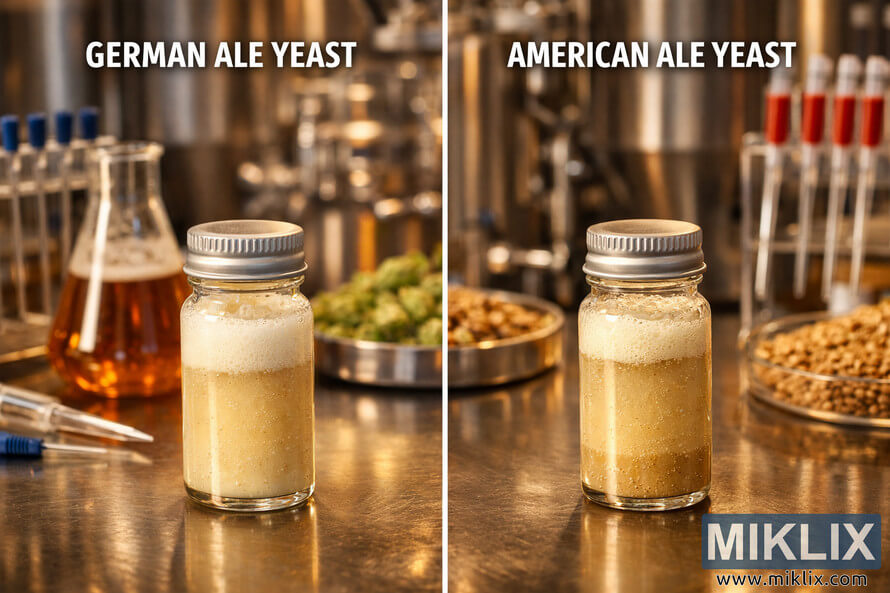
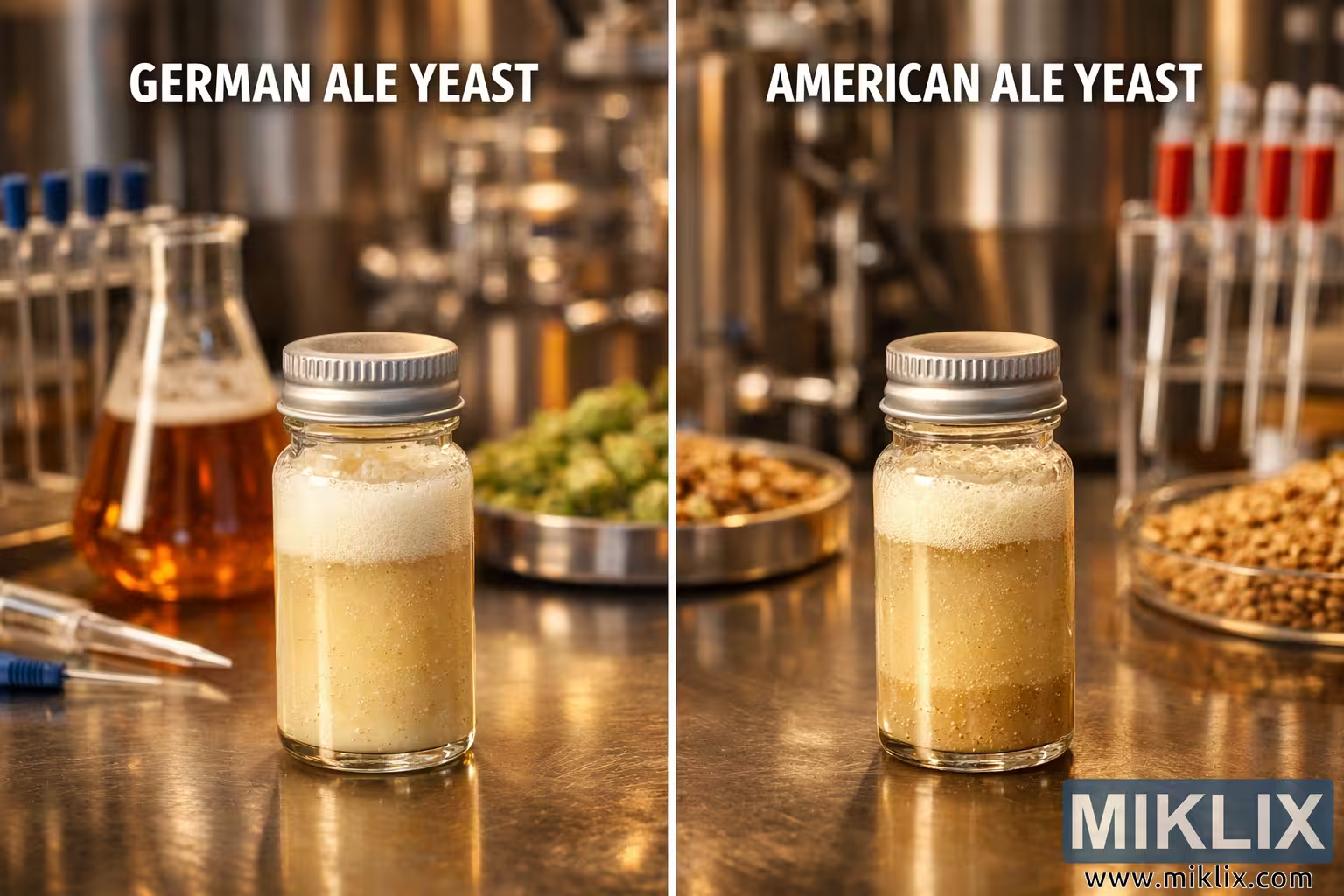
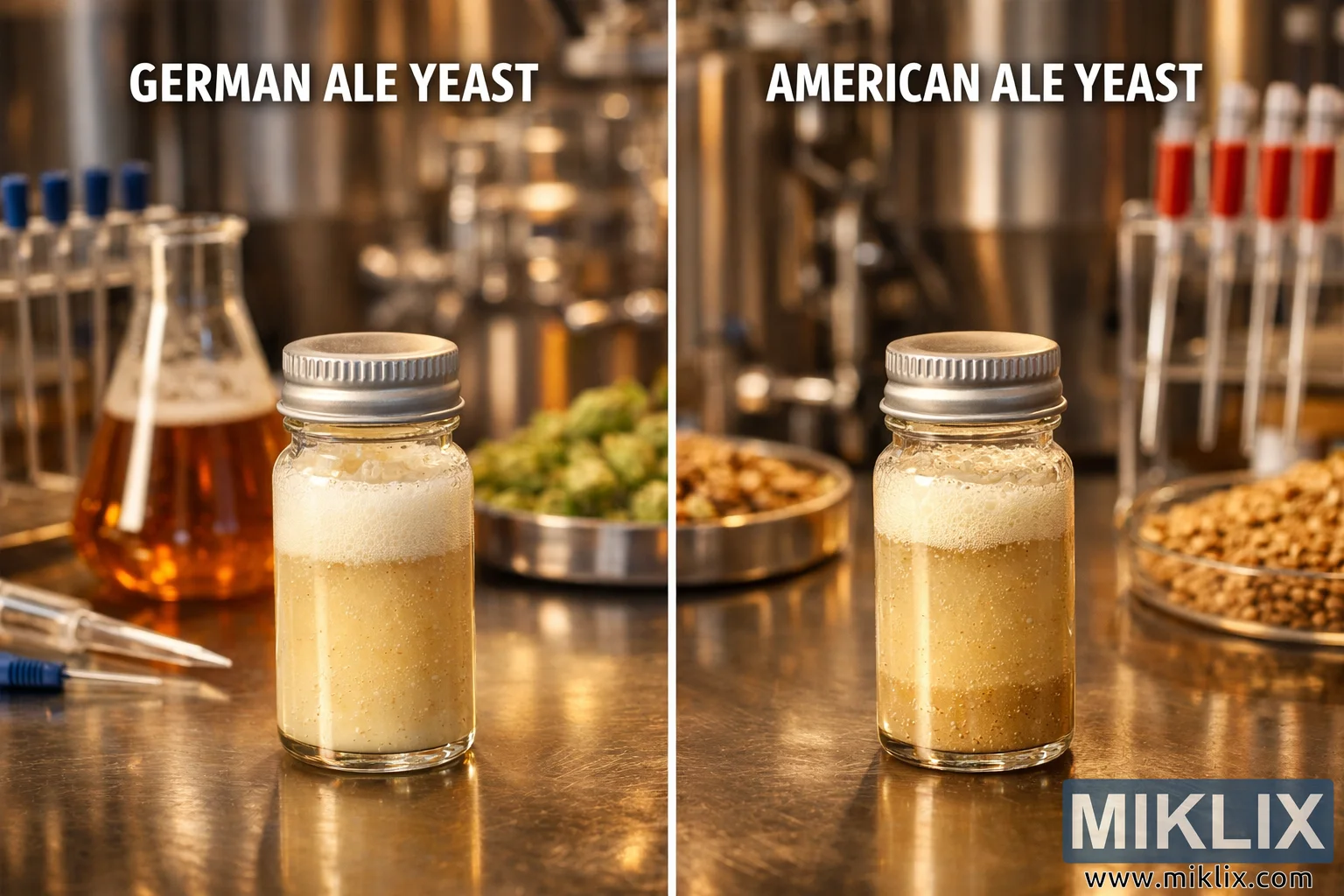
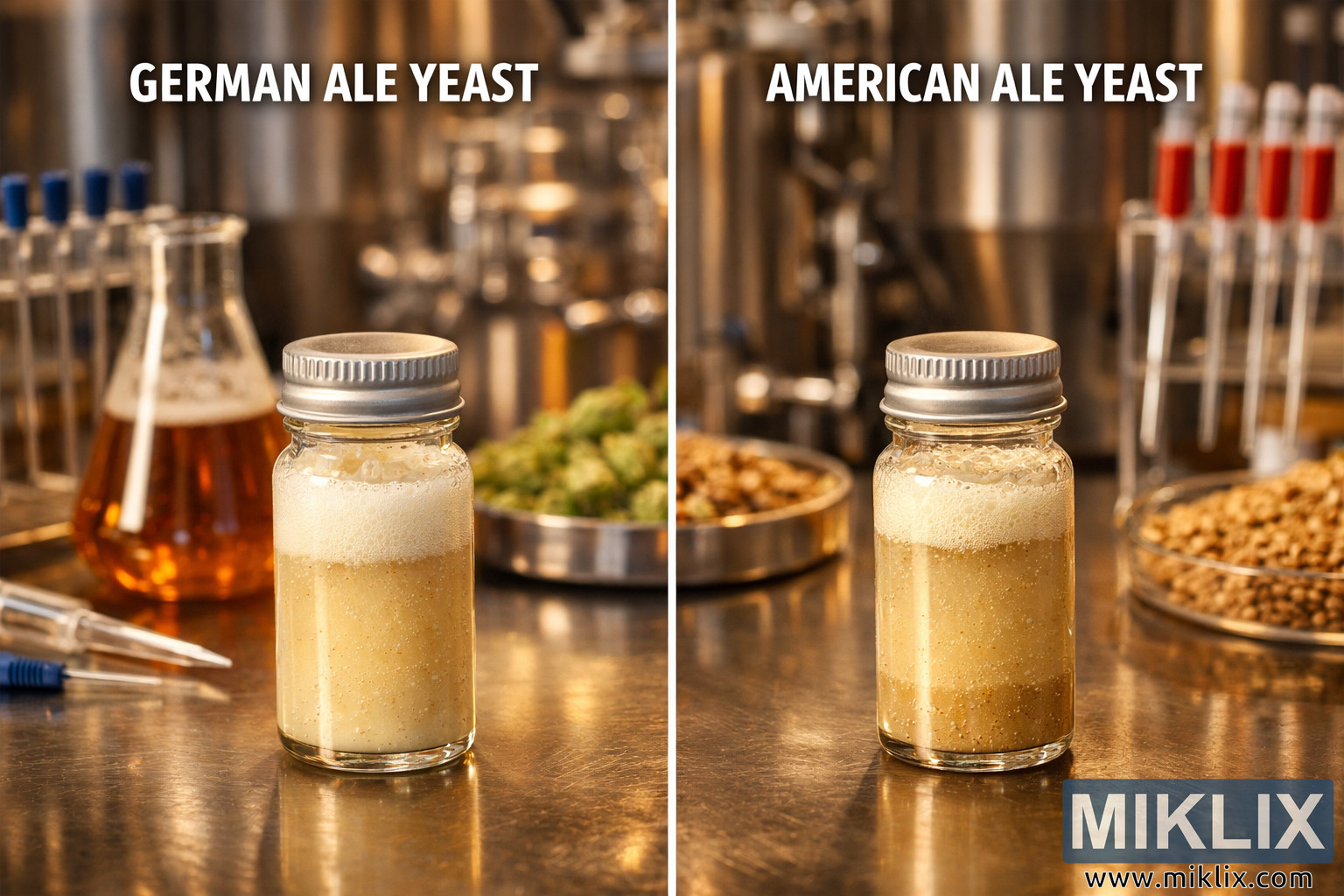
A warm, scientific brewing laboratory scene showing a split composition comparison of German Ale Yeast and American Ale Yeast in clear glass vials. The image highlights subtle differences in color, foam, and texture, with stainless steel fermenters, amber-filled flasks, pipette racks, and blurred hops and grains in the background, captured from a three-quarter angle with shallow depth of field.
Scientific Comparison of German Ale Yeast and American Ale Yeast in a Brewing Laboratory
Versiones disponibles de esta imagen
Los archivos de imagen que se pueden descargar a continuación están menos comprimidos y tienen mayor resolución -y, por tanto, mayor calidad- que las imágenes incrustadas en artículos y páginas de este sitio web, cuyo tamaño está más optimizado para reducir el consumo de ancho de banda.
Talla normal (1,536 x 1,024)
Tamaño grande (3,072 x 2,048)
Tamaño muy grande (4,608 x 3,072)
Tamaño extragrande (6,144 x 4,096)
Tamaño cómicamente grande (1,048,576 x 699,051)
- Sigo subiendo... ;-)
Descripción de la imagen
The image presents a carefully composed, split-screen style photograph that visually compares German Ale Yeast and American Ale Yeast in a modern brewing laboratory environment. The composition is divided vertically down the center, creating two distinct yet harmoniously connected halves. On the left side, the focus is on a vial labeled visually by the bold text above it as "GERMAN ALE YEAST," while the right side mirrors this arrangement with a vial under the heading "AMERICAN ALE YEAST." Both halves share a common stainless steel work surface and a cohesive background of brewing equipment and ingredients, but subtle differences in color, texture, and surrounding details emphasize the contrast between the two yeast types.
In the foreground of the left half, a small, clear glass vial stands upright on the reflective stainless steel surface. The vial is capped with a simple silver screw cap, giving it a clean, utilitarian appearance typical of laboratory containers. Inside the vial, the German Ale Yeast forms an off-white, creamy suspension. The yeast appears slightly opaque, with a rich, velvety consistency that suggests active fermentation or a dense concentration of yeast cells. At the top of the liquid, a thick, frothy foam layer has formed, bright white and textured, with tiny bubbles catching the warm light. This foam cap conveys a sense of liveliness and activity, as if the yeast has recently been agitated or is in the midst of fermentation. The creamy body of the yeast contrasts gently with the smooth glass walls of the vial, and the reflection on the metal surface beneath adds depth and realism.
Behind the German Ale Yeast vial, the middle ground features a conical laboratory flask partially filled with an amber-colored liquid. The flask is slightly out of focus, ensuring that the vial remains the primary focal point while still providing context. The amber liquid hints at wort or a brewing solution, reinforcing the brewing theme. Further back, a stainless steel fermenter rises vertically, with tubes and fittings extending from its body. The fermenter’s brushed metal surface catches the warm light, creating soft highlights and shadows that add dimensionality. To the left, a pipette rack holds several pipettes with blue-tinted tips, arranged neatly and suggesting ongoing or potential experimentation. In the far background, blurred shapes of hops and a shallow dish of malted barley grains can be seen. The hops appear as small, green, cone-like clusters, while the grains form a textured, golden-brown bed. These ingredients are intentionally soft-focused, serving as atmospheric elements that reinforce the brewing context without distracting from the central yeast comparison.
On the right half of the image, the American Ale Yeast vial mirrors the placement and general form of the German Ale Yeast vial, but with noticeable differences in the contents. This vial is also made of clear glass and topped with a silver screw cap, standing on the same stainless steel surface. Inside, the American Ale Yeast appears as an off-white to light beige suspension. Compared to the creamier hue of the German yeast, the American yeast has a slightly more muted, beige tone. The texture inside the vial suggests a smoother, denser sediment settled toward the bottom, with a thinner, more delicate foam layer at the top. This foam is off-white and less voluminous, forming a subtle bubbly ring rather than a thick cap. The visual impression is that the American Ale Yeast is either at a different stage of fermentation or possesses distinct physical characteristics, such as flocculation behavior or cell density, that set it apart from its German counterpart.
Behind the American Ale Yeast vial, the middle ground again features a conical flask containing amber liquid, echoing the left side and maintaining visual symmetry. The flask is similarly out of focus, contributing to the sense of depth and continuity across the split composition. A stainless steel fermenter is visible further back, its cylindrical form and attached tubing matching the industrial aesthetic of the left side. To the right, a pipette rack holds pipettes with red-tinted tips, providing a subtle color contrast to the blue-tipped pipettes on the opposite side. This difference in pipette colors adds a small but noticeable visual cue that distinguishes the two halves while still keeping them part of the same cohesive laboratory environment. In the distant background, hops and a shallow dish of malted barley grains appear again, blurred and softly lit, reinforcing the idea that both yeast strains are being considered within the same brewing context.
The overall lighting in the image is warm and inviting, casting a gentle golden glow across the stainless steel surface, glass vials, and metal equipment. Highlights on the vials emphasize their curvature and clarity, while reflections on the steel surface create a sense of realism and depth. The warm light also enhances the amber tones in the flasks and the earthy hues of the grains, making the scene feel both scientific and artisanal. Shadows are soft and controlled, ensuring that no part of the image feels harsh or overly dramatic. Instead, the lighting supports an atmosphere of careful observation and fermentation discovery, as if the viewer is standing at a brewer’s laboratory bench, examining the subtle differences between two important yeast strains.
The camera angle is a three-quarter view, slightly elevated and angled toward the vials, which allows the viewer to see both the front and a bit of the top surfaces of the containers. This perspective provides a sense of depth, as the vials appear firmly anchored in the foreground while the equipment and ingredients recede into the background. The shallow depth of field keeps the yeast vials in sharp focus, ensuring that their textures, colors, and foam layers are clearly visible, while the background elements remain softly blurred. This selective focus guides the viewer’s attention to the central comparison and underscores the scientific nature of the scene.
The split composition is further reinforced by the bold, white, capitalized text at the top of each half. On the left, "GERMAN ALE YEAST" is written above the vial, and on the right, "AMERICAN ALE YEAST" appears above the corresponding vial. The typography is clean and modern, standing out against the slightly darker, blurred background. These labels provide immediate clarity about the subject of the comparison, making the image suitable for educational, scientific, or brewing-related contexts where clear identification is important.
Overall, the image conveys a sense of meticulous experimentation and thoughtful brewing practice. The combination of laboratory glassware, stainless steel fermenters, pipettes, and traditional brewing ingredients like hops and grains creates a bridge between scientific precision and craft brewing tradition. The warm lighting and inviting atmosphere suggest curiosity and discovery, as if the viewer is being invited to explore how different yeast strains contribute to the flavor, aroma, and character of beer. The visual differences between the German Ale Yeast and American Ale Yeast—subtle variations in color, foam thickness, and sediment texture—are highlighted without exaggeration, presenting a balanced and informative comparison. The result is a visually rich, scientifically grounded image that celebrates the art and science of fermentation.
La imagen está relacionada con: Fermenting Beer with Wyeast 1007 German Ale Yeast