
Imagen: Suitable Containers for Growing Mustard with Proper Drainage
Publicado:
Última actualización: 7 de marzo de 2026, 18:30:01 UTC
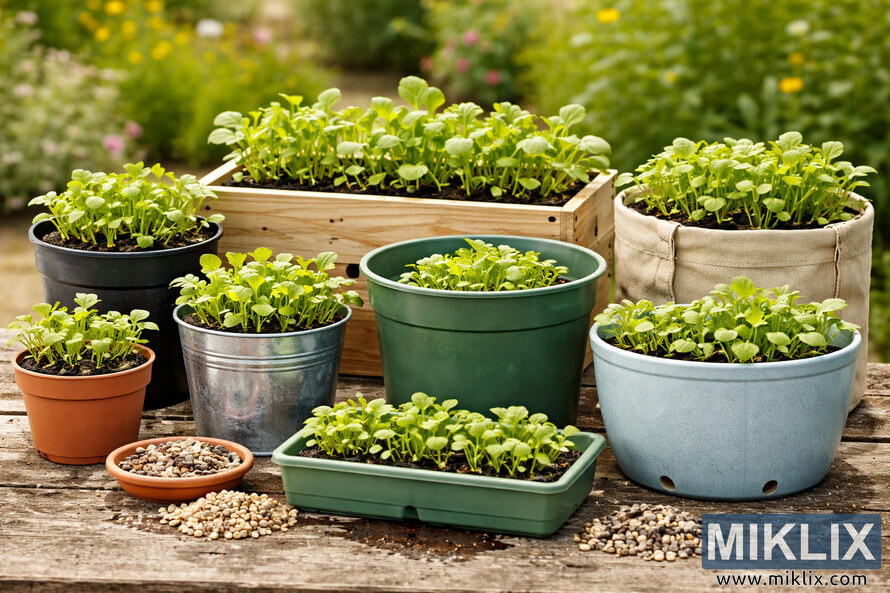
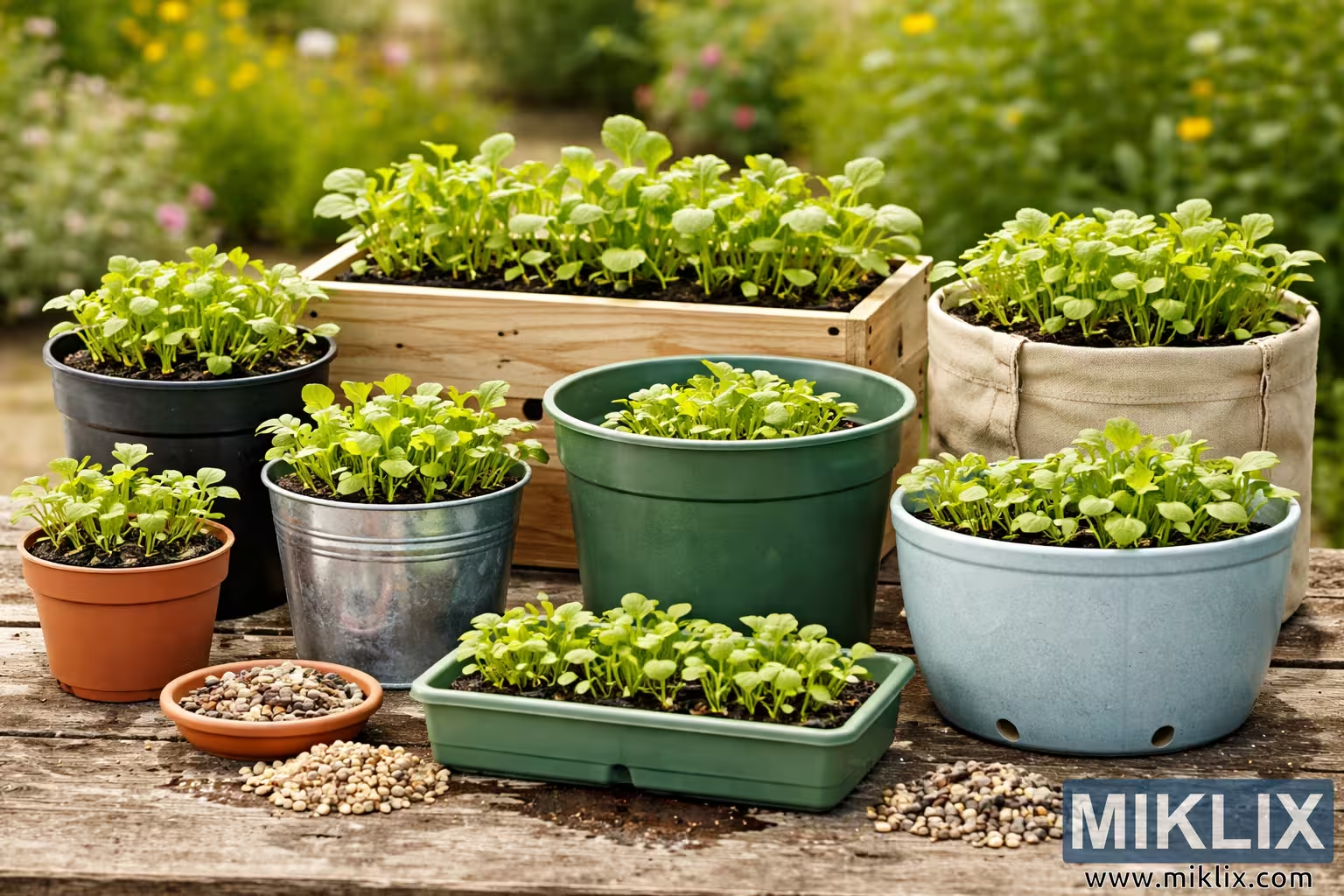
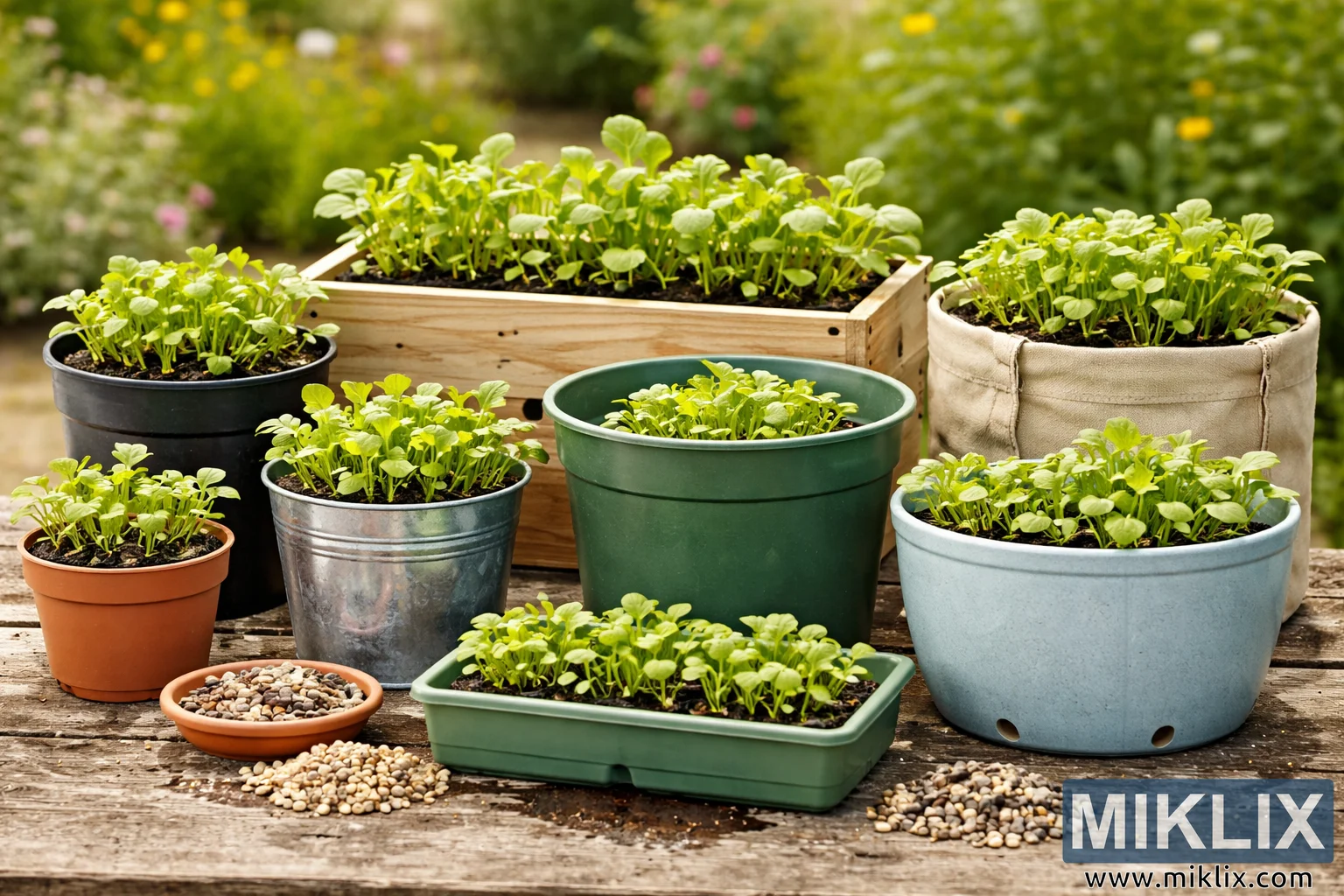
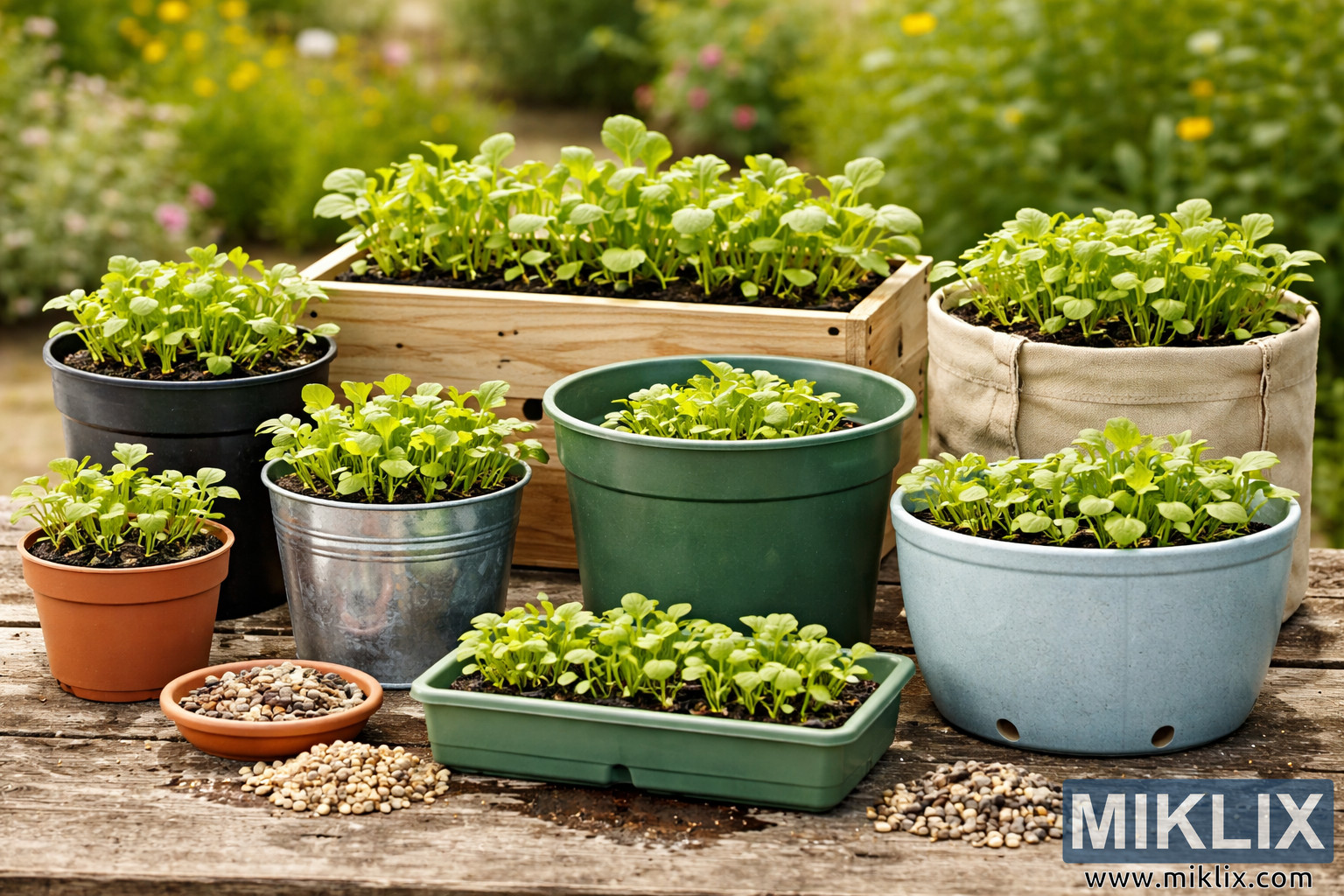
High-resolution landscape image displaying different container options for growing mustard, demonstrating appropriate sizes and effective drainage solutions for healthy plant growth.
Suitable Containers for Growing Mustard with Proper Drainage
Versiones disponibles de esta imagen
Los archivos de imagen que se pueden descargar a continuación están menos comprimidos y tienen mayor resolución -y, por tanto, mayor calidad- que las imágenes incrustadas en artículos y páginas de este sitio web, cuyo tamaño está más optimizado para reducir el consumo de ancho de banda.
Talla normal (1,536 x 1,024)
Tamaño grande (3,072 x 2,048)
Tamaño muy grande (4,608 x 3,072)
Tamaño extragrande (6,144 x 4,096)
Tamaño cómicamente grande (1,048,576 x 699,051)
- Sigo subiendo... ;-)
Descripción de la imagen
A high-resolution landscape-oriented photograph showcases a carefully arranged variety of containers suitable for growing mustard, emphasizing both appropriate size and proper drainage. The scene is set outdoors on a wooden potting bench and adjacent garden surface, under soft natural daylight that clearly highlights textures and details. In the foreground, several small to medium terracotta pots are displayed, each filled with rich, dark potting soil. The pots visibly feature drainage holes at the bottom, with some elevated slightly on pot feet to demonstrate airflow and excess water runoff. The porous texture of the terracotta is clearly visible, reinforcing its suitability for moisture regulation.
Next to them are sturdy plastic nursery pots in varying diameters, ranging from compact containers ideal for baby mustard greens to larger pots capable of supporting mature plants. These containers also prominently display multiple drainage holes at their base. A few are shown with matching saucers beneath them, illustrating how to catch excess water while preventing root rot.
On the opposite side of the arrangement, breathable fabric grow bags are presented in different sizes. The textured fabric material is clearly visible, and the bags are filled with soil, with young mustard plants emerging in neat rows. Their flexible structure and reinforced stitching are highlighted, suggesting durability and excellent drainage through the permeable sides.
Behind these, a shallow wooden crate lined with landscape fabric is shown as an alternative container option. The crate has small drainage gaps between slats, demonstrating natural water escape. Further in the background, a compact raised garden bed constructed from untreated wood is partially filled with evenly spaced mustard seedlings, showing how larger volumes of soil can support more extensive growth.
The composition clearly communicates scale, from small countertop-friendly pots to larger containers suitable for patios or balconies. Subtle details such as visible drainage holes, gravel layers at the base of one container, and slight moisture on the soil surface reinforce the educational focus on proper drainage. The overall aesthetic is clean, practical, and informative, making the image suitable for gardening guides, educational materials, or blog content focused on successfully growing mustard in containers.
La imagen está relacionada con: Complete Guide to Growing Your Own Mustard Plants