
Imagen: Cantaloupe Vitamins and Minerals Nutritional Breakdown Chart
Publicado:
Última actualización: 14 de mayo de 2026, 16:35:59 UTC
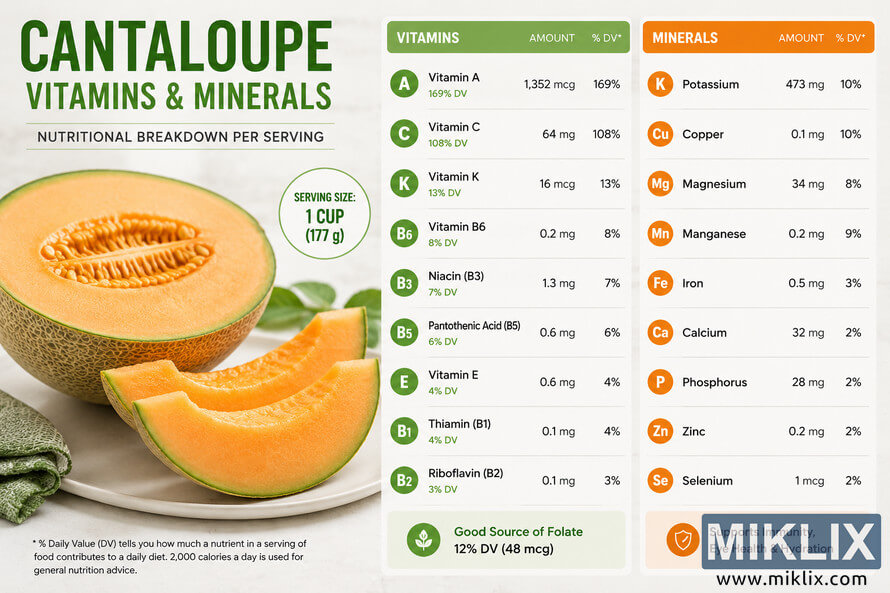
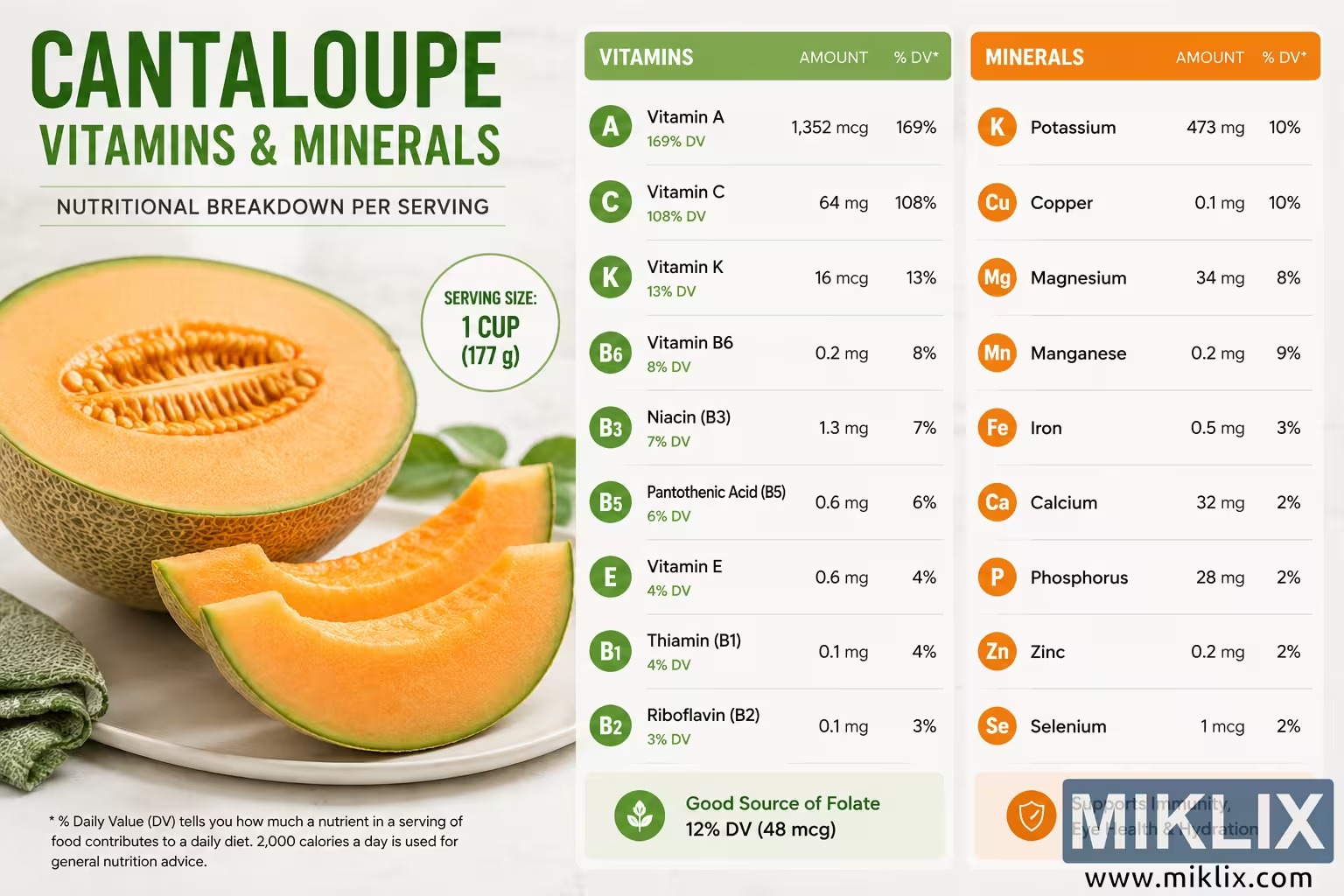
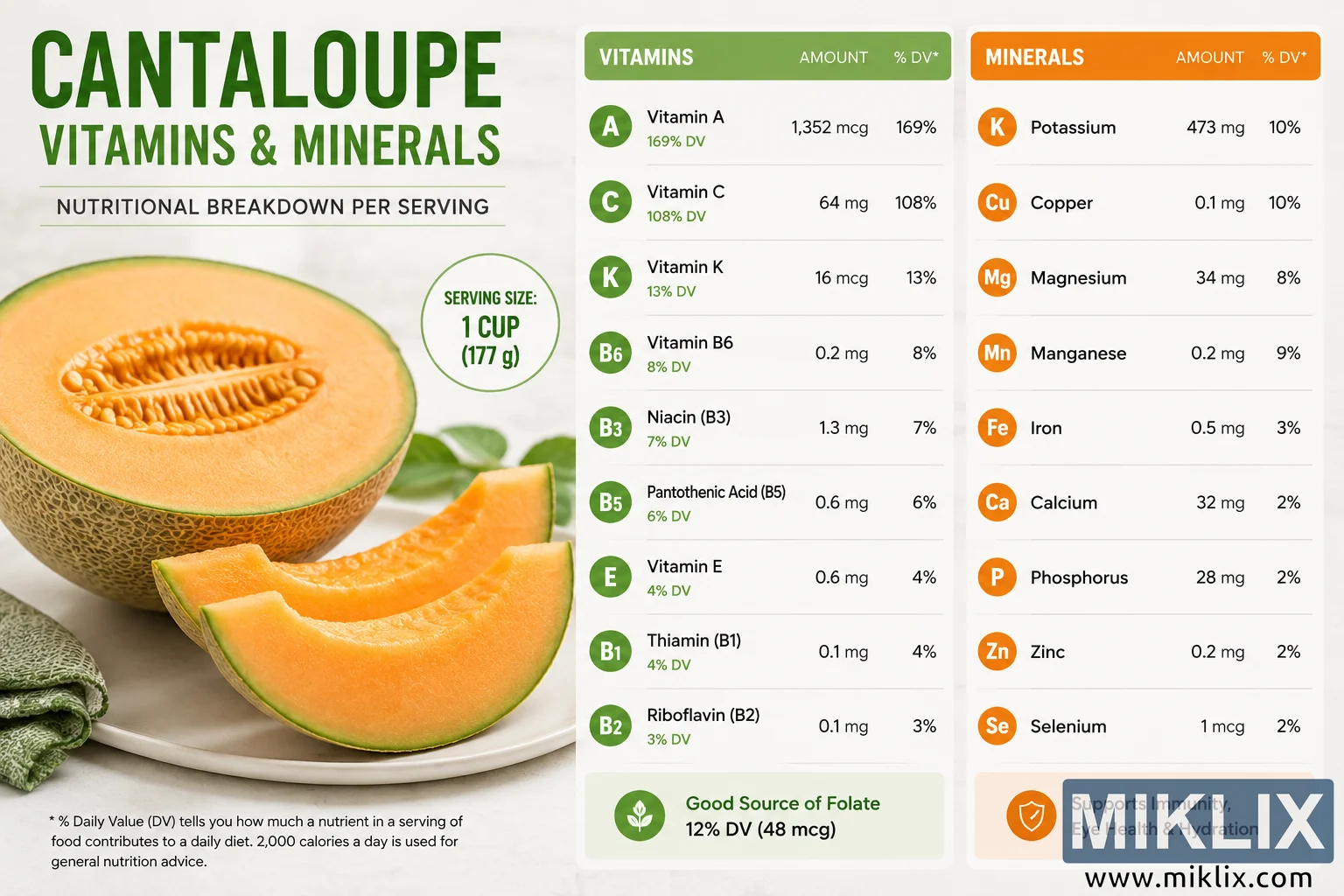
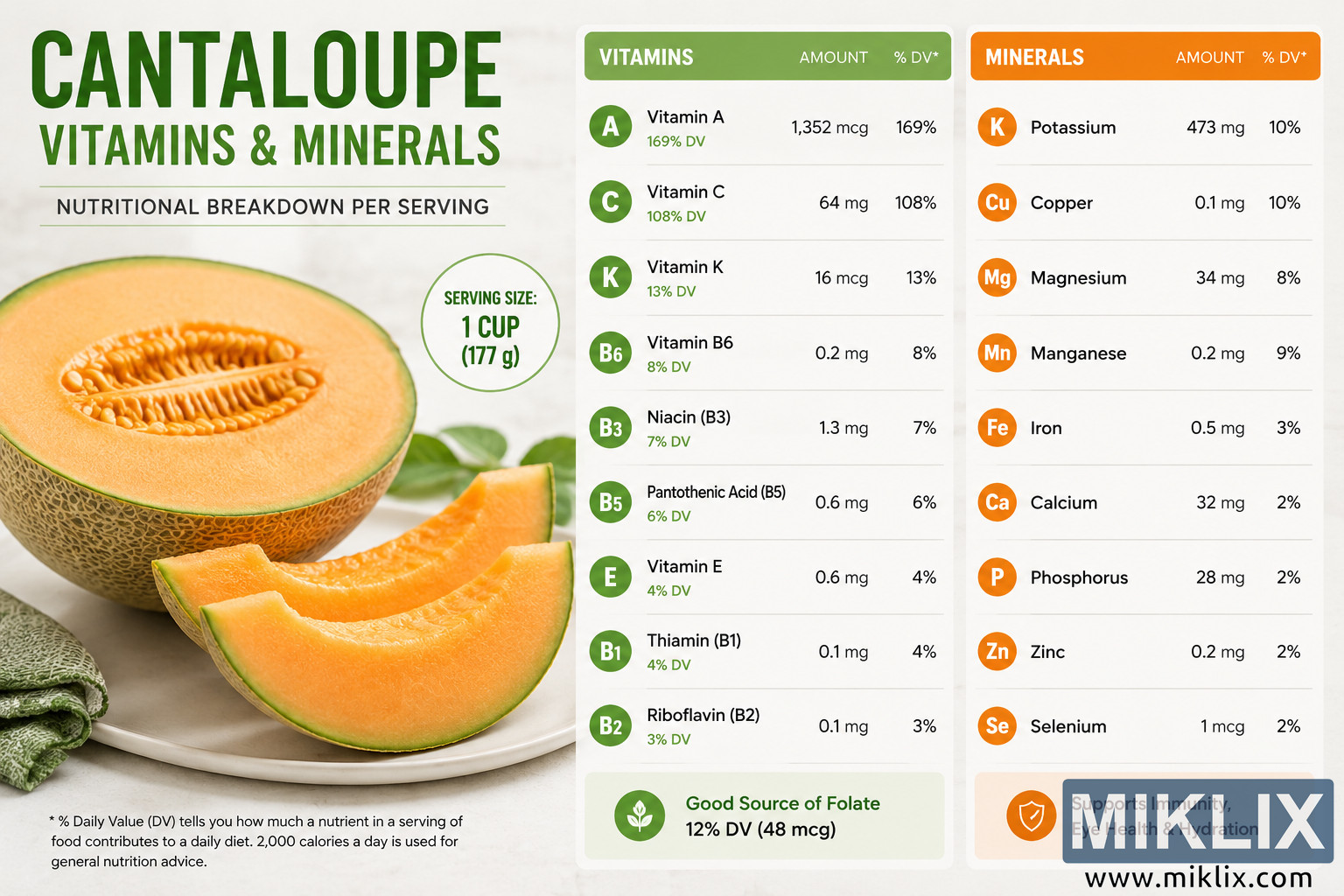
Detailed nutritional infographic highlighting cantaloupe vitamins and minerals per serving, including vitamin A, vitamin C, potassium, magnesium, and other essential nutrients with daily value percentages in a clean landscape chart design.
Cantaloupe Vitamins and Minerals Nutritional Breakdown Chart
Versiones disponibles de esta imagen
Los archivos de imagen que se pueden descargar a continuación están menos comprimidos y tienen mayor resolución -y, por tanto, mayor calidad- que las imágenes incrustadas en artículos y páginas de este sitio web, cuyo tamaño está más optimizado para reducir el consumo de ancho de banda.
Talla normal (1,536 x 1,024)
Tamaño grande (3,072 x 2,048)
Tamaño muy grande (4,608 x 3,072)
Tamaño extragrande (6,144 x 4,096)
Tamaño cómicamente grande (1,048,576 x 699,051)
- Sigo subiendo... ;-)
Descripción de la imagen
A high-resolution landscape-format nutritional infographic presents a detailed visual breakdown of the vitamins and minerals found in cantaloupe per serving. The composition is clean, modern, and highly readable, designed in the style of a premium health and wellness educational poster. The background is soft and lightly textured in off-white and pale gray tones, allowing the vivid orange and green colors of the cantaloupe to stand out prominently.
On the left side of the image is a large, realistic photograph of a freshly cut cantaloupe melon resting on a white plate. One half of the melon is shown cut open, revealing the orange flesh and seed cavity in sharp detail, while several curved cantaloupe slices are arranged neatly in front of it. The rind texture is visible and natural-looking, with green outer edges and netted tan skin. Soft natural lighting creates gentle shadows and highlights that enhance freshness and depth. Above the fruit photo is a bold headline in large green typography reading “CANTALOUPE VITAMINS & MINERALS,” followed by a smaller subtitle describing the image as a nutritional breakdown per serving. Nearby, a circular serving-size badge indicates a serving amount of one cup, approximately 177 grams.
The center portion of the infographic contains a vertically organized chart labeled “VITAMINS” in a green header bar. Beneath the header is a neatly aligned list of vitamins with associated nutrient quantities and percentage daily values. The list includes Vitamin A, Vitamin C, Vitamin K, Vitamin B6, Niacin (B3), Pantothenic Acid (B5), Vitamin E, Thiamin (B1), and Riboflavin (B2). Each nutrient row is accompanied by a circular icon displaying the vitamin letter or abbreviation. Values are presented in metric units such as milligrams or micrograms alongside percentage daily value figures. Thin divider lines separate each row for readability.
On the right side is a matching “MINERALS” section with an orange header bar. This chart lists minerals commonly found in cantaloupe, including Potassium, Copper, Magnesium, Manganese, Iron, Calcium, Phosphorus, Zinc, and Selenium. Each mineral appears beside a colored circular icon featuring a chemical abbreviation or letter identifier. Nutrient amounts and daily value percentages are aligned in clean columns, mirroring the design style of the vitamin panel.
At the bottom of the infographic are small informational callouts highlighting additional nutritional benefits such as folate content, hydration support, immunity support, and eye health benefits. A small footnote in fine print explains that daily value percentages are based on a standard diet reference. The overall design balances educational clarity with appealing food photography, making the image suitable for nutrition blogs, wellness articles, educational materials, recipe websites, fitness resources, or healthy eating guides.
La imagen está relacionada con: A Guide to the Health Benefits of Cantaloupe