
Imagen: Cellular Protection Visualization Showing Tarragon Antioxidant Benefits
Publicado:
Última actualización: 20 de junio de 2026, 7:51:25 UTC
Explore a high-resolution scientific visualization of tarragon’s antioxidant properties, featuring cellular protection, oxidative stress reduction, and natural wellness concepts in a vibrant green botanical setting.
Cellular Protection Visualization Showing Tarragon Antioxidant Benefits
Versiones disponibles de esta imagen
Los archivos de imagen que se pueden descargar a continuación están menos comprimidos y tienen mayor resolución -y, por tanto, mayor calidad- que las imágenes incrustadas en artículos y páginas de este sitio web, cuyo tamaño está más optimizado para reducir el consumo de ancho de banda.
Talla normal (1,536 x 1,024)
Tamaño grande (3,072 x 2,048)
Tamaño muy grande (4,608 x 3,072)
Tamaño extragrande (6,144 x 4,096)
Tamaño cómicamente grande (1,048,576 x 699,051)
- Sigo subiendo... ;-)
Descripción de la imagen
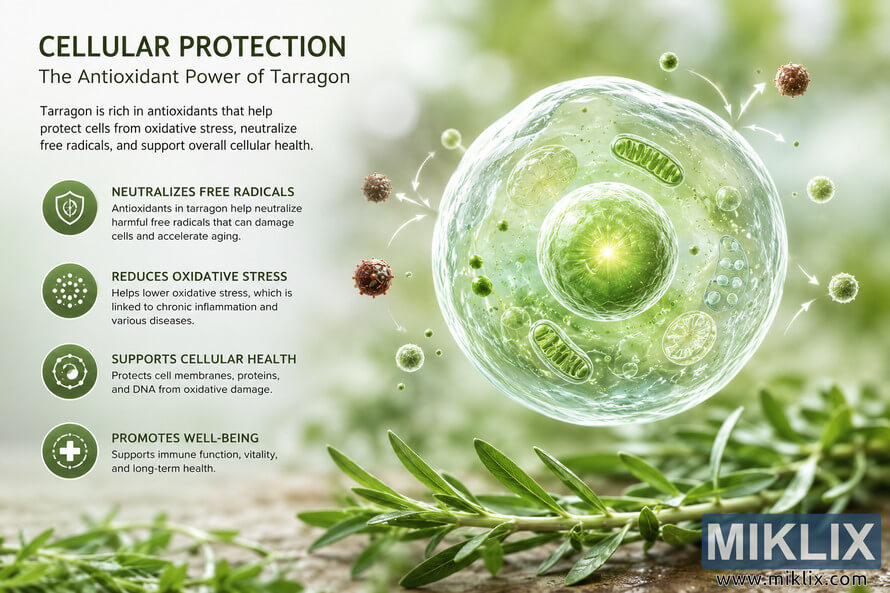
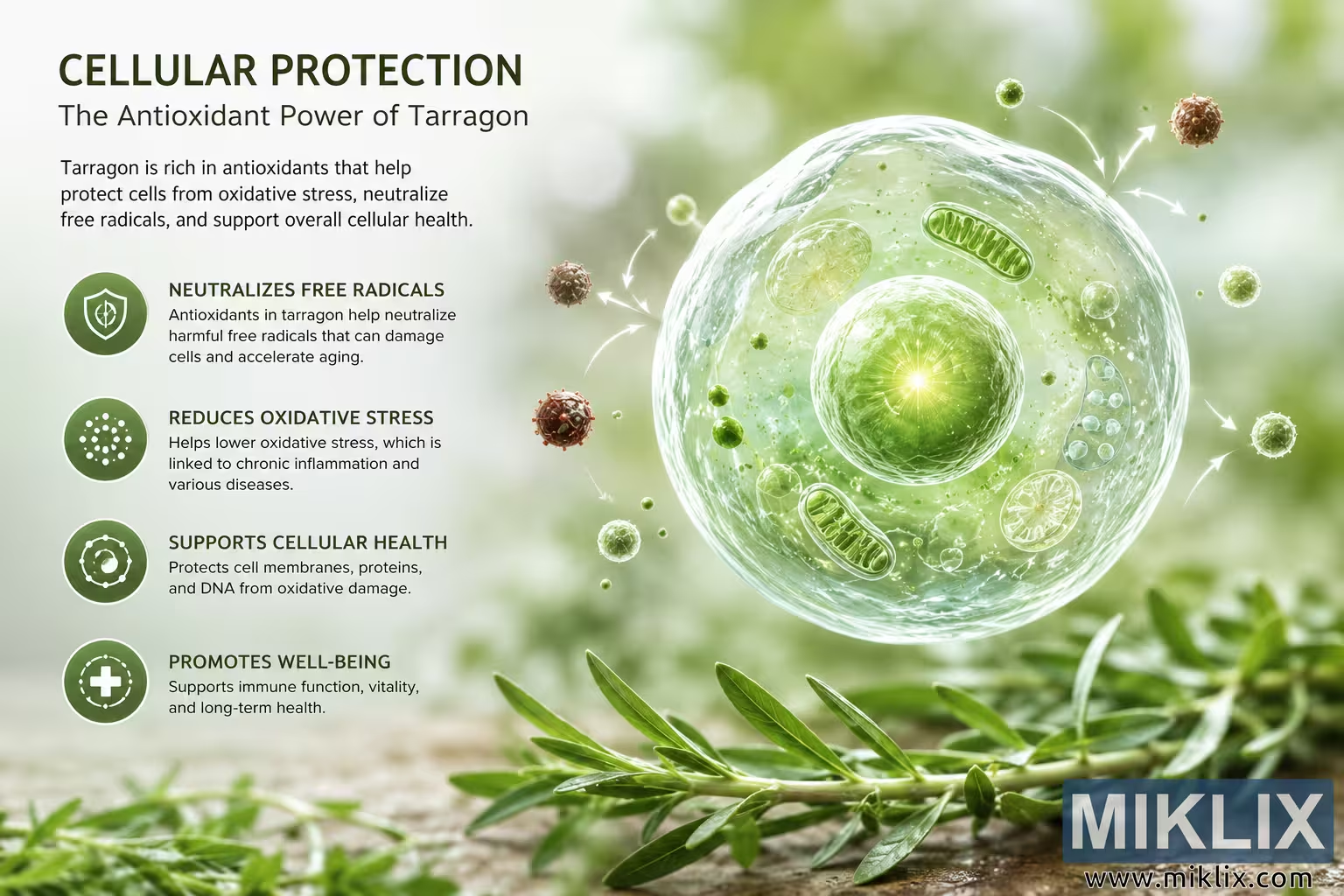
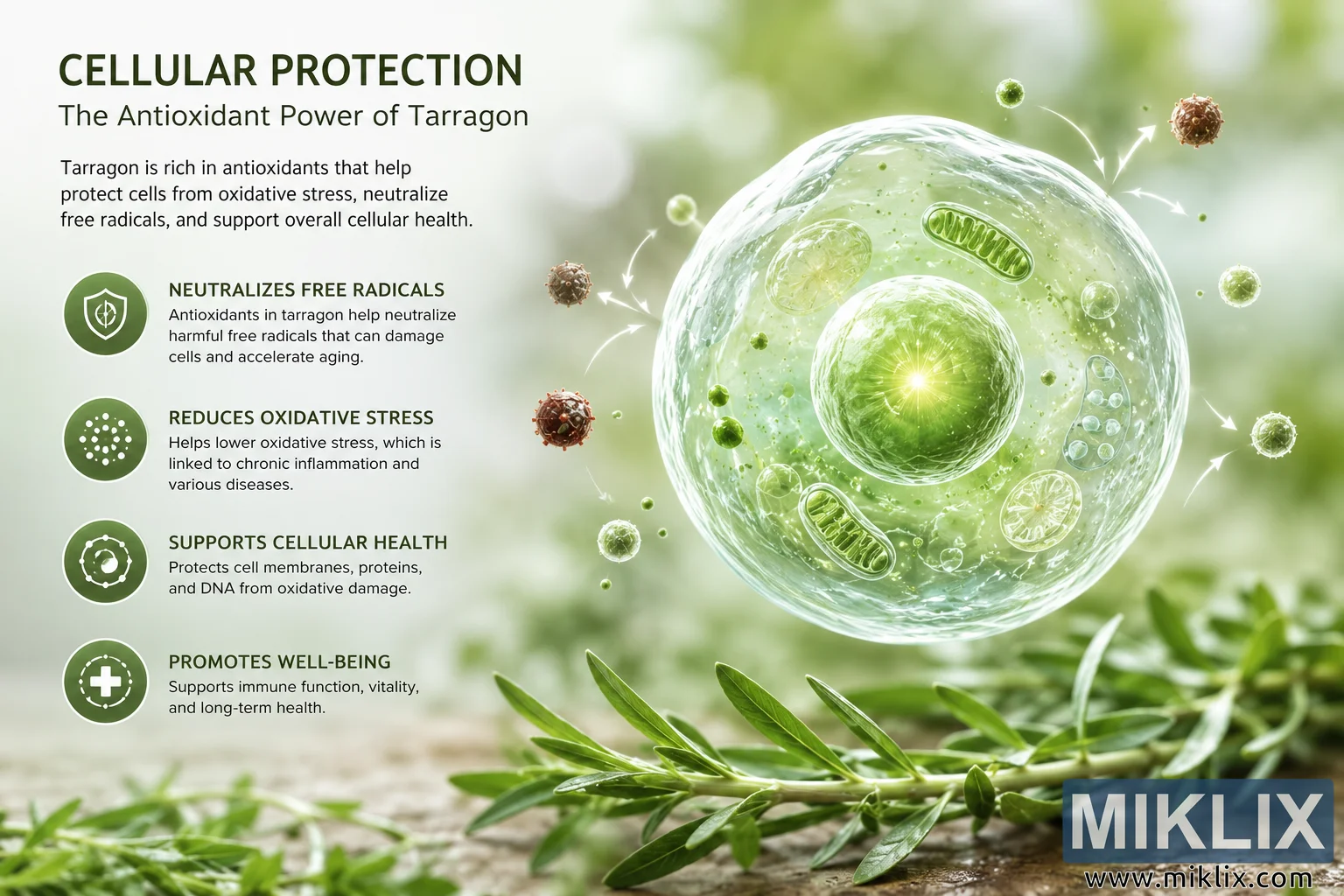
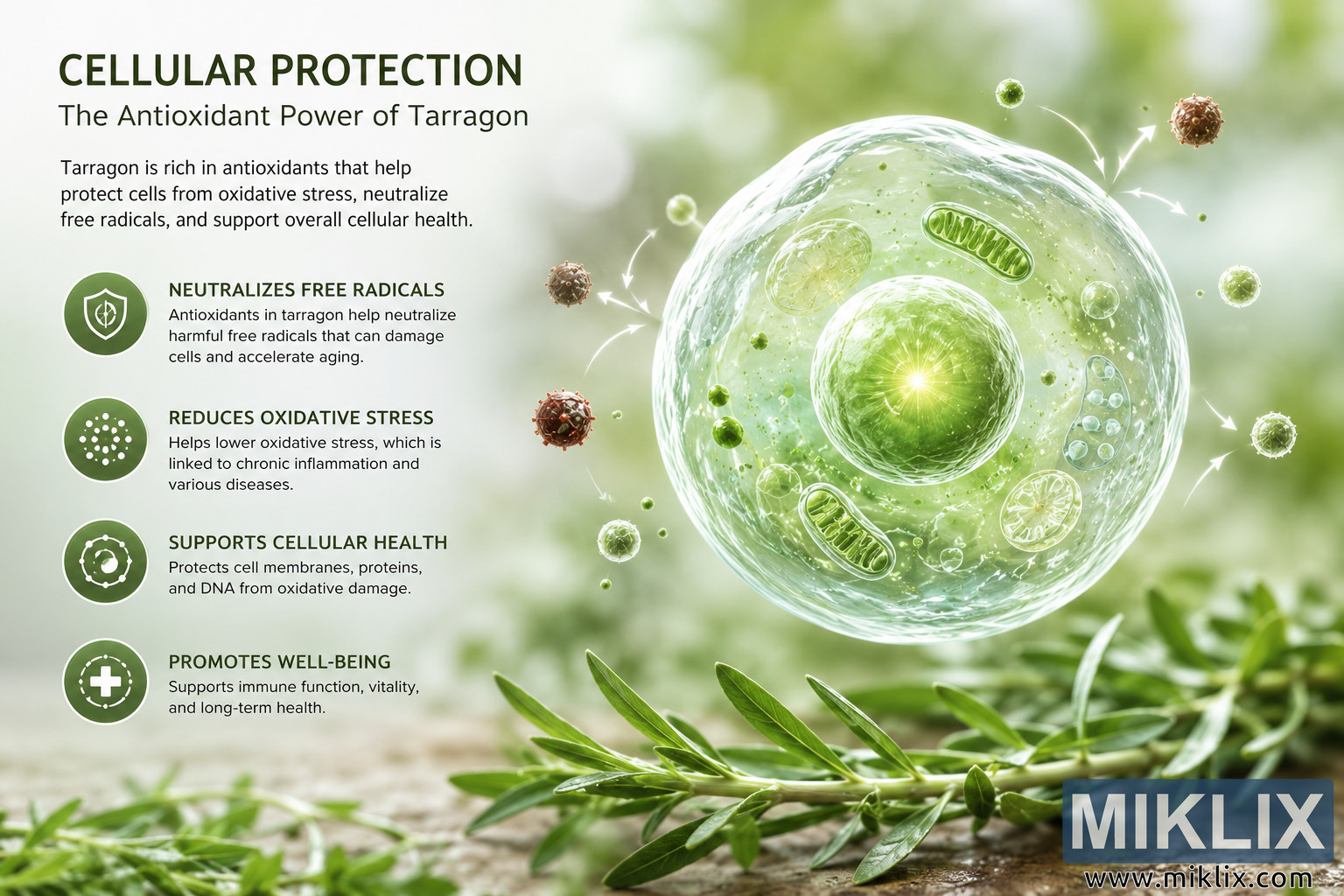
This high-resolution landscape-format digital illustration presents a scientific and wellness-inspired visualization focused on the antioxidant properties of tarragon and its potential role in supporting cellular protection. The composition combines elements of modern medical illustration, botanical imagery, and clean infographic design to create a visually engaging educational scene centered around health, vitality, and natural plant-based nutrition. The overall color palette is dominated by soft greens, muted whites, and subtle earthy tones, reinforcing themes of freshness, wellness, nature, and biological harmony. The image is highly detailed and cinematic in quality, with carefully balanced lighting, depth of field, and translucent effects that create a premium scientific visualization aesthetic.
On the right side of the composition, a large semi-transparent biological cell floats prominently in the foreground. The cell is rendered in detailed three-dimensional style with realistic membrane textures and internal organelles visible through its translucent outer layer. Inside the cell, several structures resembling mitochondria and other microscopic cellular components glow softly in shades of green and white, symbolizing energy production, vitality, and cellular integrity. At the center of the cell, a bright luminous core emits radiant light, representing health, protection, and biological resilience. The illumination creates subtle reflections and highlights across the membrane surface, adding realism and a sense of living movement.
Surrounding the central cell are several small particle-like elements and spherical forms that visually represent free radicals, oxidative stress agents, or microscopic environmental threats. Some of these particles appear darker and more textured, while others are lighter and diffuse. White directional arrows curve around the cell, symbolizing defensive action, neutralization, and protective biological processes. The arrows suggest that antioxidant compounds from tarragon are helping shield the cell from oxidative damage. This visual metaphor communicates concepts such as detoxification, immune support, anti-aging effects, and the reduction of cellular stress.
In the lower foreground and along the bottom edge of the image, fresh tarragon leaves and stems are displayed in sharp detail. The herb appears vibrant, natural, and freshly harvested, with elongated green leaves featuring realistic veins, moisture highlights, and organic curvature. The tarragon branches create a botanical frame that anchors the scientific visualization in a natural context. The herb imagery contrasts beautifully with the futuristic medical illustration style of the cell, visually linking plant-based nutrition with modern scientific understanding of antioxidants and wellness.
The background is softly blurred with a shallow depth-of-field effect, creating a clean and calming atmosphere that enhances the focus on the central cellular structure. Out-of-focus green botanical tones and gentle light gradients provide a serene environment reminiscent of a fresh herbal garden or natural wellness setting. Floating particles and soft glowing bokeh effects contribute to the sense of microscopic activity and biological energy throughout the scene.
On the left side of the image, an infographic-style information panel is integrated into the composition. The typography is clean, modern, and easy to read, using dark green and black text against a light neutral background. A large headline emphasizes the concept of cellular protection and the antioxidant power of tarragon. Beneath the headline, several informational sections are paired with circular icons and concise educational statements describing health-supportive properties associated with antioxidants. These include references to neutralizing free radicals, reducing oxidative stress, supporting cellular health, and promoting general well-being. The icons feature simple scientific and wellness-inspired symbols such as shields, molecules, cellular patterns, and medical crosses, reinforcing themes of immunity, defense, and health maintenance.
The entire composition balances educational infographic design with premium scientific artwork. It communicates ideas related to nutrition science, herbal wellness, antioxidant research, natural medicine, and preventive health in a visually sophisticated way. The image avoids commercial branding or product advertising and instead focuses on universal health concepts and nature-inspired biological protection. The result is a polished visual suitable for use in wellness articles, educational presentations, nutritional content, health blogs, botanical medicine discussions, scientific marketing materials, or medical-inspired editorial design.
La imagen está relacionada con: A Guide to the Health Benefits of Tarragon