
Imagen: Persimmon Antioxidants in Cancer Prevention Research Laboratory Scene
Publicado:
Última actualización: 4 de junio de 2026, 18:32:36 UTC
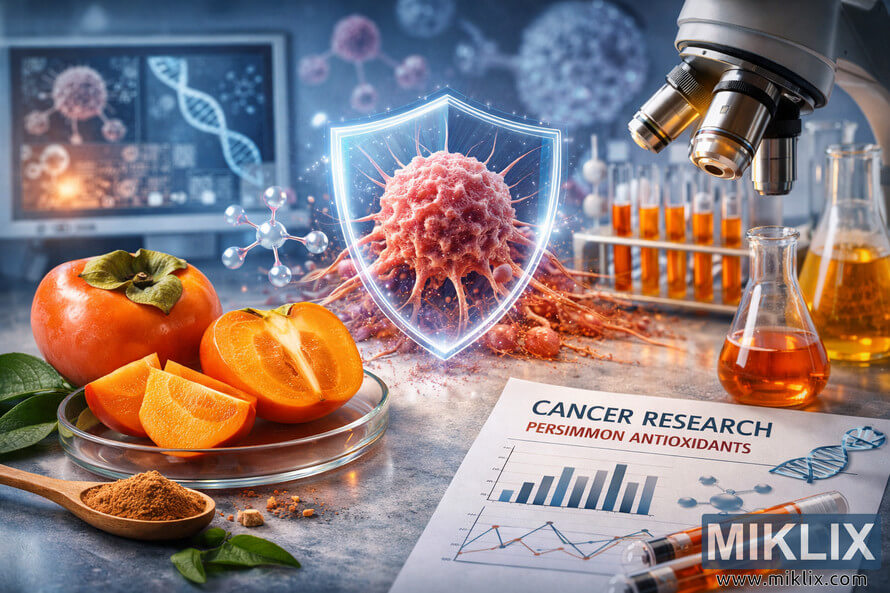
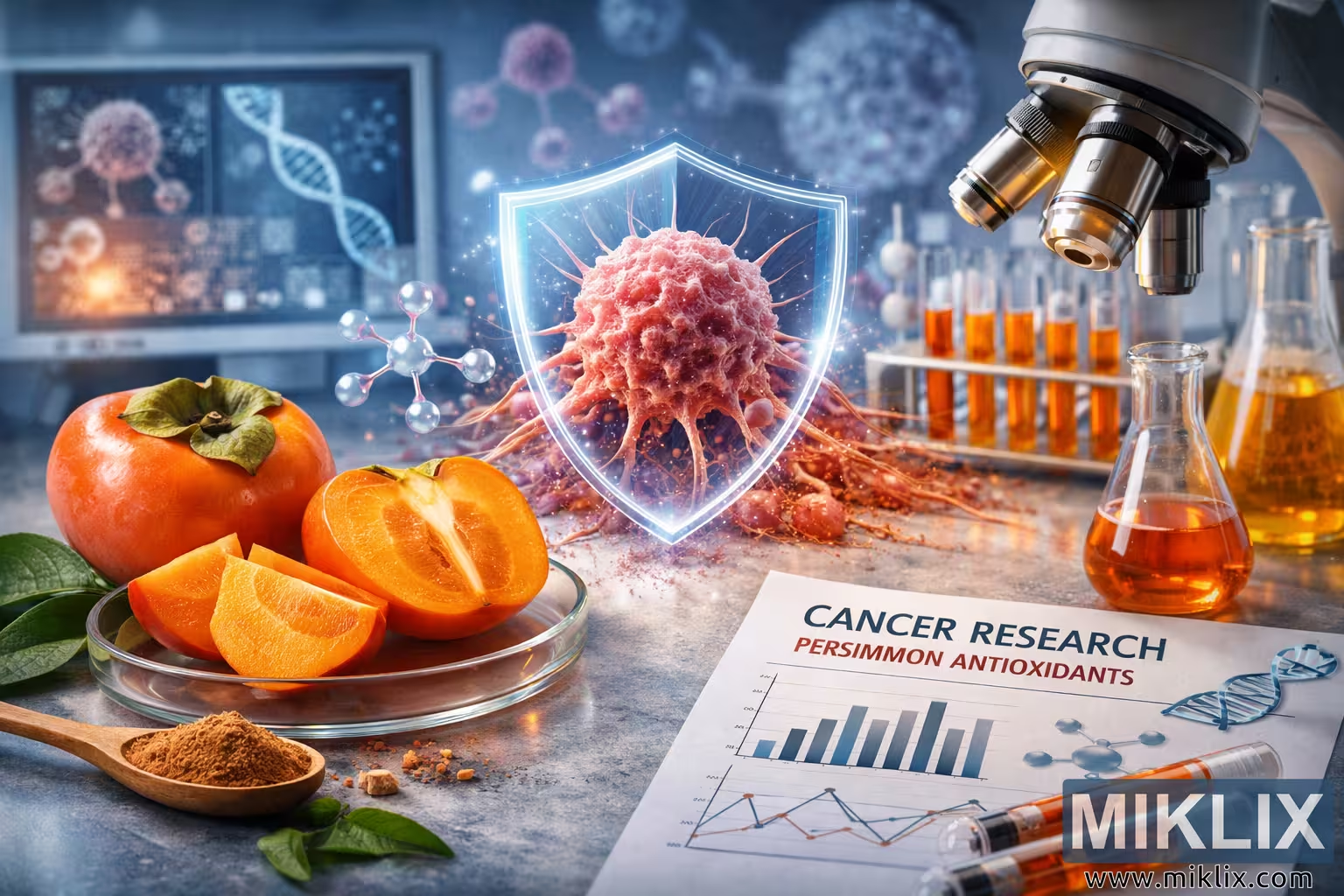
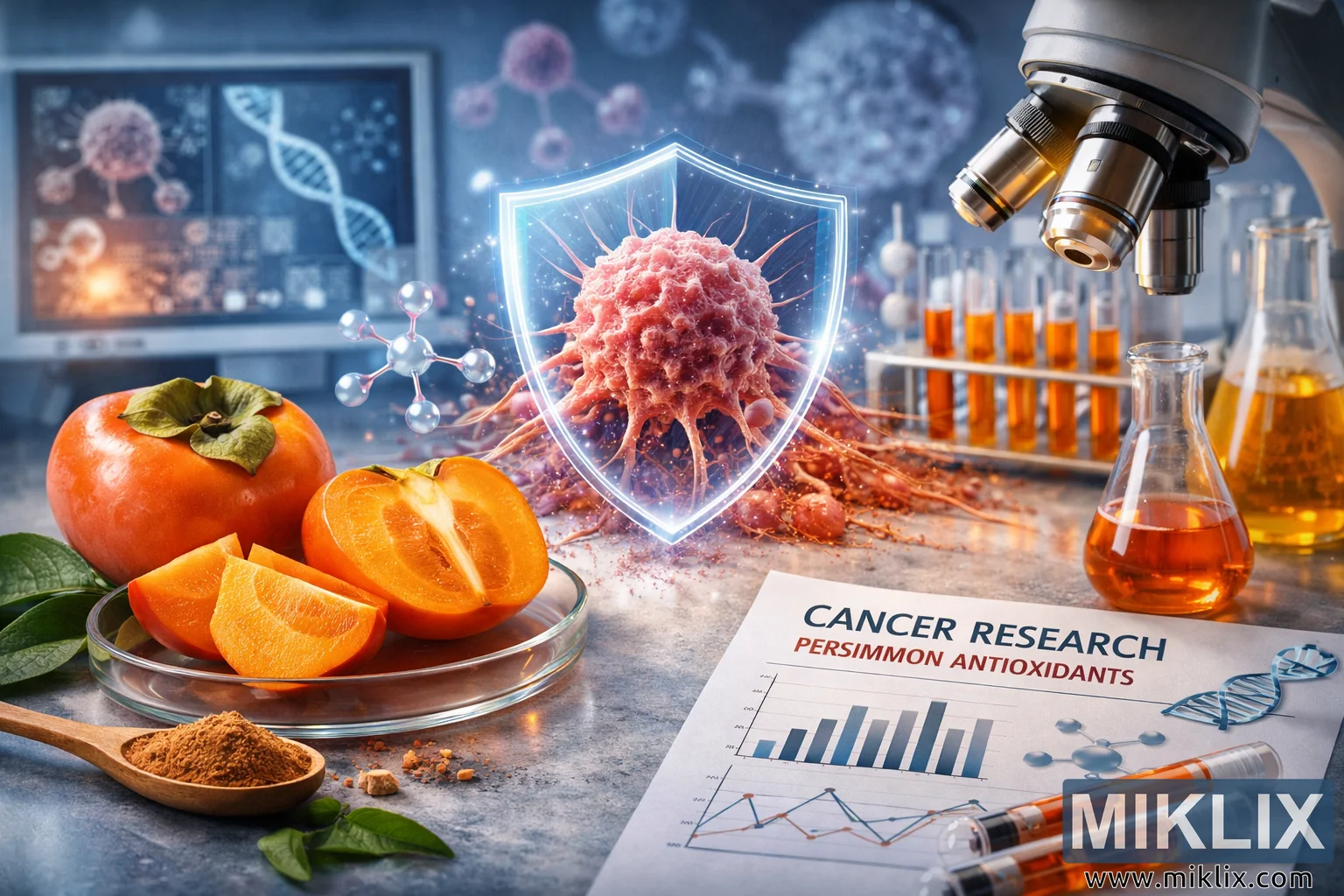
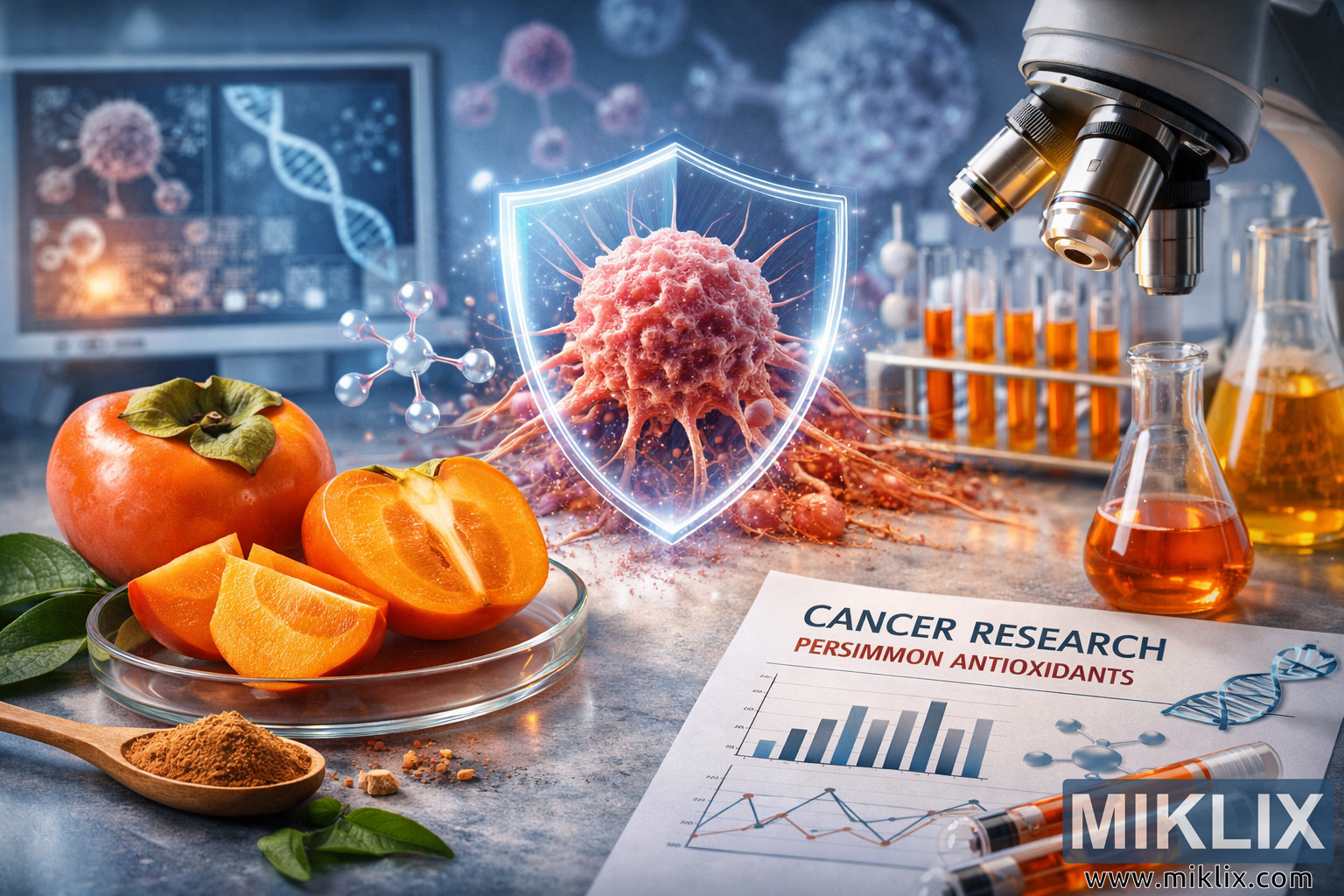
High-resolution scientific image of a cancer prevention research laboratory focusing on persimmon antioxidants. The scene features sliced persimmons, persimmon extract, and powder on a lab countertop, alongside a conceptual cancer cell protected by a glowing blue shield, DNA strands, molecular structures, a microscope, test tubes, flasks, and a research report titled "Cancer Research – Persimmon Antioxidants."
Persimmon Antioxidants in Cancer Prevention Research Laboratory Scene
Versiones disponibles de esta imagen
Los archivos de imagen que se pueden descargar a continuación están menos comprimidos y tienen mayor resolución -y, por tanto, mayor calidad- que las imágenes incrustadas en artículos y páginas de este sitio web, cuyo tamaño está más optimizado para reducir el consumo de ancho de banda.
Talla normal (1,536 x 1,024)
Tamaño grande (3,072 x 2,048)
Tamaño muy grande (4,608 x 3,072)
Tamaño extragrande (6,144 x 4,096)
Tamaño cómicamente grande (1,048,576 x 699,051)
- Sigo subiendo... ;-)
Descripción de la imagen
A high-resolution, landscape-oriented scientific photograph depicts a modern research laboratory focused on cancer prevention and the protective antioxidant effects of persimmon. The composition is carefully arranged across a wide laboratory countertop, creating a visual narrative that connects natural food-based compounds with advanced biomedical research. Cool blue ambient lighting fills the room, suggesting a controlled, high-tech environment, while the warm oranges and yellows of the persimmon fruit and extracts provide a vivid contrast that draws the eye and symbolizes vitality and health.
In the left foreground, a clear glass petri dish rests on the smooth laboratory surface. Inside the dish, several slices of ripe persimmon are neatly arranged. One slice is positioned to show the glossy, vibrant orange flesh, with a slightly translucent, juicy texture that catches the light. Tiny droplets of moisture glisten on the cut surface, emphasizing freshness and the idea of nutrient-rich content. Behind the slices, a whole persimmon sits partially in view, its skin a rich, saturated orange with subtle gradients of color. At the top of the whole fruit, a small cluster of green leaves remains attached, their slightly curled edges and visible veins adding a natural, organic detail that contrasts with the sterile lab environment.
Next to the petri dish, a small, cylindrical glass beaker is filled with a bright orange liquid, representing a persimmon extract used in the research. The liquid has a smooth surface with a faint reflection of the surrounding equipment, and the color intensity suggests a concentrated solution of bioactive compounds. Near the beaker, a wooden spoon lies on the countertop, its bowl filled with finely ground persimmon powder. The powder is a muted orange-brown shade, with a slightly uneven texture that hints at dried and processed fruit material. A few granules spill over the edge of the spoon onto the lab surface, reinforcing the sense of real, tactile ingredients being used in experimental work. Scattered nearby are a few fresh green persimmon leaves, carefully placed to visually connect the raw fruit, the powdered form, and the liquid extract as different representations of the same natural source.
At the center of the image, the focus shifts from the tangible fruit to a conceptual visualization of cancer biology and antioxidant protection. Resting on the countertop is a three-dimensional rendering of a cancer cell, depicted as a rounded, irregular mass with a pinkish-purple hue. The surface of the cell is uneven and slightly spiky, with tendril-like extensions radiating outward, suggesting invasive growth and uncontrolled proliferation. Surrounding this cell is a luminous, semi-transparent blue shield that forms a protective barrier. The shield emits a soft glow, with subtle rays of light extending outward, symbolizing the protective effects of antioxidants derived from persimmon. The contrast between the ominous appearance of the cancer cell and the calm, radiant shield visually communicates the idea of defense and prevention.
Behind and around the central cell and shield, stylized DNA double helix strands float in the air, rendered in shades of blue and white. These helices twist gracefully through the background, some in sharp focus and others more blurred, creating a sense of depth and emphasizing the genetic and molecular dimensions of cancer research. Interspersed among the DNA strands are abstract molecular structures composed of small spheres connected by thin rods, representing chemical compounds and signaling pathways. These elements reinforce the scientific context, suggesting that the persimmon antioxidants are being studied at the molecular level for their potential to modulate cellular processes and protect DNA from damage.
On the right side of the image, a laboratory microscope occupies a prominent position in the foreground. The microscope has a metallic body with a reflective finish, and the objective lens is angled downward as if focused on a slide just out of frame. The lens housing catches the cool blue light of the lab, creating subtle highlights and reflections that convey precision and advanced technology. The presence of the microscope underscores the idea that the findings about persimmon antioxidants are grounded in rigorous, observable experimentation rather than abstract theory.
Behind the microscope, a rack of test tubes stands on the countertop. Each test tube contains an orange liquid similar in color to the persimmon extract in the beaker, suggesting multiple experimental samples or different concentrations being tested. The test tubes are arranged in an orderly row, and the glass surfaces reflect both the blue ambient light and the warm tones of the liquids inside. Further back, a pair of Erlenmeyer flasks holds orange and yellow solutions, hinting at related experiments, perhaps involving different fractions of persimmon compounds or comparative antioxidant assays. The flasks’ conical shapes and narrow necks add visual variety to the array of glassware and reinforce the laboratory setting.
In the left background, a large monitor screen is mounted above the countertop. The screen displays a collage of scientific imagery: a detailed DNA helix, magnified views of cellular structures, and a graph with plotted data points. The colors on the screen echo the blue and purple tones of the central cancer cell visualization, tying the digital display to the conceptual elements in the middle of the scene. The presence of the monitor suggests that data from experiments, imaging, and simulations are being integrated to understand how persimmon antioxidants might influence cancer-related pathways.
In the lower right corner of the image, a printed research report lies flat on the countertop. The report’s title, "CANCER RESEARCH" appears in bold, followed by a subtitle, "PERSIMMON ANTIOXIDANTS," also in bold lettering. Below the title, the page features a combination of bar graphs, line graphs, and a stylized DNA helix illustration. The graphs show multiple colored bars and lines, implying comparative results, dose-response relationships, or time-course studies. Although the specific numbers are not legible, the layout clearly communicates that quantitative data has been collected and analyzed. Next to the report, a few test tubes filled with orange persimmon extract rest on the surface, visually linking the documented findings to the experimental materials.
The overall lighting of the scene blends cool and warm tones. The dominant blue illumination suggests a controlled, high-tech environment, often associated with advanced medical research and precision instrumentation. At the same time, the warm glow of the persimmon fruit, extracts, and related liquids introduces a sense of natural energy and life. This interplay of colors subtly reinforces the theme of using natural, plant-based compounds within the framework of modern scientific investigation.
The composition is balanced so that the viewer’s eye moves naturally from the fresh persimmon slices and extract on the left, through the central cancer cell and protective shield, and toward the microscope, test tubes, and research report on the right. Every element in the image contributes to a cohesive narrative: persimmon as a rich source of antioxidants; laboratory tools and methods as the means of investigation; and conceptual visualizations of cells, DNA, and molecular structures as representations of the underlying biological mechanisms. Together, these details create a comprehensive visual story about cancer prevention research focused on the potential protective effects of persimmon-derived antioxidants, without referencing any specific brands or commercial products.
The photograph, while highly detailed and visually engaging, maintains a professional and educational tone. It is suitable for use in scientific communication, health education materials, or articles discussing the role of dietary antioxidants in cancer prevention. The image conveys both the complexity of cancer biology and the hopeful promise of natural compounds like those found in persimmon, all within a single, carefully orchestrated laboratory scene.
La imagen está relacionada con: The Complete Guide to the Health Benefits of Persimmons