
Imagen: Nutritional Breakdown of Radishes
Publicado:
Última actualización: 10 de julio de 2026, 16:29:51 UTC
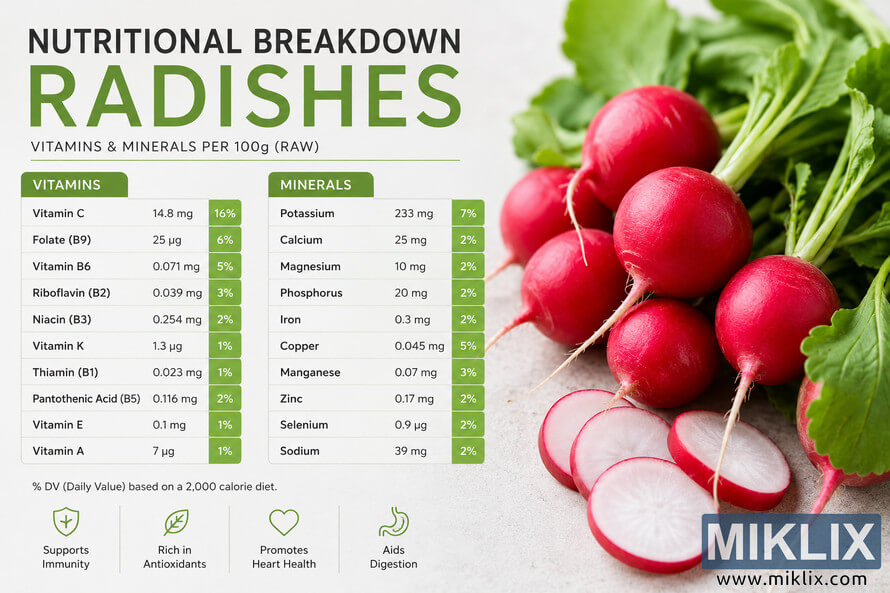
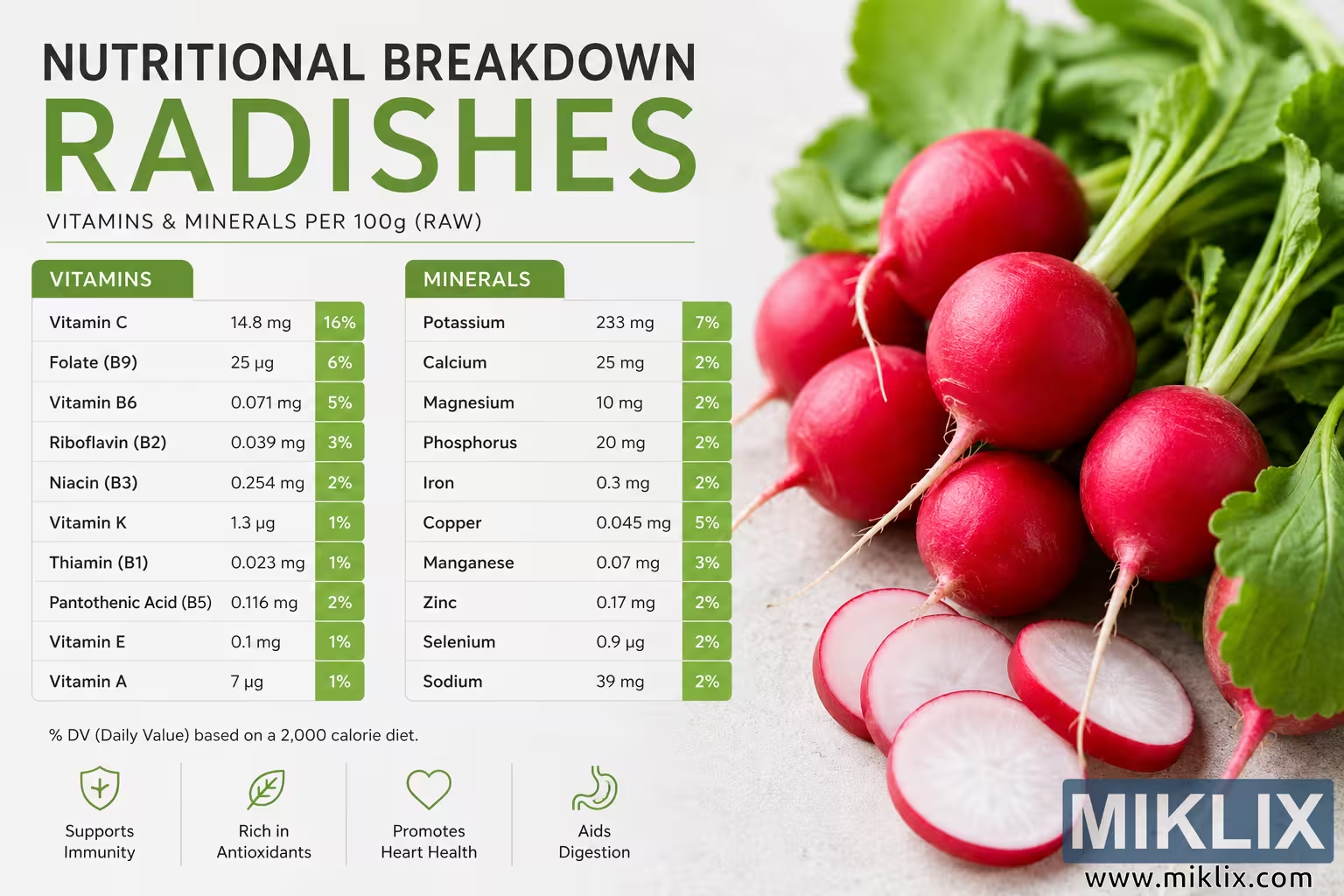
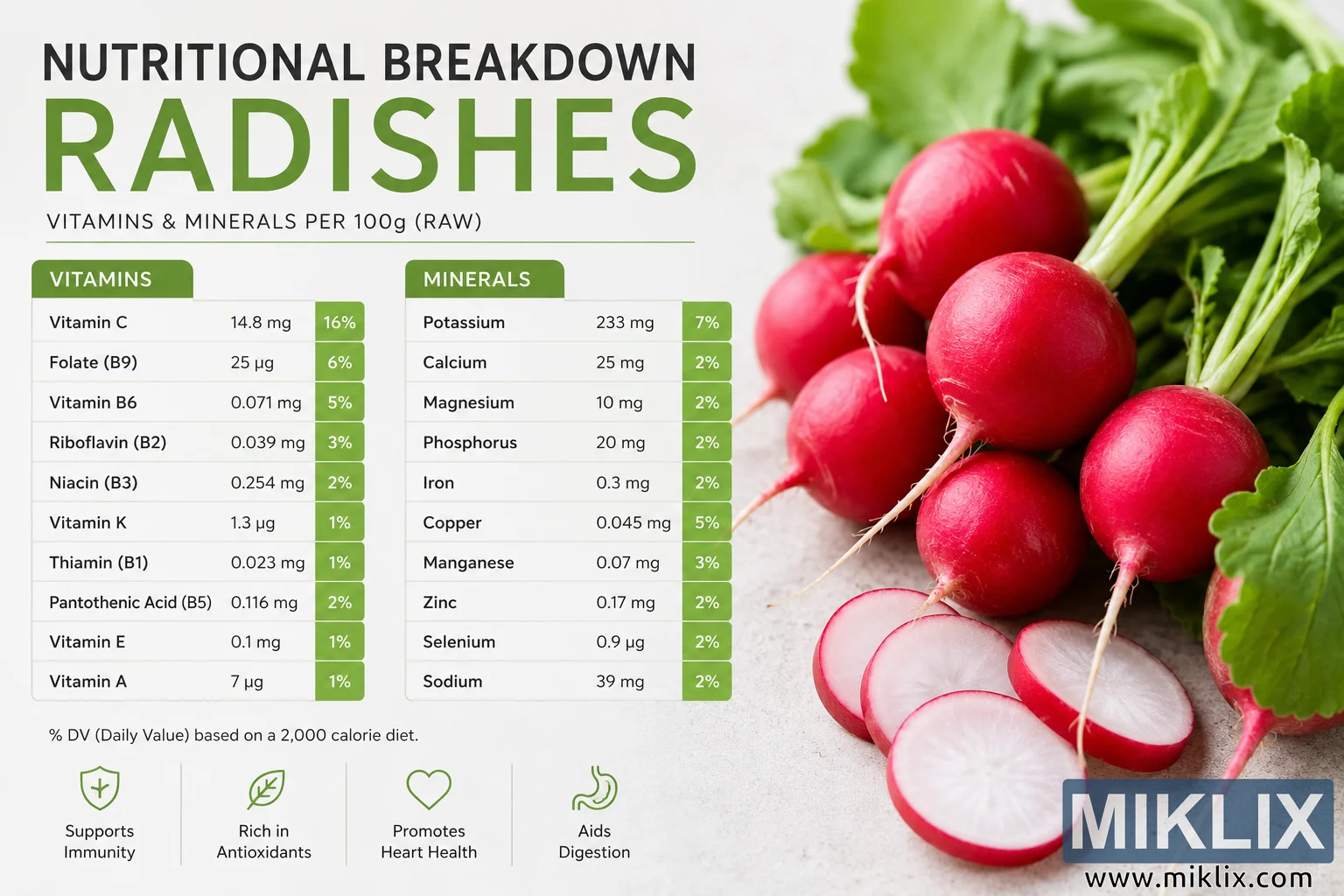
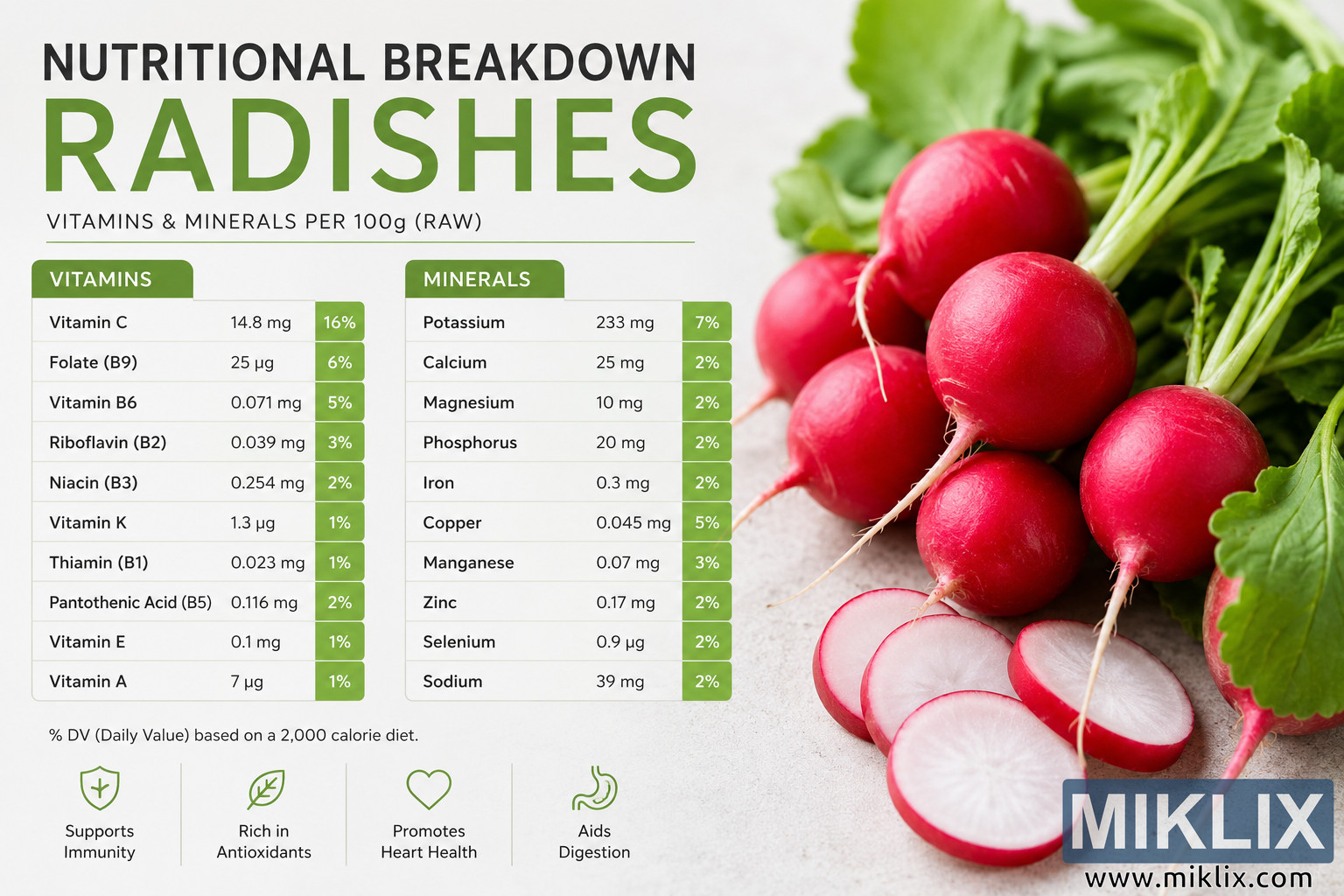
Clean landscape nutrition infographic showing vitamins, minerals, daily values, and health benefit icons for raw radishes, paired with a fresh radish photo.
Nutritional Breakdown of Radishes
Versiones disponibles de esta imagen
Los archivos de imagen que se pueden descargar a continuación están menos comprimidos y tienen mayor resolución -y, por tanto, mayor calidad- que las imágenes incrustadas en artículos y páginas de este sitio web, cuyo tamaño está más optimizado para reducir el consumo de ancho de banda.
Talla normal (1,536 x 1,024)
Tamaño grande (3,072 x 2,048)
Tamaño muy grande (4,608 x 3,072)
Tamaño extragrande (6,144 x 4,096)
Tamaño cómicamente grande (1,048,576 x 699,051)
- Sigo subiendo... ;-)
Descripción de la imagen
A landscape-oriented nutritional infographic presents a clean, modern breakdown of vitamins and minerals found in raw radishes. The design is arranged like a polished food label mixed with a fresh produce photograph. The left half contains the informational chart, while the right half is dominated by a bright, high-resolution image of fresh red radishes with leafy green tops. The overall look is crisp, editorial, and health-focused, using a white and pale stone background with green accents that match the vegetable leaves.
At the top left, large bold text reads “NUTRITIONAL BREAKDOWN,” followed by the oversized word “RADISHES” in green capital letters. Beneath the headline, a smaller subtitle states “VITAMINS & MINERALS PER 100g (RAW),” making it clear that the numbers are presented for a 100 gram serving of raw radishes. The typography is structured and easy to read, with strong contrast between dark charcoal text, green headings, and light neutral table rows.
The nutrition chart is divided into two main columns. The first column is titled “VITAMINS” and lists Vitamin C, Folate (B9), Vitamin B6, Riboflavin (B2), Niacin (B3), Vitamin K, Thiamin (B1), Pantothenic Acid (B5), Vitamin E, and Vitamin A. Each row includes the nutrient amount and a small green percentage box showing the approximate daily value. Vitamin C is shown as the most prominent vitamin entry at 14.8 mg and 16%, followed by folate at 25 µg and 6%, and Vitamin B6 at 0.071 mg and 5%. The remaining vitamins are displayed with smaller percentages, emphasizing that radishes are especially notable for Vitamin C while also contributing modest amounts of several B vitamins and other micronutrients.
The second column is titled “MINERALS” and lists Potassium, Calcium, Magnesium, Phosphorus, Iron, Copper, Manganese, Zinc, Selenium, and Sodium. Potassium appears at the top with 233 mg and 7%, suggesting it is the leading mineral contribution in the chart. Calcium, magnesium, phosphorus, iron, zinc, selenium, and sodium are shown with smaller percentage values, while copper and manganese stand out slightly with higher relative percentages. The chart uses clean horizontal row dividers and green percentage badges to make the numbers scannable at a glance.
Below the two nutrient tables, a note explains that the percent daily values are based on a 2,000 calorie diet. Along the bottom are four minimalist green line icons with short benefit labels. The icons represent general wellness themes: a shield with a medical cross for “Supports Immunity,” a leaf for “Rich in Antioxidants,” a heart for “Promotes Heart Health,” and a stomach-shaped digestive icon for “Aids Digestion.” These icons reinforce the health-oriented message without overwhelming the main nutritional data.
The right side of the image shows a vivid photographic arrangement of radishes. Several whole radishes are grouped together with smooth, glossy red skins, pale roots, and fresh green leaves extending upward and outward. The radishes are placed on a neutral textured surface that resembles a light stone or kitchen countertop. In the foreground, several radish slices reveal crisp white interiors outlined by thin red skins. The sliced pieces add freshness and visual context, making the produce appear ready to eat in a salad, garnish, or healthy snack. The photography-style portion has natural lighting, gentle shadows, and strong color contrast between the red radishes, green leaves, and soft off-white background.
The composition balances practical information with appetizing food imagery. The tables on the left provide structured nutrient values, while the close-up radish photograph on the right makes the image visually appealing and recognizable. The graphic contains no visible brand names, logos, or commercial packaging. It feels suitable for a nutrition article, educational food guide, healthy eating blog, produce fact sheet, recipe website, classroom handout, or wellness-focused social media post. Overall, the image communicates that radishes are a low-calorie raw vegetable with meaningful Vitamin C content, notable potassium, and a variety of smaller vitamin and mineral contributions, presented in a bright, fresh, and accessible visual format.
La imagen está relacionada con: The Powerful Health Benefits of Radishes: Your Complete Nutrition Guide