
Imagen: Watermelon Calorie Comparison – A Low-Calorie Food Choice
Publicado:
Última actualización: 16 de agosto de 2026, 19:08:10 UTC
Learn how watermelon compares with other everyday foods in this calorie comparison infographic. Featuring clear calorie values, a clean layout, and a focus on watermelon as a refreshing, naturally low-calorie food choice.
Watermelon Calorie Comparison – A Low-Calorie Food Choice
Versiones disponibles de esta imagen
Los archivos de imagen que se pueden descargar a continuación están menos comprimidos y tienen mayor resolución -y, por tanto, mayor calidad- que las imágenes incrustadas en artículos y páginas de este sitio web, cuyo tamaño está más optimizado para reducir el consumo de ancho de banda.
Talla normal (1,536 x 1,024)
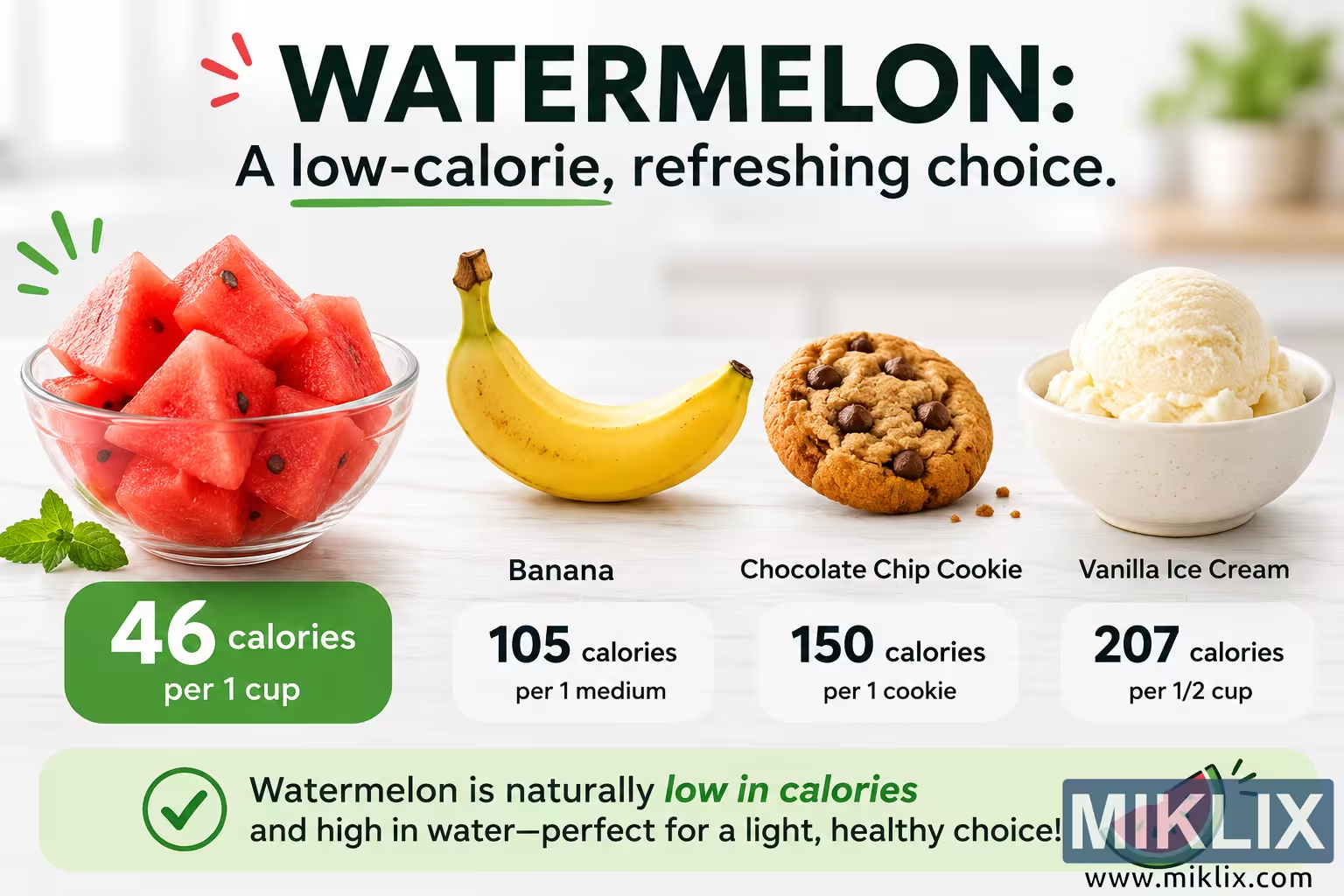
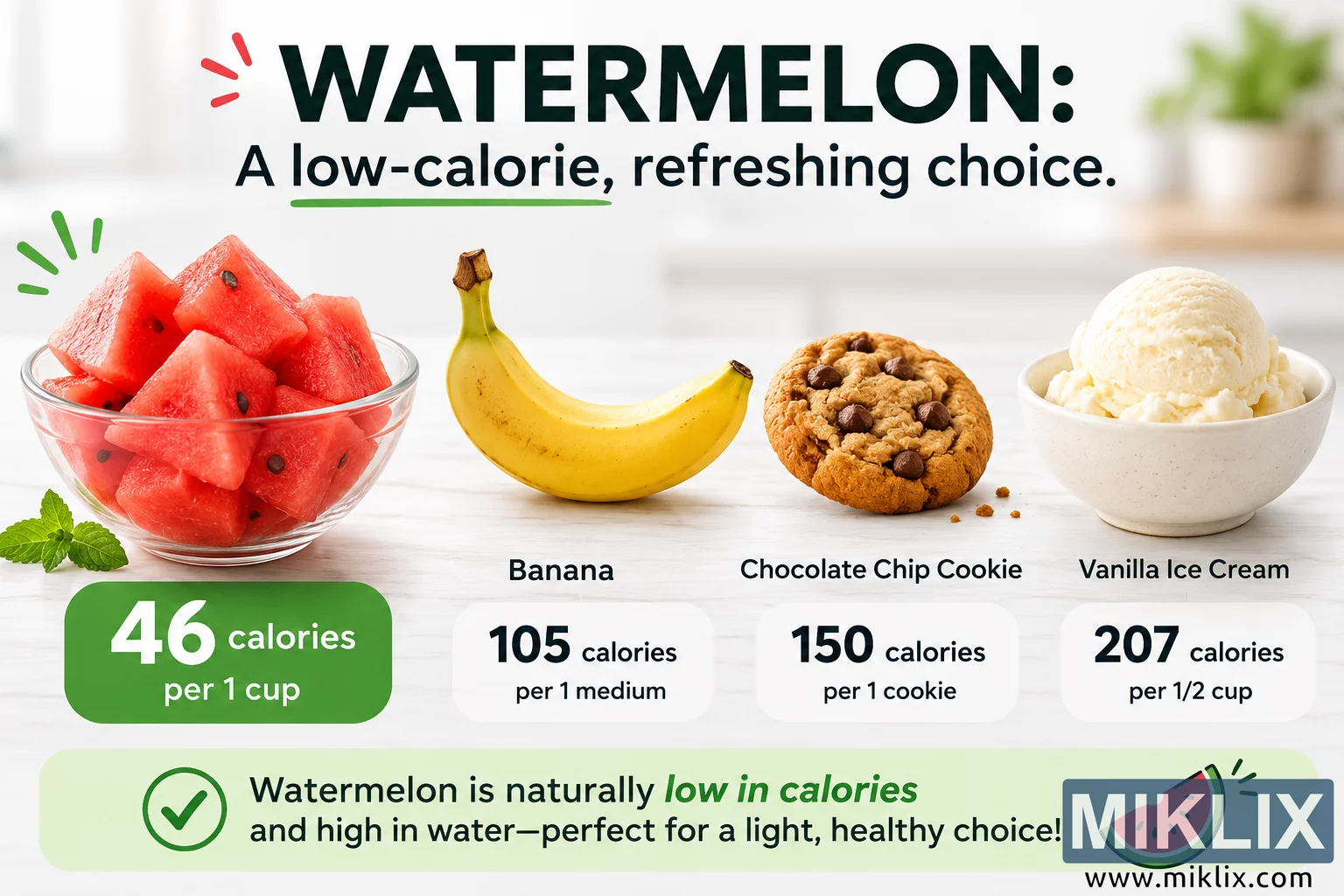
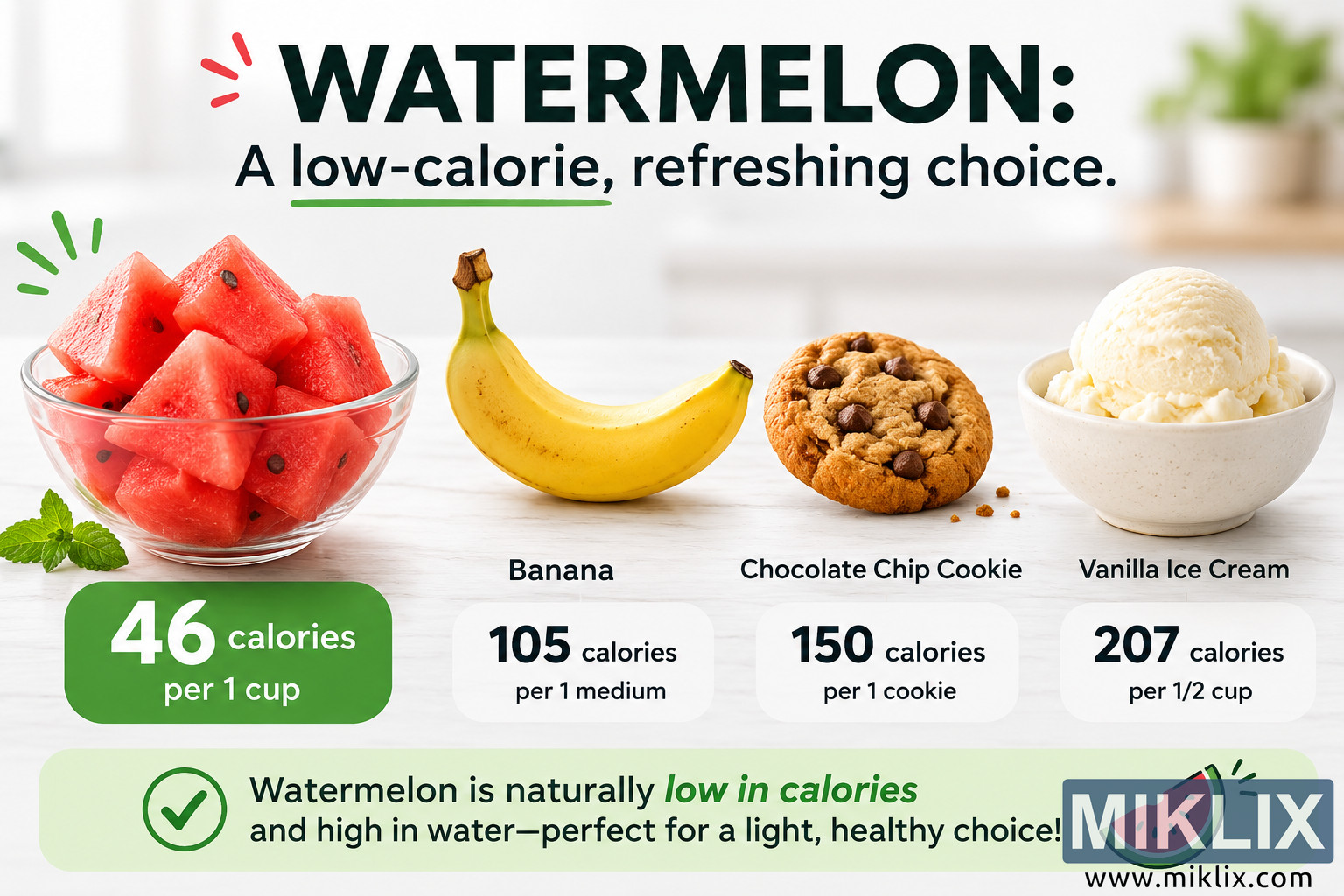
Tamaño grande (3,072 x 2,048)
Tamaño muy grande (4,608 x 3,072)
Tamaño extragrande (6,144 x 4,096)
Tamaño cómicamente grande (1,048,576 x 699,051)
- Sigo subiendo... ;-)
Descripción de la imagen
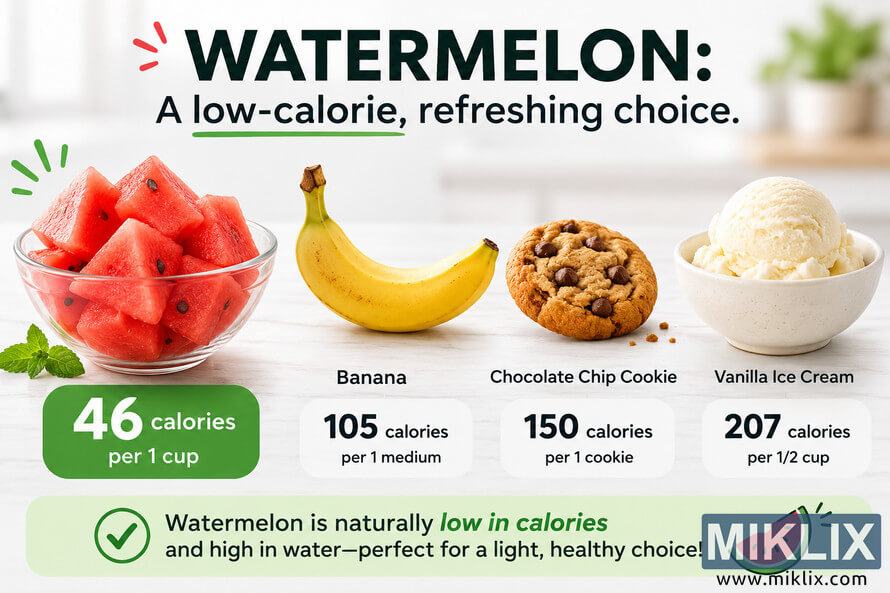
This landscape-format infographic presents a clean, modern visual comparison of the calorie content of several commonly consumed foods, using watermelon as the featured example of a naturally low-calorie option. The overall design uses a bright, high-key aesthetic with a predominantly white background that gives the composition a fresh, healthy, and uncluttered appearance. Soft background blur creates subtle depth while ensuring that the food items and typography remain the primary focus. Green accent colors throughout the graphic reinforce the healthy eating theme and naturally complement the watermelon imagery.
At the top center of the image is a large, bold headline reading "WATERMELON:" followed immediately underneath by the subtitle "A low-calorie, refreshing choice." The typography is large, dark, highly legible, and centered horizontally across the composition. A green underline beneath part of the subtitle provides additional visual emphasis while maintaining the clean design language. Decorative accent marks near the headline add a playful and energetic touch without distracting from the informational content.
The lower portion of the graphic presents four foods arranged horizontally from left to right, each photographed against the same bright surface. The first and most visually prominent item is a transparent glass bowl filled with vibrant red cubes of fresh watermelon. The watermelon pieces display natural color variation, visible black seeds, and realistic texture, conveying freshness and juiciness. Small green mint leaves near the bowl further reinforce the refreshing theme. Below the bowl is a large green information panel displaying the calorie information. The panel prominently states "46 calories" with "per 1 cup" beneath it. The green panel is noticeably larger than the calorie labels used for the remaining foods, visually emphasizing watermelon as the primary subject of the comparison.
To the right of the watermelon is a ripe yellow banana positioned horizontally with a gentle curve. Beneath the banana is a white rounded information box displaying "105 calories" followed by "per 1 medium." The typography is clear and balanced, making the calorie information easy to scan while maintaining visual consistency with the rest of the infographic.
Continuing toward the right is a single chocolate chip cookie. The cookie has a golden-brown baked appearance with numerous visible chocolate chips distributed across its surface. A few crumbs lie nearby, adding a natural photographic detail. Below the cookie is another rounded white information box displaying "150 calories" followed by "per 1 cookie." The presentation is intentionally straightforward so viewers can quickly compare calorie values between foods.
The final featured food on the far right is a bowl containing vanilla ice cream. The ice cream consists of rounded scoops with soft texture and creamy appearance placed inside a simple light-colored bowl. Beneath this food is a matching white calorie panel displaying "207 calories" followed by "per 1/2 cup." Presenting the serving size together with the calorie value helps communicate that calorie comparisons depend on standardized portions rather than overall volume.
Near the bottom of the infographic is a wide horizontal green banner spanning much of the image width. On the left side of the banner is a circular checkmark icon symbolizing a healthy choice. The accompanying message states that watermelon is naturally low in calories and high in water, making it suitable as a light, refreshing option. Key wording within the statement is highlighted using darker green text to reinforce the primary nutritional message. On the opposite end of the banner is a small illustrated watermelon slice that provides a decorative finishing element while visually tying the conclusion back to the featured fruit.
The infographic relies on strong visual hierarchy throughout. Watermelon receives the greatest emphasis through its larger image, larger calorie panel, central positioning within the message, green color treatment, and supporting headline. The remaining foods function as comparison points that help viewers quickly understand relative calorie differences at a glance. The consistent spacing, rounded information boxes, balanced alignment, and generous white space contribute to excellent readability.
The photographic elements are realistic while the overall composition remains clearly educational and infographic-like rather than purely photographic. No commercial logos, product packaging, trademarks, or recognizable brands appear anywhere in the scene. The foods are presented in generic form, making the image broadly applicable for nutrition education, healthy lifestyle articles, recipe websites, wellness blogs, social media posts, classroom materials, fitness presentations, and health-related marketing. Overall, the image communicates a simple and accessible nutritional message: watermelon is portrayed as a refreshing, hydrating, and comparatively low-calorie food option when viewed alongside several familiar everyday foods.
La imagen está relacionada con: Watermelon: The Hydrating Superfruit You Should Eat More Often