
Imagen: Blood Sugar Monitoring with Watermelon Consumption for Diabetes Management
Publicado:
Última actualización: 16 de agosto de 2026, 19:08:12 UTC
A detailed health-focused image illustrating blood sugar monitoring and watermelon consumption for diabetes management, combining medical tools and natural nutrition in a serene setting.
Blood Sugar Monitoring with Watermelon Consumption for Diabetes Management
Versiones disponibles de esta imagen
Los archivos de imagen que se pueden descargar a continuación están menos comprimidos y tienen mayor resolución -y, por tanto, mayor calidad- que las imágenes incrustadas en artículos y páginas de este sitio web, cuyo tamaño está más optimizado para reducir el consumo de ancho de banda.
Talla normal (1,536 x 1,024)
Tamaño grande (3,072 x 2,048)
Tamaño muy grande (4,608 x 3,072)
Tamaño extragrande (6,144 x 4,096)
Tamaño cómicamente grande (1,048,576 x 699,051)
- Sigo subiendo... ;-)
Descripción de la imagen
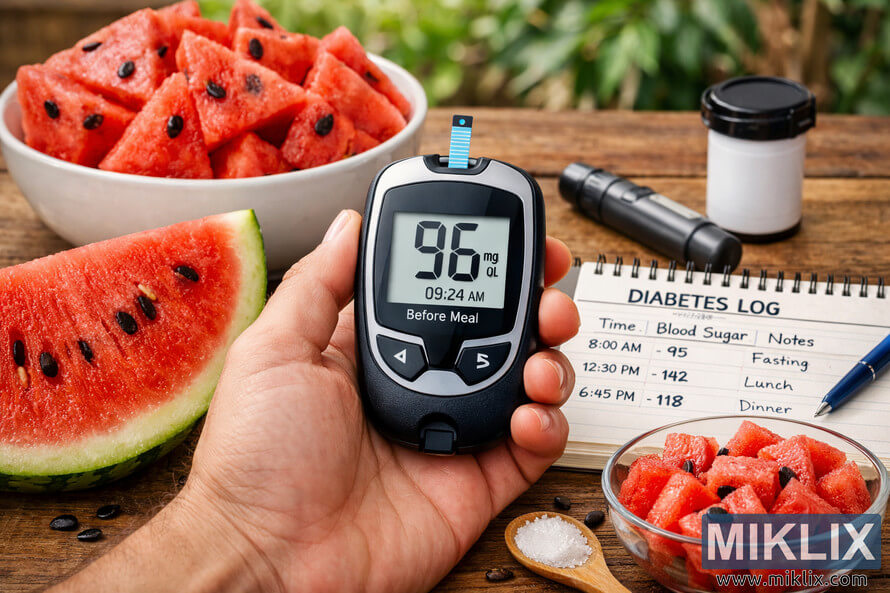
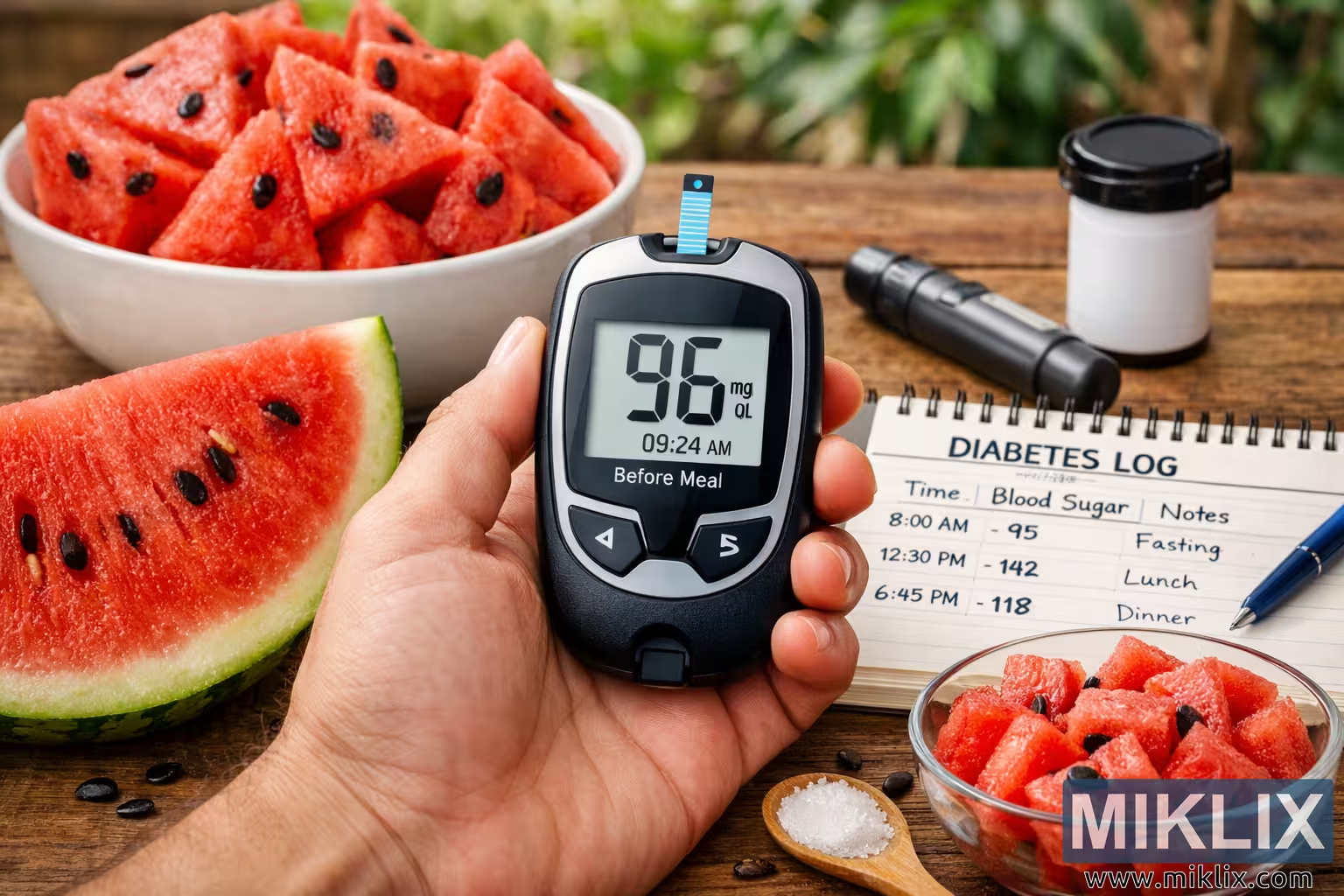
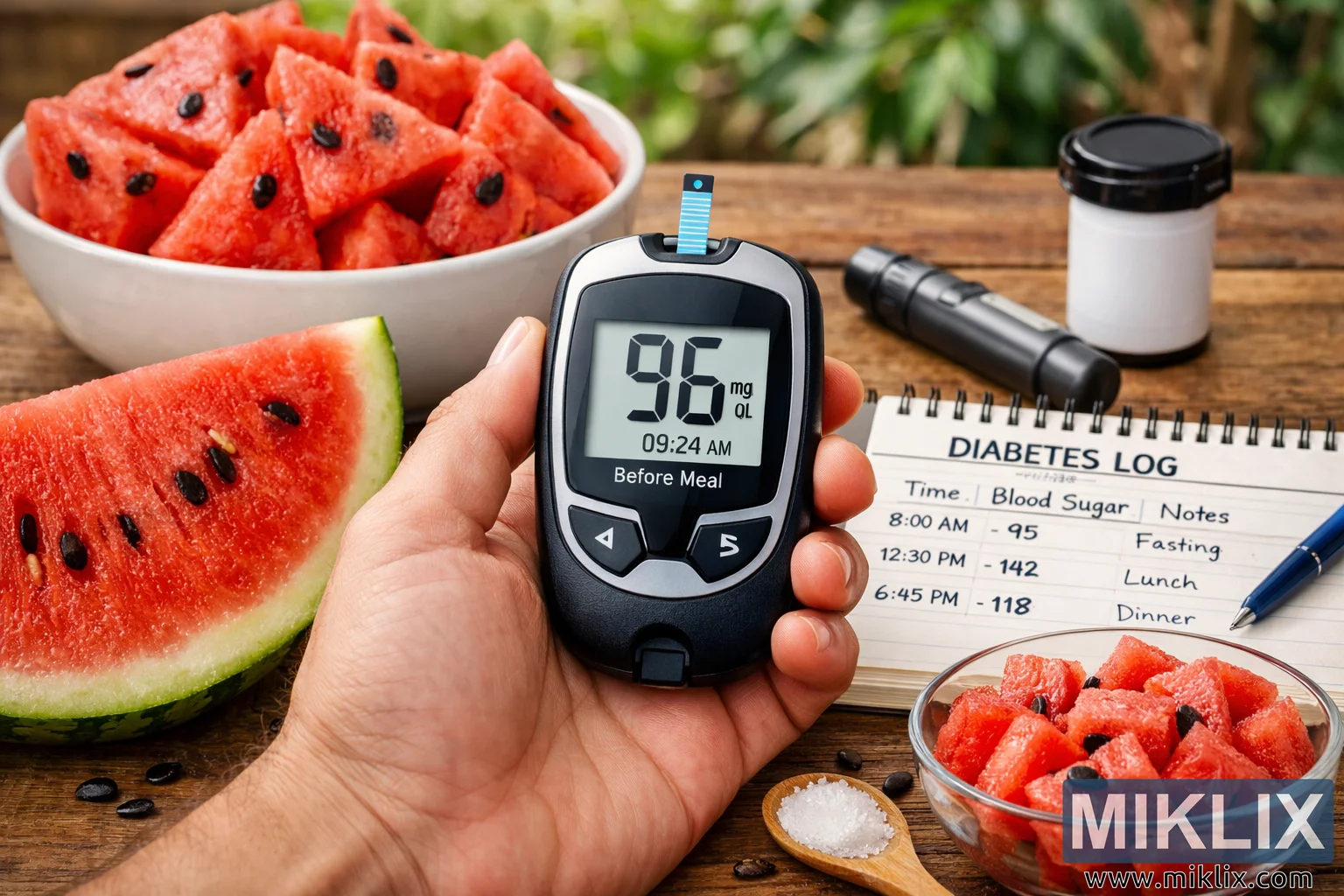
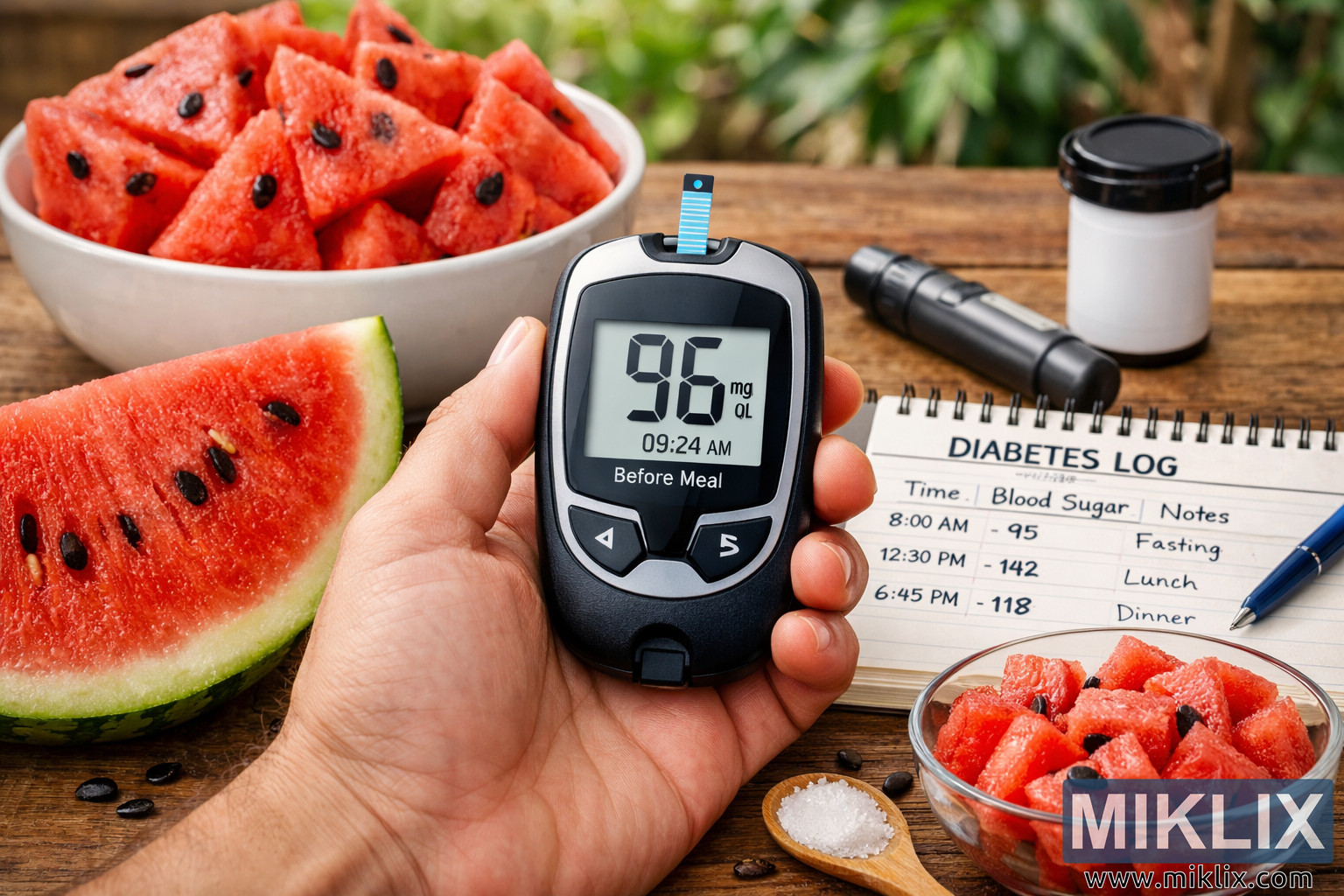
The image depicts a carefully composed scene that blends the themes of nutrition, health awareness, and diabetes management through the visual focus on watermelon consumption and blood sugar monitoring. The setting is a rustic wooden table bathed in soft, natural light, evoking a sense of calm and everyday wellness. On the left side of the composition, a large slice of ripe watermelon dominates the foreground. Its vibrant red flesh, dotted with glossy black seeds, contrasts beautifully with the green rind and the thin white layer separating the two colors. Behind this slice, a white bowl brimming with triangular watermelon pieces adds depth and texture to the arrangement, emphasizing freshness and abundance.
At the center of the image, a digital blood glucose meter is held in a person’s left hand. The meter’s sleek black and silver design stands out against the organic tones of the table and fruit. The screen displays a reading of “96 mg/dL,” accompanied by smaller text showing “09:24 AM” and “Before Meal.” A blue test strip is inserted into the top of the device, signaling active monitoring. The person’s thumb is visible, light-skinned and gently curved around the side of the meter, suggesting attentiveness and routine care.
To the right of the glucose meter lies a lancet device, cylindrical and black with a gray grip and adjustable cap. Its placement next to the meter reinforces the idea of daily health management. Further to the right, a small white pill bottle with a black flip-top cap sits beside a spiral-bound notebook labeled “DIABETES LOG.” The notebook is open to a page filled with handwritten entries under columns titled “Time,” “Blood Sugar,” and “Notes.” The entries read “8:00 AM - 95 - Fasting,” “12:30 PM - 142 - Lunch,” and “6:45 PM - 118 - Dinner.” A blue pen rests diagonally across the page, ready for the next entry, symbolizing consistency and discipline in tracking health data.
In the foreground, a clear glass bowl filled with freshly cut watermelon cubes adds a burst of color and vitality. The cubes glisten slightly, reflecting the natural light and highlighting their juiciness. In front of the bowl, a wooden spoon holds a small mound of white granulated sugar, subtly referencing the relationship between dietary choices and glucose levels. A few scattered watermelon seeds around the spoon create a natural, unpolished touch that enhances the realism of the scene.
The background is softly blurred, revealing hints of green foliage that suggest an outdoor or garden setting. This backdrop reinforces the connection between nature, nutrition, and health. The lighting is gentle and diffused, casting mild shadows that give the objects a three-dimensional presence without harsh contrasts. The overall color palette balances warm wood tones with the vivid reds and greens of the watermelon, complemented by the neutral whites and blacks of the medical devices.
Symbolically, the image communicates the harmony between mindful eating and medical monitoring. The watermelon, often associated with hydration and summer refreshment, becomes a metaphor for natural balance and moderation in a diabetic diet. The glucose meter and logbook represent the scientific and disciplined side of health management, while the fruit and natural setting evoke the emotional and sensory aspects of well-being. Together, they form a narrative of empowerment—showing that managing diabetes is not merely a clinical task but a holistic lifestyle that integrates awareness, enjoyment, and responsibility.
Every element in the composition—from the placement of the devices to the texture of the fruit—contributes to a visual story of control and optimism. The image encourages viewers to see diabetes management not as a restriction but as an opportunity to engage thoughtfully with food and health. The rustic table and natural light create a sense of authenticity, reminding us that wellness is cultivated through everyday choices. The photograph’s high resolution and landscape orientation allow each detail—from the fine grain of the wooden surface to the glint of light on the glucose meter—to be appreciated fully, making it both educational and aesthetically pleasing.
La imagen está relacionada con: Watermelon: The Hydrating Superfruit You Should Eat More Often